Heritage Eats
Our verdict
Heritage Eats occupies a strip-mall address on Bel Aire Plaza in Napa, a detail that tells you something about how the city's mid-register dining scene operates: away from the vineyard-view theatrics, closer to where locals actually eat. With a name that signals a roots-forward approach, it sits in a tier of American dining that prioritises familiar ritual over spectacle, a counterpoint to Napa's more formal tasting-menu circuit.

The menu
What to order
- Buttermilk Fried Chicken Sandwich
- Waffle Fries
- Lemongrass Pork Banh Mi
Where Napa Eats When It Isn't Performing
Napa Valley's dining identity is, at its upper registers, a very specific kind of theatre. The white-tablecloth progression, the wine pairings calibrated to fractions of an ounce, the servers who recite provenance with the precision of auctioneers, this is the tier that produces institutions like The French Laundry and The Restaurant at Auberge du Soleil, places where the meal is the event and the event can run to four figures for two. But Napa also has another layer, less photographed and considerably less choreographed, where the dining ritual is governed more by appetite than occasion. Heritage Eats occupies that layer, with an address at 3824 Bel Aire Plaza that signals immediately where its priorities lie.
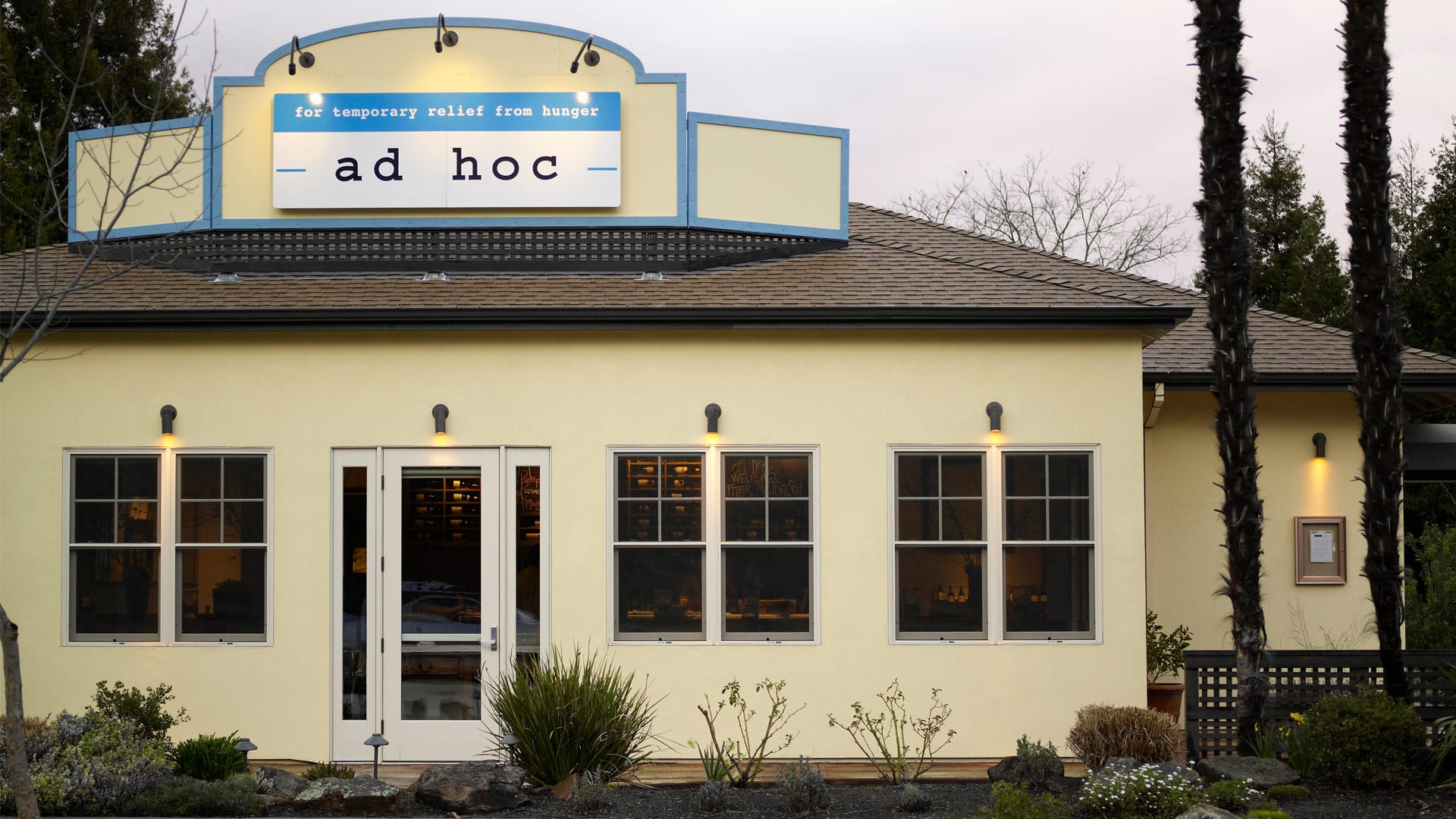
A strip-mall location in Napa is not an accident or a compromise. It is a positioning statement. The Valley's premium properties, from the Japanese-inflected counter at Kenzo to the farm-to-table American format at Ad Hoc, tend to occupy either destination settings or deliberate neighbourhood anchors with strong architectural identity. A plaza address typically means the audience is primarily local, the format is accessible, and the experience is measured in regularity rather than occasion. That framing matters for understanding what Heritage Eats is and what it is not.
The Ritual of the Everyday Meal
American dining culture has two distinct ritual modes, and they rarely overlap. The first is the occasion meal, where every detail is considered, the pacing is controlled by the kitchen, and the guest cedes authority in exchange for a curated sequence of courses. The second is the habitual meal, where familiarity is the point, where regulars occupy the same seats, order the same plates, and measure the restaurant's worth by its consistency over years rather than its ambition in any single dish. Heritage Eats, as its name implies, is oriented toward the second mode.
This distinction matters in Napa more than in most American cities. The Valley draws visitors whose primary frame of reference is the high-format tasting experience, and those visitors often approach every restaurant as though it belongs to the same register as The French Laundry. That misalignment produces misreadings in both directions: places like Heritage Eats get dismissed for not performing the rituals of fine dining, or they get over-praised for offering relief from it. Neither response captures what the mid-register local dining scene actually does well, which is provide a consistent, grounded meal for people who live in the wine country and want dinner rather than a production.
Across American dining more broadly, this category of restaurant has become a subject of renewed attention. Places like Alexis Baking Company in Napa itself have built durable local reputations precisely by refusing to compete on the terms of the destination-dining tier. The ritual there is calibrated to the morning, the counter, the regulars. Heritage Eats operates in a similar register, though oriented toward the sit-down meal format that the name and address suggest.
Napa's Mid-Register and Where It Fits
To understand Heritage Eats, it helps to map Napa's dining spectrum with some precision. At the apex sit the tasting-menu operations with national recognition: The French Laundry's three Michelin stars place it in direct comparison with destinations like Le Bernardin in New York City or Smyth in Chicago. Below that sit the wine-country Californian formats, Auberge du Soleil's terrace dining, Single Thread Farm in Healdsburg, where the setting and the farm sourcing do significant work. Further down the register, in the tier where Heritage Eats operates, the comparison set shifts toward neighbourhood reliability rather than culinary ambition.
This is not a hierarchy of quality so much as a hierarchy of purpose. The American dining tradition that informs heritage-style restaurants is not a lesser version of tasting-menu cuisine; it is a different form entirely, with different standards of success. Consistency, portion, price accessibility, and the ease of the return visit matter more than the innovation of any single dish. By those measures, a restaurant in this tier earns its place through years of sustained reliability rather than through critical recognition in a single season.
For visitors arriving from markets with strong mid-register dining culture, the frame of reference might be places like Emeril's in New Orleans or Frasca Food and Wine in Boulder, restaurants that have built durable identities in their cities without necessarily competing at the Michelin tier. Heritage Eats is working in that same tradition, localized to a Valley where the ambient competition is unusually concentrated at the top of the market.
Approaching a Meal Here
The Bel Aire Plaza address places Heritage Eats in a part of the city that is primarily residential and practical, a Napa that functions independently of harvest-season tourism and vineyard-road tourism infrastructure. Getting there from downtown Napa is a short drive north; from the main Highway 29 wine-country corridor it is accessible without significant detour. This is a relevant logistical point because many Napa visitors structure their days around vineyard routes that do not naturally pass through strip-mall retail zones. Choosing Heritage Eats requires a small deliberate departure from the standard visitor circuit, which is also why its audience skews toward people who already know it.
For the reader accustomed to planning around reservation windows of three months or more, as is standard at tasting-format operations like Lazy Bear in San Francisco or Providence in Los Angeles, the accessible end of Napa's dining market offers a different planning dynamic. The mid-register local restaurant typically operates on shorter booking lead times or walk-in capacity, and its kitchen rhythm is shaped by lunch and dinner service rather than a single nightly sitting. That accessibility is part of its function in the local dining ecosystem.
For a broader overview of where Heritage Eats sits within the full range of Napa dining options, including the tasting-format and wine-country Californian tiers discussed above, see our full Napa restaurants guide.
The Wider American Heritage-Dining Conversation
There is a genuine critical conversation underway about what American heritage-style dining means in a post-pandemic restaurant market. Places like Blue Hill at Stone Barns in Tarrytown and Addison in San Diego have demonstrated that American culinary identity can sustain international-calibre ambition. At the other end of the scale, the neighbourhood restaurant with no press profile and a loyal local following has reasserted its value as the structure of fine dining has become more expensive and more specialised. Heritage Eats, with a name that explicitly invokes tradition and continuity, situates itself in that second conversation. Whether it delivers on that framing is a question the meal itself will answer. What the address and context confirm is that it is not competing on the same terms as the Valley's destination tier, and that is, in itself, a meaningful editorial position to hold in Napa.
Frequently asked questions
Where do I go for Heritage Eats?
Heritage Eats is located at 3824 Bel Aire Plaza, Napa, CA 94558, Napa.
Is Heritage Eats a good option for locals looking for non-tourist dining in Napa?
Heritage Eats at Bel Aire Plaza sits in a part of Napa that functions as a working residential city rather than a wine-country destination, placing it outside the main tourist dining corridor. That address alone signals an orientation toward the local population rather than the cellar-door visitor. For anyone living in or near Napa who wants a meal without the tasting-menu format or visitor pricing, it warrants consideration.
What dish is Heritage Eats famous for?
Given the name and its positioning in Napa's mid-register dining scene at Bel Aire Plaza, the focus appears to be on American heritage-style cooking rather than a single showpiece item. Checking directly with the restaurant will get you the clearest picture of what's currently on the menu.
Is Heritage Eats reservation-only?
The Bel Aire Plaza location is set in a practical, residential part of the city rather than the high-volume tourist corridor, which typically means a more accessible walk-in format. Contacting the restaurant directly is the safest approach before visiting.
What's Heritage Eats best at?
Heritage Eats occupies a specific and underserved position in Napa: everyday American dining for a city whose restaurant conversation is dominated by tasting-menu operations and wine-country theatre. At Bel Aire Plaza, it serves the part of Napa that actually lives there, not just visits. That localized, unpretentious focus is the clearest thing the venue has going for it.
Can Heritage Eats adjust for dietary needs?
No dietary accommodation policy is documented for Heritage Eats. The most reliable route is to call or contact them ahead of your visit, particularly if you have strict requirements. The address at Bel Aire Plaza suggests a neighborhood-scale operation where direct communication with staff is likely straightforward.
Cuisine and Credentials
| Venue | Cuisine | Price | Awards | Notes |
|---|---|---|---|---|
| Heritage EatsThis venue (the venue you are viewing) | Global Fusion Fast-Casual | Not listed | Not listed | Not listed |
| The French Laundry | French-Californian Fine Dining | $300–500 | 3 Michelin Stars · World's 50 Best #50 | French, Contemporary |
| The Restaurant at Auberge du Soleil | Contemporary French Fine Dining | $200–300 | 1 Michelin Star · Wine Spectator Best of Award of Excellence | Californian |
| Kenzo | Authentic Japanese Kaiseki | Not listed | Michelin Plate · Star Wine List | Japanese |
| Bouchon Bistro | French Bistro | $100–150 | Michelin Plate · Wine Spectator Best of Award of Excellence | Not listed |
| Ciccio | California-Italian | $50–100 | Michelin Bib Gourmand | Not listed |
Continue exploring
More in Napa
Restaurants in Napa
All restaurants in Napa →
Bars in Napa
All bars in Napa →

Details
- Cozy
- Rustic
- Casual Hangout
- Farm To Table
- A La Carte
- Vegetarian Friendly
- Vegan Options
- Gluten Free Options
Casual cafeteria-style counter service with bare-bones decor, lively atmosphere that can get loud during peak times, and a cute outdoor bistro area.