Hoexters
On the Upper East Side's residential stretch of East 82nd Street, Hoexters occupies a neighbourhood position that places it closer to the local dining tradition than to Manhattan's trophy-restaurant circuit. For visitors mapping the city's dining scene beyond the usual Midtown flagships, it represents a different register of the New York restaurant experience.
Pearl is the En Primeur Club membership app — saves, bookings, and concierge access live there. Same editors, same standards.
- Address
- 174 E 82nd St, New York, NY 10028
- Phone
- +12122881777
- Website
- hoexters.com
- Directions
- Get directions
 Saves & bookings on Pearl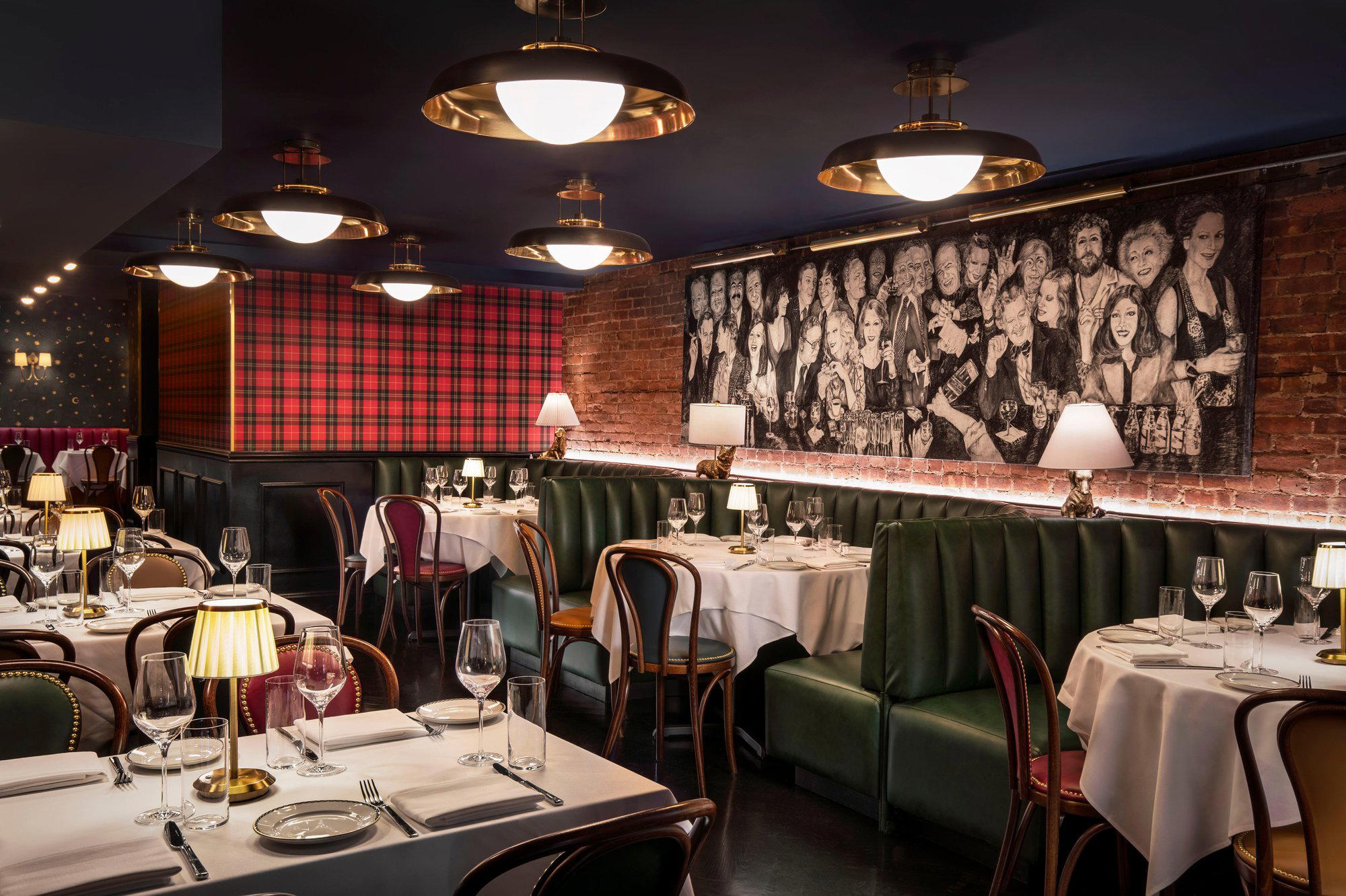
East 82nd Street and the Upper East Side Dining Register
The Upper East Side has long operated on a different frequency from Midtown's trophy-restaurant corridor. Where venues like Per Se and Masa price and present themselves against an international comparable set, the neighbourhood around East 82nd Street supports a more grounded dining culture: regulars who walk to dinner, rooms that do not announce themselves from the street, and menus that answer to a residential constituency rather than a tourist itinerary. Hoexters, at 174 East 82nd Street, occupies that register. The address alone tells you something. This is not a destination block. It is a lived-in stretch of the city where a restaurant earns its place by serving its neighbourhood well over time, rather than by capturing a moment in the press cycle.
That neighbourhood context matters for understanding what kind of experience you are booking. The Upper East Side's dining character has historically favoured reliability over novelty, and that tendency has only sharpened as downtown and Brooklyn have absorbed the city's more experimental energy. Restaurants in this part of Manhattan tend to be measured by consistency and hospitality rather than by the restlessness that drives tasting-menu culture further south. It is a different kind of ambition, and for certain meals, the ones that do not require a thesis statement, it is the more useful kind.
Where Hoexters Sits in the New York Dining Conversation
New York's restaurant field at the leading end has consolidated around a handful of well-documented formats: the French seafood counter represented by Le Bernardin, the progressive Korean tasting rooms of Atomix and Jungsik New York, and the omakase rooms that price at the outer limits of what the market will bear. These are venues that define themselves by their distance from the ordinary. Hoexters operates in a different part of the city's dining map entirely, in the neighbourhood tier where the relationship between a restaurant and its surrounding blocks is the primary credential, not the Michelin column or the reservation queue.
That positioning is neither a concession nor a limitation. Particularly durable restaurants in any city are the ones that never aspired to be elsewhere. The neighbourhood table, the place where the same faces appear on Tuesday evenings and where the staff know the regulars' preferences without being asked, is a distinct and valuable category.
The Sustainability Frame: Local, Accountable, Grounded
Across American dining, the conversation around sustainability has shifted from marketing language to operational expectation. Restaurants at every price point are now judged in part by their sourcing relationships, their waste practices, and the degree to which their supply chains are legible and accountable. At the level of the neighbourhood restaurant, this often means something different from the farm-to-table positioning that became shorthand for a certain kind of fine dining in the 2010s. It means sourcing from suppliers who can actually deliver at the scale and budget of a mid-sized room, reducing waste through menu design rather than through theatrical composting programs, and building relationships with local producers that are measured in years rather than seasons.
Nationally, the venues that have most credibly embedded sustainability into their operations tend to be those where it connects to a larger kitchen philosophy rather than existing as a separate program. Blue Hill at Stone Barns in Tarrytown, with its on-site farm, represents the integrated American model. Single Thread Farm in Healdsburg and Lazy Bear in San Francisco both demonstrate how sustainability commitments can shape the entire structure of a menu and a season. At the neighbourhood level in New York, the equivalent credential is more modest but no less meaningful: a consistent commitment to suppliers and practices that hold up over time, rather than a press release that gets refreshed annually.
For a restaurant on East 82nd Street, particularly honest sustainability story is probably one of longevity and local relevance. A venue that serves its neighbourhood for years, reduces its footprint through menu discipline, and maintains supplier relationships without the marketing apparatus of a destination restaurant is doing something that the broader industry narrative tends to skip past in favour of more photogenic examples.
Comparable Restaurants and What the comparable set Tells You
For context on where Hoexters sits relative to the wider American restaurant field, the comparison set that matters most is not the Midtown flagships but the category of neighbourhood-anchored restaurants that have built durable reputations without a national press profile. Across the country, that category includes venues like Bacchanalia in Atlanta, which built its reputation on long-term sourcing relationships and a consistent philosophy, and Emeril's in New Orleans, which has functioned as a neighbourhood institution across decades. The pattern these restaurants share is staying power grounded in a defined constituency, rather than in the rotation of press attention that sustains destination dining.
At the higher end of the sustainability and sourcing conversation, Providence in Los Angeles, Addison in San Diego, and The French Laundry in Napa each demonstrate what happens when sourcing discipline is applied at the fine-dining price point with the full resources of an award-winning operation behind it. The gap between those venues and a neighbourhood restaurant is real, but the underlying principle, that what you source and how you use it defines what you serve, runs across both tiers. Internationally, the same argument appears in different form at Alain Ducasse at Louis XV in Monte Carlo and 8½ Otto e Mezzo Bombana in Hong Kong, where ingredient provenance is central to the editorial identity of the restaurant.
Planning Your Visit
Hoexters is located at 174 East 82nd Street in the Upper East Side. The surrounding neighbourhood is primarily residential, which means the street environment is quieter than most Manhattan dining districts.
| Venue | Cuisine | Price Tier | Format | Booking |
|---|---|---|---|---|
| Hoexters | American Brasserie | $$$$ | Neighbourhood restaurant | Reservations recommended |
| Le Bernardin | French, Seafood | $$$$ | Fine dining | Online/phone |
| Atomix | Modern Korean | $$$$ | Tasting menu | Online |
| Per Se | French, Contemporary | $$$$ | Tasting menu | Online |
| Jungsik New York | Progressive Korean | $$$$ | Fine dining | Online/phone |
Just the Basics
Comparable venues nearby, for context on price, style, and recognition.
| Venue | Cuisine | Price | Notes |
|---|---|---|---|
| HoextersThis venue — the venue you are viewing | Not listed | $$$$ | Not listed |
| The Regency Bar & Grill | Not listed | $$$$ | Upper East Side-Carnegie Hill, Modern New American Grill |
| BG | Central Park, Contemporary American | $$$$ | Not listed |
| Oriana | Not listed | $$$$ | SoHo-Little Italy-Hudson Square, American Wood-Fired Grill |
| To Be Hosted Supper Club | Not listed | $$$$ | Tribeca-Civic Center, Contemporary American |
| Forty Four | Not listed | $$$ | Midtown-Times Square, New American Gastropub |
Continue exploring
More in New York City
Restaurants in New York City
Browse all →
Bars in New York City
Browse all →
Hotels in New York City
Browse all →





At a Glance
- Lively
- Cozy
- Elegant
- Classic
- Date Night
- Business Dinner
- Casual Hangout
- Brunch
- Historic Building
- Craft Cocktails
Current opening hours
- Monday
- 5–10 PM
- Tuesday
- 5–10 PM
- Wednesday
- 5–10 PM
- Thursday
- 5–10 PM
- Friday
- 5–11 PM
- Saturday
- 11 AM–11 PM
- Sunday
- 11 AM–10 PM
Hours can change for holidays and private events. Last verified .
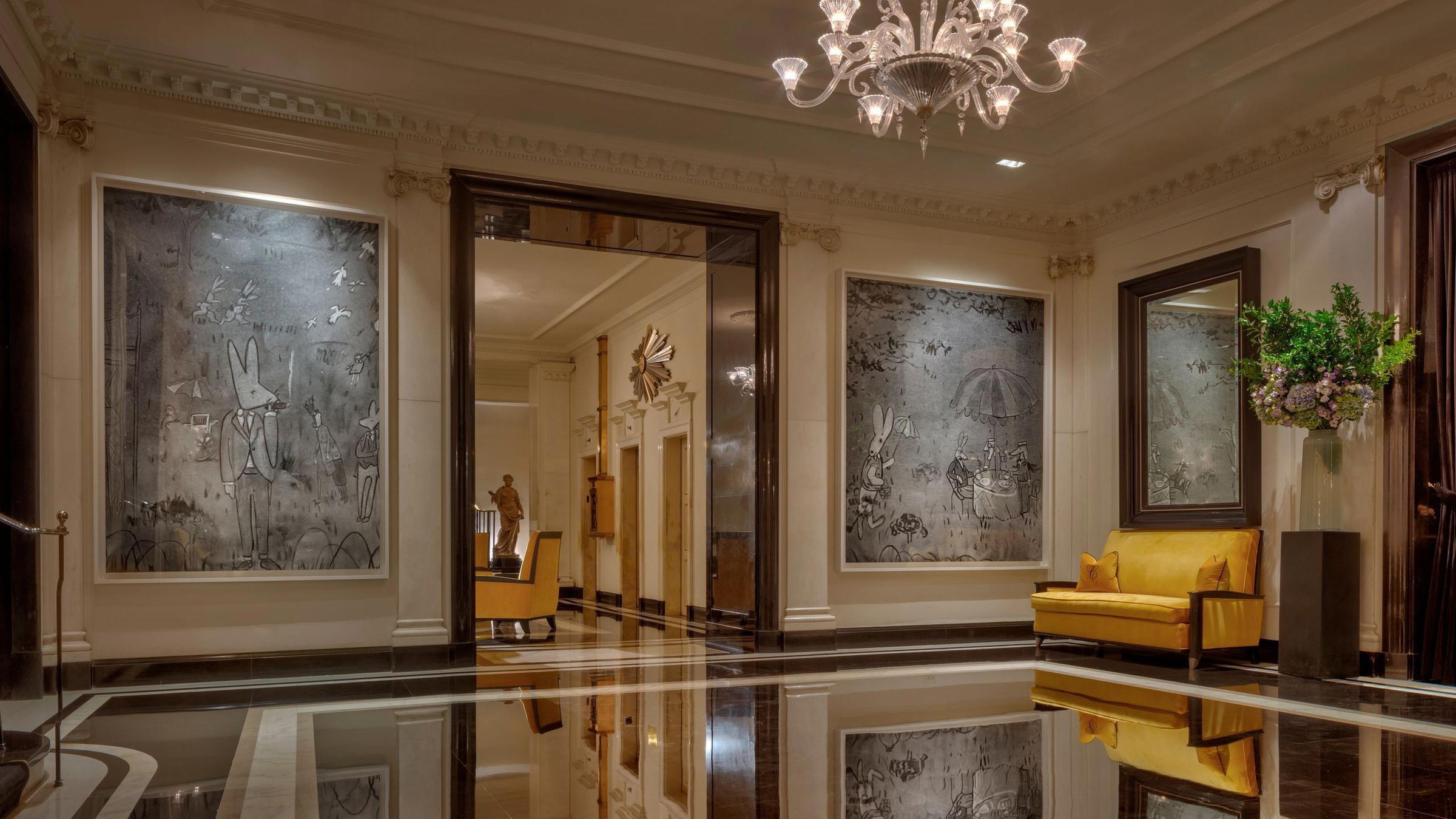
Cozy, warm, and inviting with fun decor, flannel wallpaper, deep tones, low lighting, and elegant dining room banquettes evoking old-school Upper East Side charm.