
A Korean and shabu shabu address in Minoh with a room built for groups rather than counter-theatre dining. Its Tabelog 100 selection for Asian and ethnic cuisine in WEST 2024 gives it a credentialed place in Osaka’s wider Korean-Japanese dining conversation, especially for travellers looking beyond the city-centre circuit.
Pearl is the En Primeur Club membership app — saves, bookings, and concierge access live there. Same editors, same standards.
- Address
- 6 Chome-5-38 Onoharanishi, Minoh, Osaka 562-0032, Japan
- Phone
- +81 72-726-0106
- Website
- instagram.com
 Saves & bookings on Pearl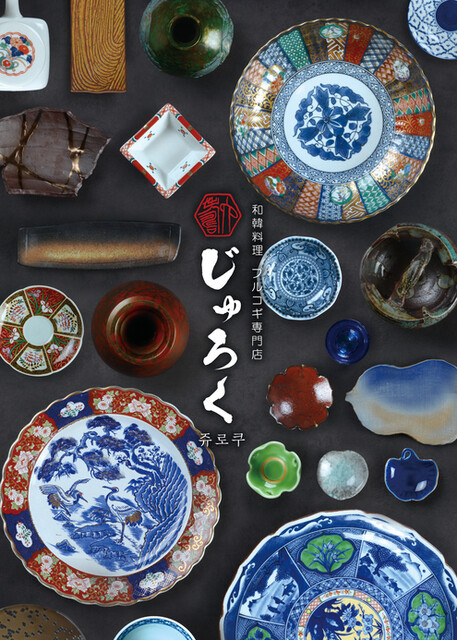
Dining in Minoh differs from working through Osaka’s station-side restaurant clusters. The pace opens up, rooms grow larger, and the meal becomes less about slipping into a narrow counter than settling into a space built for shared heat, shared meat, and a table that can hold more than two plates. In that setting, Wakan Ryori Bulgogi Senmon Ten Jurouku fits a specific Osaka-area tradition: Korean cooking adapted to Japanese dining rhythms, with shabu shabu beside bulgogi rather than competing with it.
The signal is not chef-as-celebrity theatre but category clarity. Korean and shabu shabu are listed side by side, a pairing that matters in Kansai, where yakiniku, hotpot, family meals, and celebratory tables often overlap. A Tabelog 100 selection for Asian cuisine and ethnic cuisine in WEST 2024 places the restaurant within a regional bracket rather than a single-neighbourhood recommendation. That recognition helps because this is not an address a first-time Osaka visitor finds by drifting through Namba or Umeda.
A room built for shared heat, not solo counter dining
Osaka’s dining identity is often reduced to speed: takoyaki windows, kushikatsu counters, ramen queues, department-store basements. That shorthand misses suburban dining rooms where families, office groups, and weekend drivers stretch a meal across a larger table. The 50-seat scale at Wakan Ryori Bulgogi Senmon Ten Jurouku puts it in that category. It is neither a tiny chef’s counter nor a banquet hall, but a middle ground where table layout, private-use availability, and tatami-style space shape the experience as much as the menu.
That physical container changes how Korean-Japanese cooking reads. Bulgogi has social mechanics: meat, heat, sauce, vegetables, pacing. Shabu shabu has similar table logic, with the pot as anchor. When both forms share one roof, the room must handle families, strollers, children, group timing, and dishes arriving in waves rather than a single plated sequence. The family-friendly positioning, children’s menu, stroller acceptance, and non-smoking policy all point to comfort over ceremony.
In central Osaka, Korean restaurants often compete on late-night energy, grill smoke, and transport proximity. Minoh shifts the expectation. The meal is planned, less impulsive, and more likely part of a suburban evening than a bar crawl. That gives the room editorial value: Korean food in Osaka is not confined to nightlife corridors or youth-driven neighbourhoods. It also lives in residential spaces where the table is the main stage.
Korean-Japanese cooking in a Kansai suburb
The phrase “Japanese-Korean cuisine” can be vague when used as decoration. Here, the useful reading is structural. Bulgogi brings Korean seasoning and the communal logic of cooked meat; shabu shabu brings Japanese hotpot grammar of broth, dipping, and pacing. The combination reflects Kansai’s appetite for hybrid comfort rather than novelty, in a region where borrowed formats are naturalised through service style, portioning, and room design, not manifesto.
The restaurant’s selection in Tabelog’s 2024 WEST list for Asian and ethnic cuisine gives the category a public marker. Tabelog’s Hyakumeiten lists are not Michelin stars and should not be treated as equivalent, but in Japan they usefully sort genre specialists by region and category. For travellers, that distinction matters. A Korean and shabu shabu room in Minoh is not being judged against sushi counters in Ginza or kaiseki rooms in Kyoto; it is placed among western Japan’s Asian and ethnic dining addresses, where consistency, local demand, and genre strength carry weight.
Compared with nearby lower-spend casual addresses such as Delicius Minoo honten, Kissa Ichi, New Astoria, and FRANK Ride and Eat, this sits in a more meal-centred bracket. Sakura Grill is closer on dinner spend, but the comparison also shows how Minoh supports more than one kind of planned dining: grill rooms, cafés, bakeries, and family-oriented restaurants can exist beyond the tourist map without Osaka-centre foot traffic. For readers mapping a broader eating day, that suburban spread is the point.
How to place it in an Osaka itinerary
This is not a substitute for a quick Dotonbori snack run or a counter seat near a major rail hub. It is better understood as a north-Osaka meal for travellers already looking beyond the central loop, or for residents and repeat visitors who know Kansai’s dining depth is not limited to postcard districts. Kita-Senri proximity and the Minoh setting make it a deliberate choice, and that is part of the appeal: a dining room scaled for groups and a cuisine category with a recognised regional credential.
The practical read is simple. Choose it when the table matters as much as the plate: family meals, small celebrations, mixed-age groups, or an evening where Korean flavours and Japanese hotpot logic make more sense than another counter reservation. The drinks list includes sake, shochu, and wine, suggesting a room comfortable with Japanese meal pacing rather than a narrowly Korean template. Private rooms are not part of the setup, so expect a shared dining room with enough structure for groups, not sealed-off formality.
For a wider Osaka plan, use it as a northern counterpoint to the denser centre. EP Club’s Our full Osaka restaurants guide gives the broader restaurant map, while Our full Osaka hotels guide, Our full Osaka bars guide, Our full Osaka wineries guide, and Our full Osaka experiences guide frame the rest of the trip. Nearby and citywide references add contrast:.cafe, 52CHO-ME BAKERY, 551 Horai (551蓬莱), 99 Pizza Napoletana Gourmet, and a canto (Italian) show how varied Osaka’s eating map becomes once it is not treated as a single-neighbourhood checklist.
Nationally, the comparison widens. Travellers interested in beef and hotpot formats can look at -Grilled beef Sukiyaki- KAMAKURA TANUKIAN 鎌倉 たぬき庵 in Kamakura; for casual Japanese formats outside Kansai, see. 鮪と炭火焼き うお炭 秋葉原店 in Tokyo.know in Kumamoto, (Shoku) Vietnam in Kawasaki, [Curry Senmon Ten] Maruyama Kyoju. in Sapporo, and [ki:] in Kyoto. The overseas links are instructive too: Jōdo Saké Bar in Los Angeles and Onigiri Time in Pasadena show how Japanese dining formats change when exported, while Minoh shows how imported Korean forms are absorbed into Kansai’s own dining habits.
Comparison Snapshot
Comparable venues at the same tier for side-by-side context.
| Venue | Cuisine | Price | Notes |
|---|---|---|---|
| Wakan Ryori Bulgogi Senmon Ten Jurouku | Japanese–Korean Bulgogi Specialty | $$$ | Minoh |
| Kanmichi Pakutei | Korean Royal Court Cuisine Tasting Menu | $$$ | Nishi |
| Higyu | Japanese Yakiniku | $$$ | Kita |
| Kitashinchi Yamagata Ya | Japanese Yakiniku | $$$ | Kita |
| Imparfait | Innovative French-Japanese Counter Dining | $$$ | Nishi |
| Midosuji Lodge | Yoshoku (Japanese-style Western) | $$$ | Chūō |
Recognition history
Dated appearances from independent guides and award organizations, with the underlying list record or original source where available.
Tabelog 100 #63 · No. 63
Tabelog · Tabelog 100 - Asian cuisine / Ethnic cuisine - WEST - 2024
Continue exploring
More in Osaka
Restaurants in Osaka
Browse all →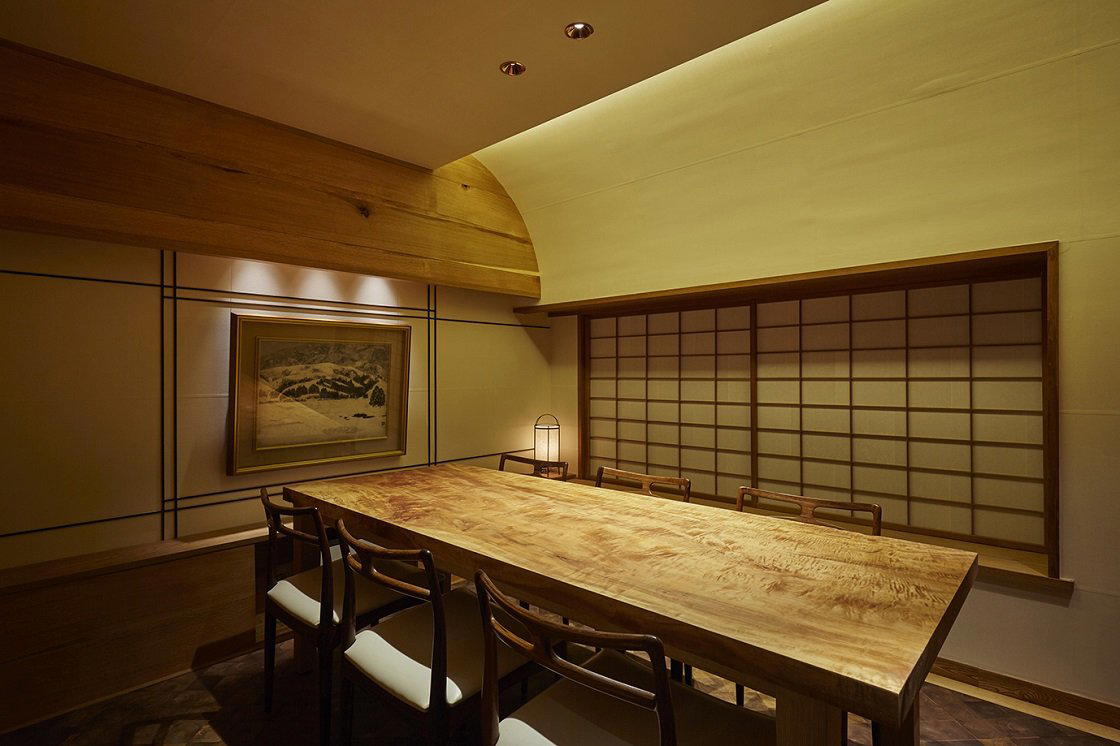




Bars in Osaka
Browse all →




Hotels in Osaka
Browse all →


Wineries in Osaka
Browse all →
At a Glance
- Elegant
- Cozy
- Romantic
- Date Night
- Group Dining
- Celebration
- Casual Hangout
- After Work
- Standalone
- Design Destination
- Local Sourcing
Current opening hours
- Monday
- 11:30 AM–10 PM
- Tuesday
- 11:30 AM–10 PM
- Wednesday
- 11:30 AM–10 PM
- Thursday
- 11:30 AM–10 PM
- Friday
- 11:30 AM–10 PM
- Saturday
- 11:30 AM–10 PM
- Sunday
- 11:30 AM–10 PM
Hours can change for holidays and private events. Last verified .
An intimate, refined Japanese-Korean dining room with carefully plated dishes, elegant tableware, and a calm, date-friendly atmosphere suited for relaxed course meals.