
Ishigaki’s izakaya culture is at its sharpest when seafood, shochu and casual room energy carry equal weight. Hitoshi Honten sits in that lane, with Tabelog 100 Izakaya WEST selection in 2025 and a format that reads closer to a local fish tavern than a destination tasting room.
Pearl is the En Primeur Club membership app — saves, bookings, and concierge access live there. Same editors, same standards.
- Address
- 15-8 Shineicho, Ishigaki, Okinawa 907-0014, Japan
- Phone
- +81 980-83-9610
- Website
- instagram.com
- Directions
- Get directions
 Saves & bookings on Pearl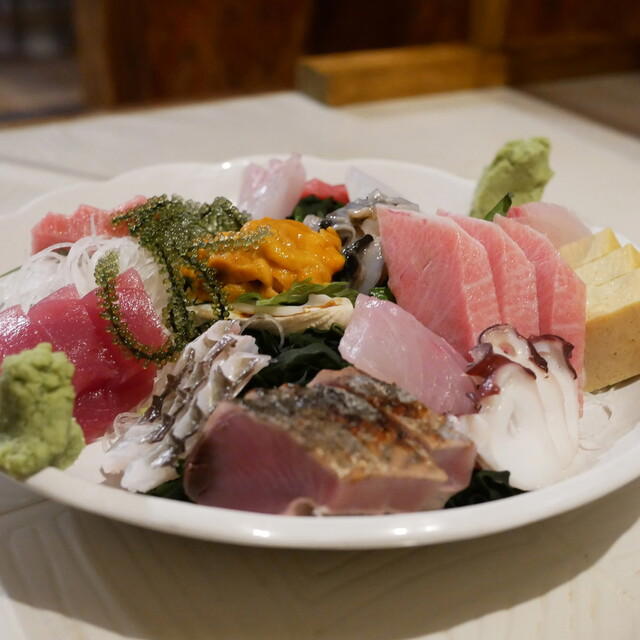
Shineicho’s evening dining rhythm is low-rise, practical and close to the water: small rooms, local regulars, travellers in sandals, and fish expected to do more talking than décor. In Ishigaki, that matters. The island’s dining identity is split between beef houses built around Ishigaki wagyu and taverns shaped by the surrounding sea. Hitoshi Honten belongs firmly to the second camp, an izakaya where seafood and sushi share the table with shochu, wine and cocktails rather than sitting in formal categories.
The point is not luxury theatre but the island tavern as a serious food format. Tabelog selected Hitoshi Honten for its 2025 Izakaya WEST 100 list, after prior selections in 2024 and 2021, placing it in a category that rewards consistency, local pull and specialist cooking more than international polish. That recognition helps because Ishigaki can be hard to read from outside: resort dining, beef counters and casual family-run rooms often sit within a few streets of one another, but serve different purposes.
Fish-first izakaya cooking in a beef-heavy island city
Ishigaki is often sold through beef, but the more revealing meal can be seafood served without ceremony. Hitoshi Honten’s listed categories, izakaya, seafood and sushi, describe a hybrid format common in Japan and especially logical on an island: raw fish, cooked seafood, rice, alcohol and shared plates can occupy one evening without a fixed course structure. The restaurant is described as particular about fish, a small phrase with weight here because the city’s stronger dining rooms tend to declare sourcing discipline through category rather than manifesto.
That seafood-led position separates it from Ishigaki’s steak and yakiniku circuit. Sumibi Yakiniku Yamamoto and Toraichi Seiniku Ten sit in the higher meat-driven bracket, while Steak Restaurant Papoiya pushes the beef meal into a more expensive tier. Corners Grill operates at a lower listed spend, but in a different casual lane. The restaurant’s value is the middle-ground izakaya proposition: not a bargain counter, formal omakase room, or steakhouse built around a single premium ingredient.
That distinction explains its reputation. A Tabelog score of 3.69 in this category signals a serious following by Japanese review standards, especially outside major metropolitan dining circuits. Izakaya ratings rarely behave like fine-dining rankings; room comfort, drink compatibility, ingredient freshness and repeatability all matter. The 2025 WEST selection places the restaurant in a regional field rather than a local popularity contest, a stronger signal for travellers choosing one seafood-focused dinner in Ishigaki.
A tavern room, not a tasting-menu performance
The space is listed with counter seating and tatami room seating, which says almost everything about tempo. Counter seats suit smaller parties and a closer view of the kitchen’s rhythm; tatami seating points toward groups, shared dishes and longer drinking sessions. This is an izakaya structure, not a chef’s-counter performance where the room moves course by course. The pleasure is assembling a meal across categories, then letting shochu or another drink set the pace.
The drinks list also places the restaurant squarely in tavern territory. Shochu receives specific emphasis, with wine and cocktails also available, suiting Ishigaki’s mixed audience of locals, domestic travellers and overseas visitors. In a sushi-only room, the beverage conversation often becomes sake-led or minimal. In an izakaya, the broader list is part of the social architecture: fish, rice, grilled or cooked plates and drinks move in parallel rather than hierarchy.
For travellers building a full Ishigaki itinerary, this is the seafood-tavern anchor rather than the whole picture. Akaishi Shokudou and Amuritano-niwa show other sides of local casual dining, while Ishigaki Jima Kitauchi Bokujou pulls the itinerary back toward beef. Hau Tree Gelato fits the after-dinner walk rather than the main meal. For broader planning, use Our full Ishigaki restaurants guide, then layer in Our full Ishigaki hotels guide, Our full Ishigaki bars guide, Our full Ishigaki wineries guide and Our full Ishigaki experiences guide if the trip extends beyond dinner reservations.
How to read the recognition, and who should choose it
The award history points to endurance rather than sudden hype. Selections for Tabelog’s izakaya lists in 2021, 2024 and 2025 suggest a room that has kept its standing across several cycles of domestic dining attention. For Ishigaki, where many visitors arrive with a checklist of beach time, island ferries and beef dinners, the restaurant is a smart counterweight: the meal keeps the island’s seafood identity in focus.
The format is socially specific. Tabelog’s occasion marker points toward friends, matching the room type and izakaya category. This is not the obvious choice for a hushed anniversary dinner or a long tasting menu with choreographed pacing. Read it as a shared-table seafood evening with drinks, measured by range, freshness and energy rather than linen, plating height or imported ceremony.
Reservations are available, and the restaurant’s waiting practice is practical: guests who provide a mobile number can be called when a seat opens. Payment is cash only; credit cards, electronic money and QR code payments are not accepted. Private rooms and private use are unavailable, the room is non-smoking, and parking is listed as available. Those details matter in Ishigaki because dinner plans often follow ferry schedules, rental-car days and resort transfers; this is stronger when the evening can flex around a tavern meal rather than a rigid fine-dining slot.
For readers comparing Japan dining formats beyond Okinawa, the useful reference is category, not cuisine alone. Beef specialists such as -Grilled beef Sukiyaki- KAMAKURA TANUKIAN 鎌倉 たぬき庵 in Kamakura answer a different craving; seafood-and-charcoal rooms such as. 鮪と炭火焼き うお炭 秋葉原店 in Tokyo show how the fish-tavern idea translates in a large city. Casual specialists like.cafe in Osaka.know in Kumamoto, (Shoku) Vietnam in Kawasaki and [Curry Senmon Ten] Maruyama Kyoju. in Sapporo underline the broader point: Japan’s memorable meals often come from tightly defined formats rather than grand dining rooms. For overseas parallels in Japanese drinking culture, Jōdo Saké Bar in Los Angeles and Onigiri Time in Pasadena sit on the diaspora side of that conversation.
A Quick Peer Check
Comparable venues by cuisine and price in the same metro.
| Venue | Cuisine | Price | Notes |
|---|---|---|---|
| Hitoshi Honten | Traditional Okinawan Izakaya & Seafood | $$ | .null |
| Toraichi Seiniku Ten | Ishigaki beef yakiniku & steak | $$ | Maezato (Maseiri), Ishigaki |
| Nakayoshi Shokudo (なかよし食堂) | Okinawan Yaeyama Soba | $$ | Shin-eicho |
| Mirumiru Honpo Honten | Ishigaki Gelato Cafe | $$ | Arakawa |
| Sumibi Yakiniku Yamamoto | Charcoal-grilled Ishigaki beef yakiniku | $$$ | Hamasakicho |
| Amuritano-niwa | Contemporary Japanese-Italian Fusion Cafe | $$ | Ishigaki City |
Recognition history
Dated appearances from independent guides and award organizations, with the underlying list record or original source where available.
Tabelog 100 #63 · No. 63
Tabelog · Tabelog 100 - Izakaya - WEST - 2025
At a Glance
- Lively
- Cozy
- Classic
- Energetic
- Group Dining
- Casual Hangout
- After Work
- Family
- Late Night
- Standalone
- Sake Program
- Beer Program
- Local Sourcing
- Sustainable Seafood
Current opening hours
- Monday
- 4:30–10 PM
- Tuesday
- 4:30–10 PM
- Wednesday
- 4:30–10 PM
- Thursday
- 4:30–10 PM
- Friday
- 4:30–10 PM
- Saturday
- 4:30–10 PM
- Sunday
- 4:30–10 PM
Hours can change for holidays and private events. Last verified .