
Ishigaki’s beef culture is not only steakhouse territory; charcoal yakiniku gives the island’s cattle a more social, cut-by-cut reading. Sumibi Yakiniku Yamamoto sits in that lane with Tabelog 100 Yakiniku WEST 2025 recognition, a JPY 6,000–7,999 dinner range, and a format built around grilling, tripe, shochu, and wine rather than resort polish.
Pearl is the En Primeur Club membership app — saves, bookings, and concierge access live there. Same editors, same standards.
- Address
- 沖縄県石垣市浜崎町2-5-18
- Phone
- +81980835641
- Website
- tabelog.com
 Saves & bookings on Pearl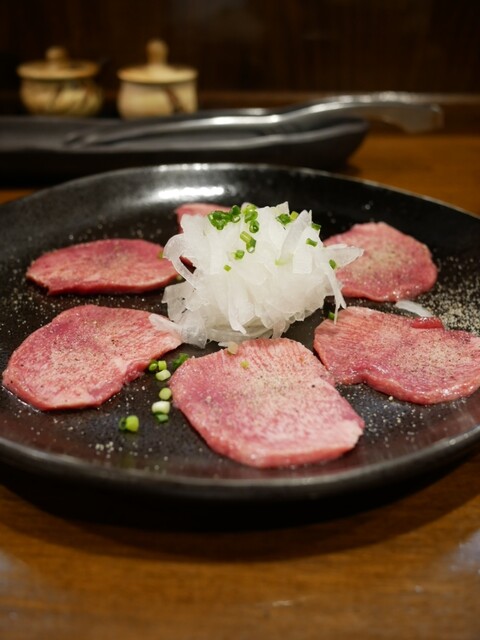
Approaching a house-style yakiniku room in Ishigaki changes the scale of dinner. The island’s beef reputation is often sold through steak counters and resort dining rooms, but charcoal grilling puts the conversation closer to the table: smoke, shared plates, and the rhythm of cuts arriving in a sequence controlled by appetite rather than ceremony. Sumibi Yakiniku Yamamoto belongs to that more local, more tactical side of Ishigaki dining, where the value of the meal depends on sourcing, trimming, heat, and how quickly prized cuts leave the kitchen.
Ishigaki sits at an unusual intersection in Japanese beef culture. The island raises cattle in a subtropical climate, while Okinawan dining also has a long comfort with offal, pork, awamori, and grill-driven informality. Yakiniku on the island therefore reads differently from a polished urban wagyu room in Tokyo or Osaka. The point is not hushed luxury; it is access to beef in a place where cattle are part of the local food economy. That is why the restaurant’s Tabelog 100 Yakiniku WEST 2025 selection matters: it places a small Ishigaki address inside a western Japan list that usually favours denser dining cities.
Charcoal beef, tripe, and the Ishigaki sourcing question
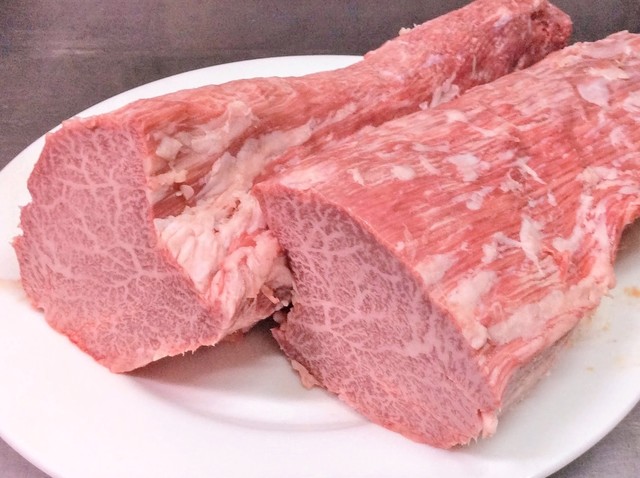
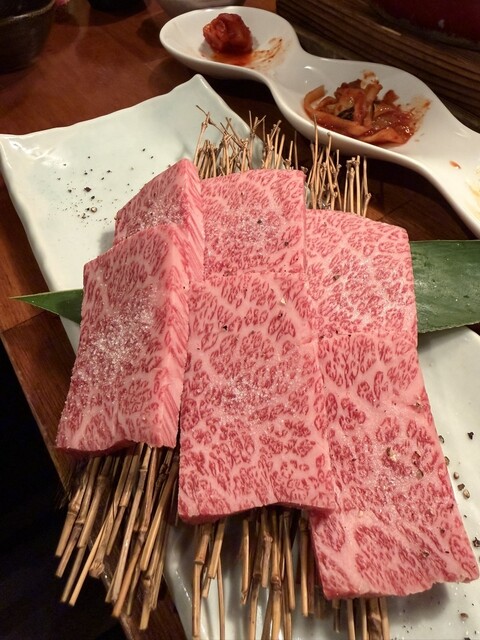
Yakiniku is a cuisine of procurement as much as cooking. The grill is deliberately simple, so the restaurant’s judgement is exposed in the buying, slicing, portioning, and timing. Here, the listed categories are yakiniku and tripe, a pairing that signals a broader view of beef than tender cuts alone. In Japan, a serious yakiniku table often treats offal as part of the measure of the house: it demands freshness, careful cleaning, and confidence from diners who understand texture as much as marbling.
The island context sharpens that point. Visitors tend to arrive in Ishigaki primed for seafood, Yaeyama soba, tropical fruit, and beef, but the stronger meals usually avoid treating those ingredients as souvenirs. A grill house can be more revealing than a steakhouse because it breaks beef into decisions: leaner cuts, richer cuts, organ meats, and the pace of ordering. The restaurant’s own reservation note warns that upper cuts, harami, and grilled shabu-shabu may sell out, which is useful intelligence. It suggests demand concentrates around specific beef categories rather than a generic all-purpose menu.
The price range also frames expectations. At JPY 6,000–7,999 for dinner, this sits above casual Ishigaki standards but below the island’s more expensive steakhouse bracket. Among named local comparisons, Corners Grill is listed at JPY 2,000–2,999, while Steak Restaurant Papoiya is listed at JPY 10,000–14,999. Hitoshi Honten, a different kind of Ishigaki dining reference point, is listed at JPY 3,000–3,999. That leaves Sumibi Yakiniku Yamamoto in a middle-premium band: not cheap, not ceremonial, and better judged by ingredient access than by formality.
The room favours groups, families, and quick decisions
Format is more functional than theatrical. There are 48 seats, including counter seating, tables, and raised seating, with private rooms for groups of 8 and 10–20. That configuration matters in Ishigaki, where many visitors dine in pairs after day trips, while local meals often run through families and friend groups. A 90-minute time limit keeps the meal moving, and the non-smoking policy changes the comfort level for travellers who avoid older-style grill rooms.
Children are explicitly accommodated, with child chairs and stroller access at table seating. That does not make the room casual in the low-cost sense; the dinner spend is closer to a planned meal. But it does make the experience easier to fit into an Ishigaki itinerary than a tasting-menu restaurant or a counter with rigid pacing. Shochu and wine are listed, which is also telling. Yakiniku in Okinawa can tilt toward beer and spirits, but wine at this level suggests diners are not treating beef as a snack before a second dinner.
Recognition adds discipline to the reading. The restaurant has appeared repeatedly in Tabelog’s Yakiniku 100 selections, including 2018, 2019, 2020, 2021, 2022, 2023, and 2025, with a Grill WEST selection in 2024. Tabelog scores should never be read as universal truth, but a 3.63 score and recurring list selection indicate sustained local and traveller attention rather than a single-season spike. In a tourism-heavy island market, that continuity carries weight.
Where it fits in an Ishigaki eating plan
Ishigaki rewards a sequence rather than a single headline meal. Beef, tuna, soba, gelato, island cafés, and beach-adjacent casual stops all play different roles. For a broader map, Our full Ishigaki restaurants guide is the stronger starting point, with nearby dining references such as Hitoshi Honten, Akaishi Shokudou, Amuritano-niwa, and Hau Tree Gelato showing how varied the island’s dining circuit can be.
The decision is simple: choose this meal when beef is the point and charcoal cooking is preferable to a plated steak format. Choose elsewhere when the night calls for tuna, noodles, or a lower spend. The restaurant’s relocation from Misakicho to Hamasakicho also places it in a practical urban part of Ishigaki rather than a remote resort setting, which suits the style. This is island beef without the resort narrative, and that is its advantage.
Travellers building a fuller itinerary can pair the restaurant plan with Our full Ishigaki hotels guide, Our full Ishigaki bars guide, Our full Ishigaki wineries guide, and Our full Ishigaki experiences guide. For broader Japan and overseas dining context, EP Club also tracks formats as varied as -Grilled beef Sukiyaki- KAMAKURA TANUKIAN 鎌倉 たぬき庵 in Kamakura,. 鮪と炭火焼き うお炭 秋葉原店 in Tokyo,.cafe in Osaka,.know in Kumamoto, (Shoku) Vietnam in Kawasaki, [Curry Senmon Ten] Maruyama Kyoju. in Sapporo, Jōdo Saké Bar in Los Angeles, and Onigiri Time in Pasadena.
Comparable Spots, Quickly
Comparable venues by cuisine and price in the same metro.
| Venue | Cuisine | Price | Awards | Notes |
|---|---|---|---|---|
| Sumibi Yakiniku YamamotoThis venue — the venue you are viewing | Charcoal-grilled Ishigaki beef yakiniku | $$$ | , | |
| Akaishi Shokudou | Okinawan Yaeyama Soba | $$ | , | Ibaruma |
| Nakayoshi Shokudo (なかよし食堂) | Okinawan Yaeyama Soba | $$ | , | Shin-eicho |
| Hau Tree Gelato | Ishigaki Island Fruit Gelato | $$ | , | Okawa |
| Corners Grill | Ishigaki beef steak & burger grill | $$ | , | Okawa |
| Shunya Ban Chan | Island Japanese set meals & breakfast | $$ | , | Shiraho |
Continue exploring
More in Ishigaki
Restaurants in Ishigaki
Browse all →
At a Glance
- Lively
- Cozy
- Classic
- Iconic
- Energetic
- Group Dining
- Family
- Casual Hangout
- Celebration
- Date Night
- Private Dining
- Standalone
- Local Sourcing
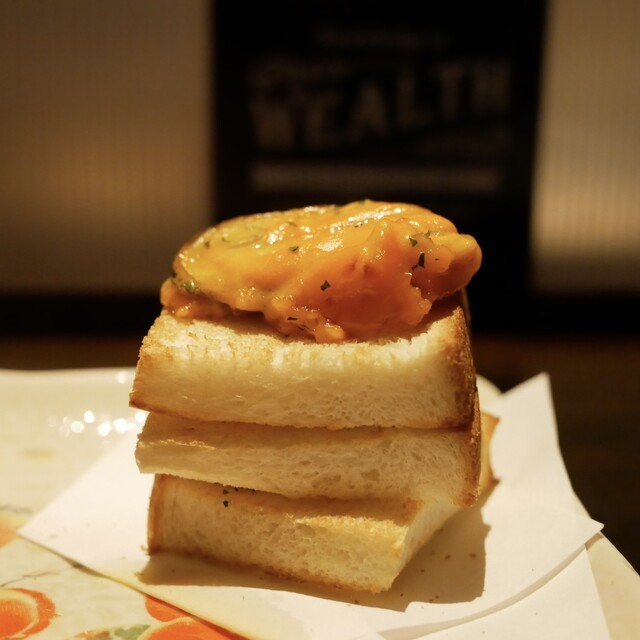
Bustling, down-to-earth yakiniku house inside a standalone residence, with counter seats and tatami raised seating creating a warm, cozy atmosphere that feels energetic and casual rather than formal.