Hemelhuijs
Hemelhuijs on Waterkant Street occupies a particular position in Cape Town's daytime dining scene: a room where the visual language of the space and the logic of the menu speak the same considered aesthetic. Operating in the City Centre, it draws a crowd that arrives as much for the atmosphere as for what ends up on the plate, making it a useful reference point for understanding how Cape Town's café-restaurant category has matured.
Pearl is the En Primeur Club membership app — saves, bookings, and concierge access live there. Same editors, same standards.
- Address
- 71 Waterkant St, Cape Town City Centre, Cape Town, 8001, South Africa
- Phone
- +27 75 284 7053
- Website
- hemelhuijs.co.za
- Directions
- Get directions
 Saves & bookings on Pearl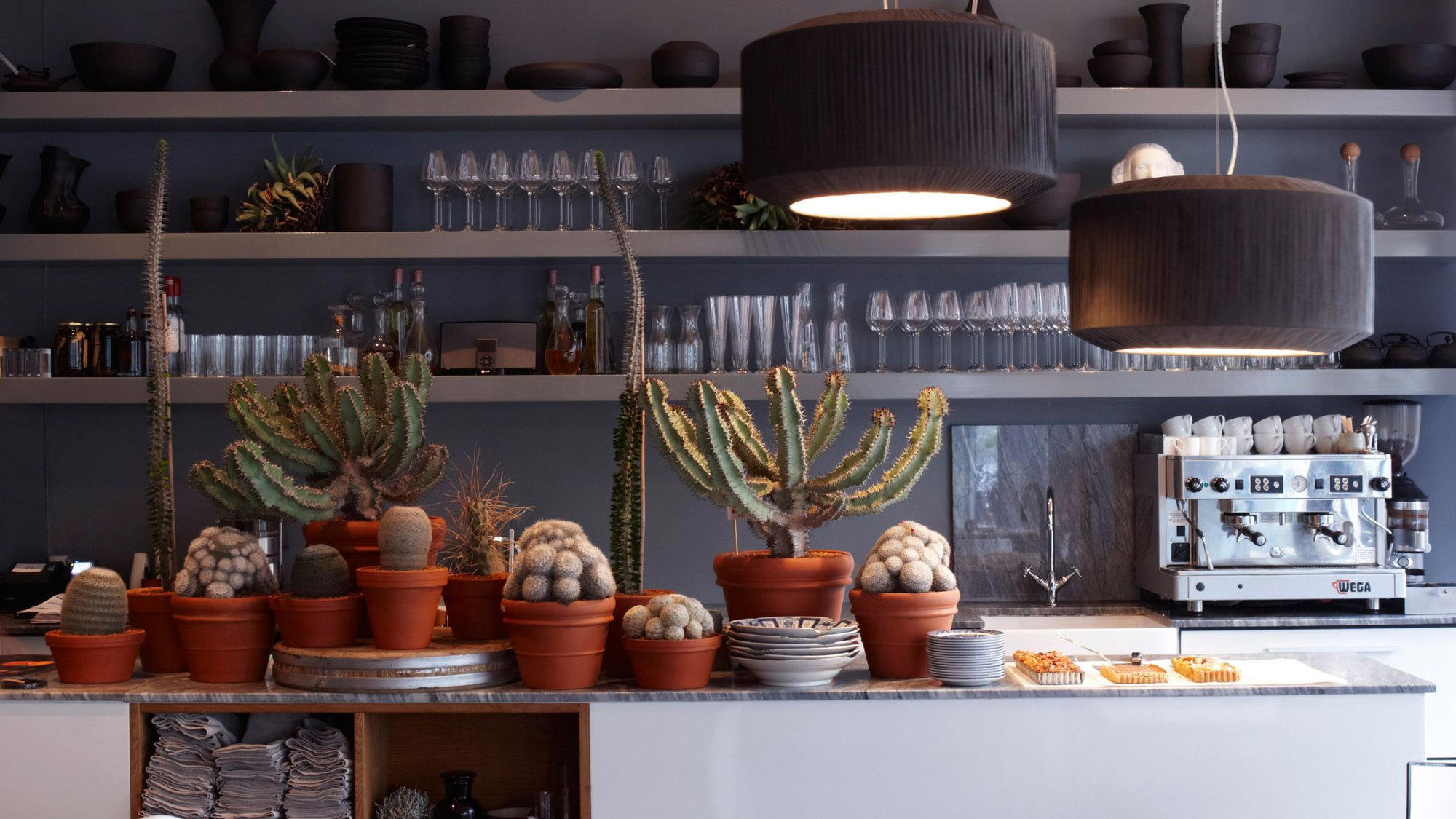
Waterkant Street and the Grammar of Daytime Dining
Cape Town's City Centre has spent the past decade sorting itself into distinct dining registers. The evening fine-dining tier, represented by restaurants like Fyn, La Colombe, and The Test Kitchen, operates on reservation-heavy, tasting-menu logic. Below that, a more interesting middle category has emerged: all-day or daytime restaurants where the ambition is applied not to elaborate multi-course sequences but to the coherence of a shorter, more considered menu served in a room that does real aesthetic work. Hemelhuijs is a Modern South African Cafe at 71 Waterkant St, Cape Town City Centre, Cape Town, 8001, South Africa.
The address itself signals intent. Waterkant sits at the edge of the De Waterkant neighbourhood, where converted Victorian terraces and newer retail units share blocks with design studios and architectural practices. It is not the obvious tourist corridor, and that positioning matters. The crowd that finds its way to Hemelhuijs tends to arrive with some prior knowledge, which sets a different ambient register than the high-footfall spots along the V&A; Waterfront.
How the Menu Is Organised, and What That Reveals
The clearest way to read Hemelhuijs is through the architecture of its menu rather than through any single dish. Daytime restaurant menus in Cape Town broadly fall into two categories: the broad, café-style list that tries to cover every appetite from pastry through to full plates, and the tighter, more edited format that sacrifices range for coherence. Hemelhuijs operates closer to the latter model. The menu reads as a set of considered decisions about what the kitchen does well and what the room is for, rather than an attempt to appeal to the widest possible audience.
This kind of editorial restraint is more common in European café culture, particularly in cities like Amsterdam and Copenhagen, than it has historically been in South Africa's restaurant scene. That Cape Town now has multiple venues operating in this register reflects a broader shift in how the city's dining public thinks about the midday meal: less as fuel, more as an occasion with its own aesthetic expectations. 95 at Parks represents a comparable sensibility in a different neighbourhood, which suggests the pattern is city-wide rather than venue-specific.
The menu's structure at Hemelhuijs prioritises produce sourcing and seasonal availability over fixed signature items, which means the offering shifts rather than staying static across months. This is the same logic applied at destination restaurants well beyond South Africa's borders, including places like Wolfgat in Paternoster, where the local and seasonal constraint functions as both a creative framework and a quality signal. At Hemelhuijs, it operates at a more accessible price point and in an urban daytime context, but the underlying editorial logic shares something with that approach.
The Room as Argument
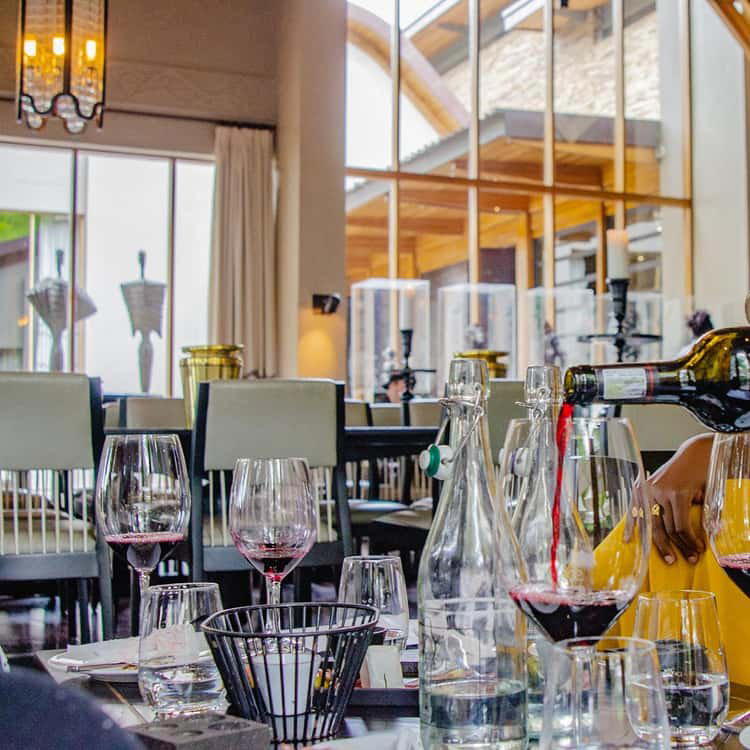
Describing the physical environment at Hemelhuijs requires some precision, because the space is doing something deliberate. Cape Town's premium daytime restaurants divide between those that inherit a generic hospitality aesthetic (marble surfaces, exposed filaments, open kitchens performing confidence) and those that apply a more specific point of view to the interior. Hemelhuijs belongs to the second group. The room references mid-century design without pastiche, uses natural light as a structural element rather than an afterthought, and treats tableware as part of the total aesthetic statement. In practice, this means the experience of sitting in the space is different from the experience of reading a menu description of it.
For the Cape Town dining scene more broadly, this matters because it positions Hemelhuijs within a comparable set that is defined less by cuisine type and more by sensibility. Salsify at the Roundhouse and Le Quartier Français in Franschhoek both demonstrate how South African restaurants at various price points are increasingly making the room itself an editorial statement rather than a neutral container for food. Hemelhuijs does this in the daytime café register, which is the harder version of the problem.
Cape Town's Daytime Restaurant Tier in Wider Context
Seen against the full spectrum of South African restaurant culture, Hemelhuijs occupies a niche that is underrepresented in the national conversation. South Africa's most-discussed restaurants skew toward either the destination fine-dining model (Wolfgat, La Colombe, Fyn) or the informal township-cuisine revival. The considered daytime restaurant, operating with edited menus, design-led interiors, and produce-first sourcing, does not generate the same volume of awards coverage or international press. That makes venues like Hemelhuijs harder to categorise in a system built around dinner-service metrics, but it does not make them less significant to how a city actually eats.
For context, the equivalent category in other cities produces particularly locally meaningful dining addresses: Le Bernardin in New York is at the far formal end of the spectrum, while Lazy Bear in San Francisco shows how considered format and communal intent can define a restaurant's identity as much as its food. Hemelhuijs operates at a different scale and price register than either, but the principle that format and environment carry as much meaning as the menu applies across all three.
Elsewhere in South Africa, the restaurant scene is developing its own version of this sensibility at different urban scales. Foundry in Sandton, Sympathy's in Johannesburg, and Capito in Pretoria each represent a local interpretation of the considered-room, edited-menu format. For visitors building a broader picture of South African dining, experiences like Silvan Safari Lodge in Kruger, Londolozi Game Reserve, and Ellerman House in Bantry Bay show how the same design-led, food-serious sensibility extends across accommodation formats. Wine travellers looking beyond Cape Town might find Delheim Wine Estate in Stellenbosch a useful counterpoint in the winelands. Wolfgat in Saldanha Bay extends the same coastal-sourcing logic further up the West Coast.
Planning a Visit
Hemelhuijs operates as a daytime restaurant, which means the visit calculus is different from an evening fine-dining booking. Arriving mid-morning to late lunch covers the window where the room works well and the menu operates across its full range. The Waterkant Street address is walkable from the City Bowl and the De Waterkant neighbourhood, and close enough to the V&A; Waterfront that it fits logically into a morning or afternoon in that part of the city. The venue is compact, and peak weekend periods fill the space quickly, so arriving with some flexibility in timing is advisable.
Credentials Lens
Comparable venues nearby, for context on price, style, and recognition.
| Venue | Cuisine | Price | Notes |
|---|---|---|---|
| HemelhuijsThis venue — the venue you are viewing | Modern South African Cafe | $$ | Not listed |
| Den Anker | Belgian Seafood Brasserie | $$ | Schotschekloof |
| Lievita | Authentic Neapolitan Pizza & Pasta | $$ | Schotschekloof |
| Pizza Connection | Contemporary Neapolitan Pizza | $$ | Woodstock |
| Greenhouse Restaurant Constantia | Modern African Fine Dining | $$$$ | Constantia |
Continue exploring
More in Cape Town
Restaurants in Cape Town
Browse all →
Bars in Cape Town
Browse all →
Hotels in Cape Town
Browse all →
At a Glance
- Elegant
- Modern
- Cozy
- Intimate
- Brunch
- Casual Hangout
- Open Kitchen
- Craft Cocktails
- Local Sourcing
Current opening hours
- Monday
- 9 AM–4 PM
- Tuesday
- 9 AM–4 PM
- Wednesday
- 9 AM–4 PM
- Thursday
- 9 AM–4 PM
- Friday
- 9 AM–4 PM
- Saturday
- 9 AM–3 PM
- Sunday
- Closed
Hours can change for holidays and private events. Last verified .
Stylish, modern interior with seasonal color changes like blush pink or burgundy, whimsical fresh flowers, light wood, black accents, terracotta walls, and handmade ceramics creating a cozy, artistic oasis.