Hakata TonTon
Hakata TonTon on Mott Street brings the pork-centric izakaya tradition of Fukuoka's Hakata district to the edge of Manhattan's Chinatown. The kitchen focuses on horumon, offal cuts and collagen-rich pork parts, that sit largely outside the mainstream Japanese dining options available across the city. It occupies a specific niche in New York's Japanese restaurant scene, where nose-to-tail pork cooking remains underrepresented relative to sushi and ramen.
Pearl is the En Primeur Club membership app — saves, bookings, and concierge access live there. Same editors, same standards.
- Address
- 43 Mott St, New York, NY 10013
- Phone
- +12125772888
- Website
- hakatatonton.net
- Directions
- Get directions
 Saves & bookings on Pearl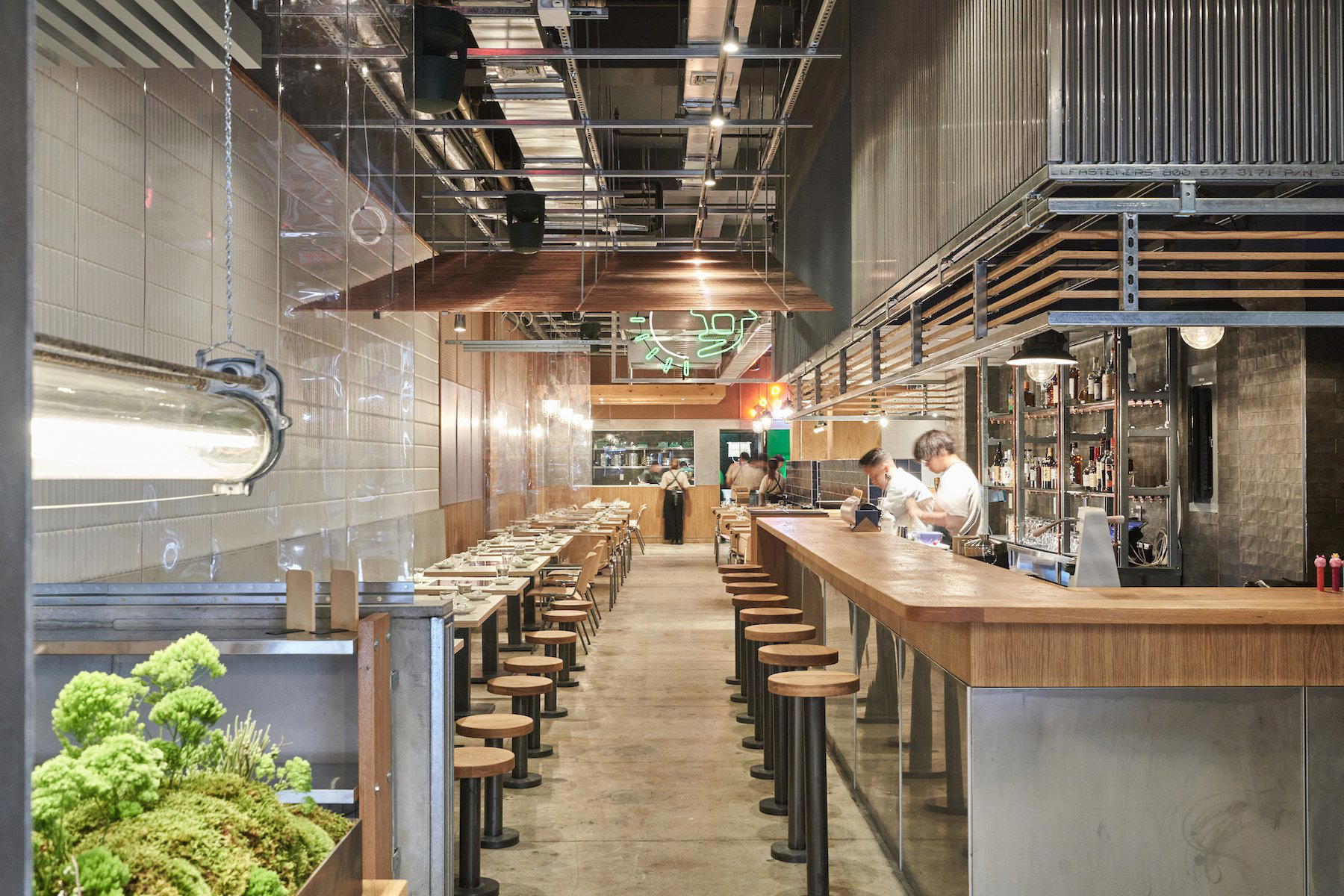
Mott Street and the Izakaya Gap in New York's Japanese Scene
Walk south through Chinatown toward the bottom of Mott Street and the signage shifts from Cantonese characters to a mix of languages that reflects the neighbourhood's layered immigration history. At 43 Mott St, Hakata TonTon occupies a position in Chinatown that gives it a distinct identity. The room reads as a compact izakaya: functional, undecorated in any deliberate design sense, and built around the logic of eating with drinks rather than dining as a formal event.
That framing matters because it shapes the entire experience, including how the day divides. Japanese izakaya formats traditionally distinguish between lunch service, tighter menus, faster pacing, value-oriented sets, and evening service, which expands into the full range of small plates and ordering sequences that the format was designed for. Hakata TonTon follows that general pattern. The Mott Street address draws a lunch crowd that skews toward the neighbourhood's working population and downtown regulars who know the spot; evenings pull a more deliberate dining audience who have come specifically for the horumon-focused menu.
The Horumon Tradition and What It Means on This Menu
Hakata, the commercial and culinary heart of Fukuoka Prefecture on Kyushu, has a distinct food identity within Japan. While Tokyo is associated with high-precision kaiseki and refined sushi counters, the tier where venues like Masa operate, and Osaka with its street food directness, Hakata's contribution to Japanese culinary culture is earthier: the tonkotsu ramen that became a global export, and the izakaya-grilled offal tradition that largely did not travel. Horumon cooking, the preparation of pork intestine, stomach, and other organ cuts, is deeply embedded in Hakata's working-class food culture, and Hakata TonTon takes its name directly from that lineage.
In New York's Japanese dining spectrum, this places the restaurant in an unusual position. The city's high-end Japanese tier is dense and well-documented, with tasting menus and omakase counters generating most of the critical attention. Atomix and Jungsik New York represent the progressive end of Asian fine dining in Manhattan; Le Bernardin and Per Se anchor the French fine dining comparison set. The restaurant operates at a significant distance from all of those, in both price point and register. It is not competing with tasting menus. It competes with a much smaller pool: the handful of New York restaurants that take Japanese nose-to-tail pork cooking as their primary subject.
Lunch Versus Dinner: Two Different Propositions
The lunch-versus-dinner divide at an izakaya-style restaurant in this neighbourhood carries practical meaning. Lunch at the restaurant functions as a more contained proposition, useful for someone eating solo or in a small group near Chinatown, looking for a specific kind of Japanese comfort cooking at a price point that does not require planning. The format at midday tends toward efficiency: the kitchen runs through its core preparations, portions are sized for a single sitting, and the room turns over at a pace consistent with the surrounding lunch-hour foot traffic.
Evening service is a different register. The izakaya framework means ordering unfolds progressively, drinks arrive alongside food rather than as a separate ritual, and the horumon preparations that define the menu's identity become the main event. For a visitor who has not eaten this style before, the evening is the better introduction: more time to work through unfamiliar cuts, more opportunity to ask about the preparation logic, and the general loosening of pace that izakaya culture is built around. The Mott Street location means the surrounding neighbourhood is quiet enough by mid-evening that the room feels more contained than a comparable spot in the East Village or Midtown would.
Where This Fits in the Wider New York Restaurant Picture
New York's Japanese restaurant ecosystem has expanded significantly in the past decade, but the expansion has been uneven. Premium formats, omakase, kaiseki, high-end ramen, have multiplied and matured. The izakaya tier has grown, but the specifically Hakata-derived, offal-focused version of that tradition remains thin on the ground. That gap is what gives the restaurant its continued relevance. It is not especially refined Japanese restaurant in the city, nor does it position itself that way. What it offers is a degree of specificity, a regional Japanese food tradition rendered in a format that the broader market has not crowded.
For readers whose reference points are the destination restaurants catalogued across the US fine dining circuit, Alinea in Chicago, The French Laundry in Napa, Blue Hill at Stone Barns in Tarrytown, or Providence in Los Angeles, the restaurant occupies a completely different category of the dining hierarchy. The comparison is not useful. The more instructive frame is the broader izakaya tradition across Japanese cities, where this type of room is unremarkable in the leading sense: common, specific, reliable, and built for repeat use rather than occasion dining.
The restaurant sits in a specific part of the city's Japanese dining map, not near the headline omakase counters, but filling a gap those counters have no interest in occupying. That is a meaningful kind of usefulness.
Planning a Visit
The Mott Street address puts the restaurant in walking distance of the Canal Street subway station, served by the J, Z, N, Q, R, W, and 6 lines, making it accessible from most Manhattan neighbourhoods without a transfer. The compact room size, typical of the izakaya format, which prioritises intimacy over capacity, means that evening visits, particularly on weekends, benefit from advance planning even if the booking process is informal. Lunch on weekdays tends to be more readily available. Contacting the restaurant directly before a first visit is advisable, particularly for groups larger than two or three.
Style and Standing
Comparable venues nearby, for context on price, style, and recognition.
| Venue | Cuisine | Price | Notes |
|---|---|---|---|
| Hakata TonTonThis venue — the venue you are viewing | Hakata-style Japanese Izakaya | $$ | Not listed |
| Wagamama | Modern Pan-Asian with Japanese Inspiration | $$ | Midtown South-Flatiron-Union Square |
| Sake Bar By Zabb | Japanese Izakaya | $$ | Elmhurst |
| Umi | Japanese Sushi | $$ | Fresh Meadows |
| Ramen Setagaya | Traditional Japanese Ramen | $$ | East Village |
| Okiboru House of Tsukemen | Japanese Tsukemen & Ramen | $$ | Lower East Side |
Continue exploring
More in New York City
Restaurants in New York City
Browse all →
Bars in New York City
Browse all →
Hotels in New York City
Browse all →







At a Glance
- Intimate
- Cozy
- Group Dining
- Casual Hangout
- Open Kitchen
- Sake Program
Current opening hours
- Monday
- 5–10 PM
- Tuesday
- 5–10 PM
- Wednesday
- 5–10 PM
- Thursday
- 5–10 PM
- Friday
- 5–11 PM
- Saturday
- 5–11 PM
- Sunday
- 5–10 PM
Hours can change for holidays and private events. Last verified .
Cozy and intimate small space with an authentic, low-profile address atmosphere popular among Japanese diners.