Okiboru House of Tsukemen


Our verdict
On Orchard Street in the Lower East Side, Okiboru House of Tsukemen has earned Opinionated About Dining recognition for a format that remains rare in New York: tsukemen, the dipping-style ramen where thick, complex broth arrives separately from the noodles. The tontori and the signature tsukemen are the benchmarks, drawing.

Pearl is the En Primeur Club membership app, where members save venues, book tables and use the concierge.
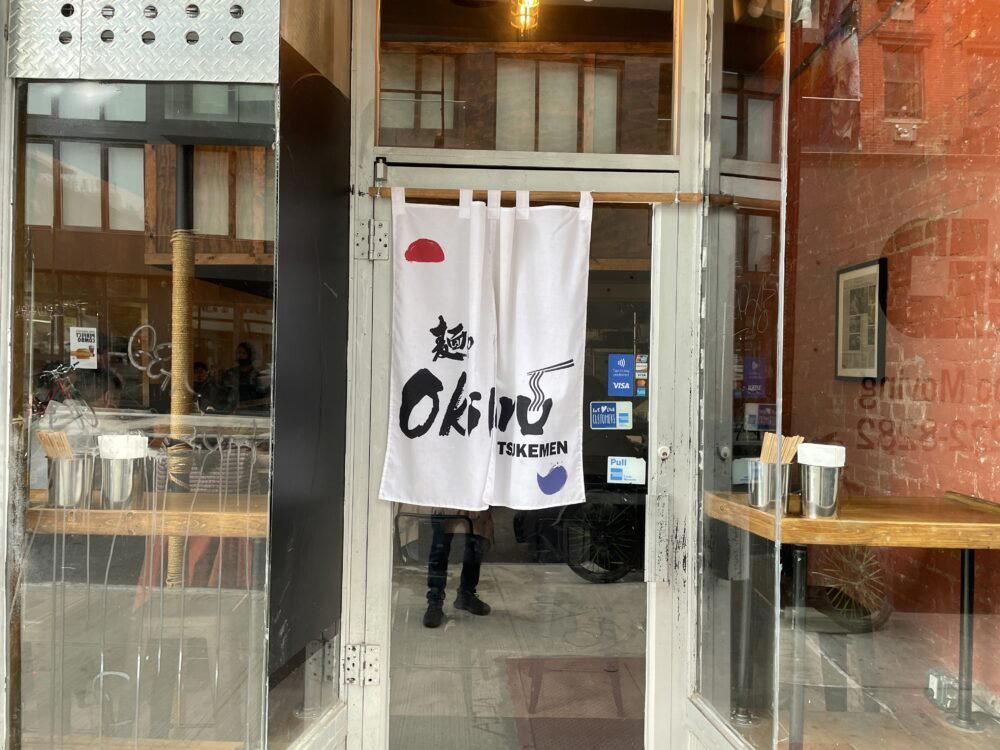
Where Tsukemen Found Its New York Address
The Lower East Side has spent the better part of two decades cycling through restaurant formats, from Jewish deli survivors to small-plates concepts to the wave of Japanese specialists that took hold in the 2010s. Ramen arrived in that wave, but tsukemen, the dipping variant where noodles and broth are served separately, remained a minority format in a city that defaulted to tonkotsu and shoyu bowls. Okiboru House of Tsukemen, at 117 Orchard Street, sits at the centre of that narrower niche, operating in a city where the tsukemen counter is still an uncommon proposition outside of a handful of specialists.
The format itself deserves context. In standard ramen, noodles cook and rest in broth, absorbing liquid and softening over time. In tsukemen, the noodles arrive drained, usually at room temperature or slightly chilled, and are dipped into a separate, smaller vessel of concentrated broth before each bite. Because the broth never dilutes from noodle contact, it can be far thicker and more intense than a standard bowl, functioning almost as a sauce rather than a soup. The result demands a different calibration from the kitchen: the broth must carry enough depth to coat without overwhelming, and the noodles need enough structural integrity to hold up to repeated dipping.
What Opinionated About Dining Recognised
In 2025, Okiboru received a two-star listing in Opinionated About Dining's Cheap Eats in North America guide. OAD's Cheap Eats category operates as a serious critical tier, not a budget-food consolation bracket, and a two-star placement in that list signals a level of execution that holds up to direct comparison with named peers across the continent. The citation is specific: the tsukemen broth is described as mole-esque in thickness and complexity, the tontori (pork and chicken broth) as milky and rich, and the vegetarian version as carrying equivalent impact. The language around healing powers is the kind of shorthand critics use when a bowl delivers physiological comfort, not just flavour.
For context, the New York ramen scene has several well-regarded participants. Hide-Chan on the East Side runs a tonkotsu program with strong recognition; Momosan Ramen & Sake brings a celebrity-chef profile to the format; Nakamura Ramen operates with a more minimal, broth-forward identity; and Tonchin New York imports a Tokyo pedigree.
The Bowl in Practice
The tsukemen format at Okiboru is built around broth concentration rather than volume. The OAD citation's comparison to mole, a sauce that can involve dozens of components and hours of reduction, points toward a kitchen that treats its dipping broth as a finished product in its own right rather than a backdrop for noodles and toppings. Mole-esque thickness implies body from rendered fats, gelatin from long-simmered bones, and a complexity of background flavour that takes successive dips to read fully.
The tontori option, combining pork and chicken broth, follows a different trajectory. Where the signature tsukemen broth tends toward dark intensity, tontori broths typically achieve richness through emulsification, the fat and collagen from both proteins creating an opaque, creamy consistency. The OAD description of milky and rich confirms that approach. The vegetarian bowl earning equal recognition from the citation is a meaningful signal: vegetarian ramen is often the version that reveals where a kitchen is working around limitations rather than working from strength. When it carries equivalent wallop, the technique is transferable rather than protein-dependent.
Chef Justin Lim leads the kitchen. In a format as repetitive and technically exacting as ramen, where the same broth must cook to the same consistency service after service, kitchen leadership matters in ways that differ from more improvisational cooking environments.
Where This Sits in the New York Spectrum
New York's food-critical attention concentrates heavily on fine dining, and names like Alinea in Chicago, The French Laundry in Napa, Providence in Los Angeles, Lazy Bear in San Francisco, and Single Thread Farm in Healdsburg frame the national conversation around the very best of the price and ambition ladder. The OAD Cheap Eats framework deliberately refuses that framing. It applies the same critical rigour to low-price-point specialists and argues, consistently, that execution at $15 deserves the same evaluative seriousness as execution at $300. Okiboru's two-star placement is an argument of that kind.
Within the Lower East Side specifically, the density of Japanese food options is high relative to most New York neighbourhoods, but tsukemen counters remain thin. TabeTomo adds to the neighbourhood's Japanese casual dining options, but the dipping-noodle format is not a default setting in Manhattan the way it is in Tokyo's ramen districts, where dedicated tsukemen shops draw lines that rival the most followed tonkotsu houses.
For comparison, the Tokyo tsukemen scene, anchored by houses like Afuri in Tokyo, operates with a format discipline and broth obsession that translates imperfectly when exported. Afuri's Portland outpost is one of the few US examples that has retained the original's precision. Okiboru, earning its OAD recognition on Orchard Street, makes a comparable case for the Lower East Side.
For those building out a New York itinerary beyond food, our full New York City hotels guide, bars guide, wineries guide, and experiences guide cover the rest of the city. The full New York City restaurants guide maps Okiboru against the broader dining field.
Know Before You Go
- Address: 117 Orchard St, New York, NY 10002 (Lower East Side)
- Recognition: Opinionated About Dining Cheap Eats in North America, 2-star (2025)
- Format: Tsukemen specialist, noodles and dipping broth served separately
- Key bowls: Tsukemen (signature dipping broth), tontori (pork and chicken), vegetarian
- Neighbourhood: Lower East Side, Manhattan; walkable from Essex Street and Delancey Street subway stops
Frequently asked questions
What type of food is Okiboru House of Tsukemen known for?
Who runs the kitchen at Okiboru House of Tsukemen?
The chef associated with Okiboru House of Tsukemen is Justin Lim.
What should I eat at Okiboru House of Tsukemen?
The tsukemen is the centrepiece: noodles served separately alongside a dipping broth that Opinionated About Dining describes as mole-esque in thickness and complexity. The tontori, a pork-and-chicken broth bowl, runs milky and dense. A vegetarian option is also available, and OAD's 2025 two-star citation notes that each bowl, regardless of format, delivers serious weight.
What's Okiboru House of Tsukemen's location?
Okiboru House of Tsukemen is located at 117 Orchard St, New York, NY 10002, New York City.
What awards or recognition does Okiboru House of Tsukemen have?
Okiboru House of Tsukemen has received recognition including: Opinionated About Dining Cheap Eats in North America (2025); ★★ The bowls of ramen here have healing powers. The tsukemen itself, served with a dipping broth that is mole-esque in thickness and complexity, is savory and satisfying, while th….
Should I book Okiboru House of Tsukemen in advance?
Okiboru is located at 117 Orchard St on the Lower East Side. No phone or online reservation link is listed in current public records, which typically signals a walk-in format. Given the OAD two-star recognition in 2025, expect lines during peak lunch and dinner hours, particularly on weekends.
What is Okiboru House of Tsukemen known for?
Okiboru earned a two-star listing in Opinionated About Dining's 2025 Cheap Eats in North America guide, one of the more credible critical benchmarks for serious, affordable eating on the continent. The kitchen, led by Justin Lim, built its reputation on tsukemen: a format that prioritises broth concentration over volume, producing bowls with a depth that OAD placed above the standard Lower East Side ramen field.
Comparable Spots, Quickly
| Venue | Cuisine | Price | Awards | Notes |
|---|---|---|---|---|
| Okiboru House of TsukemenThis venue (the venue you are viewing) | Japanese Tsukemen & Ramen | $20–30 | Not listed | Not listed |
| Le Bernardin | French Seafood Fine Dining | $300–500 | 3 Michelin Stars · World's 50 Best #13 | French, Seafood |
| Atomix | Modern Korean Tasting Menu | $300–500 | 2 Michelin Stars · World's 50 Best #7 | Modern Korean, Korean |
| Masa | Seasonal Hokkaido Tempura Omakase | $150–200 | Tabelog 100 #34 | Sushi, Japanese |
| Per Se | French Fine Dining Tasting Menu | $300–500 | 3 Michelin Stars · World's 50 Best #40 | French, Contemporary |
| Eleven Madison Park | Contemporary Plant-Based Fine Dining | $300–500 | 3 Michelin Stars · World's 50 Best #4 | French, Vegan |
Recognition history
Dated appearances from independent guides and award organizations, with the underlying list record or original source where available.
New York Times Best Restaurants in New York City #86
New York Times
Opinionated About Dining Cheap Eats in North America
Opinionated About Dining
Full recognition history (3 entries)
New York Times Best Restaurants in New York City
New York Times