
Asakusa’s dumpling culture is built on quick meals, compact rooms, and old Tokyo pragmatism rather than ceremony. Gyoza no Ousama fits that tradition with a 31-seat house-restaurant format, counter seating, take-out, and recognition in Tabelog’s Dumplings 100 selection for 2019, 2021, and 2024.
Pearl is the En Primeur Club membership app — saves, bookings, and concierge access live there. Same editors, same standards.
- Address
- 1 Chome-30-8 Asakusa, Taito City, Tokyo 111-0032, Japan
- Phone
- +81 3-3841-2552
- Website
- asakusanioideyo.com
 Saves & bookings on Pearl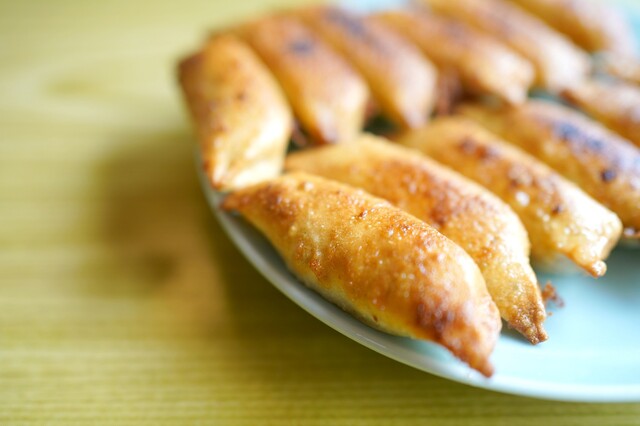
Asakusa does not need dining theatre. Around temple streets and station exits, stronger food addresses announce themselves by repetition: a short queue, tight doorway, griddle smell, regulars who know the drill. Here, dumplings make cultural sense. Gyoza belongs to Tokyo’s fast-comfort vocabulary, between Chinese influence and Japanese everyday eating, as natural beside ramen as beside beer, sake, or shochu.
Gyoza no Ousama is an older urban type: a compact house restaurant, not a designed dining room. The format matters because dumplings reward pace, not ceremony or long tableside explanation; they depend on heat, turnover, and a kitchen repeating the same small act with discipline. In Asakusa, where visitors seek Edo nostalgia and find a working district beneath it, this address reads the area more clearly than another polished room.
Asakusa dumpling culture, without the performance layer
Tokyo’s gyoza scene splits into ramen-shop side orders, drinking snacks, old Chinese-Japanese canteens, and specialist counters where dumplings drive the visit. Gyoza no Ousama sits in that specialist lane, with dumpling, Chinese, and ramen categories attached. Its selection for Tabelog’s Dumplings 100 in 2019, 2021, and 2024 is a useful signal in a city where casual restaurants can be harder to read than luxury counters.
Read that recognition correctly. Tabelog’s Hyakumeiten lists are not Michelin-style fine-dining verdicts; they are category-specific maps of where Japanese diners pay attention. For dumplings, that matters. The category is broad, inexpensive by Tokyo standards, and judged by local repeat use more than destination tasting-menu logic. A 3.49 score here means something different from the same number at a reservation-only restaurant: consistency inside a crowded everyday field, not luxury positioning.
The 31-seat room, with a second floor and counter seating, fits a practical Tokyo lineage. Small restaurants in older commercial districts often solve volume vertically or through direct service. Counter seats suit solo diners and quick pairs; upstairs seating adds elasticity without changing the rhythm. Take-out is another clue. This is not built only for visitors; it works as a neighbourhood utility, where gyoza often tastes most convincing as culture.
Why the value equation matters in Tokyo's casual dining tier
Tokyo can make inexpensive food feel as competitive as luxury dining. Casual categories, curry, ramen, soba, tonkatsu, yakitori, gyoza, are dense with specialists, and the margin between ordinary and memorable often lies in narrow operational details, not spectacle. In that context, an Asakusa dumpling address needs no chef mythology. The point is repetition, access, and a price tier that keeps the meal everyday.
That is where this stop differs from nearby peers. Kibun Zushi, in Tokyo, sits in a higher sushi budget band, while Larousse and Asakusa Sanboa occupy more expensive dining territory. Royal Coffee Ten Honten is the café lane at the other end of the spend spectrum. Gyoza no Ousama is better read against category specialists than formal restaurants: a focused dumpling-and-casual-Chinese meal in Asakusa, not a full evening of service choreography.
For travellers building a Tokyo food day, compare not only restaurant versus restaurant but tempo versus tempo. Sushi asks for attention; yakitori asks for a run of skewers and drinks; gyoza can sit between temple walking, shopping streets, and a second meal elsewhere. That flexibility is central to the cuisine’s role in Japan. Gyoza can be lunch, drinking food, a ramen companion, or a late-plan substitute when reservations fail. The specialist version simply gives the category more weight.
How to fold it into a Tokyo itinerary
Asakusa rewards eating in fragments. The visitor circuit pulls toward snack stalls and sweets, but stronger savoury meals often sit slightly apart from the postcard neighbourhood. The restaurant works as a compact anchor: small enough to pair with a wider day, recognized enough to justify the detour, and casual enough not to distort the schedule. The nearest-station note is Asakusa Station, keeping it in the main visitor orbit without making it a hotel-dining decision.
The practical read is simple: treat it as a focused gyoza stop, not a long-form restaurant night. Credit cards are accepted; electronic money and QR code payments are not. Private rooms are unavailable. The restaurant is non-smoking, parking is not provided, and coin parking is listed nearby. These details matter because small Tokyo restaurants reward the prepared diner: arrive with the right payment expectation, keep the party modest, and remember that a compact room works differently from a reservation-led dining room.
For planning, place it inside a mixed Tokyo map rather than a single-neighbourhood checklist. EP Club’s city coverage can help through Our full Tokyo restaurants guide, with parallel planning in Our full Tokyo hotels guide, Our full Tokyo bars guide, Our full Tokyo wineries guide, and Our full Tokyo experiences guide. Nearby or contrasting restaurant entries across the public record include. 鮪と炭火焼き うお炭 秋葉原店, 12/10 Shinjuku ten, 124. KAGURAZAKA (Yakitori), 2D Cafe, and 3 Chome no Curry Ya San.
Travellers extending the same casual-specialist logic beyond Tokyo can compare focused formats elsewhere: -Grilled beef Sukiyaki- KAMAKURA TANUKIAN 鎌倉 たぬき庵 in Kamakura.cafe in Osaka.know in Kumamoto, (Shoku) Vietnam in Kawasaki, [Curry Senmon Ten] Maruyama Kyoju. in Sapporo, [ki:] in Kyoto, Jōdo Saké Bar in Los Angeles, and Onigiri Time in Pasadena. The through-line is not cuisine similarity; it is how tight formats reveal local eating habits faster than grand dining rooms.
What It’s Closest To
Comparable venues at the same tier for side-by-side context.
| Venue | Cuisine | Price | Notes |
|---|---|---|---|
| Gyoza no OusamaThis venue — the venue you are viewing | Traditional Chinese dumpling house in Asakusa | $ | Not listed |
| Gyoza Ohsho (餃子の王将) | Japanese-Style Chinese Gyoza | $ | Chiyoda |
| Rairai Ken | Traditional Chinese gyoza & ramen shop | $ | Kōtō |
| 和田倉 | Chinese | $$ | Chiyoda |
| 南方中華料理 南三 | Taiwanese | Not listed | Shinjuku |
| Shinga | Classic neighborhood Chinese (Showa‑style) | $ | Bunkyō |
Recognition history
Dated appearances from independent guides and award organizations, with the underlying list record or original source where available.
Tabelog 100 #37 · No. 37
Tabelog · Tabelog 100 - Dumplings - 2024






At a Glance
- Classic
- Lively
- Well Known
- Cozy
- Solo
- Family
- Casual Hangout
- After Work
- Group Dining
- Standalone
- Historic Building
- Street Scene
Current opening hours
- Monday
- 11:15 AM–2:30 PM, 4–8 PM
- Tuesday
- Closed
- Wednesday
- 11:15 AM–2:30 PM, 4–8 PM
- Thursday
- 11:15 AM–2:30 PM, 4–8 PM
- Friday
- 11:15 AM–2:30 PM, 4–8 PM
- Saturday
- 11:15 AM–8 PM
- Sunday
- 11:15 AM–8 PM
Hours can change for holidays and private events. Last verified .
A compact, old-fashioned Chinese eatery with a bright yellow storefront on Asakusa Chuo Dori and a bustling interior of counter and simple table seating; the atmosphere is no-frills, lively, and nostalgic rather than stylish, with guests coming for quick plates of dumplings, ramen, and fried rice rather than a drawn-out meal.