Grind
Grind at 213 Old Street sits at the heart of EC1V, a corner of east London where the coffee-shop-to-bar transition has become something of a neighbourhood institution. Operating across multiple London sites, Grind runs a format built around all-day trading, attracting regulars who return for consistency as much as atmosphere. For the Old Street crowd, it functions less as a destination than a fixed point in the daily rhythm.
Pearl is the En Primeur Club membership app — saves, bookings, and concierge access live there. Same editors, same standards.
- Address
- 213 Old St, London EC1V 9NR, United Kingdom
- Phone
- +44 20 7490 7490
- Website
- grind.co.uk
- Directions
- Get directions
 Saves & bookings on Pearl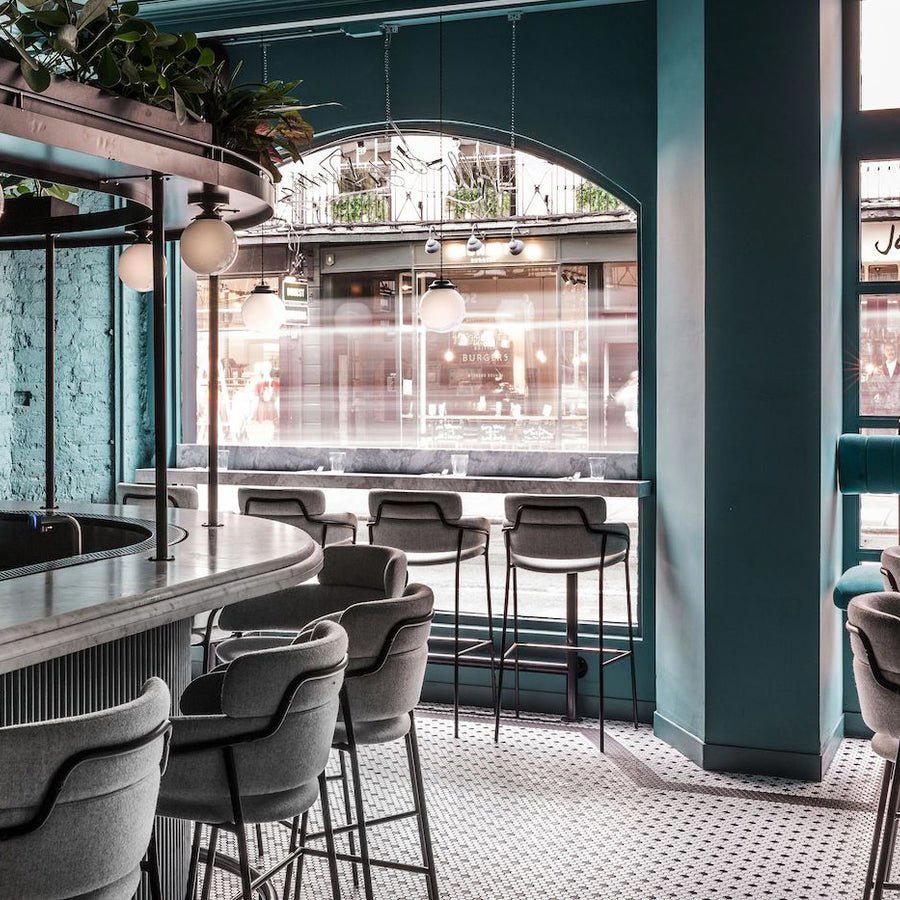
Old Street's All-Day Rhythm
Old Street roundabout has spent the better part of two decades cycling through identities: tech hub, creative quarter, gentrification flashpoint. What has persisted through each cycle is a particular type of venue, one that anchors itself to the neighbourhood's daily movement rather than waiting for destination diners to arrive. Grind is a Modern British Brasserie at 213 Old Street in London. The format positions it between the morning coffee crowd and the after-work drinks contingent, a span of trading that requires a different kind of operational discipline than a single-service restaurant.
The broader Grind model, coffee by day, cocktails by evening, with food running through both, has become a recognisable format in London's middle-market hospitality sector. It occupies a space that formal restaurant groups largely ignore: too casual for a tasting menu crowd, too considered for a straight café. For a stretch of London that generates consistent foot traffic from Shoreditch, Clerkenwell, and the City's eastern fringe, that positioning has proven durable.
What Keeps the Regulars Returning
The regulars at a venue like this are not drawn back by novelty. London has enough novelty. What sustains repeat visits at all-day operations is something closer to reliability: the expectation that a flat white at 8am and a negroni at 7pm will both arrive at the standard that has been set over dozens of visits. That consistency is the unwritten contract between an all-day venue and its local clientele, and it is harder to maintain than a single tightly controlled service window.
Old Street iteration draws from a specific demographic pool: founders and developers working from nearby studio spaces, media workers passing through EC1, and the dense residential population that has built up around Shoreditch in the years since converted warehouse living became the default aspiration for east London arrivals. For this crowd, a venue that functions as office overflow in the morning, lunch spot at noon, and drinks venue by evening fills a genuine gap. The question is not whether the food or coffee is destination-worthy by the standards of, say, CORE by Clare Smyth or The Ledbury, it is not pitched at that register at all. The question is whether it executes its own format with enough consistency to earn a place in the neighbourhood's daily routine. The evidence suggests it does.
The All-Day Format in London's Wider Context
London's hospitality sector has been debating the all-day model for years. High rents on prominent corners make single-service operations economically precarious in a way they were not twenty years ago. The venues that have found stability tend to be those that spread revenue across breakfast, lunch, and an evening drinks programme, reducing dependence on any one service peak. This is the structural logic behind the Grind format across its multiple London sites.
Compared to the tight, highly defined service windows at London's formal dining end, whether that is Restaurant Gordon Ramsay in Chelsea or Sketch's Lecture Room and Library in Mayfair, the all-day format sacrifices kitchen focus for commercial flexibility. That trade-off is not a criticism; it is a different set of priorities serving a different market. The comparison is useful because it clarifies what Grind is not trying to be, which helps locate what it is actually offering.
Further afield in the UK's premium dining tier, from Waterside Inn in Bray to L'Enclume in Cartmel, Moor Hall in Aughton, or Gidleigh Park in Chagford, the model is the opposite of all-day: single-minded, formally structured, and explicitly destination-driven. Even London venues like Dinner by Heston Blumenthal operate with a clarity of purpose that the all-day format cannot replicate. What those venues offer, Grind does not attempt. What Grind offers, those venues cannot provide: a seat without a reservation, a coffee that arrives in three minutes, a corner to work from on a Tuesday morning in EC1.
EC1 in the Morning, EC1 in the Evening
The physical experience of Old Street shifts considerably across the day. The morning commute through the roundabout is dense and purposeful; the lunch hour draws people out of office blocks along City Road and the surrounding streets; by early evening, the crowd reconfigures around the area's bars and restaurants. A venue that can absorb all three waves without feeling incoherent requires a particular kind of interior logic, enough energy to feel alive without enough noise to make a laptop call impossible at 10am.
For context on how London's broader café and bar culture has evolved, the shift away from purely single-purpose venues has been visible across neighbourhoods from Soho to Bermondsey. What makes the Old Street iteration notable is the density of competing formats on the same stretch: coffee shops with no evening offer, restaurants with no morning service, and bars that open too late to catch the morning trade. Grind's format is one of the few that attempts the full arc.
Planning a Visit
Grind at Old Street is located at 213 Old Street, EC1V 9NR, a short walk from Old Street station on the Northern line. The reservation policy is recommended, so planning ahead is sensible. The dress code is as casual as the neighbourhood demands: there is no formality here, and none expected.
Venues at the opposite end of the UK's formal dining register, including Hand and Flowers in Marlow, hide and fox in Saltwood, Midsummer House in Cambridge, Opheem in Birmingham, Ynyshir Hall in Machynlleth, and Restaurant Andrew Fairlie in Auchterarder, require a different planning posture entirely, typically booking weeks or months ahead. Internationally, venues like Le Bernardin in New York City and Lazy Bear in San Francisco operate with comparable advance-booking demands. Grind's walk-in format sits at the opposite end of that access spectrum, which is precisely part of its appeal for regulars who treat it as a functional daily stop rather than a planned occasion.
Budget Reality Check
Comparable venues nearby, for context on price, style, and recognition.
| Venue | Cuisine | Price | Notes |
|---|---|---|---|
| GrindThis venue — the venue you are viewing | St Luke's, Modern British Brasserie | $$ | Not listed |
| Faulkner's | Not listed | $$ | Kingsland, Traditional British Fish & Chips |
| Newman Arms | Fitzrovia, British Pie Pub | $$ | Not listed |
| Truscott Arms | Little Venice, Modern British Gastropub | $$ | Not listed |
| Andover Arms | Hammersmith Broadway, British Gastropub | $$ | Not listed |
| Duke of Sussex | Acton Green, British Gastropub | $$ | Not listed |
Continue exploring
More in London
Restaurants in London
Browse all →
Bars in London
Browse all →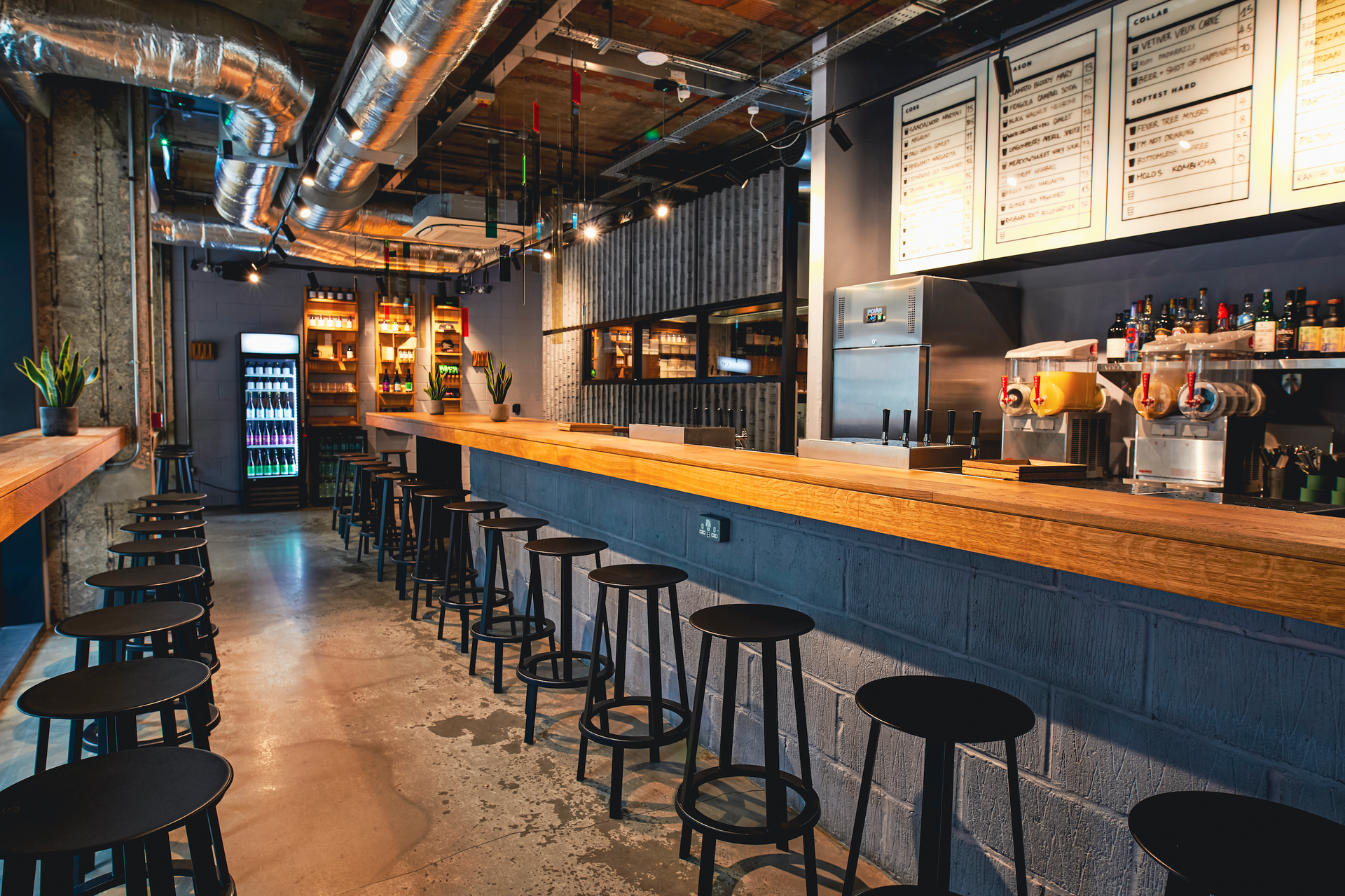
Hotels in London
Browse all →



At a Glance
- Modern
- Trendy
- Lively
- Industrial
- Brunch
- Casual Hangout
- After Work
- Open Kitchen
- Craft Cocktails
Current opening hours
- Monday
- 7:30 AM–5 PM
- Tuesday
- 7:30 AM–9 PM
- Wednesday
- 7:30 AM–9 PM
- Thursday
- 7:30 AM–10 PM
- Friday
- 7:30 AM–10 PM
- Saturday
- 9 AM–10 PM
- Sunday
- 9 AM–5 PM
Hours can change for holidays and private events. Last verified .
Industrial chic with concrete walls, exposed pipes, red neon lights, open kitchen, and busy lively atmosphere.