Duke of Sussex
A Victorian pub on Chiswick's South Parade, the Duke of Sussex occupies a stretch of west London where neighbourhood drinking has remained a serious pursuit for well over a century. The interior retains period detailing that situates it firmly within the tradition of the great London gin palace, while the food offer has moved considerably beyond the bar-snack tier that once defined the form.
Pearl is the En Primeur Club membership app — saves, bookings, and concierge access live there. Same editors, same standards.
- Address
- 75 S Parade, London W4 5LF, United Kingdom
- Phone
- +44 20 8742 8801
- Website
- thedukeofsussex.co.uk
- Directions
- Get directions
 Saves & bookings on Pearl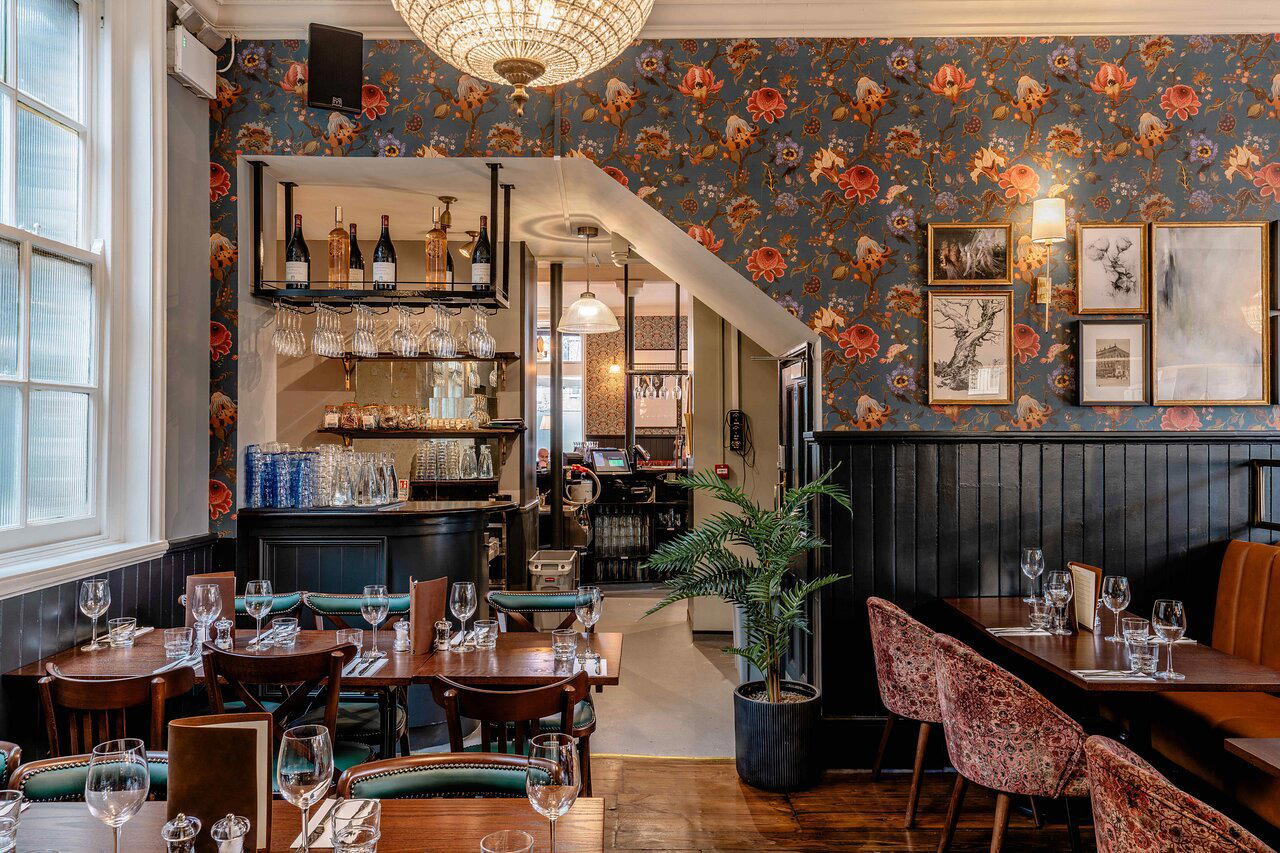
The Victorian Pub as a Living Format
London's Victorian pub stock is enormous, but the proportion that still functions as a serious venue rather than a tourist prop or a stripped-back sports bar is considerably smaller. The Duke of Sussex, at 75 South Parade in Chiswick W4, sits in a residential pocket of west London where the pub has retained social weight that many comparable buildings in more central postcodes lost decades ago. The address places it in a neighbourhood that runs broadly between the more commercial strips of Turnham Green and Gunnersbury, where the density of long-established restaurants and bars is lower than in Soho or Shoreditch, and where a well-run pub carries outsized importance to its immediate community.
The Victorian pub as a building type was engineered for atmosphere in a way that later twentieth-century formats were not. High ceilings, etched glass, dark timber joinery, and tiled floors were not decorative choices so much as functional ones: they created warmth and enclosure in buildings designed to serve large numbers of people across long opening hours. Where those original architectural elements survive, as they do here, the sensory baseline of the room is set before a single drink is poured.
Chiswick's Drinking and Dining Context
West London's food and drink offer has shifted considerably over the past fifteen years. Chiswick in particular has attracted a cohort of operators who treat the neighbourhood as a serious destination rather than an overflow from more central areas. The result is a local scene where pubs are expected to maintain a food offer that competes with standalone restaurants, and where the bar itself is held to standards that would have seemed unusual for the format a generation ago.
That shift is visible across the wider city. London's pub dining category has bifurcated: one tier has contracted toward the gastropub model pioneered in the 1990s, with a kitchen that drives the offer as much as the bar; another tier has held to a more traditional format while improving the quality of what it serves and, critically, how it presents. The Duke of Sussex occupies the latter position, where the room's period character remains the dominant experience and the food and drink reinforce rather than redirect it.
The Duke of Sussex operates in an entirely different register, but understanding that wider London context clarifies what the neighbourhood pub format is and is not competing against, and why a well-executed version of it carries its own value.
The Room: Atmosphere as Architecture
The sensory experience of a Victorian pub is inseparable from its physical fabric. Sound behaves differently in a room with high ceilings and hard surfaces than it does in a low-ceilinged modern bar: there is a particular ambient quality, a layered hum of conversation and glass and background noise, that functions almost as part of the decor. At South Parade, the building's period detailing creates a room that reads immediately as London, specifically as a version of London that predates the homogenisation of high-street hospitality.
Lighting in these buildings tends toward warmth by default. Original fittings, where retained, cast a lower, more directional light than the flat, cold illumination common in newer venues. The effect is a room that feels inhabited rather than staged, where the patina of long use is legible in the grain of the wood and the wear of the floor. This is the kind of atmosphere that cannot be reproduced in a new-build, only inherited.
Placing Duke of Sussex in a Wider British Context
The British pub tradition extends well beyond London, and some of the country's most closely watched food-and-drink venues operate in a pub or inn format. Hand and Flowers in Marlow holds two Michelin stars in a pub building, a distinction it shares with few venues in the country. The Fat Duck in Bray, L'Enclume in Cartmel, and Moor Hall in Aughton represent the upper tier of destination dining outside London. Gidleigh Park in Chagford and hide and fox in Saltwood show how deeply the country-house and coastal-inn formats have been shaped by serious kitchen ambition. Internationally, Le Bernardin in New York City and Atomix in New York City mark the formal end of the spectrum against which any serious hospitality operation is ultimately measured.
The restaurant is not competing in that tier. What it represents, and what the Victorian pub at its leading has always represented, is a different kind of proposition: a room with genuine character, accessible to a broad range of visitors, where the quality of the drink and the atmosphere of the space are reason enough to spend an evening.
Planning a Visit
South Parade in Chiswick W4 is accessible from Chiswick High Road, with Turnham Green underground station (District line) one practical public transport approach for visitors coming from central London. The address is residential in character, which means the pub draws primarily from the immediate neighbourhood and from visitors making a deliberate trip rather than passing trade. For anyone spending time in west London and seeking a venue with architectural integrity rather than a chain-operated alternative, the restaurant represents the kind of address worth factoring into a broader itinerary.
Comparable Venues
Comparable venues nearby, for context on price, style, and recognition.
| Venue | Cuisine | Price | Notes |
|---|---|---|---|
| Duke of SussexThis venue — the venue you are viewing | British Gastropub | $$ | Not listed |
| Fishers | Traditional British Fish & Chips | $$ | Hurlingham |
| Sands End | British Gastropub | $$ | Sands End |
| Mall Tavern | British Gastropub | $$ | Kensington Palace Gardens |
| Cellarium Cafe & Terrace | British Cafe | $$ | Westminster |
| Garden Café | Modern British & European | $$ | Lambeth |
Continue exploring
More in London
Restaurants in London
Browse all →
Bars in London
Browse all →
Hotels in London
Browse all →
Wineries in London
Browse all →
At a Glance
- Lively
- Classic
- Cozy
- Casual Hangout
- Group Dining
- After Work
- Historic Building
- Craft Cocktails
- Beer Program
Current opening hours
- Monday
- 12–11 PM
- Tuesday
- 12–11 PM
- Wednesday
- 12–11 PM
- Thursday
- 12–11 PM
- Friday
- 12 PM–12 AM
- Saturday
- 12 PM–12 AM
- Sunday
- 12–10 PM
Hours can change for holidays and private events. Last verified .
Chic and relaxed modern-meets-classic pub atmosphere with a lively, welcoming vibe, comfortable bar areas, and heated outdoor garden seating.