Michelin Plate
Our verdict
A Michelin Plate-recognised sushi address in Jardim Paulista, Goya Zushi operates within São Paulo's compact tier of Japanese restaurants that take technical rigour seriously without the price ceiling of the city's omakase flagships. Ratings of 4.5 on Google across 68 reviews suggest consistent execution rather than occasional brilliance. At the $$$ price point, it sits alongside Jun Sakamoto in the mid-premium bracket of the city's Japanese scene.

Pearl is the En Primeur Club membership app, where members save venues, book tables and use the concierge.

Where São Paulo's Japanese Tradition Meets Neighbourhood Precision
Jardim Paulista is not the flashiest address in São Paulo, but it has long functioned as a residential anchor for the city's more considered dining. The streets around Rua Artur Frazão carry a quieter register than the high-traffic corridors of Pinheiros or the Jardins strip proper: lower signage, steadier foot traffic, a sense that the restaurants here have been built for locals rather than for spectacle. Goya Zushi, at number 37, fits that pattern. The building does not announce itself loudly. What draws attention, instead, is what the 2025 Michelin Plate recognition implies: consistent kitchen standards assessed against a guide that covers one of the most demanding Japanese dining ecosystems outside Japan.
The Arc of the Meal
São Paulo's Japanese dining scene has two distinct gravitational pulls. On one end sit the city's grand omakase formats, tasting counters where the meal is entirely surrendered to the kitchen's sequence and the price reflects that contract. On the other end sits a broad middle tier of competent sushi houses that execute reliably but without particular ambition. The restaurants worth tracking are those that operate between those poles: technically serious, structured enough to reward attention course by course, but not so ceremonial that spontaneity is edited out entirely. Goya Zushi's Michelin Plate designation places it in that more considered bracket, and the $$$ price point confirms it prices in line with that positioning rather than at the ceiling of the market.
The progression of a Japanese meal at this level tends to follow an internal logic that the leading kitchens in the city honour without making it feel scripted. Lighter preparations arrive first, whether cold dishes that read clean and acidic, or small constructions that set the palate's baseline. Richer, warmer material follows in the mid-section. The final runs of nigiri, when present, carry the weight of accumulated technique: rice temperature, vinegar calibration, the interval between the fish being sliced and the piece being served. That arc, when it holds together, is what separates a serious Japanese kitchen from one that simply handles good ingredients. The Michelin recognition at Goya Zushi suggests the arc holds.
For context, Jun Sakamoto has operated at a similar $$$ price tier with Michelin Star recognition, making it the clearest peer reference in the city's Japanese segment. Other addresses worth mapping in the broader São Paulo Japanese picture include Huto, Kan Suke, KANOE, Kinoshita, and Kuro, each representing different points along the spectrum from neighbourhood-scale to counter-format tasting. Goya Zushi at $$$ slots into the same accessible-premium range that makes this cluster of restaurants the most actively used tier in the city's Japanese dining circuit.
The Neighbourhood and What It Signals
Jardim Paulista's dining identity has historically been shaped by the density of São Paulo's Nikkei community, whose influence on the city's food culture extends well beyond any single neighbourhood. Brazil is home to the largest Japanese diaspora outside Japan, and São Paulo is the centre of that community's culinary expression. The result is a city where Japanese technique has been practised across generations and where diners bring a level of baseline familiarity that holds kitchens to a higher standard than in markets where Japanese cuisine is primarily novelty. A Michelin Plate in this context means something specific: it signals that the kitchen is performing at a level the guide's inspectors found consistently credible in a city where the reference points are unusually high.
That local calibration also explains why the $$$ tier in São Paulo's Japanese segment carries more culinary ambition per spend than it might in a city with less established Japanese roots. The competitive pressure from within the community keeps standards high without necessarily inflating prices to the levels seen at destination omakase counters in New York or London. For international visitors already familiar with Japanese reference points in Tokyo (where counters like Myojaku and Azabu Kadowaki operate at the upper end of formality and price), Goya Zushi offers a useful data point: São Paulo's leading mid-premium Japanese addresses perform close to that benchmark at a fraction of the Tokyo price.
How It Fits Into a São Paulo Itinerary
Visitors building a full picture of São Paulo's dining scene will find Goya Zushi makes sense as a focused, mid-week dinner rather than a centrepiece occasion. The Jardim Paulista location is accessible from the Jardins hotel corridor, and the neighbourhood's lower ambient energy suits a meal where attention is directed inward toward the food rather than outward toward scene. For the grander expressions of the city's modern Brazilian and creative cooking, addresses like Maní at the same $$$ price tier with Michelin Star recognition, or D.O.M. and Evvai at the $$$$ tier, fill a different role on the itinerary. Goya Zushi serves the specific function that a serious Japanese address should in a city of this calibre: technically grounded, consistent in execution, and priced to allow repeat visits rather than once-a-year occasions.
For planning a full São Paulo trip, the full São Paulo restaurants guide covers the broader dining picture, while the São Paulo hotels guide, bars guide, wineries guide, and experiences guide map the rest. Beyond the city, Brazil's wider Michelin-tracked dining circuit includes Lasai in Rio de Janeiro, Manu in Curitiba, Manga in Salvador, Mina in Campos do Jordão, Orixás North Restaurant in Itacaré, and Castelo Saint Andrews in Gramado.
Planning Your Visit
Goya Zushi is located at Rua Artur Frazão, 37, Jardim Paulista, São Paulo. Given the Michelin Plate recognition and the size typical of neighbourhood Japanese addresses in São Paulo, advance reservations are advisable, particularly for dinner and on weekends. Current hours and booking methods are best confirmed directly with the venue before planning your visit.
Frequently asked questions
Can I bring kids to Goya Zushi?
Goya Zushi sits in the residential Jardim Paulista neighbourhood, which generally skews toward a quieter, adult dining pace. The $$$ price positioning suggests a considered dining context rather than a casual family outing. If you are bringing children, a focused, shorter visit during off-peak hours would be the practical approach.
What should I expect atmosphere-wise at Goya Zushi?
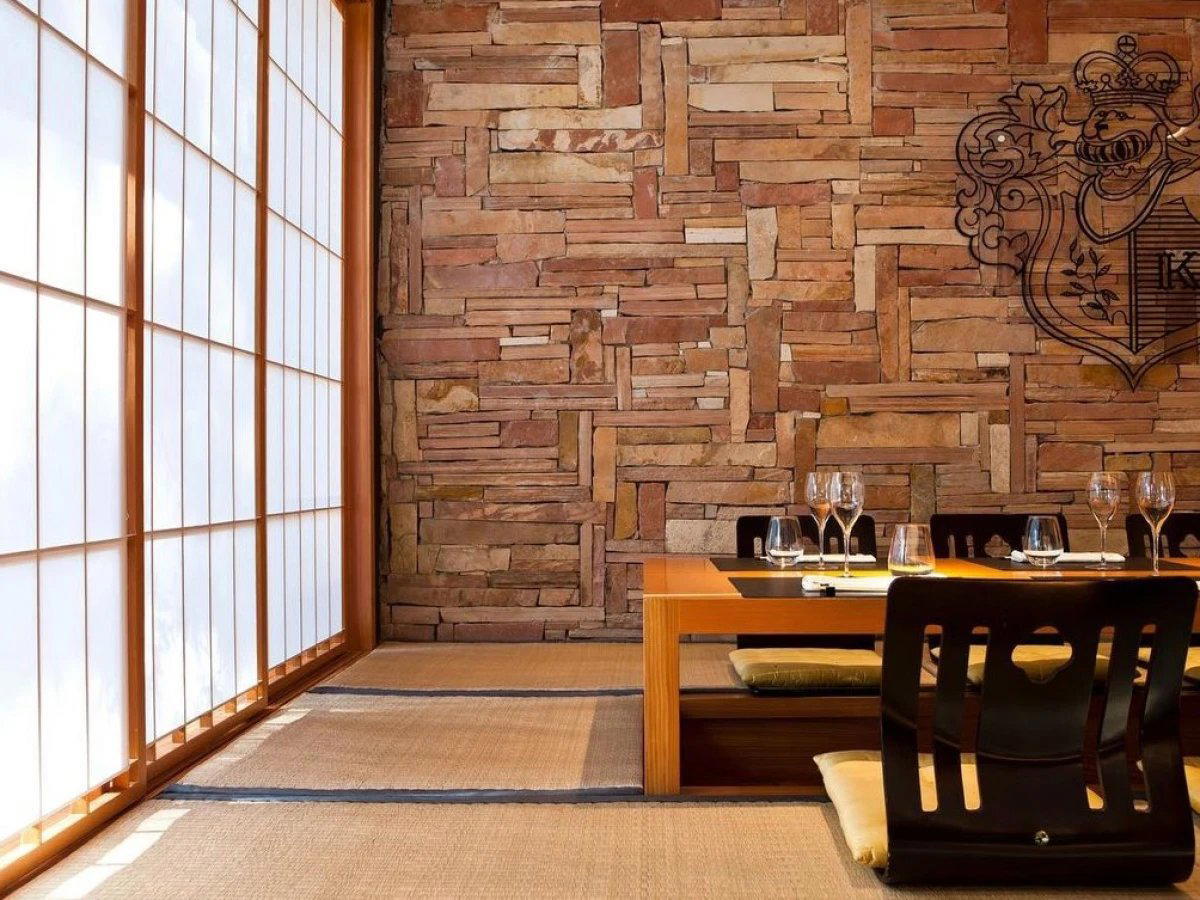
Jardim Paulista is a residential district, and Goya Zushi fits that register: this is not a high-volume, buzzy venue but a neighbourhood Japanese restaurant shaped by São Paulo's Nikkei community. Its 2025 Michelin Plate recognition signals a focus on kitchen discipline over theatrical staging. Expect a setting where the food carries the room.
Is Goya Zushi award-winning?
Goya Zushi has received recognition including: Michelin Plate (2025).
What's the must-try dish at Goya Zushi?
What the 2025 Michelin Plate does confirm is consistent kitchen quality across the Japanese menu. Ask the front-of-house team on arrival for what is fresh and in season, that is standard practice at any serious sushi counter.
What style of cooking does Goya Zushi do?
What does dinner at Goya Zushi typically cost?
Pricing at Goya Zushi is listed as $$$.
Just the Basics
Comparable venues nearby, for context on price, style, and recognition.
| Venue | Cuisine | Price | Awards | Notes |
|---|---|---|---|---|
| Goya ZushiThis venue (the venue you are viewing) | Traditional Japanese Omakase | Not listed | Michelin Plate | Not listed |
| Maza | Modern Japanese with Korean Influences | Not listed | Michelin Plate | Pinheiros, Modern Japanese with Korean Influences |
| Naga | Traditional Japanese Sushi and Omakase | $50–100 | Michelin Plate | Pinheiros, Traditional Japanese Sushi and Omakase |
| Marena Cucina | Puglia-Inspired Italian | $50–100 | Michelin Plate | Pinheiros, Puglia-Inspired Italian |
| Djapa Moema | Modern Japanese Rodízio | $30–50 | Not listed | Moema, Modern Japanese Rodízio |
| Sushi Hamatyo | Traditional Japanese Omakase | $50–100 | Not listed | Pinheiros, Traditional Japanese Omakase |
Recognition history
Dated appearances from independent guides and award organizations, with the underlying list record or original source where available.
Michelin Plate
Michelin
Full recognition history (2 entries)
Michelin Plate
Michelin