Goldenette
A Polk Street fixture built around the retro diner format, Goldenette delivers American breakfast and burgers at a pitch that sits well below San Francisco's tasting-menu tier. The room channels mid-century diner codes without irony, and the menu holds to a focused, comfort-first range. For visitors calibrating between the city's fine-dining circuit and its more grounded neighbourhood tables, this is a useful reference point.
Pearl is the En Primeur Club membership app — saves, bookings, and concierge access live there. Same editors, same standards.
- Address
- 1601 Polk St, San Francisco, CA 94109
- Phone
- (415) 928-1233
- Website
- goldenettediner.com
- Directions
- Get directions
 Saves & bookings on Pearl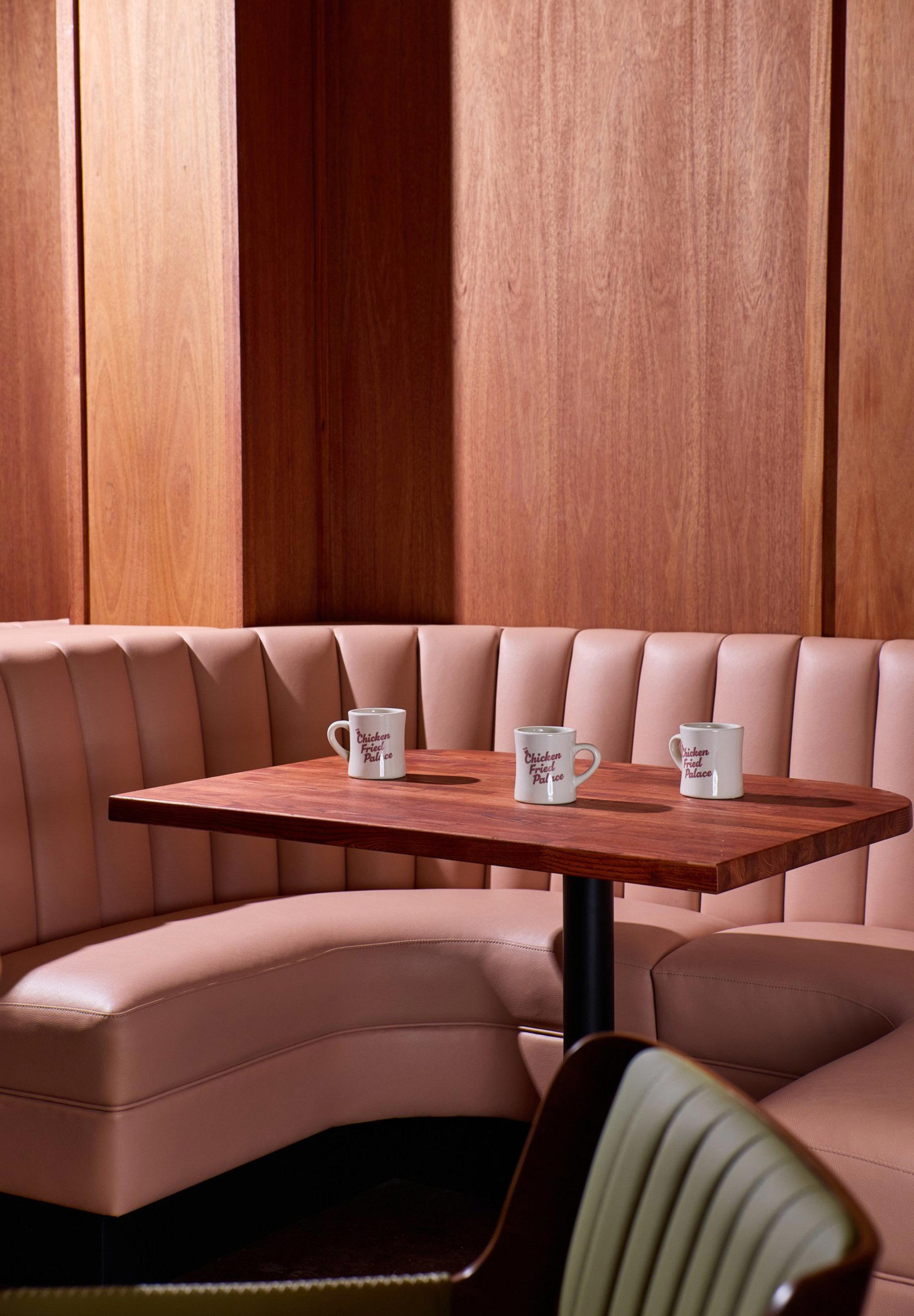
Polk Street and the Diner's Continuing Case
San Francisco has spent the better part of two decades building a dining identity dense enough to rival any American city. The Michelin-starred corridor running from the Financial District through SoMa to the Mission, represented by places like Benu, Atelier Crenn, and Lazy Bear, commands serious critical attention. But the city's neighbourhood character is equally shaped by the tables that don't chase that tier: the counter-service spots, the all-day diners, the lunch rooms where the bill is settled in minutes and the format hasn't changed since the Reagan administration. Goldenette, a Classic American Diner at 1601 Polk St in San Francisco, belongs to that second category. It operates as a retro diner focused on American breakfast and burgers, and in a city where a tasting menu at Saison or Quince can run several hundred dollars per head, the diner format carries a quiet civic importance.
The Retro Diner Format in American Food Culture
The American diner as a culinary institution has a genealogy that predates the farm-to-table movement by decades, yet the two traditions have converged in interesting ways across California over the past fifteen years. The farm-to-table argument, broadly, is that ingredient sourcing is the primary determinant of food quality: that a simple dish executed with produce grown close by and harvested at the right moment outperforms a technically complex dish built on commodity inputs. That argument has migrated steadily down the price spectrum, from destination restaurants like The French Laundry in Napa and Blue Hill at Stone Barns in Tarrytown, where sourcing relationships are part of the formal dining narrative, through mid-range Californian tables, and into the informal sector. The retro diner occupies an interesting position in that evolution: its format resists the seasonally rotating menu by design, yet Northern California's proximity to some of the country's most productive agricultural land means that even a direct breakfast programme draws on ingredient chains that fine-dining kitchens covet.
That context matters when reading a place like Goldenette against the broader San Francisco food map. The city's premium dining circuit, from the hyper-sourced Californian modernism of Single Thread Farm in Healdsburg to the produce-driven Italian focus of Quince, has largely absorbed the farm-to-table vocabulary into its core identity. Neighbourhood tables don't always make those sourcing relationships explicit, but they operate within the same Northern California ingredient geography. A burger or a breakfast plate on Polk Street draws from the same regional food system that supplies the tasting-menu kitchens a few miles south.
What the Room Communicates
The diner format carries its own set of spatial codes, and Goldenette works within them deliberately. Mid-century American diner design, as an aesthetic category, leans on particular material cues: vinyl, formica, chrome fixtures, a counter that invites solitary eating, booths that encourage the kind of conversation that doesn't require a dress code. The retro framing at Goldenette signals a conscious reference to that tradition rather than an accident of age. Across American cities, this approach has become a distinct sub-genre, separate from both the nostalgia trap of theme-restaurant diners and the scrubbed minimalism of the contemporary fast-casual sector. In San Francisco specifically, where the dominant premium dining aesthetic tends toward restraint and material austerity, a room that reaches back to mid-century warmth reads as a deliberate counter-position.
Polk Street itself provides useful neighbourhood context. The corridor runs through an area that has resisted the full gentrification pressure applied to neighbourhoods like the Mission or Hayes Valley, retaining a mix of long-standing residents, service workers, and newer arrivals. The dining character along Polk skews toward the practical and the approachable: it is a street where a diner fits more naturally than a concept restaurant, and where a consistent all-day format serves a wider cross-section of the city than the reservation-dependent fine-dining circuit can reach.
Breakfast, Burgers, and the All-Day Format
The American breakfast-and-burger pairing, as a menu architecture, reflects a specific commercial logic. Breakfast drives morning and weekend volume; burgers anchor the lunch and early dinner window. Together they allow an all-day operation without the kitchen complexity of a full multi-section menu. That format has proven durable across American cities in ways that more ambitious neighbourhood concepts have not: diners built around a tight, consistent menu tend to outlast trend-dependent restaurants by a significant margin. For comparison, the kind of progressive American cooking represented by Smyth in Chicago or the coastal-Californian sourcing ambition of Providence in Los Angeles requires constant menu evolution and a kitchen team capable of executing at a high technical level. The retro diner format asks different things of its kitchen: consistency, speed, and a menu short enough to execute without error at volume.
Within San Francisco's full dining picture, covered in more depth in our full San Francisco restaurants guide, Goldenette occupies the practical end of the spectrum. It is the kind of place that serves a function the city's award-heavy fine-dining tier cannot: a meal that doesn't require forward planning, a reservation window, or a significant outlay. The tasting-menu circuit represented by Atelier Crenn or destination-level coastal cooking like Addison in San Diego operates on a different logic entirely, one built around occasion dining and deliberate scarcity. A diner operates on the logic of availability and repetition: the same menu, reliably executed, on a weekday morning or a Sunday afternoon.
Where It Sits in the National Diner Conversation
The retro diner format has attracted renewed critical attention in American food writing over the past five years, partly as a counterweight to the farm-to-table fine-dining consensus and partly as a response to the economic pressures that have forced many ambitious restaurants to close. Across the country, from New Orleans to New York, critics and diners have returned to the question of what casual American food actually is at its most coherent: not the refined gastropub riff, not the fast-casual disruption play, but the original format, executed with care. The farm-to-table movement itself has a version of this argument, articulated most explicitly at places like Blue Hill at Stone Barns and internationally at operations like Atelier Moessmer Norbert Niederkofler in Brunico, where sourcing discipline is applied to deeply traditional formats. The retro diner makes a quieter version of the same case: that a simple format, honestly executed, has more longevity than the format-of-the-moment.
For visitors moving between San Francisco's tasting-menu tier and its neighbourhood tables, Goldenette is worth understanding as a data point about how the city eats across its full register, not just at the level that attracts international critical attention. Frasca Food and Wine in Boulder, which holds its own version of that regional-ingredient argument in the Mountain West, and Frasca Food and Wine in Boulder, or The Inn at Little Washington, represent different national expressions of the same underlying question about American food identity. Goldenette answers that question from the diner end of the spectrum, on a Polk Street block that has resisted simplification for decades.
Planning a Visit
Goldenette is located at 1601 Polk St, San Francisco, CA 94109, at the junction of Polk Street and California Street on the edge of Russian Hill. The address is accessible by the 19-Polk and 47-Van Ness Muni lines, and street parking is available on the surrounding blocks, though weekend mornings typically compress availability.
Comparison Snapshot
Comparable venues nearby, for context on price, style, and recognition.
| Venue | Cuisine | Price | Notes |
|---|---|---|---|
| GoldenetteThis venue — the venue you are viewing | Classic American Diner | $$ | Not listed |
| Jones | American Gastropub | $$ | Nob Hill |
| Super Mensch | Modern Jewish Deli | $$ | Marina |
| The Buena Vista | Classic American Cafe with Irish Coffee | $$ | Russian Hill |
| As Quoted | Gluten-Free Farm-to-Table American | $$ | Presidio Heights |
| Firefly | Seasonal American Comfort Cuisine | $$ | Noe Valley |
Continue exploring
More in San Francisco
Restaurants in San Francisco
Browse all →
Bars in San Francisco
Browse all →
Hotels in San Francisco
Browse all →
At a Glance
- Cozy
- Trendy
- Casual Hangout
Current opening hours
- Monday
- 9 AM–9 PM
- Tuesday
- 9 AM–9 PM
- Wednesday
- 9 AM–9 PM
- Thursday
- 9 AM–9 PM
- Friday
- 9 AM–9 PM
- Saturday
- 9 AM–9 PM
- Sunday
- 9 AM–3 PM
Hours can change for holidays and private events. Last verified .
Cozy booths with warm lights and a Millennial pink flair creating a nostalgic diner atmosphere.