The Buena Vista
The Buena Vista is one of San Francisco's most enduring bar institutions, credited with introducing Irish Coffee to the United States at its Hyde Street address overlooking the cable car turnaround at Fisherman's Wharf. The bar draws locals and visitors in roughly equal measure, operating as a working neighborhood fixture rather than a tourist set piece, with a counter culture and service rhythm that rewards repeat visits.
Pearl is the En Primeur Club membership app — saves, bookings, and concierge access live there. Same editors, same standards.
- Address
- 2765 Hyde St, San Francisco, CA 94109
- Phone
- +1 415 474 5044
- Website
- thebuenavista.com
- Directions
- Get directions
 Saves & bookings on Pearl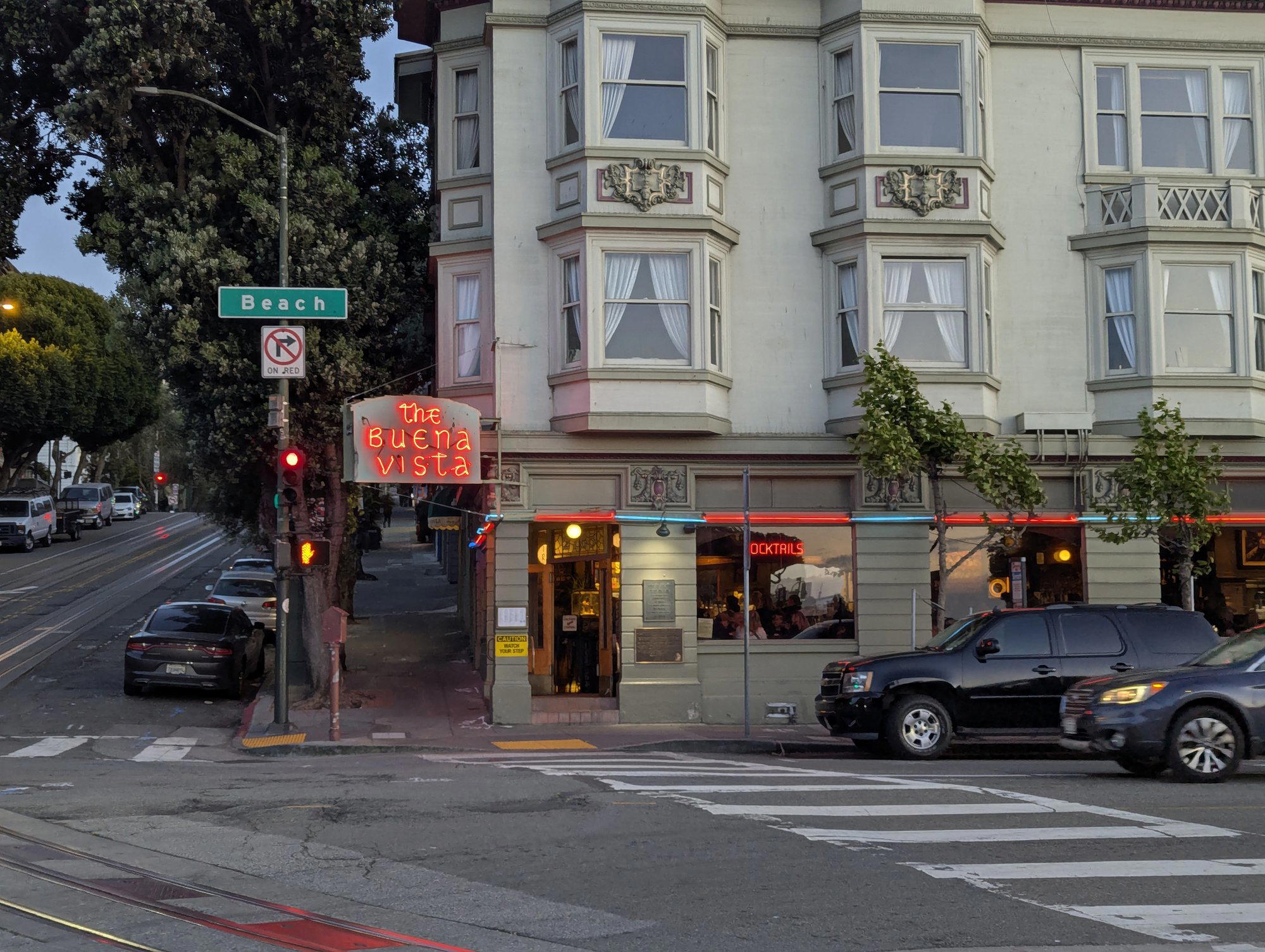
Where the Cable Cars Turn and the Irish Coffee Was Born
At the northern foot of Hyde Street, where the Powell-Hyde cable car line completes its loop before heading back up toward Nob Hill, The Buena Vista occupies a position that is less address than landmark. The fog comes in off the bay with enough regularity here that a warm drink in a handled glass feels less like an indulgence and more like sound judgment. This is not the San Francisco of ambitious tasting menus, venues like Lazy Bear, Atelier Crenn, and Benu operate in an entirely different register, but The Buena Vista carries a specific weight in the city's drinking history that those newer institutions haven't had time to accumulate.
The bar's central claim is documented and specific: in 1952, owner Jack Koeppler and San Francisco Chronicle columnist Stanton Delaplane worked together to recreate the Irish Coffee served at Shannon Airport in Ireland, eventually standardizing the recipe after repeated trials. That recipe, Irish whiskey, sugar, hot coffee, and a layer of lightly whipped cream that sits on leading rather than mixing in, became the template that spread across American bar culture. The Buena Vista has reportedly served more than 30 million Irish Coffees since. That number, cited consistently in public record, situates the bar not as a curiosity but as a volume operation with a singular identity.
The Bar as Production Line: A Study in Service Coordination
The way Irish Coffee service operates here illustrates something worth understanding about high-volume hospitality coordination. Bartenders line up rows of handled glasses on the counter, fill them in sequence, and float cream across the leading with practiced economy. The motion is closer to a production system than a cocktail ritual, and that discipline is what allows the bar to serve the crowds that arrive consistently throughout the day. There is no performance of craft for individual attention, the craft is embedded in the system itself.
This model of team-coordinated service has parallels in other American institutions where a single dish or drink defines the operation. At places like Emeril's in New Orleans, signature identity and high throughput coexist through back-of-house discipline rather than front-of-house theater. The restaurant applies the same logic to a bar counter rather than a kitchen pass. The front-of-house staff work in a rhythm that absorbs large groups without losing consistency, a dynamic that is harder to sustain than it looks and that defines the bar's operational character as much as any single drink.
That coordination matters because the bar sits in one of San Francisco's highest foot-traffic zones. Fisherman's Wharf draws visitors who may never cross into the Mission or venture up to Hayes Valley for the kind of progressive American cooking found at Saison or the Italian contemporary work at Quince. The restaurant meets a different kind of traveler and holds its ground without adjusting its format to suit trends.
Irish Coffee in American Bar History
The Irish Coffee's trajectory from a transatlantic airport drink to an American bar staple tells a broader story about mid-century drinking culture. In the early 1950s, American cocktail culture was navigating the shift from Prohibition-era improvisation toward a more codified approach to spirits service. The restaurant's role in that shift was specific: it introduced a European airport drink to a West Coast audience and standardized it into something replicable. The drink itself is structurally simple, but the layered cream technique requires enough precision that it rewards consistent practice, which is exactly what decades of high-volume service provide.
For context on how American fine dining and bar culture developed on parallel tracks during the same period, institutions like The French Laundry in Napa and Le Bernardin in New York City represent the formal dining inheritance of that era, while the restaurant represents the bar-counter inheritance: democratic, repeatable, and rooted in a single signature.
Across the broader American dining geography, signature-driven institutions occupy their own tier. Blue Hill at Stone Barns in Tarrytown built an identity around agricultural sourcing; The Inn at Little Washington built one around regional Virginian hospitality. The restaurant built one around a single glass. The commitment is the same; the format differs entirely.
The Neighbourhood Position
Fisherman's Wharf has a complicated reputation among San Francisco regulars, who tend to treat the waterfront zone as tourist territory and orient their own eating and drinking toward the Mission, SoMa, or the Tenderloin. That geography is real, but it misses what the restaurant actually is within that zone: a functioning local bar that happens to occupy a tourist-heavy address. The cable car turnaround draws visitors; the bar's consistency draws return guests who treat the counter as a regular stop rather than a once-visit experience.
For travelers building a San Francisco itinerary that balances serious dining with the city's older drinking culture, see our full San Francisco restaurants guide for the broader picture. Institutions like Smyth in Chicago, Providence in Los Angeles, Addison in San Diego, Single Thread Farm in Healdsburg, Frasca Food and Wine in Boulder, Atomix in New York City, and Atelier Moessmer Norbert Niederkofler in Brunico each represent the tasting-menu and fine-dining end of that spectrum. The restaurant occupies the opposite end: walk-in, counter-service, and anchored to a drink rather than a chef.
Know Before You Go
- Address: 2765 Hyde St, San Francisco, CA 94109
- Getting There: The Powell-Hyde cable car terminates directly outside; the bar is walkable from Ghirardelli Square and Fisherman's Wharf.
- Reservations: The bar operates on a walk-in basis; no booking is required or typically available for counter seating.
- Timing: Weekend mornings and midday bring the heaviest crowds given the cable car foot traffic; weekday afternoons offer a quieter counter experience.
- Signature Order: The Irish Coffee is the bar's documented specialty and the drink that established its reputation; ordering anything else is a personal decision rather than an informed one.
- Food: The bar serves food alongside its drinks; specific menu details should be confirmed directly with the venue, as offerings may vary.
Just the Basics
Comparable venues nearby, for context on price, style, and recognition.
| Venue | Cuisine | Price | Notes |
|---|---|---|---|
| The Buena VistaThis venue — the venue you are viewing | Not listed | $$ | Not listed |
| Boxing Room | Not listed | $$ | Hayes Valley, New Orleans Cajun/Creole |
| Greenburger's | Not listed | $$ | Lower Haight, Locally-Sourced American Comfort Food |
| Little Skillet | South of Market, Southern Soul Food | $$ | Not listed |
| Holey Moley - San Francisco | Mission, American Pub Fare | $$ | Not listed |
| Wise Sons - Square HQ | South Beach, Jewish Deli | $$ | Not listed |
Continue exploring
More in San Francisco
Restaurants in San Francisco
Browse all →
Bars in San Francisco
Browse all →
Hotels in San Francisco
Browse all →
At a Glance
- Well Known
- Classic
- Lively
- Brunch
- Late Night
- Casual Hangout
- Historic Building
- Craft Cocktails
- Street Scene
Current opening hours
- Monday
- 9 AM–11 PM
- Tuesday
- 9 AM–11 PM
- Wednesday
- 9 AM–11 PM
- Thursday
- 9 AM–11 PM
- Friday
- 9 AM–12 AM
- Saturday
- 8 AM–12 AM
- Sunday
- 8 AM–11 PM
Hours can change for holidays and private events. Last verified .
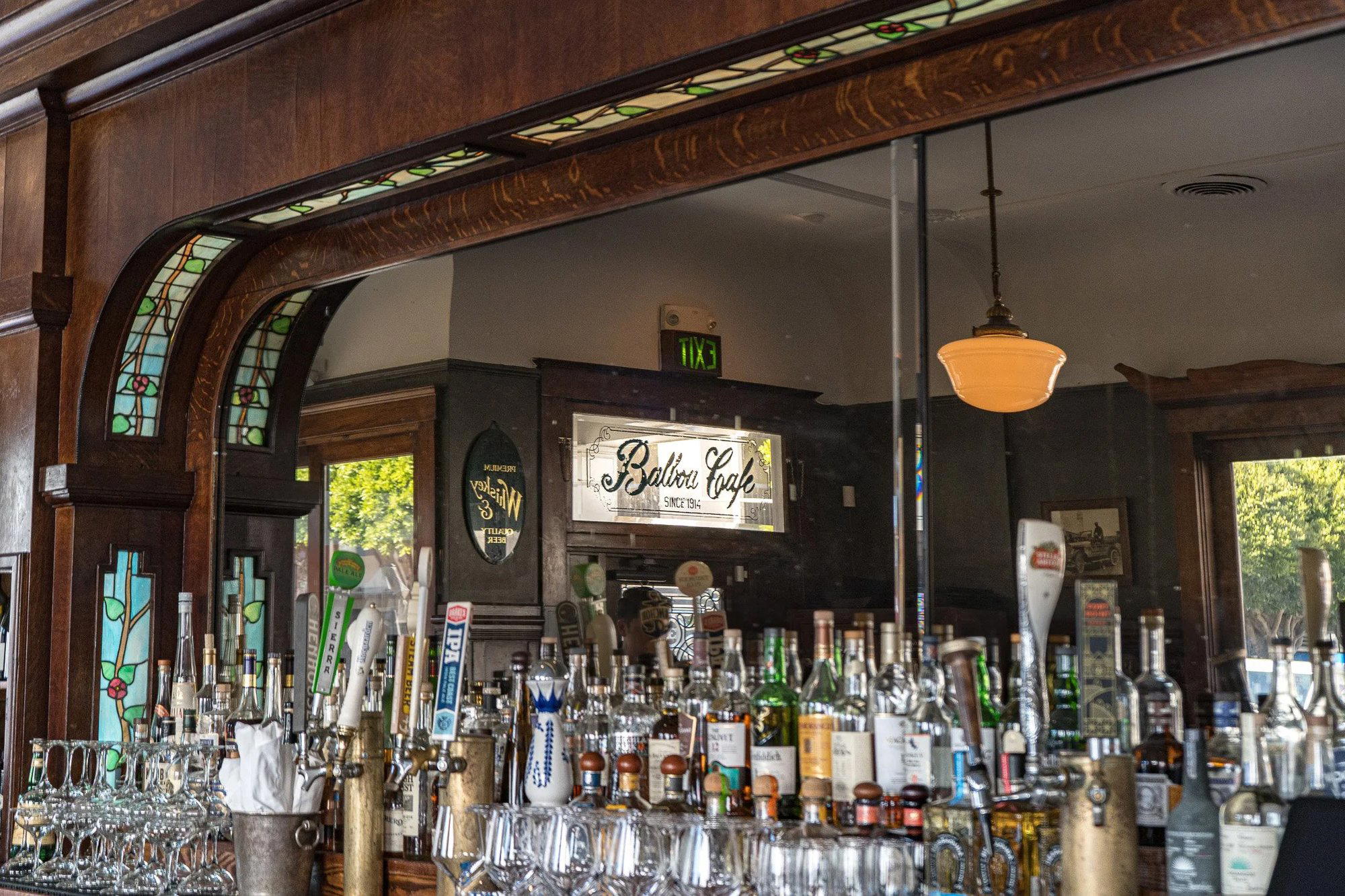
Historic Queen Anne-style building with a lively, nostalgic bar atmosphere filled with the clinking of glasses and the ding of cable cars nearby.