A traditional Austrian inn at Wiener Strasse 7 in Mariazell, Goldenes Kreuz sits close to the pilgrimage town's basilica and draws on the deep larder of Styrian alpine country. The setting leans into regional character rather than cosmopolitan ambition, making it a practical base for understanding how rural Austrian hospitality operates when it stays grounded in its own geography.
Pearl is the En Primeur Club membership app — saves, bookings, and concierge access live there. Same editors, same standards.
- Address
- Wr. Str. 7, 8630 Mariazell, Austria
- Phone
- +434338822309
- Website
- hotelscherfler.at
- Directions
- Get directions
 Saves & bookings on Pearl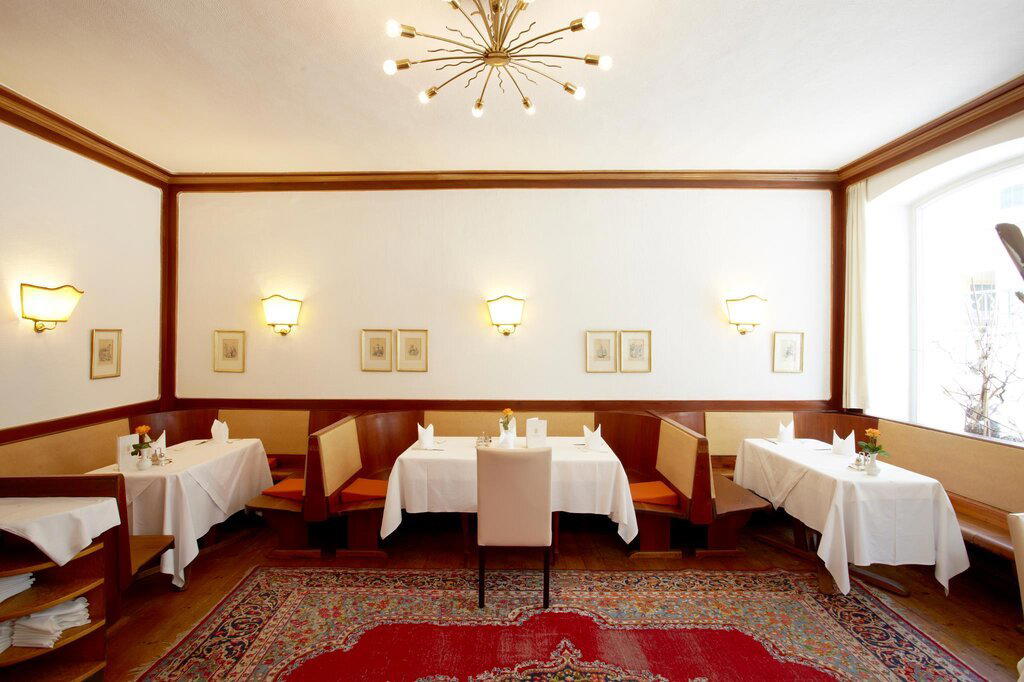
Where Pilgrimage Town Meets Alpine Larder
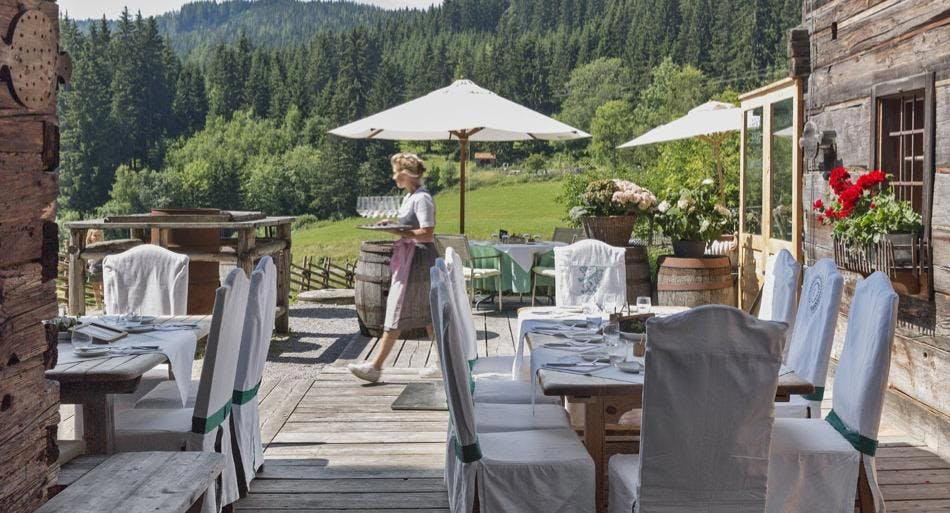
Mariazell occupies a specific position in the Austrian imagination: it is simultaneously the country's most visited pilgrimage site and a working alpine town surrounded by forests, mountain pastures, and rivers that supply a kitchen economy largely invisible to outside critics. The streets leading from the basilica into the residential quarters carry the unhurried rhythm of a place that has fed arriving travellers for centuries, not seasons. Goldenes Kreuz is a traditional Austrian restaurant in Mariazell, Austria. It sits inside that older hospitality tradition rather than apart from it. The address places it within walking distance of the basilica square, which means it draws from a visitor population that arrives with purpose, not just appetite.
This matters for understanding what Austrian regional dining in a town like Mariazell actually is. Unlike the destination restaurants of the Wachau or the Salzburg surroundings, where kitchens such as Landhaus Bacher in Mautern an der Donau or Obauer in Werfen have built international reputations around tasting formats and wine programs, the inns of Mariazell operate within a more grounded register. The benchmark is reliability and regional fidelity, not innovation. The competitive set is local rather than national.
Styrian Alpine Country as a Source Region
The region around Mariazell draws from one of Austria's most coherent ingredient geographies. Styria's upper alpine belt, where the town sits at around 870 metres elevation, produces game from managed forest hunts, freshwater fish from cold-running streams, and dairy from high-pasture herds whose milk carries the flavour compression that altitude and short grass seasons tend to produce. These are not abstract sourcing claims; they reflect the actual supply chains that have structured Upper Styrian cooking for generations. Venison, char, trout, pumpkin seed oil from lower Styrian farms transported north, and aged mountain cheeses form the backbone of what kitchens in this zone have historically cooked.
That sourcing geography matters because it positions Mariazell's dining firmly within a Styrian rather than a generically Austrian framework. The distinction has real culinary meaning: Styrian cooking leans toward earthier fats, sharper vinaigrettes built on apple cider or pumpkin seed oil, and a preference for game and freshwater protein over the pork-forward register more common in Lower Austria or Vienna. A traveller arriving from Steirereck im Stadtpark in Vienna, which has long championed Styrian producers at a fine-dining scale, will recognise some of the same ingredient logic operating here at a more everyday register.
For the traveller building a broader picture of how alpine Austrian inns use their local larder, Mariazell also rewards comparison with other mountain towns. The kitchen discipline at Gourmetrestaurant Tannenhof in Sankt Anton am Arlberg or Griggeler Stuba in Lech shows how alpine sourcing can be pushed toward a refined format; what Mariazell offers is that same ingredient geography without the ski-resort premium or the destination-dining framing.
The Inn Format in Austrian Regional Dining
The Gasthaus and Gasthof model that Goldenes Kreuz represents is structurally distinct from the destination restaurants that dominate Austrian fine-dining conversation. Where places like Döllerer in Golling an der Salzach or Taubenkobel in Schützen am Gebirge have built their reputations on formal tasting sequences and wine cellar depth, the regional inn operates on a different logic: breadth of menu over depth of sequence, table turnover over lingering courses, and a pricing structure calibrated to the local population as much as to visiting travellers.
This format has its own integrity. Austrian regional inns at their most serious maintain kitchen discipline through consistency rather than ambition, cooking the same dishes across seasons because the sourcing relationships and the technique have been refined over years. The Schnitzel arrives properly rested, the Tafelspitz broth is clear, the Apfelstrudel pastry has the right tension. These are not simple things to execute well at volume, and the towns that maintain genuine quality in this register offer something that the destination-dining circuit, by its nature, cannot.
Travellers interested in comparing this format across Austrian geography might also look at Lurgbauer, Mariazell's other notable kitchen, which takes a more explicitly seasonal approach to the same regional larder.
Placing Goldenes Kreuz in Its comparable set
Austrian regional inns rarely attract the international critical attention that goes to tasting-menu houses such as Ikarus in Salzburg or destination kitchens like Ois in Neufelden. A kitchen cooking honest regional food for pilgrims, hikers, and weekend visitors from Graz and Vienna is operating in a different register than the restaurants that appear in international rankings alongside venues like Le Bernardin in New York City or Lazy Bear in San Francisco.
The more useful comparison set for Goldenes Kreuz is the network of mid-tier Austrian inns that have maintained regional character without pivoting to contemporary format. In that frame, the question is whether the kitchen handles its Styrian ingredients with respect and whether the room and service carry the unpretentious warmth that defines the category at its leading. Those are harder qualities to certify from the outside than a Michelin star, but they are the qualities that determine whether a meal in Mariazell feels like it belongs to the place.
Planning Your Visit
Mariazell is accessible from Vienna by the Mariazellerbahn, a narrow-gauge railway that runs from St. Pölten and takes roughly two hours, making the town a viable day trip or weekend destination from the capital. The pilgrimage season runs heaviest from spring through October, when the basilica draws large organised groups; visiting midweek outside of major Catholic feast days keeps the town quieter and the restaurants less pressured. The restaurant sits on Wiener Strasse, the main road entering from the east, which places it a short walk from the central square. Travellers who want to anchor a broader Styrian alpine itinerary might pair a visit here with kitchens further afield, such as Kräuterreich by Vitus Winkler in Sankt Veit im Pongau or Atelier Fischer in Sankt Gilgen, to map the range from regional inn to refined contemporary format across the Austrian alpine corridor. For a comparison within the Tyrolean tradition, Schwarzer Adler in Hall in Tirol and Stüva in Ischgl show how similar alpine sourcing operates under different culinary influences. Those planning a longer Austrian journey built around regional specificity might also consider Restaurant 141 by Joachim Jaud in Mieming as a further reference point for how the country's non-capital kitchens handle their local ingredient geography.
Comparable Venues
Comparable venues nearby, for context on price, style, and recognition.
| Venue | Cuisine | Price | Awards | Notes |
|---|---|---|---|---|
| Goldenes KreuzThis venue — the venue you are viewing | Traditional Austrian | $$$ | Not listed | Not listed |
| Lurgbauer | Modern Austrian Farm-to-Table | $$$ | Michelin Plate | Lurg |
| Babenbergerhof | Austrian Regional Cuisine | $$$ | Not listed | Ybbs an der Donau |
| Gasthaus Gruber | Modern Austrian Gastropub | $$$ | Not listed | Euratsfeld |
| Claus Curn | Innovative Austrian | $$$ | Not listed | Adamstal |
| Dorfhotel Fasching | Austrian Alpine Cuisine | $$$ | Not listed | Fischbach |
Continue exploring
More in Mariazell
Restaurants in Mariazell
Browse all →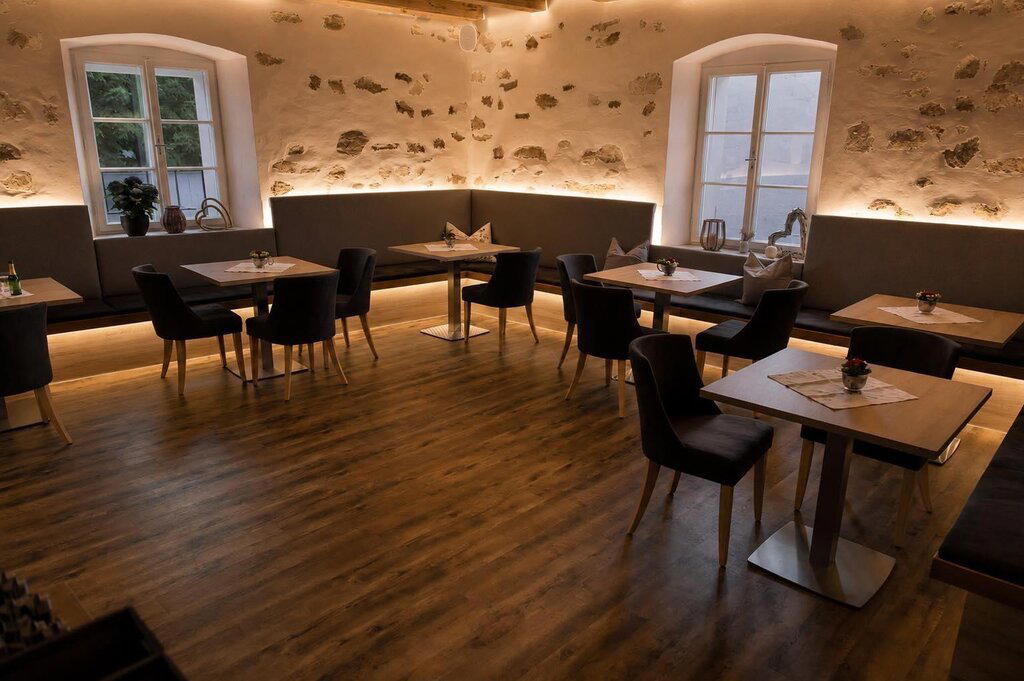
Bars in Mariazell
Browse all →
Hotels in Mariazell
Browse all →
At a Glance
- Classic
- Cozy
- Rustic
- Elegant
- Family
- Casual Hangout
- Group Dining
- Celebration
- Hotel Restaurant
- Historic Building
- Panoramic View
- Local Sourcing
- Mountain
Traditional and hospitable, with a classic hotel-restaurant feel and an emphasis on regional warmth, comfort, and old Austrian character.