


Michelin Bib Gourmand · Falstaff Restaurant - 93 Falstaff Points
Our verdict
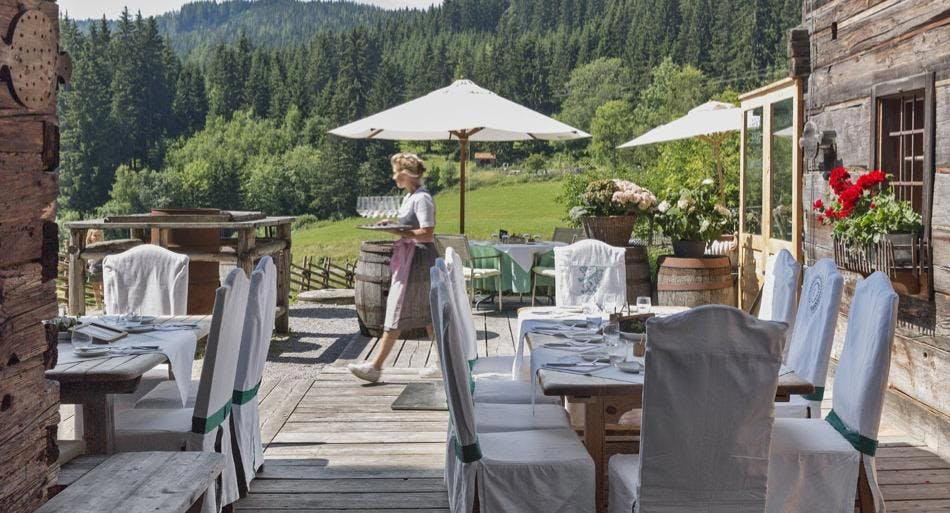
Set on a working estate in the Styrian hills outside Turnau, Wirtshaus Steirereck am Pogusch holds a Michelin Bib Gourmand and an Opinionated About Dining recommendation for its hyper-seasonal, farm-sourced regional cooking. Weekday menus rotate by theme — offal on Thursdays, freshwater fish on Fridays — while the communal Schankkuchl counter (Thursday to Saturday) serves fire- and steam-cooked dishes at a shared table. Accommodation ranges from a treehouse to a converted hunting lodge.

Pearl is the En Primeur Club membership app — saves, bookings, and concierge access live there. Same editors, same standards.
- Address
- Pogusch 21, 8625 Pogusch, Austria
- Phone
- +43 3863 2000
- Website
- steirereck.at
- Directions
- Get directions
The menu
What to order
- Steirisches Kalb
- Fedelkoch
- Pogusch Bouillon
Where the Styrian Hills Set the Menu
The approach to Pogusch 21 already signals what kind of meal is coming. The estate sits in open hill country above the Mürztal valley, surrounded by farmland and forest, and the building itself reads as a working property rather than a designed destination. That context is not incidental — it is the premise of the cooking. In a category where farm-to-table has become shorthand for a supplier credit on the menu, the kitchen here operates from its own farm and from the immediate surrounding landscape, a degree of supply-chain compression that is genuinely rare in European restaurant dining at any price tier.
Heinz Reitbauer's name appears on this property as well as on Steirereck im Stadtpark in Vienna, and the two addresses represent opposite poles of what Austrian cuisine can look like in practice. Pogusch operates at €€, with a format built around the week's available produce rather than around an authored tasting sequence. The contrast is instructive: the same culinary thinking applied to a rural Wirtshaus context produces something structurally different but thematically continuous.
The Weekly Rotation and What It Signals
The rotating weekly menu structure is not a marketing device. It reflects what serious farm-sourced cooking actually requires — the ability to build a menu around what is ready rather than what was planned months ago. Wednesdays are given over to garden, field and forest; Thursdays focus on offal; Fridays on freshwater fish; Saturdays mix the categories. This format asks something of the diner that most restaurant experiences do not: you book around a theme, not just a date. That pre-commitment to a category is a good proxy for the kitchen's confidence in its supply and its technique.
Offal cookery in particular is a useful signal. It is the most demanding test of a regional Austrian kitchen because it requires both sourcing integrity and the willingness to serve dishes that a softer audience might resist. The Thursday focus positions Pogusch inside a tradition of nose-to-tail Styrian cooking that goes back well before sustainability became a selling point. Similar commitments to whole-animal and foraged-ingredient work appear at peers such as Gannerhof in Innervillgraten and Fahr in Künten-Sulz, though each interprets regional tradition through a different geographic and cultural lens.
The Schankkuchl and the Case for Communal Dining
Thursday through Saturday, an alternative format operates within the estate: the Schankkuchl, where dishes are prepared over fire or steam at a communal table. Open-fire cooking at this level is a different discipline from the main kitchen, it demands timing and temperature control without the precision equipment that modern restaurant kitchens rely on, and it places the preparation in partial view of the guests. The communal table format changes the social dynamic of the meal in ways that matter: conversation crosses tables, the sequence of dishes becomes collective rather than individual, and the physical warmth of a fire in a Styrian hill estate creates an atmosphere that a formally set dining room simply cannot replicate.
Austria's rural restaurant tradition has always maintained this dual register, the formal Gaststube alongside a more convivial, fire-centred alternative, and Pogusch preserves that structural duality in a contemporary operating context. Diners who arrive expecting the controlled silence of a tasting-menu room will need to recalibrate. Those who arrive expecting a lively Alpine Wirtshaus may find the kitchen's ambition exceeds their expectations in the other direction.
Awards and Peer Position
The Michelin Bib Gourmand, held as of 2025, places Pogusch in a specific tier of European dining: properties where price remains accessible but kitchen quality clears a meaningful threshold. The Bib designation is not a consolation prize below a star; it is Michelin's explicit endorsement of value-to-quality ratio, a different evaluative frame from the starred hierarchy. An Opinionated About Dining Casual Europe ranking of 734 (2025), alongside a prior OAD recommendation in 2023, adds a second independent data point from a critic-weighted survey system that skews toward informed, well-travelled voters. Together these signals position Pogusch as performing at a level that its price range does not immediately advertise.
For comparison, the Austrian restaurants operating at the creative €€€€ level, Ikarus in Salzburg, Döllerer in Golling an der Salzach, Obauer in Werfen, operate with different cost structures, different service architectures, and different audience expectations. Pogusch at €€ with a Bib Gourmand and OAD recognition occupies a value position that has few direct equivalents in the Austrian regional dining category. Other hyper-regional Alpine estates with comparable sourcing credentials and farm-based supply chains are rare; comparable cooking at this price tier is rarer still.
The Estate as a Place to Stay
Accommodation at Pogusch is structured around the estate's architectural history rather than a unified design concept. The options include a treehouse built to contemporary specifications, former stables converted for guest use, a hunting lodge, and a glass house. These are not interchangeable rooms, each format carries a different sensory relationship to the landscape, and the choice of accommodation shapes the experience of the estate itself. The practical advantage is that staying on-site resolves the question of how to reach a property sitting in rural Styrian hill country, where road access is the only realistic option. For guests travelling from Vienna or Graz, the estate is a destination in its own right rather than a stopover. For context on where Pogusch sits relative to the broader regional accommodation offer, see our full Turnau hotels guide.
Planning a Visit
The estate sits outside the standard urban dining circuit, and visiting requires a commitment to the format that the rotating weekly menu demands. Choosing a day means choosing a culinary category, and that specificity rewards guests who engage with the structure rather than treating it as incidental. The Schankkuchl operates Thursday through Saturday and should be considered a distinct booking rather than an alternative to the main dining room, the communal format and fire-cooking context produce a meaningfully different experience.
For broader planning across the region, our full Turnau restaurants guide covers the dining options in and around the area, and our Turnau experiences guide maps what else the Styrian uplands offer beyond the table. Those building a longer Austrian itinerary around serious regional cooking should also consider Kräuterreich by Vitus Winkler in Sankt Veit im Pongau, Griggeler Stuba in Lech, Ois in Neufelden, Schwarzer Adler in Hall in Tirol, Stüva in Ischgl, and Restaurant 141 by Joachim Jaud in Mieming as reference points across the broader Alpine regional category. The Turnau bars guide and Turnau wineries guide round out the picture for those spending more than a night in the area.
Frequently asked questions
Can I bring kids to Wirtshaus Steirereck am Pogusch?
The Wirtshaus setting and the €€ price range both suggest a more relaxed environment than a tasting-menu restaurant, and the range of dining spaces from cosy and rustic to light and modern gives families flexibility. The communal Schankkuchl format (Thursday to Saturday) works particularly well for guests who prefer an informal, convivial atmosphere over a formal service sequence. For rural Austrian Wirtshaus dining in this price tier, children are generally a reasonable fit, though booking ahead and confirming current arrangements with the venue directly is advisable.
Is Wirtshaus Steirereck am Pogusch better for a quiet night or a lively one?
The answer depends on which format you book. The main dining rooms span a range from rustic and intimate to airy and contemporary, and mid-week evenings with the themed menus (garden on Wednesdays, fish on Fridays) tend toward a quieter register. The Schankkuchl on Thursday through Saturday, with its communal table and fire-cooking format, runs considerably livelier. The OAD and Bib Gourmand recognition both reflect a property operating at higher than its price tier implies, so neither option is casual in the cooking, the atmosphere is the variable, not the kitchen's commitment.
What's the signature dish at Wirtshaus Steirereck am Pogusch?
Rotating weekly menu structure means the kitchen does not operate around fixed signature dishes in the way a static tasting menu does. What the format guarantees is thematic coherence by day: offal cookery on Thursdays and freshwater fish on Fridays represent the kitchen's most specific technical commitments, and either day offers the clearest window into what Pogusch does that its peers at the same price tier typically do not. The farm-sourced and foraged ingredient base, recognised by Michelin's Bib Gourmand assessors and OAD's critic network, is the consistent element across all four days.
Fast Comparison
| Venue | Cuisine | Price | Awards |
|---|---|---|---|
| Wirtshaus Steirereck am POGUSCHThis venue — the venue you are viewing | Regional Austrian Country Cooking | $50–100 | Michelin Bib Gourmand · Falstaff Restaurant - 93 Falstaff Points |
| Steirereck im Stadtpark | Creative | Not listed | Michelin 3 Star |
| Döllerer | Contemporary Austrian, Innovative | Not listed | Michelin 2 Star |
| Ikarus | Modern European, Creative | Not listed | Michelin 2 Star |
| Mraz & Sohn | Modern Austrian, Creative | Not listed | Michelin 2 Star |
| Obauer | Classic Cuisine | Not listed | Michelin 2 Star |
Recognition history
Dated appearances from independent guides and award organizations, with the underlying list record or original source where available.
Michelin Bib Gourmand
Michelin
Falstaff Restaurant - 93 Falstaff Points
Falstaff
Opinionated About Dining Casual in Europe Recommended
Opinionated About Dining
Full recognition history (7 entries)
Michelin Bib Gourmand
Michelin
Opinionated About Dining Casual in Europe Ranked #734
Opinionated About Dining
Michelin Bib Gourmand
Michelin
Opinionated About Dining Casual in Europe Recommended
Opinionated About Dining
Continue exploring
More in Turnau
Restaurants in Turnau
Browse all →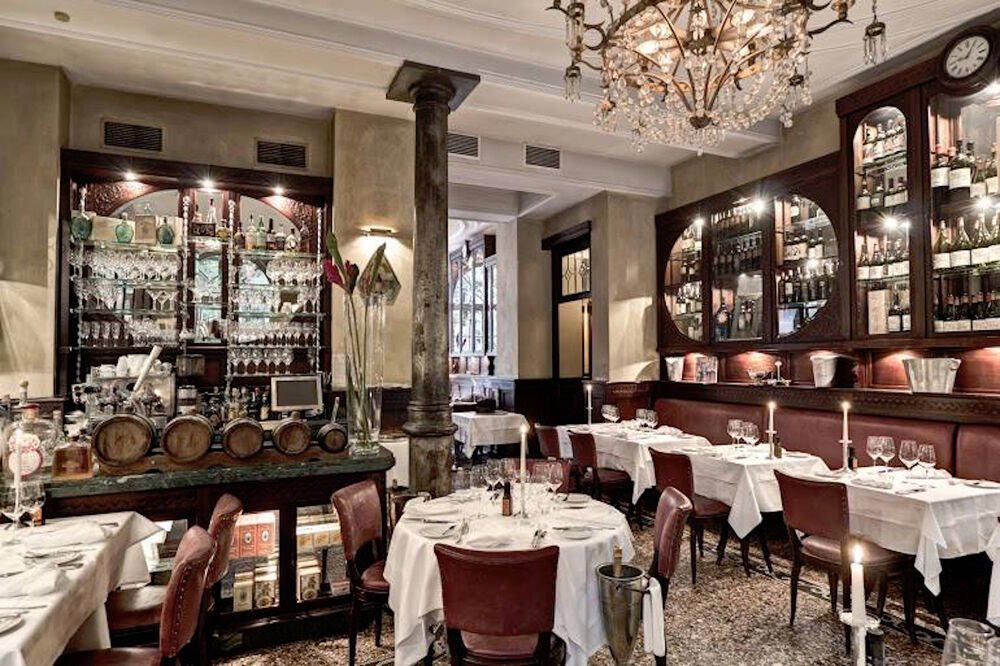
Bars in Turnau
Browse all →

Hotels in Turnau
Browse all →

Details
- Rustic
- Cozy
- Elegant
- Scenic
- Special Occasion
- Date Night
- Group Dining
- Open Kitchen
- Terrace
- Garden
- Private Dining
- Extensive Wine List
- Farm To Table
- Local Sourcing
- Mountain
- Garden
- A La Carte
- Small Plates
- Vegetarian Friendly
- Gluten Free Options
- Vegan Options
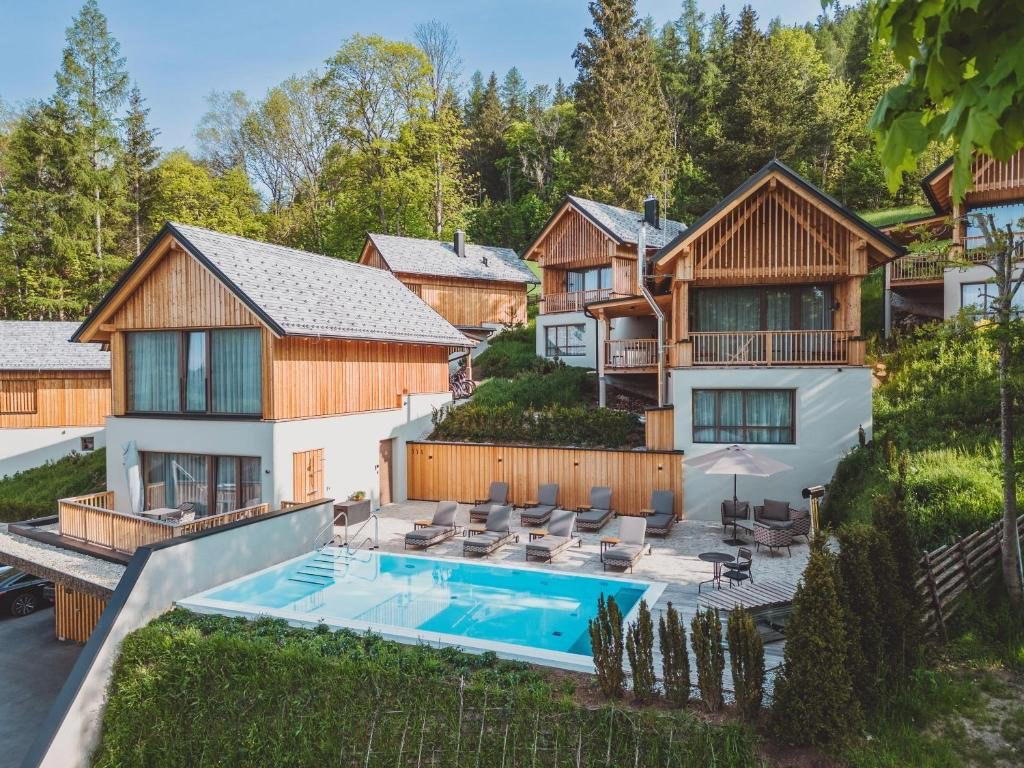
Inviting dining areas ranging from cosy and rustic to light and modern, with a terrific terrace offering beautiful mountain views; warm, natural atmosphere enhanced by attentive service and open-fire cooking.