
Gokumen Aonisai belongs to Osaka’s compact, queue-driven ramen culture rather than its expense-account dining circuit. The draw is format as much as fame: ramen and tsukemen served from an eight-seat counter, with repeated Tabelog 100 Ramen recognition through the Osaka and West lists placing it among the city’s serious noodle rooms.
Pearl is the En Primeur Club membership app — saves, bookings, and concierge access live there. Same editors, same standards.
- Address
- 大阪府吹田市末広町21-53
- Website
- tabelog.com
 Saves & bookings on Pearl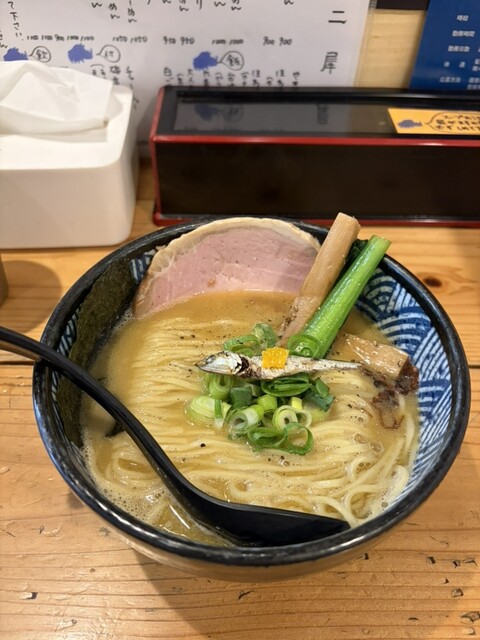
Approach ramen in Osaka and the city quickly divides into two moods: neon-speed bowls near major stations, and smaller counters where the meal narrows to a sequence of broth, noodles, toppings, and exit rhythm. Gokumen Aonisai sits in the second camp. The room is counter-only, the category is ramen and tsukemen, and the experience is built around a compressed progression rather than the leisure of a tasting menu.
That progression matters. Ramen at this level is not a single-note comfort bowl; it is a short-form composition with a beginning, middle, and finish. The first impression comes through aroma and broth weight, then the noodle texture takes over, then the final third tests balance as salt, fat, heat, and dilution change in the bowl. Tsukemen sharpens that structure further because dipping noodles separate texture from broth concentration. The diner controls the pace, but the kitchen controls the frame.
A counter meal where the arc is the point
Osaka’s ramen scene rewards precision at modest prices. This is a city where a serious bowl can compete for attention with okonomiyaki counters, kushikatsu shops, department-store basements, and late-night izakaya cooking. The pressure on ramen is different from sushi or kaiseki: there is little ceremony to hide behind, and the meal has to make its case quickly.
Gokumen Aonisai’s repeated Tabelog 100 selections, including Ramen OSAKA 2025 and earlier WEST list appearances, place it in a documented peer group rather than the general pool of neighborhood noodle shops. The distinction is useful because Tabelog’s Hyakumeiten lists tend to reward consistency within a category. For ramen, that means the counter must hold up across repeat local scrutiny, not just a single high-profile review cycle.
The useful comparison is not with formal dining, but with other Osaka meals in the same planning band. Ramenya Akagi operates in a similar low-price range, while Hakata Tonkotsu Tenjinki and KUCHE sit in the next common ramen bracket. Épais Coup moves into a different spend category altogether, and isato belongs to another casual-dining lane. Against that spread, Gokumen Aonisai reads as a specialist stop: a focused noodle counter, not a broad Osaka dining sampler.
For visitors building a day around food, that focus is an advantage. A ramen counter can anchor a half-day without consuming the whole itinerary. Pair it with bakery culture at 52CHO-ME BAKERY, a pork-bun stop at 551 Horai (551蓬莱), or a coffee break at .cafe, and the day starts to show Osaka’s range without pretending every meal needs to be maximal.
Why the format suits Osaka's northern edge
The location in Suita changes the reading of the meal. Central Osaka ramen often competes with nightlife, transit, and shopping traffic; a smaller suburban counter asks for more intent. That does not make it obscure, it makes it less incidental. Diners who make the trip are usually there for the bowl, not because they drifted past a station-front queue.
The eight-seat counter also shapes behavior. Small ramen rooms in Japan depend on turnover, line discipline, and an unspoken compact between kitchen and diner. The meal is not rushed in the crude sense, but it is efficient by design. This is where ramen differs from the city’s Italian dining at a canto (Italian) or pizza at 99 Pizza Napoletana Gourmet: the pleasure is concentrated, not extended.
That concentration is also why awards recognition matters here. In a category where prices stay accessible and rooms are often tiny, reputation cannot be explained by luxury signals. Selection on the Tabelog 100 Ramen lists gives a clearer read: the counter has earned attention inside a category where repeat visits, local comparison, and technical execution carry more weight than décor or service theatre.
The better way to think about the meal is as a compact tasting progression. The first minutes establish the broth’s force and temperature. The middle stretch is about noodle structure, especially in tsukemen, where bite and dipping ratio become the meal’s engine. The finish tests whether the bowl remains coherent after repeated passes through fat, seasoning, and starch. A strong ramen counter is judged by that last third as much as the first spoonful.
How to place it in an Osaka food itinerary
The restaurant is suited to diners who value narrow specialization. It is less useful for groups wanting a long, social meal, private-room comfort, or a broad menu. Solo diners and pairs tend to fit the format better because counter ramen rewards decisiveness: choose the style, eat while the bowl is in condition, and let the next diner take the seat.
For a broader Osaka plan, use ramen as one register in the city rather than the whole argument. The full restaurant map can run from casual counters to Italian rooms, bakeries, and regional Japanese cooking; Our full Osaka restaurants guide is the natural place to widen the search. Travelers pairing food with lodging, drinking, wine, or cultural programming can also cross-check Our full Osaka hotels guide, Our full Osaka bars guide, Our full Osaka wineries guide, and Our full Osaka experiences guide.
Ramen also travels well as a lens for Japan’s wider casual-dining intelligence. A noodle counter in Suita has little in common stylistically with -Grilled beef Sukiyaki- KAMAKURA TANUKIAN 鎌倉 たぬき庵 in Kamakura. 鮪と炭火焼き うお炭 秋葉原店 in Tokyo.know in Kumamoto, or (Shoku) Vietnam in Kawasaki, yet all four show how specific formats define a meal before décor or price does. The same applies to [Curry Senmon Ten] Maruyama Kyoju. in Sapporo, [ki:] in Kyoto, Jōdo Saké Bar in Los Angeles, and Onigiri Time in Pasadena: the sharper the format, the less useful generic praise becomes.
The editorial call is simple. This is not the Osaka meal for lingering, ceremony, or breadth. It is the meal for understanding how much narrative a ramen counter can fit into a short sitting: broth as opening argument, noodles as structure, the final third as proof of control.
Price and Recognition
Comparable venues for orientation by cuisine and category.
| Venue | Cuisine | Price | Notes |
|---|---|---|---|
| Gokumen AonisaiThis venue — the venue you are viewing | Suita, Ramen & tsukemen shop | $ | Not listed |
| Udon Kurajuu | Asahi, Osaka Udon & Tempura Shop | $ | Not listed |
| Motsuyaki Doppo Tenma ten | Kita, Japanese motsuyaki standing bar | $ | Not listed |
| Kishimen Amano | Not listed | $ | Kita, Nagoya-style miso udon and kishimen |
| Yotsubashi Cafe | Not listed | $ | Nishi, Japanese yoshoku-style cafe specializing in hamburg steak |
| Menya Joroku Nanba ten | Chūō, Takaida-style ramen counter | $ | Not listed |
Recognition history
Dated appearances from independent guides and award organizations, with the underlying list record or original source where available.
Tabelog 100 #30 · No. 30
Tabelog · Tabelog 100 - Ramen - OSAKA - 2025
Continue exploring
More in Osaka
Restaurants in Osaka
Browse all →




Bars in Osaka
Browse all →


Hotels in Osaka
Browse all →



Wineries in Osaka
Browse all →
At a Glance
- Lively
- Cozy
- Solo
- Casual Hangout
- After Work
- Standalone
A small, non-smoking counter-only ramen shop with a casual, bustling atmosphere and constant lines outside, focused on efficient solo and friends’ dining rather than lingering.