
Kishimen Amano puts Nagoya-style flat wheat noodles inside Osaka’s Umeda commuter rhythm, where lunch efficiency and evening looseness create two different readings of the same counter-and-table format. Its Tabelog 100 Udon WEST 2024 selection gives the room a credential beyond convenience, while the menu’s udon and oyako-don focus keeps the appeal grounded rather than ceremonial.
Pearl is the En Primeur Club membership app — saves, bookings, and concierge access live there. Same editors, same standards.
- Address
- Japan, 〒530-0017 Osaka, Kita Ward, Kakudacho, 2−5 ホワイティうめだノースモール1
- Phone
- +81 6-6312-3470
- Website
- osakaamano.co.jp
 Saves & bookings on Pearl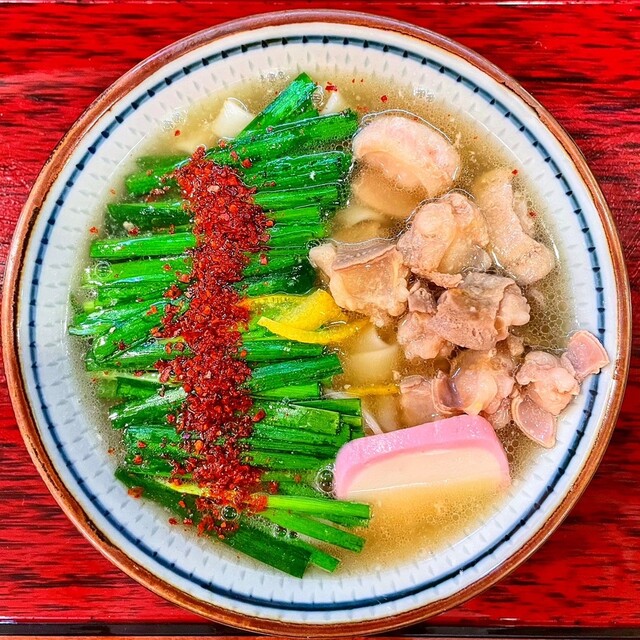
Whity Umeda does not ask diners to slow down. The underground mall moves in commuter pulses: office workers cutting through from train lines, shoppers between department stores, solo diners seeking a seat without negotiation. In that flow, Kishimen Amano fits a specific Osaka genre: the serious noodle shop hidden in plain sight, compact, functional, recognized enough for a detour, and casual enough that the meal never becomes an event.
The useful lens is timing, not luxury. Lunch in Umeda rewards speed, clarity, and price discipline; dinner lets the same bowl-and-rice format turn more social, especially with sake. That split matters because udon shops in Japan often carry two identities: by day, precise hunger-solvers; by night, low-friction neighborhood dining rooms, especially near stations where commuting and eating blur.
Flat wheat noodles in a city built on faster lunches
Kishimen is associated more directly with Nagoya than Osaka, giving the room its first point of interest. Osaka’s noodle imagination tends to move between udon softness, dashi culture, standing soba practicality, and the ramen boom that draws younger diners into denser, louder formats. Flat wheat noodles sit differently: regional rather than trend-led, and logical in Umeda, where one underground network compresses many Japanese eating habits.
Kishimen Amano’s Tabelog 100 Udon WEST 2024 selection places it in a selective regional noodle conversation, not a generic station-mall category. The credential matters because the setting can mislead first-time visitors: an underground commercial passage may look like pure convenience, yet the award shows the shop is judged against udon specialists across western Japan, not only nearby lunch counters.
The menu frame is narrow by design: udon, wheat noodles, and oyako-don. In Osaka, where department-store basements and station corridors overwhelm with choice, this focused noodle-and-rice format gives the meal clear grammar. Lunch is practical: a solo diner can read the room, order without ceremony, and leave. Dinner changes less through theatrical service than permission to linger; the same categories feel warmer when the room is not fighting the office clock.
Umeda has plenty of adjacent quick-meal competition at similar spend levels, including curry counters such as curry restaurant BRUNO HEP NAVIO ten and Cantegrande Curry San hiroba ten, plus bakery-led stops like le Boulanger de monge Umeda hankyuu ten, ECHIRE MARCHE AU BEURRE, and Al Roikku Hankyu umeda honten. Kishimen Amano is not competing with tasting-menu Osaka. It answers the traveler’s Umeda question: where can a modest meal carry enough local texture to beat convenience alone?
The lunch-dinner divide is the real story
At lunch, the appeal is structural. Counter seating gives solo diners a clean path through the meal, while the small table count keeps the room from feeling like a banquet hall disguised as a noodle shop. Osaka’s central districts understand solo diners, but not all treat solo eating as dignified. Here, the format accepts that a good meal may last less than an hour and still be properly considered.
Evening shifts the equation. Sake listed alongside the food categories suggests a room suited to a gentler after-work pace, not only refueling. It is a familiar Japanese station-district transformation: the same counter serving efficient lunch becomes a place for a bowl, a rice dish, and a drink before the train home. For travelers, dinner better explains how Umeda eats after retail thins out; lunch better captures value and rhythm.
The 23-seat scale matters. Seven counter seats and four tables let the room absorb couples, families, friends, and solo diners without changing identity. Private rooms and private-use dining are not part of the proposition, which is the point: public, everyday Japanese dining with an award signal, not a hushed occasion room.
That distinction fits a wider Osaka itinerary. Travelers building a Umeda food day can pair this noodle stop with Our full Osaka restaurants guide, then decide whether the evening belongs to cocktails via Our full Osaka bars guide or a hotel base through Our full Osaka hotels guide. The city rewards modular eating: one focused bowl, one department-store sweet, one bar, one late train.
How to place it inside an Osaka food day
The strongest case for the restaurant is editorial rather than sentimental. It shows that Osaka’s eating culture lives not only in market alleys, high-end counters, or neon restaurant streets, but also beneath the city, in commercial corridors where station geography sets tempo. The value is not escape from Umeda’s infrastructure; it is working inside it with enough specificity to avoid interchangeability.
For visitors comparing noodle culture across Japan, this is a useful corrective. Osaka is often reduced to takoyaki, okonomiyaki, kushikatsu, and late-night appetite, yet station dining is equally instructive. A recognized udon specialist in Umeda shows how the city eats between appointments, trains, and shopping floors: less theatrical than Dotonbori, often more revealing.
The broader EP Club map helps frame that choice. Nearby casual Osaka entries such as .cafe, 52CHO-ME BAKERY, 551 Horai (551蓬莱), 99 Pizza Napoletana Gourmet, and a canto (Italian) show how broad the city’s casual-to-polished range becomes beyond one dish category. For non-restaurant planning, Our full Osaka wineries guide and Our full Osaka experiences guide round out the city view.
Comparable browsing might include -Grilled beef Sukiyaki- KAMAKURA TANUKIAN 鎌倉 たぬき庵 in Kamakura. 鮪と炭火焼き うお炭 秋葉原店 in Tokyo.know in Kumamoto, (Shoku) Vietnam in Kawasaki, [Curry Senmon Ten] Maruyama Kyoju. in Sapporo, and [ki:] in Kyoto. For Japanese food culture abroad, Jōdo Saké Bar in Los Angeles and Onigiri Time in Pasadena show how narrower formats travel when they leave Japan.
The verdict is simple: treat the restaurant as a precision stop, not a grand night out. Lunch gives the cleanest expression of Umeda efficiency; dinner adds a softer after-work register. Either way, the draw is regional noodle specificity, a compact public room, and a recognized udon credential inside one of Osaka’s busiest transit ecosystems.
Peers You’d Cross-Shop
Comparable venues at a glance for context.
| Venue | Cuisine | Price | Notes |
|---|---|---|---|
| Kishimen AmanoThis venue — the venue you are viewing | Nagoya-style miso udon and kishimen | $ | Not listed |
| Chitose Udon | Osaka Nikusui Udon | $ | Namba |
| Deiribashi Kintsuba Ya | Traditional Japanese Wagashi & Kintsuba Café | $ | Kita |
| Yotsubashi Cafe | Japanese yoshoku-style cafe specializing in hamburg steak | $ | Nishi |
| Jyonetsu Don Hokuto | Udon and curry udon shop | $ | Nishi |
| Tai Paitan Ramen ○de▽ | Sea bream paitan ramen | $ | Yodogawa |
Recognition history
Dated appearances from independent guides and award organizations, with the underlying list record or original source where available.
Tabelog 100 #95 · No. 95
Tabelog · Tabelog 100 - Udon - WEST - 2024
Continue exploring
More in Osaka
Restaurants in Osaka
Browse all →




Bars in Osaka
Browse all →




Hotels in Osaka
Browse all →



Wineries in Osaka
Browse all →
At a Glance
- Lively
- Casual
- Classic
- Solo
- Family
- Casual Hangout
- After Work
- Group Dining
- Standalone
Current opening hours
- Monday
- 11 AM–3 PM, 5–10 PM
- Tuesday
- 11 AM–3 PM, 5–10 PM
- Wednesday
- 11 AM–3 PM, 5–10 PM
- Thursday
- 11 AM–3 PM, 5–10 PM
- Friday
- 11 AM–3 PM, 5–10 PM
- Saturday
- 11 AM–10 PM
- Sunday
- 11 AM–9 PM
Hours can change for holidays and private events. Last verified .
Bright, open-front noodle shop in Whity Umeda’s underground mall with counter and small tables, fast turnover, and the energetic feel of a busy commuter-friendly spot rather than a lingering sit-down restaurant.