
Tabelog 100 #72
Our verdict
Goichi Nishitenma ten places Osaka yakitori in the careful middle ground between casual grill culture and allocation-driven counter dining. Its Tabelog 100 Yakitori WEST 2025 selection, compact counter-and-room format, and ingredient-led course structure make it a serious Nishitenma address without pushing into the city’s highest sushi pricing tier.

Pearl is the En Primeur Club membership app, where members save venues, book tables and use the concierge.
The menu
What to order
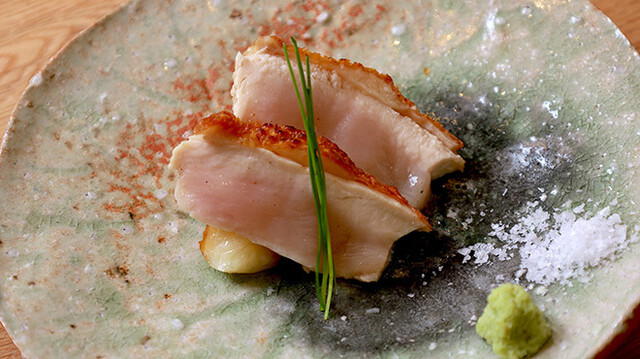
- Momo tataki (chicken thigh tataki)
- Homemade chicken sausage
- Chicken sashimi
- Marinated chicken liver
- Duck hotpot course (kamo nabe)
Osaka does not always announce itself with neon certainty. Away from the busiest postcard images, the city has quieter dining rooms that suit yakitori: a format of concentration, grill work, and diners who understand Japanese chicken cookery as timing rather than ornament. Goichi Nishitenma ten belongs to this narrower Osaka register, where pacing and the grill matter as much as smoke.
Osaka’s eating identity is often reduced to batter, sauce, and street-side speed, but its stronger restaurant culture is wider: serious yakitori, sushi counters, kappo rooms, curry specialists, bakeries, and small Italian dining rooms, each with its own rhythm. For that spread, Our full Osaka restaurants guide maps the city beyond one genre, while other Osaka dining rooms show how wide the city’s appetite runs.
Yakitori where sourcing carries the argument
Ingredient quality is where yakitori gains authority or collapses into repetition. The vocabulary is familiar: skewers, grill heat, tare or salt, drinks alongside. At the serious end, selection and sequencing make the difference. A focused format lets the kitchen move through cuts and preparations with less dependence on casual grazing, important when the appeal is calibration, not abundance. Goichi Nishitenma ten is listed for yakitori, placing it closer to ingredient-led dining than an after-work skewer stop.
The Tabelog 100 Yakitori WEST 2025 selection is a useful external marker. Tabelog’s Hyakumeiten lists are not Michelin stars and should not be read as the same judgement, but they show a venue has entered a recognized regional conversation. For Osaka yakitori, that matters because the category is crowded: inexpensive neighborhood grills at one end, more formal formats at the other. Goichi Nishitenma ten is listed at JPY 8,000 - JPY 9,999, which gives travelers a clear sense of dinner spend without making it a luxury-marker booking.
That position helps travelers allocate meals in Osaka. An itinerary can easily become sushi-heavy or kaiseki-heavy, especially when awards drive choices. Yakitori offers another test of Japanese technique: heat management, poultry handling, drink compatibility, and keeping a sequence lively without luxury seafood. The category does not need elaborate plating; it needs raw material worthy of attention.
A focused format suits the grill rather than the group dinner
The format reads best when the grill remains central. Experienced diners understand the cues before the menu opens: pacing and the relationship between cooking and skewer matter more than decorative theatre. Goichi Nishitenma ten’s appeal sits in that disciplined zone, where the cooking can feel focused without requiring the solemnity of a high-luxury meal.
That flexibility changes yakitori’s social use. Some of the category rewards diners who want a tightly controlled experience; other versions work as a more relaxed meal built around grilled chicken and drinks. In Osaka, where dining can be socially elastic, this kind of yakitori can serve both travelers and locals without becoming a banquet-style occasion. The point is not spectacle, but a comfortable frame for a serious grill.
Osaka shapes the mood. A meal here reads as a city evening rather than a set-piece for first-timers. Visitors who want the city around the table can pair dinner with planning across Osaka hotels, bars, wineries, and experiences; the point is dinner as part of Osaka’s wider evening pattern, not an isolated booking.
How it fits into a wider Japan dining itinerary
For travelers moving through Japan, Goichi Nishitenma ten works as counterpoint rather than trophy slot. Osaka gives easy access to specialist formats across the country’s dining map: beef-driven meals, casual charcoal cooking, regional modern dining, Vietnamese cooking, curry specialization, and smaller-format Kyoto dining. Outside Japan, Japanese drinking and rice formats have their own diaspora logic, but Goichi Nishitenma ten is best understood through Osaka’s local appetite for focused, ingredient-aware restaurants.
The better reason to come is not rarity. It is seeing how Osaka handles a disciplined grill category without losing comfort. Goichi Nishitenma ten is recognized in Tabelog 100 Yakitori WEST 2025 and carries a listed score of 3.70, placing it within a documented regional yakitori conversation. That recognition matters in a city with many cheaper ways to eat chicken and many more expensive ways to spend an evening.
The editorial call is simple: choose this for yakitori in Osaka when the aim is focus without ceremony. Diners chasing luxury markers should look elsewhere; diners who want Osaka’s serious but flexible grill culture will understand the appeal quickly.
What It’s Closest To
Nearby venues at a similar price tier for orientation.
| Venue | Cuisine | Price | Awards | Notes |
|---|---|---|---|---|
| Goichi Nishitenma tenThis venue (the venue you are viewing) | Yakitori Omakase | $50–100 | Tabelog 100 #72 | Not listed |
| Goichi | Yakitori (Japanese grilled chicken skewers) | $50–100 | Tabelog 100 #56 | Kita |
| ZEN | Yakitori & Japanese Izakaya | $50–100 | Tabelog 100 #92 | Fukushima |
| Kiyo Suke | Traditional Sukiyaki & Shabu-shabu | $50–100 | Tabelog 100 #87 | Chūō |
| Shushi Mon | Traditional Japanese Izakaya | $50–100 | Tabelog 100 #23 | Kita |
| Kitashinchi Shabushabu Sukiyaki Kiraku | Traditional Wagyu Shabu-shabu & Sukiyaki | $100–150 | Tabelog 100 #35 | Kita |
Recognition history
Dated appearances from independent guides and award organizations, with the underlying list record or original source where available.
Tabelog 100 #72 · No. 72
Tabelog · Tabelog 100 - Yakitori - WEST - 2025
Continue exploring
More in Osaka
Restaurants in Osaka
All restaurants in Osaka →




Bars in Osaka
All bars in Osaka →




Hotels in Osaka
All hotels in Osaka →




Wineries in Osaka
Browse all →
Details
- Cozy
- Lively
- Intimate
- Modern
- Date Night
- Business Dinner
- Group Dining
- Special Occasion
- After Work
- Solo
- Chefs Counter
- Open Kitchen
- Private Dining
- Standalone
- Sake Program
- Beer Program
- Local Sourcing
- Tasting Menu
- Omakase
- Counter Dining
- Set Menu
- Sake
- Beer
- Shochu
Current opening hours
- Monday
- 5–11 PM
- Tuesday
- 5–11 PM
- Wednesday
- 11:30 AM–1 PM, 5–11 PM
- Thursday
- 11:30 AM–1 PM, 5–11 PM
- Friday
- 11:30 AM–1 PM, 5–11 PM
- Saturday
- 11:30 AM–1 PM, 5–11 PM
- Sunday
- 5–11 PM
Hours can change for holidays and private events. Hours as of .
A relaxed but polished yakitori dining room with counter and table seating, subdued lighting, and a calm, modern atmosphere suited to both special occasions and everyday dinners; the focus is on the grill and course experience rather than flashy design.