On Bloor Street West, Gochu Libre Kantina works in a corner of Toronto dining that doesn't get enough serious attention: the intersection of Korean heat and Latin-American structure. The room and the drink list operate at the same register as the food, making it a reliable choice for anyone who wants substance alongside the spice.
Pearl is the En Primeur Club membership app — saves, bookings, and concierge access live there. Same editors, same standards.
- Address
- 815 Bloor St W, Toronto, ON M6G 1M1, Canada
- Website
- gochulibre.com
- Directions
- Get directions
 Saves & bookings on Pearl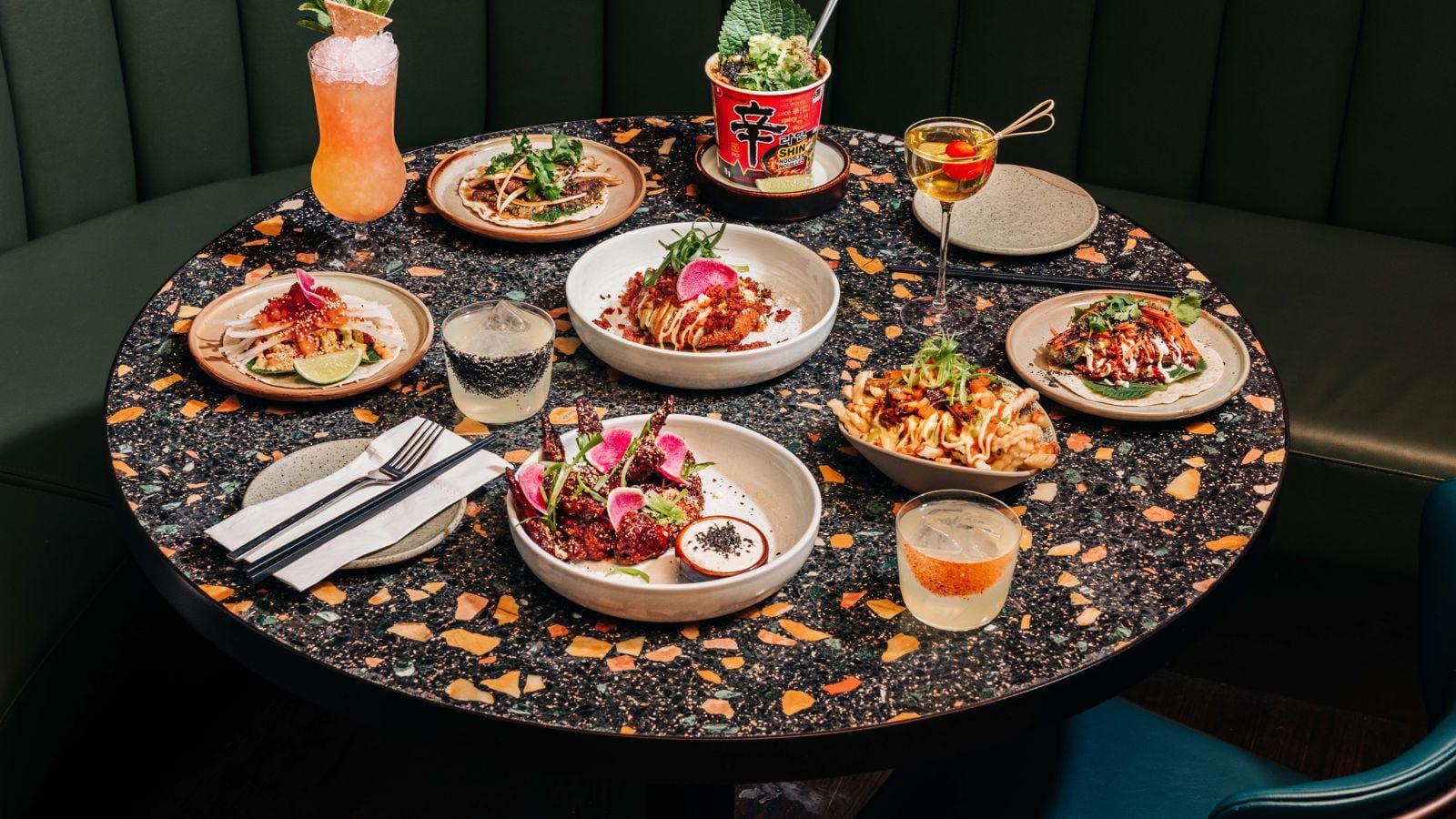
Bloor West's Spice Corridor and Where Gochu Libre Kantina Sits in It
Bloor Street West between Bathurst and Lansdowne has quietly assembled one of Toronto's more interesting mid-format dining strips, running from Korean grocers and Portuguese bakeries through to spots that fold both traditions into something harder to categorise. The area resists the polished homogeneity of King West and the destination-dining gravity of the Financial District, which is why it tends to produce restaurants with stronger points of view. Gochu Libre Kantina, at 815 Bloor St W, occupies that corridor with a format built around the convergence of Korean and Latin-American flavours.
Gochu is the Korean word for chilli pepper, the foundational heat source in the country's cuisine. Libre and kantina borrow from the Spanish-language tradition, suggesting something simultaneously free-form and canteen-style, a place where the rules of one culinary tradition are deliberately loosened by another. That framing matters because it sets the expectation correctly: this is not a fusion exercise in the diluted sense, but a kitchen working at the overlap of two distinct chilli cultures, each with its own fermentation logic, its own acid balance, and its own relationship with smoke and heat.
How the Korean-Latin Overlap Actually Works on the Plate
The Korean-Latin pairing is not as unlikely as it first sounds. Both cuisines organise around fermented condiments, gochujang and doenjang on one side, mole and salsa macha on the other. Both treat heat as a layered element rather than a blunt instrument, with the temperature curve of a Korean stew behaving similarly to the slow build of a well-made Mexican adobo. The structural logic of a taco, a vessel for a small, intensely seasoned filling, maps easily onto the Korean tradition of ssam, the lettuce or perilla wraps that serve the same architectural function. When a kitchen understands those parallels at a technical level rather than treating them as a novelty hook, the results tend to hold up across a full meal rather than fading after the first dish.
Toronto's broader dining scene has the range to contextualise what Gochu Libre Kantina is doing. At the formal end of the spectrum, tasting-menu restaurants like Alo (Contemporary) and omakase counters like Sushi Masaki Saito (Sushi, Japanese) operate in a completely different register, where the kaiseki-influenced precision of Aburi Hana (Kaiseki, Japanese) and the Italian-rooted depth of DaNico (Italian) or Don Alfonso 1890 (Contemporary Italian, Italian) represent the city at its most technically demanding. Gochu Libre Kantina is doing something categorically different, and that is not a limitation. The canteen format it implies in its name has its own discipline, one measured in consistency and value.
The Drink Program as the Second Language
Any serious consideration of a Korean-Latin kitchen has to account for the drink list, because both culinary traditions carry strong beverage cultures that do specific work alongside the food. Korean dining has increasingly made space for natural wine, the bright acidity and low-intervention character of skin-contact whites and light reds cutting through fermented sauces in a way that heavily oaked styles cannot. The Latin-American tradition brings its own counterpart in mezcal and tequila, whose agave bitterness and smoke function as a flavour bridge between protein and chilli heat.
Particularly thoughtful Korean-Latin programs treat the drinks list as a third cuisine, built to operate at the same frequency as the food rather than sitting alongside it as an afterthought. A wine list shaped around this kind of kitchen would typically reach toward high-acid bottles: Gamay from the Loire or Ontario's own Niagara Peninsula, Grüner Veltliner from Austria, orange wines from Georgia or Slovenia, and Riesling at varying sweetness levels depending on the heat intensity of a given course. If the spirits side is equally considered, it runs through mezcales with enough complexity to hold against gochujang marinades, and soju either served straight or integrated into low-ABV cocktails that don't compete with the food for centre stage.
For reference points on what considered regional Canadian wine programming looks like in a similar-latitude context, Restaurant Pearl Morissette in Lincoln has set a high standard for how a kitchen and a cellar can be built around the same philosophy. Further afield, Tanière³ in Quebec City demonstrates how a regional identity can be expressed across every element of a program, food and drink included. On the West Coast, AnnaLena in Vancouver has built a similar reputation for pairing intelligence that rewards the curious drinker. These are different kitchens working in different formats, but they share a commitment to the drink list as editorial statement, not commercial necessity.
Toronto in the Canadian Dining Context
Toronto's dining scene sits at the summit of the Canadian hierarchy by volume and by access to ingredients, but some of the country's most committed cooking happens elsewhere: at Eigensinn Farm in Singhampton, at Fogo Island Inn Dining Room in Joe Batt's Arm, or in the quieter regional registers of Narval in Rimouski and Cafe Brio in Victoria. What Toronto offers that those destinations cannot is the density of immigrant culinary tradition, which is exactly what makes a place like Gochu Libre Kantina possible. The Korean population concentrated in the area north of Bloor and the Latin-American communities spread through Roncesvalles and beyond are not demographic footnotes but the actual source material for this kind of cooking. That specificity of place matters when assessing whether a concept is grounded or simply trend-adjacent.
Internationally, the Korean-Latin idiom has earned serious attention. Le Bernardin in New York City and Lazy Bear in San Francisco represent the formal end of cities that also support a wide mid-format scene, and it is that mid-format tier, ambitious but accessible, where concepts like Gochu Libre Kantina tend to develop particularly loyal followings. Closer to home, The Pine in Creemore, Busters Barbeque in Kenora, and Jérôme Ferrer - Europea in Montreal all demonstrate how regional character shapes a dining experience in ways that urban concentration alone cannot replicate.
For anyone building a Toronto itinerary across multiple meals, the full picture is available in our full Toronto restaurants guide.
Planning Your Visit
The restaurant sits at 815 Bloor St W in Toronto's west end, accessible by TTC on the Bloor-Danforth line at Ossington station. The restaurant is open Tuesday through Sunday from 5 PM to midnight and is closed Monday; reservations are recommended.
Comparison Snapshot
Comparable venues nearby, for context on price, style, and recognition.
| Venue | Cuisine | Price | Notes |
|---|---|---|---|
| GOCHU LIBRE KANTINAThis venue — the venue you are viewing | Korean-Mexican Fusion | $$ | Not listed |
| Gateau Ghost | Korean-Parisian Fusion Bistro | $$ | Palmerston-Little Italy |
| Florette | Funky Modern Canadian with Seasonal Sharing Plates | $$ | Little Portugal |
| CHEFS HALL | Global Multi-Vendor Food Hall | $$ | Financial District |
| Levant | Levantine Sicilian Pizza Fusion | $$ | Dovercourt-Wallace Emerson-Junction |
| Hapa Toronto | Modern Japanese Izakaya Tapas | $$ | Palmerston-Little Italy |
Continue exploring
More in Toronto
Restaurants in Toronto
Browse all →
Bars in Toronto
Browse all →
Hotels in Toronto
Browse all →

At a Glance
- Lively
- Trendy
- Energetic
- Casual Hangout
- Open Kitchen
- Craft Cocktails
- Local Sourcing
Current opening hours
- Monday
- Closed
- Tuesday
- 5 PM–12 AM
- Wednesday
- 5 PM–12 AM
- Thursday
- 5 PM–12 AM
- Friday
- 5 PM–12 AM
- Saturday
- 5 PM–12 AM
- Sunday
- 5 PM–12 AM
Hours can change for holidays and private events. Last verified .
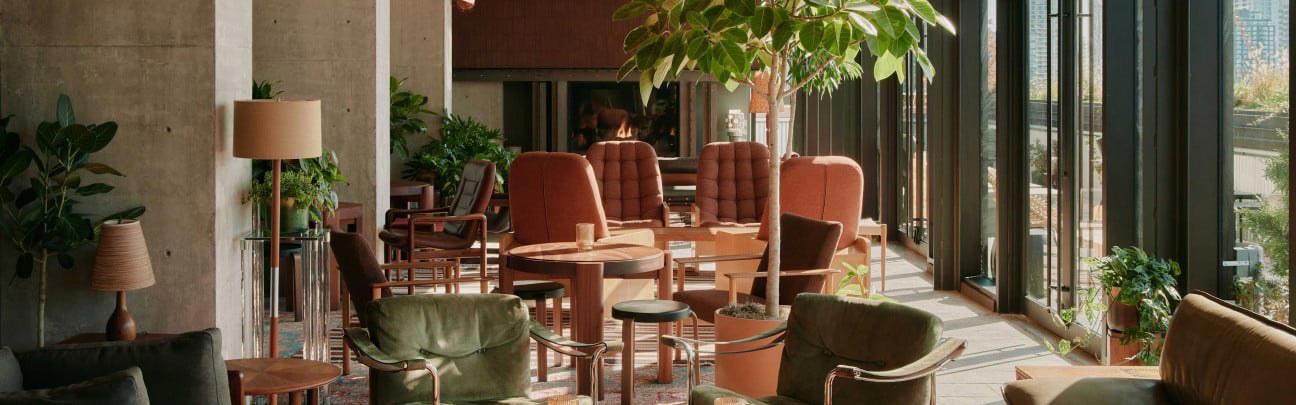
Sleek, sparsely decorated space with lively, high-energy vibes that intensify after dark.