
Gishu puts Gifu’s dumpling culture into a compact, counter-led format rather than a formal dining frame. Its Tabelog 100 Dumplings selections in 2019, 2021, and 2024 give it a clear national signal, while the small room and take-out option keep the experience rooted in the city’s everyday Chinese-Japanese eating habits.
Pearl is the En Primeur Club membership app — saves, bookings, and concierge access live there. Same editors, same standards.
- Address
- 岐阜県岐阜市住田町1-31 マツノビル 1F
- Phone
- +81582666227
- Website
- tabelog.com
 Saves & bookings on Pearl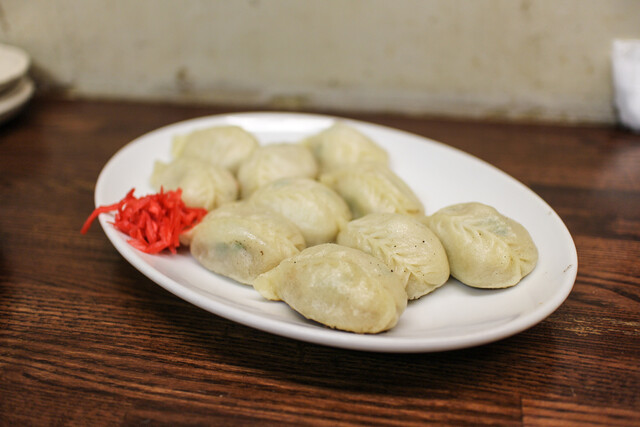
Approaching a small dumpling room in central Gifu is a different act from entering a kappo counter or a high-budget yakiniku house. The cues are plainer: counter seats, a short evening rhythm, and the sense that the meal is built around heat, turnover, and a narrow category rather than a long performance. In Japan, gyoza houses with serious followings often operate in this register. They ask less of ceremony and more of timing, repetition, and confidence with a few staple preparations.
Gishu belongs to that compact tradition. The public signals are unusually strong for a casual dumpling address: selection for Tabelog 100 Dumplings in 2019, 2021, and 2024, a 3.72 Tabelog score, and a format that lists dumplings and Chinese cooking rather than a broader modern-Japanese identity. Those details matter because gyoza is a crowded field in Japan. Recognition in this category does not reward luxury trappings; it tends to reward consistency, local appetite, and a dish category that can survive direct comparison across cities.
Gifu's gyoza case study is small-format, station-adjacent, and ingredient-led
The ingredient story here is not a farm-name performance. It is the more Japanese, more practical version: a restaurant whose credibility sits in how a narrow menu category handles wrapper, filling, fat, steam, and pan heat. Gyoza exposes sourcing and prep quickly. A poor wrapper turns heavy, a weak filling disappears, and careless cooking flattens texture. That is why dumpling specialists can develop reputations that exceed their price tier. The craft is visible in the final few minutes, but the real work sits earlier, in ratios and mise en place.
Gifu is also a useful setting for this kind of restaurant. The city’s dining scene is not defined only by destination tasting menus; it has a strong everyday-drinking and casual-counter culture around the station area, where a focused specialist can sit beside izakaya, bars, and small Chinese-Japanese rooms. Compared with Yakiniku Shun Yasai Fanbogi or THE Setsugekka, both operating in a higher dinner band, this kind of dumpling counter answers a different reader question: where does the city show skill without turning dinner into a major spend?
That contrast gives the place its editorial value. Tejaku Kappou Terada sits in the kappo conversation, Sake no Tori in a drinking-food lane, and Mikazuki Bar in the bar-night circuit. A dumpling specialist asks for a simpler decision: appetite, timing, cash, and tolerance for a small room. In that sense, Gishu is less a substitute for Gifu’s formal restaurants than a marker of how the city eats between categories.
Recognition matters more here because the format has little room for theatre
Awards and ratings can distort luxury dining, but they are useful in modest specialist categories because there are fewer distractions. A Tabelog 100 Dumplings listing places a restaurant inside a national conversation around a single food type. The repeat selections in 2019, 2021, and 2024 suggest that this is not a one-season burst of attention. For travellers, that is the trust signal: not a chef mythology, not a tasting-menu thesis, but repeated category recognition in a field where customers compare directly and often.
The room reinforces that reading. With 17 seats, including counter seating and a few small tables, the experience is scaled to quick concentration rather than lingering luxury. Counter-led dumpling shops work on proximity: the cooking rhythm is part of the room, and the meal is anchored by immediacy rather than plating language. The absence of private rooms and private-use format also tells the reader what not to expect. This is not where Gifu performs hospitality through space; it is where the city compresses a craving into a compact dining format.
Drink context also matters. Shochu appears in the public details, which places the restaurant in a casual evening register rather than a wine-led or cocktail-led one. For a broader night in Gifu, the category map can be useful: Aka Renga and Akane Ya sit elsewhere in the city’s restaurant conversation, while BAR-BAROSSA and BAROSSA cocktailier point toward Gifu’s drinking side. Belle Equipe (French) represents a more European frame. The point is not to rank them against one another; it is to read the city by format.
How to place it within a Gifu food itinerary
For travellers building a Gifu itinerary, this is the kind of stop that works because it resists overplanning as a grand occasion but rewards precision. The small seating count, no-reservation format, cash-only payment, and evening service until sell-out all point to a practical truth: arrive with flexibility and treat the meal as a focused specialist stop, not as a long hosted dinner. Take-out is part of the format, which also suits the category. Dumplings travel better than many counter foods, though the sharpest version of any pan-cooked dumpling is usually the one eaten closest to the pan.
The broader Gifu map helps frame the decision. Use our full Gifu restaurants guide for dining context, our full Gifu hotels guide for where to stay, our full Gifu bars guide for after-dinner drinking, our full Gifu wineries guide for wine-focused planning, and our full Gifu experiences guide for cultural time around the meal. Readers comparing casual Japanese specialist formats beyond Gifu can also look at -Grilled beef Sukiyaki- KAMAKURA TANUKIAN 鎌倉 たぬき庵 in Kamakura. 鮪と炭火焼き うお炭 秋葉原店 in Tokyo.cafe in Osaka.know in Kumamoto, (Shoku) Vietnam in Kawasaki, [Curry Senmon Ten] Maruyama Kyoju. in Sapporo, Jōdo Saké Bar in Los Angeles, and Onigiri Time in Pasadena.
The editorial read is clear: Gishu is valuable because it shows how a narrow, ingredient-sensitive category can carry serious local weight without adopting the codes of luxury dining. In a city where higher-spend meat, kappo, and bar formats all compete for attention, this is the dumpling counter as a test of basics. The right expectation is not spectacle. It is a short, tightly focused meal where the difference between ordinary and memorable depends on sourcing choices, filling balance, and cooking discipline.
How It Stacks Up
Comparable venues by cuisine and price in the same metro.
| Venue | Cuisine | Price | Notes |
|---|---|---|---|
| GishuThis venue — the venue you are viewing | Gyoza-focused Chinese dumpling house | $$ | Not listed |
| hiro | Refined Chinese | $$$ | Takamicho |
| Rikidou | Ramen & tsukemen shop | $$ | Gifu |
| Akane Ya | Yakiniku & Chinese Grill | $$$ | Mitonocho |
| Kawaramachi Izumiya | Traditional Ayu Fish Cuisine | $$$ | Kawaramachi |
| Chuka Dining Hanabi | Modern Chinese dining with congee & dim sum-style specialties | $$ | Kita-jima, Gifu City |
Recognition history
Dated appearances from independent guides and award organizations, with the underlying list record or original source where available.
Tabelog 100 #21 · No. 21
Tabelog · Tabelog 100 - Dumplings - 2024
Continue exploring
More in Gifu
Restaurants in Gifu
Browse all →


At a Glance
- Lively
- Cozy
- Well Known
- Energetic
- Casual Hangout
- Solo
- After Work
- Late Night
- Date Night
- Standalone
- Street Scene
A compact, non-smoking gyoza counter with just 17 seats, bright and bustling in the evenings, where guests sit close together at the counter and small tables while plates of sizzling dumplings and simple Chinese dishes come out until they sell out.