
Gian Franco gives Tokyo’s bread culture a Setagaya address rather than a department-store stage. The Yoga bakery is listed in Tabelog 100 Bread Tokyo 2022, works in the accessible JPY 1,000–1,999 range, and fits the city’s serious everyday baking tier: modest spend, specialist focus, and a neighbourhood rhythm shaped by regulars rather than spectacle.
Pearl is the En Primeur Club membership app — saves, bookings, and concierge access live there. Same editors, same standards.
- Address
- 4 Chome-14-21 Yoga, Setagaya City, Tokyo 158-0097, Japan
- Phone
- +81 3-6432-7317
- Website
- gianfranco.jp
 Saves & bookings on Pearl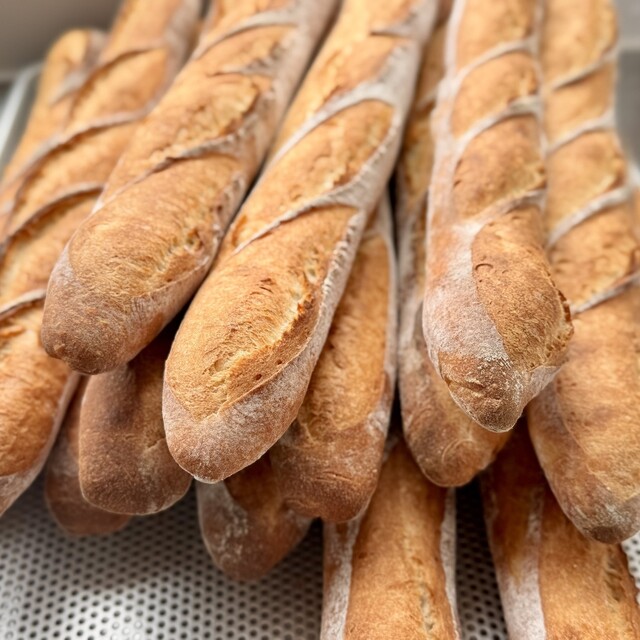
Yoga’s commercial streets move at a different tempo from the station-front food halls and basement bakeries that define much of central Tokyo bread shopping. The mood is residential, quieter, and local: people buy for the day rather than for a train-platform souvenir box. In that setting, Gian Franco fits a specific Tokyo category: the neighbourhood bakery with enough craft recognition to draw attention beyond its ward.
Tokyo bread culture is not one tradition. It moves between shokupan specialists, French-leaning pâtisserie-boulangeries, German-style loaves, sandwich counters, and small shops built around daily habits. The strongest addresses are not always the largest. They make bread part of the city’s food grammar: bought in the morning, carried home, eaten with coffee, packed for children, or used as a quiet anchor between restaurant reservations. Gian Franco sits in that everyday-specialist lane, with Bread and Sandwich listed as its defining categories and a Tabelog score of 3.74 attached to a Tabelog 100 Bread Tokyo 2022 selection.
Setagaya bread culture, measured by repeat purchase rather than theatre
Setagaya helps explain why Tokyo bakery acclaim can look understated from outside. The ward has a dense residential market, many families, and food-literate regulars who punish inconsistency. A bakery here cannot live on design language alone. It must work for weekday buying, weekend errands, and small bread-shopping rituals that are not fine dining but still require technical control.
That is why the Tabelog 100 Bread Tokyo selection matters. It is not a Michelin-style star system or a luxury signal. It is a practical marker that a bakery has entered the conversation among Tokyo bread addresses in a crowded, exacting city. Gian Franco’s listed price range, JPY 1,000–1,999, reinforces the point. This is not tasting-counter economics; it is the band where quality must show through flour handling, fermentation decisions, bake consistency, and a product mix broad enough to justify repeat visits.
Bread sourcing is less theatrical than sushi or kaiseki sourcing, but just as consequential. Flour choice, butter quality, fillings, dairy, and seasonal produce determine whether a bakery feels competent or serious. Without naming unlisted suppliers or inventing production details, the editorial point is that Tokyo’s better bakeries increasingly compete on ingredient discipline as much as style. Customers may not ask for milling specifications, but they recognize structure, freshness, and balance. A neighbourhood bakery earns trust not through one dramatic plate, but through accumulated everyday evidence.
Where it sits among Yoga's small-format food addresses
Yoga is not a district tourists usually build a full dining day around, which is why its better food addresses read as local infrastructure rather than destination theatre. Area comparisons show varied neighbourhood scale. Ryoura sits in a higher pastry-adjacent spend band, while Bäckerei Brotheim occupies a similar bakery conversation with a low everyday range. Suna no Misaki, also in the JPY 1,000–1,999 bracket, points to the area’s appetite for focused casual eating, and Hodori Youga ten sits far higher on spend, changing the occasion entirely. Against that spread, the restaurant’s value is not competing with dinner restaurants. It gives Yoga a serious bread stop where repeatability matters.
The bakery should therefore be judged differently from Tokyo’s more performative dining categories. Omakase counters announce themselves through scarcity. Cocktail bars announce themselves through technique and service choreography. Bakeries have less room for rhetoric. They open the case, sell what has been baked, and expose their standards hour by hour. A Tabelog 100 Bread Tokyo listing from 2022 and a 2020 selection history place the restaurant inside that demanding everyday arena, where consistency outweighs ceremony.
For travellers mapping Tokyo through restaurants, this stop adds itinerary texture. It is not a substitute for a serious dinner and should not be forced into that role. It works better as a daytime food errand in western Tokyo, especially for readers who treat bakeries as cultural evidence rather than filler between reservations. Tokyo’s bread scene shows how Japan absorbs European technique, domestic shopping habits, and neighbourhood loyalty into something distinctly local. The restaurant is a compact example.
How to plan it into a Tokyo food day
The practical rhythm is narrow enough to matter. Service runs Thursday through Sunday and public holidays, 10 AM to 6 PM, with Monday, Tuesday, and Wednesday closed. The address is 4 Chome-14-21 Yoga, Setagaya City, and the nearest station is Yoga on the Tokyu Denentoshi Line. The walk from the north exit is listed at six to seven minutes along Yoga Nakamachi Street, making it a realistic add-on, not a cross-city mission, if the day is already oriented toward Setagaya or the Denentoshi corridor.
Reservations are listed as available, unusual enough for a bakery to note when planning around specific items or timing. Payment is practical by Tokyo standards: credit card, electronic money, and QR code payments are accepted. The space is non-smoking, private rooms and private use are unavailable, and children are explicitly welcome, including babies, preschoolers, and school-age children. Nearby coin parking is listed, though the station approach is cleaner for most visitors.
Readers building a wider Tokyo itinerary can place this stop beside the city’s other casual-specialist categories rather than only formal restaurants. For broader planning, see Our full Tokyo restaurants guide, Our full Tokyo hotels guide, Our full Tokyo bars guide, Our full Tokyo wineries guide, and Our full Tokyo experiences guide. Nearby and citywide food references range from 鮪と炭火焼き うお炭 秋葉原店, 12/10 Shinjuku ten, 124. KAGURAZAKA (Yakitori), 2D Cafe, and 3 Chome no Curry Ya San to regional contrasts such as -Grilled beef Sukiyaki- KAMAKURA TANUKIAN 鎌倉 たぬき庵 in Kamakura.cafe in Osaka.know in Kumamoto, (Shoku) Vietnam in Kawasaki, [Curry Senmon Ten] Maruyama Kyoju. in Sapporo, [ki:] in Kyoto, Jōdo Saké Bar in Los Angeles, and Onigiri Time in Pasadena.
Comparison Snapshot
Comparable venues in the metro at similar price points.
| Venue | Cuisine | Price | Notes |
|---|---|---|---|
| Gian FrancoThis venue — the venue you are viewing | Neighborhood bakery & sandwich shop | $ | Not listed |
| Boulangerie Sudo | Artisan Japanese-French Bakery | $ | Setagaya |
| Plaisir | French-style patisserie & café | $ | Setagaya |
| BAKERY SASA | Tokyo neighborhood bakery | $ | Shibuya |
| Kanda Brazil | Retro Japanese kissaten & coffee shop | $ | Chiyoda |
| Jensen | Danish-style bakery and cake shop | $ | Shibuya |
Recognition history
Dated appearances from independent guides and award organizations, with the underlying list record or original source where available.
Tabelog 100 #73 · No. 73
Tabelog · Tabelog 100 - Bread - TOKYO - 2022













At a Glance
- Cozy
- Quiet
- Classic
- Solo
- Casual Hangout
- After Work
- Family
- Standalone
- Street Scene
Current opening hours
- Monday
- Closed
- Tuesday
- Closed
- Wednesday
- Closed
- Thursday
- 10 AM–6 PM
- Friday
- 10 AM–6 PM
- Saturday
- 10 AM–6 PM
- Sunday
- 10 AM–6 PM
Hours can change for holidays and private events. Last verified .
A small, homey bakery with a relaxed, local feel; simple display cases of breads and sandwiches, minimal seating, and a calm atmosphere suited to quick visits and takeaway rather than lingering meals.