George's
Our verdict
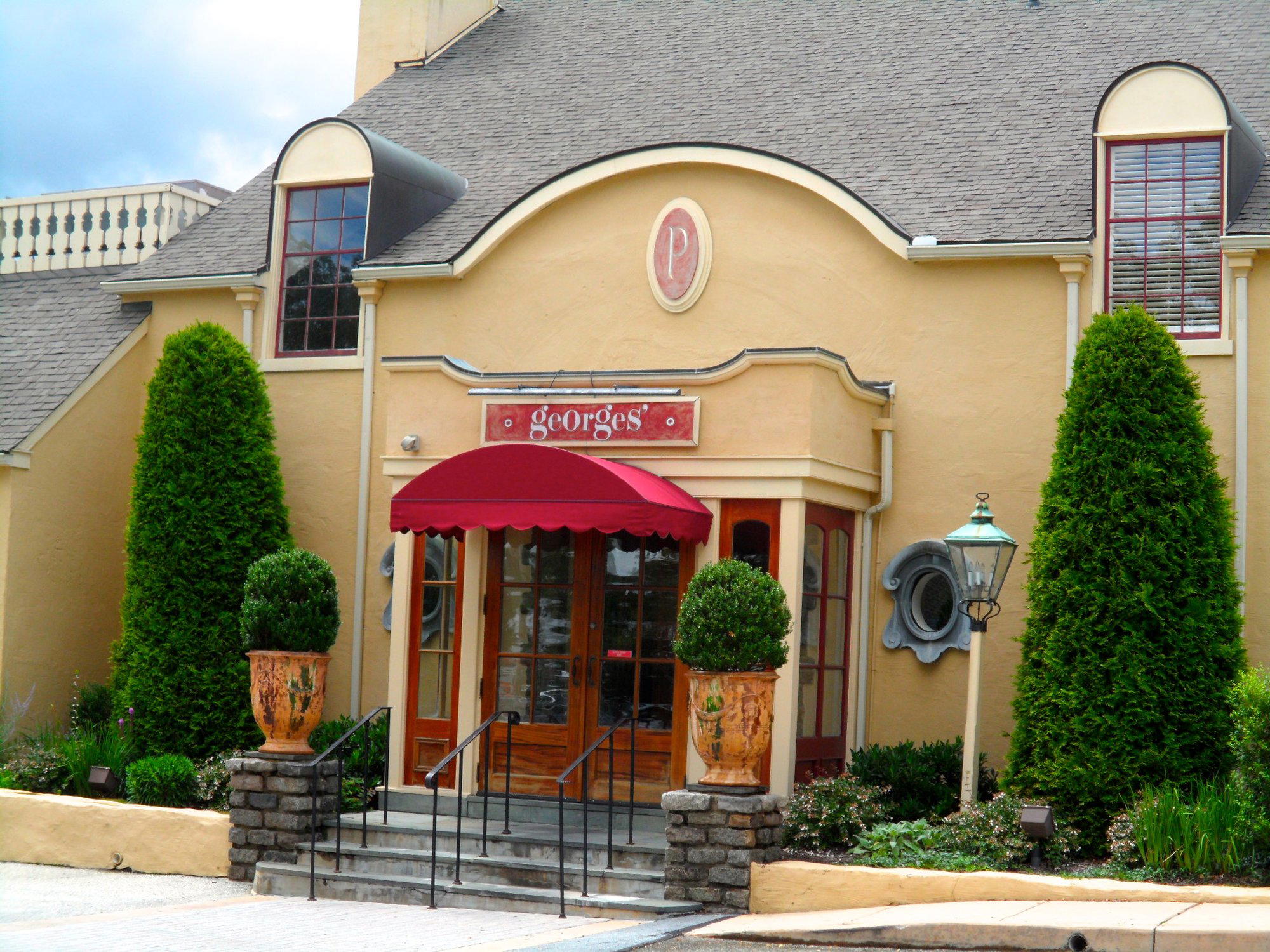
George's sits on Lancaster Avenue in Wayne, Pennsylvania, a stretch of Main Line dining that rewards the kind of local loyalty suburban American restaurants rarely earn from serious food travelers. The address alone places it inside a competitive corridor that has quietly developed over the past two decades, where sourcing and kitchen craft matter as much as setting.
- Address
- 503 Lancaster Ave, Wayne, PA 19087
- Phone
- (610) 964-2588
- Website
- georgesonthemainline.com
- Directions
- Get directions
The menu
What to order
- Specialty pizza
- Cheesesteak
- Stromboli
Lancaster Avenue and the Main Line Table
Wayne, Pennsylvania occupies a particular position in the American suburban dining conversation. The Main Line corridor running west from Philadelphia along Lancaster Avenue has developed a restaurant culture that operates at a remove from the city's center-stage energy, yet draws from the same regional larder: Chester County farms, South Jersey produce, Delaware Valley purveyors whose supply chains connect the suburbs to the same sourcing networks used by kitchens with considerably higher profiles. George's, at 503 Lancaster Avenue, sits inside that geography and the expectations it now carries. For our full Radnor Township restaurants guide, this address is a reference point worth understanding in context.
The American mid-Atlantic has always had a complicated relationship with fine dining's coasts. Serious restaurants in the Philadelphia suburbs tend to operate below the radar of the publications that devote their column inches to New York tasting menus or California farm-table formats. That relative obscurity has, in some cases, produced kitchens with less pressure to perform for the room and more latitude to develop a consistent identity over time. The dynamic is not unlike what you find at Frasca Food & Wine in Boulder or The Wolf's Tailor in Denver, where secondary-market positioning has freed kitchens from the most acute tier of coast-driven scrutiny.
Where the Ingredients Come From
The Mid-Atlantic region is among the most materially productive agricultural zones in the continental United States. Chester County, which borders Radnor Township to the west, has maintained an active farming presence through the same period that its neighbors became suburbs, and the proximity of working farms to restaurant kitchens along the Main Line is a logistical advantage that better-known markets don't always share. Mushroom growing in the Kennett Square area, less than thirty miles from Wayne, supplies some of the country's most consistent commercial fungal production. Seafood arrives from points east and south, with the Chesapeake corridor providing shellfish and finfish that reach inland Pennsylvania in a compressed supply chain.
This sourcing geography matters because it shapes the character of what mid-Atlantic suburban restaurants can put on the plate without manufacturing a concept around it. The argument for ingredient-driven dining in this corridor is geographic as much as it is philosophical. When kitchens at Blue Hill at Stone Barns in Tarrytown or Single Thread Farm in Healdsburg build their identities around place-specific produce, the editorial apparatus of food media follows. Restaurants in Wayne operate inside the same regional logic with less of that spotlight, which tends to keep the conversation local and the clientele repeat.
The Room at 503 Lancaster
Lancaster Avenue through Wayne carries the visual grammar of well-maintained Main Line commercial strips: a human-scaled streetfront, older retail buildings that have cycled through tenants across decades, a mix of national brands and independent operators. George's occupies that context without the kind of architectural statement that destination restaurants use to signal their ambitions from the street. The setting is suburban American in the most literal sense, which means the work happens inside, where the room's atmosphere is set by the relationship between the kitchen's output and the expectations of a neighborhood audience that returns regularly rather than arrives once for a special occasion.
That regulars-over-destination dynamic is worth noting as a category distinction. The Philadelphia suburbs have produced restaurants that sustain real quality over years precisely because their dining room economics depend on repeat visits rather than tourist spending or media cycles. The pressure to perform for the long-term local customer is, in its own way, as demanding as the pressure to perform for a critic's table.
The upper tier of American ingredient-driven dining has consolidated around a recognizable format: sourcing-led menus, defined chef identities, and either Michelin recognition or James Beard attention as the primary trust signal. Le Bernardin in New York City, Providence in Los Angeles, and Addison in San Diego all sit in that tier, where the awards architecture validates the pricing and the sourcing narrative is legible to a national audience. The Philadelphia corridor operates a step below that recognition economy, which does not imply a step below in quality but does mean that context-setting falls to the local audience and repeat customers rather than to Michelin inspectors or the 50 Best apparatus.
For comparison, the sourcing-forward format appears across markets at varying scales. Oyster Oyster in Washington, D.C. has built a vegetable-and-shellfish identity with explicit sourcing transparency and won recognition accordingly. Bacchanalia in Atlanta made farm-direct sourcing central to its identity long before the term became a menu-section header. Smyth in Chicago runs its own farm supply into a tasting menu format that uses the sourcing chain as the menu's organizing principle. George's operates without the national profile of those addresses, but the regional logic is consistent: proximity to agricultural production is an asset, and the Main Line's position between Chester County farming and the Delaware Valley seafood corridor is a material one.
The broader American shift toward sourcing transparency has also produced a secondary market for this kind of restaurant outside gateway cities. Lazy Bear in San Francisco, The Inn at Little Washington, and ITAMAE in Miami have each built audiences around specific sourcing identities in markets with distinct supply chains. The pattern holds: when a kitchen commits to a regional food geography, it inherits both the constraints and the advantages of that place.
Planning a Visit
For readers building a broader Philadelphia-area itinerary that includes serious restaurants, the Main Line merits consideration as a complement to the city's own dining geography. The sourcing infrastructure that feeds Chester County-adjacent kitchens is active year-round, with summer and fall bringing the most productive windows for produce-driven menus across the region. Those planning visits to Atomix in New York City or Atelier Moessmer Norbert Niederkofler in Brunico as reference points for what ingredient-led formats look like at peak execution will find the Wayne corridor a useful regional counterpart in the American mid-Atlantic context, operating on a different scale but within the same underlying logic.
Frequently asked questions
Is George's a family-friendly restaurant?
George's sits on the main commercial strip at 503 Lancaster Avenue in Wayne, a walkable Main Line borough with a residential character that tends to support family dining. The room's scale on Lancaster Avenue, as described by those familiar with the block, suits groups rather than an exclusively destination-tasting format. check the venue's official channels to confirm seating arrangements and any age-specific considerations before visiting.
What is the atmosphere like at George's?
The setting at 503 Lancaster Avenue places George's within the visual register of Wayne's established Main Line commercial strip: a human-scaled streetfront with older retail architecture that reads as neighbourhood rather than destination-resort. The room functions as a dining anchor for the surrounding borough, drawing a local crowd from Radnor Township and the wider Main Line corridor. It is a working dining room on a working street, not a stage-set experience.
Does George's on Lancaster Avenue in Wayne, PA reflect regional Mid-Atlantic sourcing in its cooking?
George's is positioned in Radnor Township at 503 Lancaster Avenue, placing it inside Chester County's agricultural radius, one of the more productive farming zones in the Mid-Atlantic. The broader context of ingredient-driven dining on the Main Line has moved toward defined sourcing relationships with local producers, a pattern George's sits within geographically and commercially. For specifics on current supplier relationships or seasonal menu direction, check the venue's official channels.
What's the best thing to order at George's?
Specific menu details for George's are not available in current documentation, so naming a particular dish here would be speculative. What the Mid-Atlantic region around Chester County does supply, in material terms, includes strong seasonal produce, poultry, and dairy from farms within the immediate agricultural zone. Checking directly with the restaurant for current preparations is the most reliable path to an informed order.
How It Stacks Up
| Venue | Cuisine | Price | Awards | Notes |
|---|---|---|---|---|
| George'sThis venue — the venue you are viewing | Pizza and Cheesesteaks | Not listed | Not listed | Not listed |
| Le Bernardin | French Seafood Fine Dining | $300–500 | 3 Michelin Stars · World's 50 Best #13 | French, Seafood |
| Lazy Bear | Modern American Tasting Menu | Not listed | 2 Michelin Stars · World's 50 Best #25 | Progressive American, Contemporary |
| Atomix | Modern Korean Tasting Menu | $300–500 | 2 Michelin Stars · World's 50 Best #7 | Modern Korean, Korean |
| Per Se | French Fine Dining Tasting Menu | $300–500 | 3 Michelin Stars · World's 50 Best #40 | French, Contemporary |
| Masa | Traditional Japanese Omakase | $500+ | 2 Michelin Stars · World's 50 Best #27 | Sushi, Japanese |
Continue exploring
More in Wayne
Restaurants in Wayne
Browse all →
Bars in Wayne
Browse all →
Hotels in Wayne
Browse all →
Wineries in Wayne
Browse all →
Details
- Casual Hangout
- A La Carte
Casual takeout spot with no dine-in seating and friendly service.