White Dog Cafe Wayne
Our verdict
White Dog Cafe Wayne brings the farm-to-table ethos that made the original Philly location a regional institution to the Main Line, operating from a prominent address on West Lancaster Avenue in Wayne, PA. The menu draws from regional producers and seasonal supply chains, placing it in the same conversation as Wayne's more ingredient-conscious dining rooms. It works as a reliable neighbourhood anchor for the area's food-aware crowd.

Pearl is the En Primeur Club membership app — saves, bookings, and concierge access live there. Same editors, same standards.
- Address
- 200 W Lancaster Ave, Wayne, PA 19087
- Phone
- (610) 225-3700
- Hours
- Mon–Thu 11:30 AM–9 PMFri 11:30 AM–9:30 PMSat 10 AM–9:30 PMSun 10 AM–8 PM
- Website
- whitedog.com
- Directions
- Get directions
- Booking
- Book on OpenTable
The menu
What to order
- Lamb bolognese
- Kennett Square mushroom soup
- House burger
- Crab cakes
- Verlasso salmon
Sourcing as the Story: Where White Dog Cafe Wayne Sits on the Main Line
West Lancaster Avenue in Wayne runs through one of Philadelphia's more food-serious suburban corridors, where a cluster of independently minded restaurants competes for a demographic that reads menus the way some people read wine labels. White Dog Cafe occupies 200 W Lancaster Ave in that stretch, and its operating premise has always been the same: that the distance between a farm and a plate is a fact worth publishing. In a region with genuine access to Pennsylvania Dutch country farms, the Chesapeake watershed, and the agricultural pockets of New Jersey and Delaware, that premise has more traction here than it would in a city insulated from its food supply.
The White Dog brand carries history that predates the farm-to-table vocabulary becoming a marketing default. The original Philadelphia location opened in 1983, years before sourcing transparency became an industry expectation, and it helped define what a community-anchored, producer-focused restaurant could look like in the mid-Atlantic. The Wayne outpost extends that lineage into Main Line territory, which means arriving with a set of inherited values around local procurement, seasonal rotation, and supplier relationships that most newer competitors in the corridor have had to build from scratch.
What the Menu Signals About the Supply Chain
Restaurants that stake a claim on ingredient sourcing tend to fall into two camps: those that list farms as decoration and those that build the menu architecture around what those farms can reliably deliver. White Dog Cafe's track record across its locations suggests the latter orientation. Pennsylvania is productive agricultural ground, and a kitchen that treats its procurement relationships seriously will have access to heritage pork, free-range poultry, seasonal brassicas, stone fruit, and root vegetables that shift the baseline quality of even direct preparations.
This matters in Wayne because the alternative is a dining room where ingredients arrive from the same national distributors supplying restaurants three states away. The difference is legible on the plate, not just in the menu copy. Produce harvested closer to service has different texture and intensity than commodity supply. Proteins from farms with transparent practices carry different fat profiles. For a kitchen committed to those sourcing standards, the seasonal menu isn't a marketing exercise but a structural constraint that shapes what can be cooked at all.
Among Wayne's dining options, this positioning places White Dog in a distinct tier. Autograph Brasserie operates with a brasserie format that draws on European technique, while Estia Taverna anchors its menu in Greek coastal tradition. Creed's Seafood & Steaks occupies the upscale protein-forward bracket, and Amada Radnor brings a Spanish-inflected approach to the area. White Dog's differentiator is less about cuisine category and more about supply chain philosophy — a position that 118 North also gestures toward with its own local-leaning menu. See the full Wayne restaurants guide for a broader mapping of the corridor.
The Physical Environment and What It Communicates
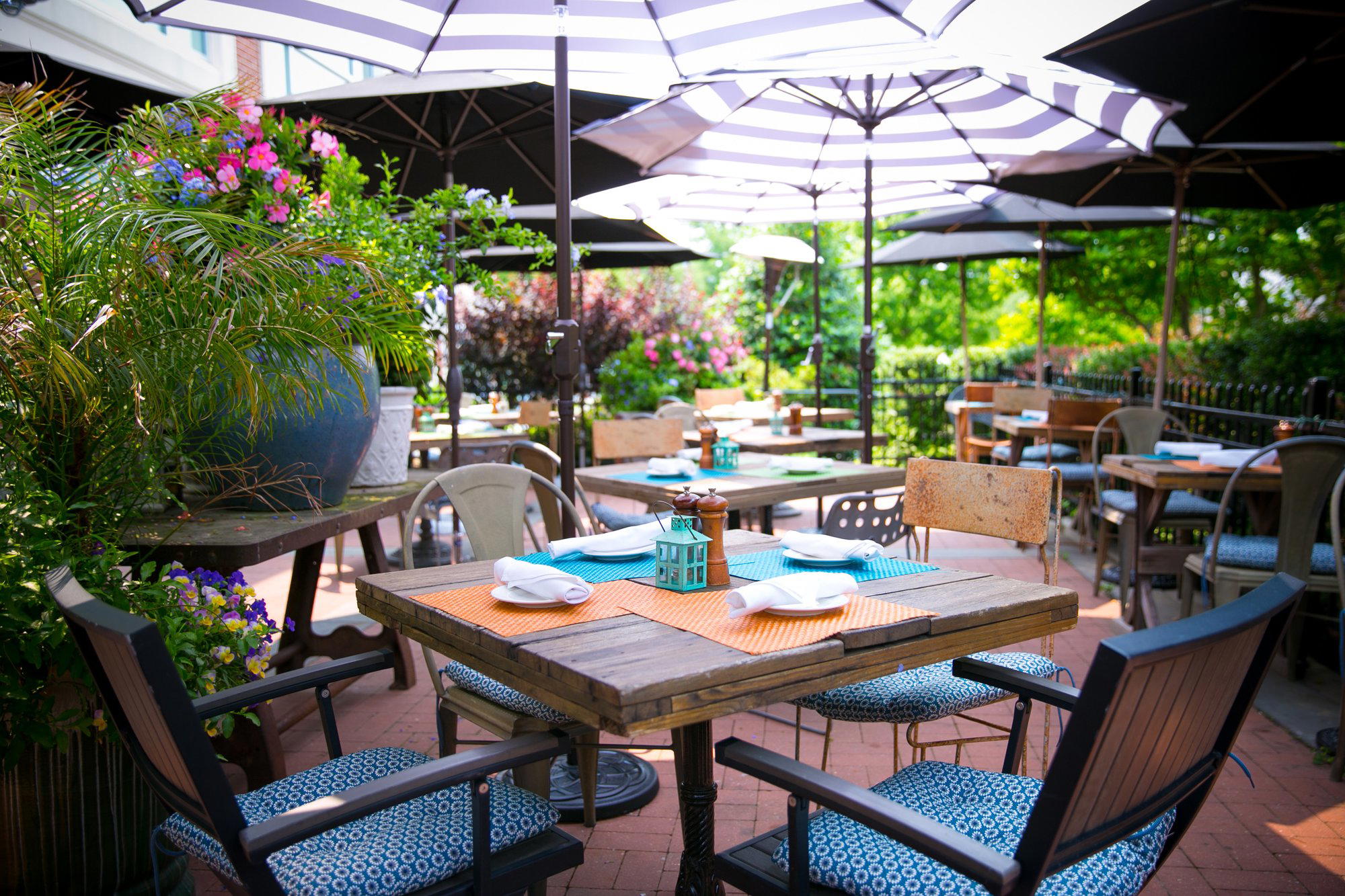
Farm-to-table dining rooms have developed their own visual grammar: exposed wood, ambient lighting, chalkboard supplier lists, and a general warmth that signals informality without sacrificing ambition. White Dog Cafe's aesthetic across its locations has stayed consistent with that register — approachable but considered, the kind of room where you can have a serious conversation about what you're eating without the atmosphere demanding formal deference. The Wayne location on West Lancaster Avenue reads as a neighbourhood anchor rather than a destination statement, which is appropriate for its role in the local dining ecosystem.
That approachability extends to how the space functions across different occasions. It's the kind of format that holds a weeknight dinner as comfortably as a weekend table with a larger group, and that range of use is part of what keeps ingredient-focused independent restaurants viable in suburban markets, where the volume of covers on quieter nights has to offset the economics of shorter supply chains and seasonal purchasing.
Farm-to-Table at Scale: The Broader Context
White Dog's approach to sourcing puts it in a national conversation that extends well beyond the Main Line. Across the country, the most rigorously sourced restaurants tend to cluster in regions with productive agricultural hinterlands and chef communities willing to deal with the operational friction of working with smaller producers. Blue Hill at Stone Barns in Tarrytown operates its own farm and has set the benchmark for what total vertical integration looks like at the fine dining level. Single Thread Farm in Healdsburg applies a similar farm-driven model with Japanese technique. At the formal end, The French Laundry in Napa, Lazy Bear in San Francisco, and Alinea in Chicago each maintain supplier relationships as a core component of their kitchen identity, even when the culinary ambition runs in different directions.
White Dog doesn't compete with those operations on format or price. It occupies the more democratic end of the sourcing-conscious spectrum, alongside restaurants like Emeril's in New Orleans, which built regional identity around Louisiana producers, or Providence in Los Angeles, where seafood provenance drives the menu logic. The through-line across all of them is that sourcing decisions are treated as editorial choices, not procurement afterthoughts. Other reference points in the broader farm-and-craft conversation include Addison in San Diego, The Inn at Little Washington, Le Bernardin in New York City, Atomix in New York City, and 8½ Otto e Mezzo Bombana in Hong Kong, each of which demonstrates how supplier transparency operates differently across price tiers, cuisines, and geographies.
Planning a Visit
White Dog Cafe Wayne is located at 200 W Lancaster Ave, Wayne, PA 19087, on a stretch of road that is walkable from the Wayne SEPTA station on the Paoli/Thorndale line, making it accessible from Center City Philadelphia without a car. For current hours, pricing, and reservation availability, checking directly via the restaurant's website or a current booking platform is advisable, as seasonal menu rotations can affect service schedules. Weekend evenings on West Lancaster Avenue tend to draw consistent demand across the dining corridor, so planning ahead is sensible for larger parties or specific dates.
Frequently asked questions
Is White Dog Cafe Wayne good for families?
The farm-to-table format at 200 W Lancaster Ave suits mixed-age groups reasonably well. The dining room's warmth and accessible menu language make it less intimidating than a tasting-menu counter, though it reads more as a thoughtful adult dinner destination than a dedicated family spot.
How would you describe the vibe at White Dog Cafe Wayne?
White Dog Cafe Wayne occupies the space between neighbourhood bistro and mission-driven dining room. The West Lancaster Avenue address anchors it in a walkable, independently minded Wayne corridor, and the interior follows the farm-to-table visual register: ambient light, natural materials, and supplier acknowledgment built into the room rather than bolted on.
How does White Dog Cafe Wayne connect to the broader White Dog Cafe brand, and what does that mean for a first-time visitor?
White Dog Cafe originated in Philadelphia and carries a documented commitment to local and regional sourcing across its locations, giving the Wayne outpost at 200 W Lancaster Ave an institutional framework that many independently opened farm-to-table restaurants take years to develop. For a first visit, that means the sourcing ethos is structural rather than aspirational — the supply relationships are established, not promotional. Arriving with curiosity about what's currently on the menu rewards more than arriving with fixed expectations.
What's the best thing to order at White Dog Cafe Wayne?
The menu is built around the supply chain rather than fixed signatures, so what leads the card shifts with the season and what regional farms are delivering. Ordering around whatever produce or protein the kitchen has foregrounded that week is the more reliable strategy than hunting a single dish.
What part of town is White Dog Cafe Wayne in?
White Dog Cafe Wayne is located at 200 W Lancaster Ave, Wayne, PA 19087, Wayne.
Should I book White Dog Cafe Wayne in advance?
Wayne's West Lancaster Avenue corridor draws a food-conscious local crowd, and White Dog's sourcing reputation has given it durability on the Main Line dining scene. A reservation ahead of weekend evenings is a reasonable precaution, particularly if you're travelling from central Philadelphia.
What has White Dog Cafe Wayne built its reputation on?
White Dog Cafe Wayne's standing in the Philadelphia suburbs rests on a sourcing model that treats regional farms as structural partners rather than menu footnotes. That positioning places it in the same national conversation as the most rigorously supply-chain-driven independents, executed at the scale of a Main Line neighbourhood restaurant.
How It Stacks Up
Comparable venues nearby, for context on price, style, and recognition.
| Venue | Cuisine | Price | Awards | Notes |
|---|---|---|---|---|
| White Dog Cafe WayneThis venue — the venue you are viewing | Contemporary American | $30–50 | Not listed | Not listed |
| Autograph Brasserie | Modern American Steakhouse Brasserie | $50–100 | Not listed | Wayne |
| The Silverspoon | Seasonal American Bistro | Not listed | Not listed | Wayne |
| Triple Crown | Classic American Steakhouse & Seafood | $30–50 | Wine Spectator Award of Excellence | Villanova |
| Amada Radnor | Authentic Spanish Tapas | $30–50 | Not listed | Wayne |
| Pietro's | Italian Pizzeria | $30–50 | Not listed | Radnor |
Continue exploring
More in Wayne
Restaurants in Wayne
Browse all →
Bars in Wayne
Browse all →
Hotels in Wayne
Browse all →
Wineries in Wayne
Browse all →
Details
- Cozy
- Whimsical
- Classic
- Elegant
- Date Night
- Business Dinner
- Group Dining
- Brunch
- Casual Hangout
- Special Occasion
- Private Dining
- Terrace
- Craft Cocktails
- Beer Program
- Farm To Table
- Local Sourcing
- A La Carte
- Craft Cocktails
- Local Beer
- Vegetarian Friendly
- Vegan Options
- Gluten Free Options
- Allergy Accommodating
Current opening hours
- Monday
- 11:30 AM–9 PM
- Tuesday
- 11:30 AM–9 PM
- Wednesday
- 11:30 AM–9 PM
- Thursday
- 11:30 AM–9 PM
- Friday
- 11:30 AM–9:30 PM
- Saturday
- 10 AM–9:30 PM
- Sunday
- 10 AM–8 PM
Hours can change for holidays and private events. Last verified .
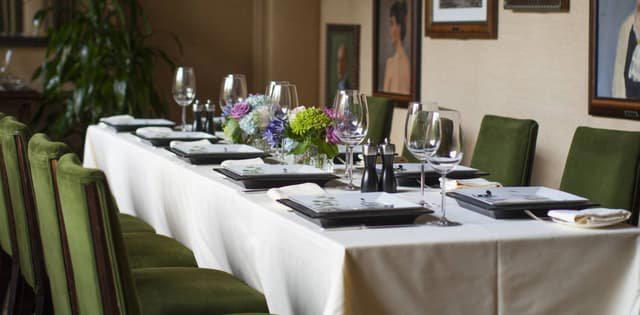
Warm and inviting with whimsical dog artwork and décor throughout; mahogany coffered ceilings in The Den, floral prints in The Garden Room, flying books in The Library, and reclaimed materials in The Kitchen create distinct atmospheric spaces with a buzzy bistro-style energy.