Autograph Brasserie
Our verdict
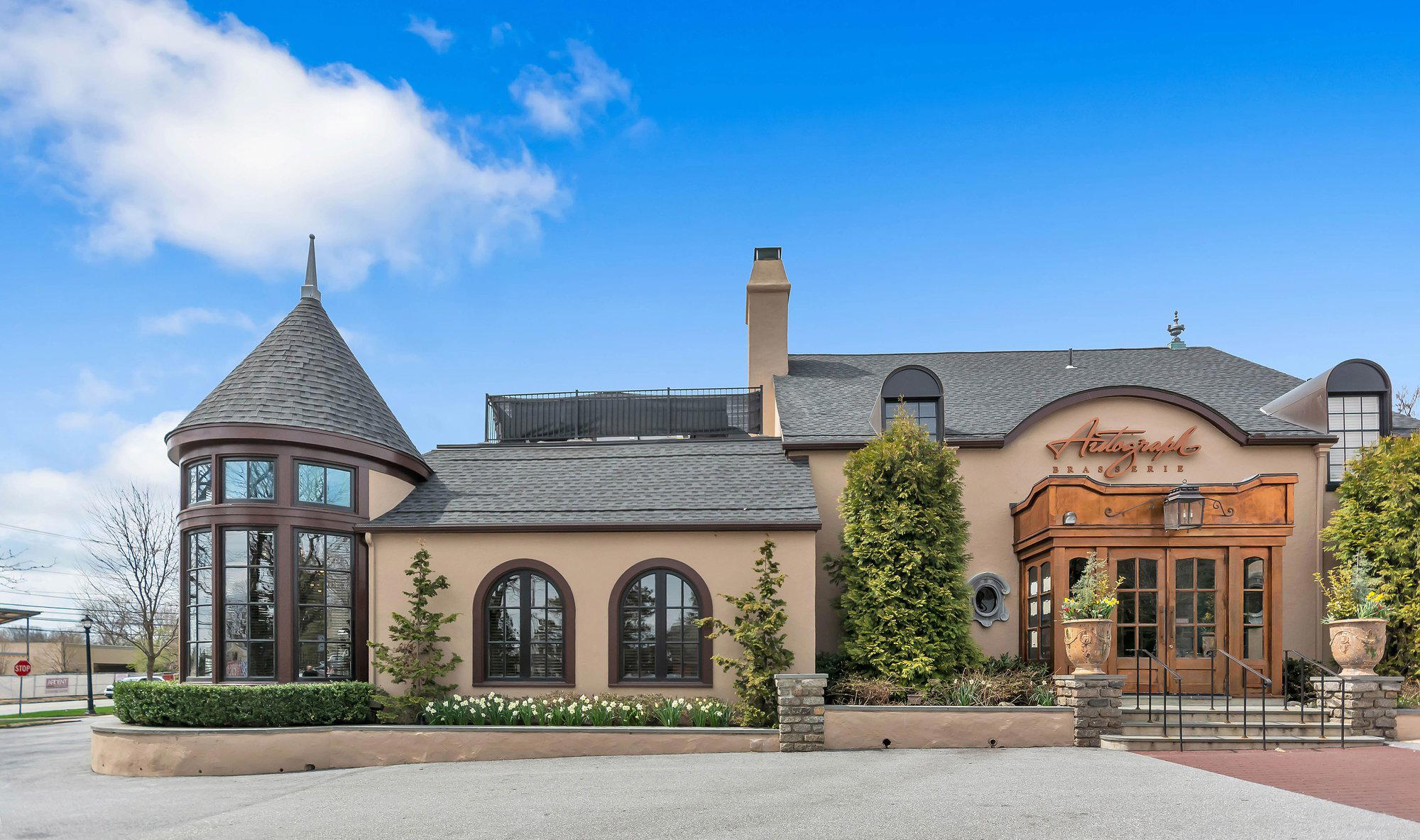
Autograph Brasserie occupies a prominent address on West Lancaster Avenue in Wayne, Pennsylvania, positioning itself within the Main Line's increasingly serious dining corridor. The brasserie format carries specific cultural weight — a tradition rooted in French culinary history that has shaped how upscale casual dining operates across American suburban markets. For dining options in the area, see EP Club's full Wayne restaurants guide.

Pearl is the En Primeur Club membership app — saves, bookings, and concierge access live there. Same editors, same standards.
- Address
- 503 W Lancaster Ave, Wayne, PA 19087
- Phone
- (610) 964-2588
- Hours
- Mon–Thu 11:30 AM–3 PM, 4–9 PMFri 11:30 AM–3 PM, 4–9:30 PMSat 10 AM–3 PM, 4–9:30 PMSun 10 AM–3 PM, 4–8 PM
- Website
- autographbrasserie.com
- Directions
- Get directions
- Booking
- Book on OpenTable
The menu
What to order
- Lobster Bisque
- Steak Frites
- Dry-Aged Porterhouse
The Brasserie Tradition on the Main Line
The American brasserie occupies a particular space in the dining hierarchy — neither the commitment of a tasting-menu restaurant nor the informality of a neighborhood bistro. The format traces its roots to the grand Alsatian brasseries of Paris, where long hours, zinc counters, and menus anchored by shellfish, charcuterie, and braised meats defined a style of confident, unfussy hospitality. When that model crossed the Atlantic and settled into suburban American contexts, it took on new pressures: a clientele with sophisticated urban reference points, local competition across multiple cuisine categories, and the expectation that a brasserie would hold its own against the city rather than merely approximate it.
Wayne's West Lancaster Avenue has become the Main Line's clearest answer to that challenge. The corridor draws from a population with strong Philadelphia dining literacy — residents who commute into the city, eat at serious restaurants, and bring those standards home. Autograph Brasserie, at 503 W Lancaster Ave, occupies that corridor's dining layer, where the brasserie format's inherent versatility is tested against a demanding local audience.
What the Brasserie Format Demands
A brasserie succeeds or fails on range. The kitchen must handle a broad menu across long service windows, typically lunch through late dinner, without the luxury of a narrow, controlled tasting format. That breadth is both the appeal and the difficulty. In French tradition, the brasserie's credibility rests on its command of classical technique applied without ceremony: a properly reduced sauce, a well-managed braise, a plateau de fruits de mer assembled with precision. American interpretations of the format have often softened those standards in favor of accessibility, but the better examples hold to the discipline that gives the format its character.
On the Main Line, that discipline matters because the comparison set is wide. Diners here move between multiple dining registers: the Spanish-inflected plates at Amada Radnor, the seafood and steakhouse combination at Creed's Seafood & Steaks, the Greek kitchen at Estia Taverna, and the omakase precision of Osushi Wayne. Each of those venues has a defined cuisine identity; the brasserie model asks for something different, cohesion across a deliberately broad range rather than depth in a single tradition.
Wayne's Dining Corridor in Context
The Main Line's dining evolution over the past decade mirrors patterns visible in comparable affluent suburban corridors across the Northeast. The shift has moved away from occasion-only fine dining toward restaurants that can function as both a weeknight choice and a destination, places where the kitchen is serious enough to justify a reservation but the room is comfortable enough for frequency. That shift has favored formats like the brasserie, which carries enough culinary authority to satisfy a critical diner while remaining accessible enough for regular use.
Wayne specifically benefits from proximity to Philadelphia, roughly seventeen miles to the east, and the supply chains and talent pipelines that city access creates. The Main Line's independent restaurant scene draws chefs who have trained in Philadelphia kitchens and increasingly in those of other American cities with strong culinary programs. That credential flow matters: it is the same mechanism that gives peer venues in other markets their positioning. At the national level, restaurants like Blue Hill at Stone Barns in Tarrytown or The Inn at Little Washington demonstrate how suburban and exurban dining can build genuine authority independent of a city address. Locally, the standard is more modest but the ambition is traceable.
Among Wayne's dining options covered in our full Wayne restaurants guide, the variety of cuisine approaches reflects how the corridor has developed: each venue targets a distinct dining occasion rather than competing for the same occasion. 118 North represents the American bistro end of the range, while the brasserie format at Autograph targets the more structured middle ground between casual and formal.
The Cultural Weight of the Brasserie Name
Choosing to call a restaurant a brasserie in 2024 is a deliberate act of positioning. The word signals French culinary heritage, a willingness to handle a broad menu, and an expectation of conviviality alongside craft. It sets the comparison class not just locally but against any serious American brasserie, a category that includes some of the country's more precise kitchens. Restaurants like Le Bernardin in New York City and The French Laundry in Napa represent the ceiling of French-rooted American dining, while at the other end, a substantial number of suburban venues use the brasserie label loosely. The question for any venue carrying the name is which part of that spectrum its kitchen actually occupies.
The American brasserie's strongest contemporary examples, from Smyth in Chicago to Lazy Bear in San Francisco, tend to hold the format's classical structure while finding regional material within it. Venues like Emeril's in New Orleans and Providence in Los Angeles demonstrate how French technique applied to local product creates a distinct kitchen identity rather than a generic approximation of European style. At the more experimental end, Atomix in New York City and Atelier Moessmer Norbert Niederkofler in Brunico show how European dining frameworks can carry entirely new cultural content. The brasserie at Autograph operates within a different scale and ambition, but the cultural expectation that comes with the label still applies.
Planning Your Visit
Autograph Brasserie is located at 503 W Lancaster Avenue in Wayne, Pennsylvania 19087, accessible from central Philadelphia by regional rail on the Paoli/Thorndale line, with Wayne Station a short walk from the restaurant. The West Lancaster Avenue corridor is walkable within Wayne's town center, placing the restaurant within the same block range as several comparison venues. For visitors building a broader Main Line itinerary, the nearby options at Addison in San Diego offer a useful comparison point for how suburban venues build fine-dining credibility; locally, Single Thread Farm in Healdsburg represents the farm-to-table suburban model, while Wayne's own corridor demonstrates a different approach to the same category pressure.
Frequently asked questions
Where do I go for Autograph Brasserie?
Autograph Brasserie is located at 503 W Lancaster Ave, Wayne, PA 19087, Wayne.
Is Autograph Brasserie a good option for a group dinner on the Main Line?
The brasserie format at 503 W Lancaster Ave in Wayne, PA is structurally well-suited to group dining: broad menus with varied price points reduce the coordination friction that tasting-menu or prix-fixe formats impose on larger parties. Wayne sits along the Paoli/Thorndale regional rail line, making it accessible from central Philadelphia without requiring every guest to drive. Groups should contact Autograph Brasserie directly to confirm private dining or large-party booking arrangements.
What dish is Autograph Brasserie famous for?
The brasserie format typically anchors its reputation on range rather than a single signature plate, handling everything from midday service through late dinner across a broad menu. For the most current menu, check the venue's official channels.
How far ahead should I plan for Autograph Brasserie?
Reservation lead times at Autograph Brasserie in Wayne, PA vary by season and day of the week. The Main Line dining corridor draws consistent demand from the surrounding affluent suburban communities, so weekend tables at well-positioned brasseries in this corridor tend to fill faster than weeknight slots. Checking availability two to three weeks out is a practical starting point for weekend dining.
What's the signature at Autograph Brasserie?
Autograph Brasserie's defining commitment, based on its positioning on Wayne's W Lancaster Avenue dining corridor, is the full brasserie service model: a broad menu handled across extended hours rather than a narrow tasting format. That range is itself the signature — the ability to execute well across multiple service periods is what separates a functioning brasserie from a restaurant simply borrowing the name.
Is Autograph Brasserie allergy-friendly?
Guests with dietary restrictions should check the venue's official channels before booking to confirm what accommodations the kitchen can provide.
A Pricing-First Comparison
Comparable venues nearby, for context on price, style, and recognition.
| Venue | Cuisine | Price | Notes |
|---|---|---|---|
| Autograph BrasserieThis venue — the venue you are viewing | Modern American Steakhouse Brasserie | $50–100 | Not listed |
| 118 North | Innovative Americana | $30–50 | North Wayne, Innovative Americana |
| Amada Radnor | Authentic Spanish Tapas | $30–50 | Wayne, Authentic Spanish Tapas |
| Creed's Seafood & Steaks | Seafood & Steaks | Not listed | King of Prussia, Seafood & Steaks |
| Osushi - Wayne | Premium Japanese Sushi | $30–50 | Wayne, Premium Japanese Sushi |
| Estia Taverna | Authentic Greek Taverna | $50–100 | Radnor, Authentic Greek Taverna |
Continue exploring
More in Wayne
Restaurants in Wayne
Browse all →
Bars in Wayne
Browse all →
Hotels in Wayne
Browse all →
Wineries in Wayne
Browse all →
Details
- Elegant
- Sophisticated
- Classic
- Date Night
- Special Occasion
- Business Dinner
- Brunch
- Private Dining
- Craft Cocktails
- Extensive Wine List
- A La Carte
- Vegetarian Friendly
- Vegan Options
- Gluten Free Options
Current opening hours
- Monday
- 11:30 AM–3 PM, 4–9 PM
- Tuesday
- 11:30 AM–3 PM, 4–9 PM
- Wednesday
- 11:30 AM–3 PM, 4–9 PM
- Thursday
- 11:30 AM–3 PM, 4–9 PM
- Friday
- 11:30 AM–3 PM, 4–9:30 PM
- Saturday
- 10 AM–3 PM, 4–9:30 PM
- Sunday
- 10 AM–3 PM, 4–8 PM
Hours can change for holidays and private events. Last verified .
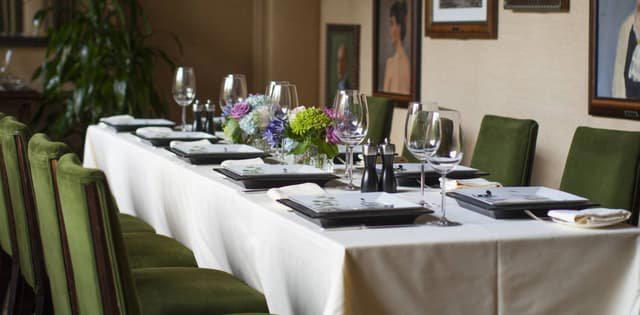
Lavishly clubby with elegant lighting, eclectic portraits of icons, and a sophisticated atmosphere praised for special occasions.