
Michelin Plate
Our verdict
A three-generation family restaurant on Via Cavour, Gatto Rosso has held the Michelin Plate in 2024 and 2025 for a fish-only menu that reflects Taranto's port identity more faithfully than almost anywhere else in the city.

Pearl is the En Primeur Club membership app, where members save venues, book tables and use the concierge.
The menu
What to order
- Spaghetti with vongole
- Swordfish with caponata
Where Taranto's Fishing Identity Reaches the Table
Puglia's heel has two coastlines and one of southern Italy's most historically significant ports, yet Taranto rarely appears in the same conversation as the Adriatic fishing towns that attract wider attention. That gap partly explains why places like Gatto Rosso on Via Cavour matter: the city's relationship with the Ionian Sea is old, daily, and largely unperformed for outside audiences.
Southern Italian seafood cooking at its most coherent is not about technique display. It is about proximity, to the boat, to the market, to the specific species that a particular stretch of coastline produces in each season. The Ionian produces sea urchin, mussels, cuttlefish, and a range of white-fleshed fish that differ in texture and intensity from what the Adriatic delivers to the kitchens of, say, Uliassi in Senigallia. Both traditions are legitimate; they are simply drawing from different water. Gatto Rosso sits inside the Ionian tradition without apparent apology or qualification.
Three Generations and a Fish-Only Menu
The Michelin Plate, awarded in both 2024 and 2025, is the guide's signal for a kitchen worth the detour without the full-star apparatus around it. In southern Italy's mid-range dining tier, that designation separates kitchens with consistent sourcing discipline from those coasting on location or tourist traffic. Gatto Rosso's two consecutive Plates, set against a price point of €€, position it as a reference address in Taranto rather than a stepping stone toward something grander.
The restaurant's commitment to fish exclusively is worth pausing on. A menu that refuses meat entirely is a structural declaration about supply relationships and culinary focus. It means the kitchen sources, and has always sourced, within a single category, which over three generations creates accumulated knowledge about seasonal availability, port contacts, and the specific preparations that suit each species. The black-and-white photographs on the walls are the visual record of that continuity; they are evidence rather than decoration.
For context on what Italian seafood cooking looks like at the top of the price and prestige range, Quattro Passi in Marina del Cantone and Alici on the Amalfi Coast operate with starred credentials and higher price tiers. Gambero Rosso in Marina di Gioiosa Ionica works a similar Ionian-adjacent geography. Gatto Rosso is not competing with those addresses; it occupies a different tier where value and regularity of execution carry more weight than innovation or spectacle.
The Physical Environment
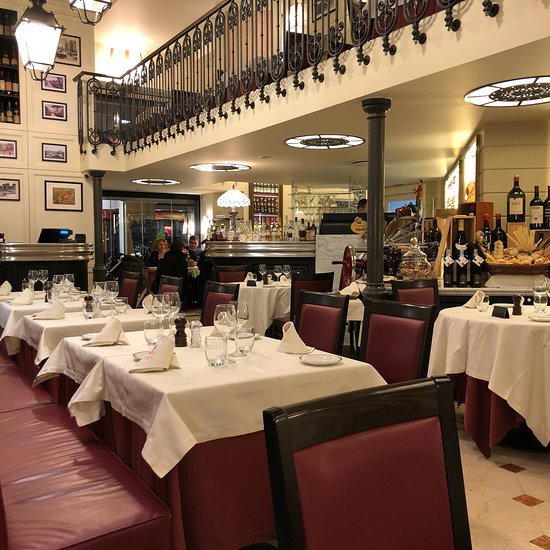
Via Cavour runs through central Taranto, and the address places Gatto Rosso within the older fabric of the city rather than on the waterfront or in a tourist-facing zone. The dining room is described as simple and well-maintained, two qualities that, in this context, are a declaration of priorities. The investment has gone into sourcing and cooking rather than into interior design. That positioning is consistent with how long-established family restaurants across southern Italy tend to operate: the room serves the food, not the other way around.
The atmosphere that results is one of local use. Families, regulars, and visitors who have done their research ahead of time will share a room that does not need to explain itself through its decor. The photographs provide the only narrative gesture, and they earn their place.
Port-to-Plate in a City Built on Fish
Taranto's fishing industry predates the steel works that shaped its twentieth-century identity, and the Ionian catch has always been the city's most direct food source. Mussels farmed in the Mar Piccolo, the landlocked inner sea unique to Taranto's geography, have been part of the local diet for generations. Sea urchin, eaten raw with local bread or cooked into pasta, is a marker of the season and the place. A restaurant that has operated across three generations in this city will have built its menu around these specificities rather than against them.
That kind of embedded sourcing is different from the port-to-plate narrative that newer seafood restaurants construct as a marketing position. At Gatto Rosso, the supply relationships are simply the way things have always worked. Italy's most celebrated kitchens, Osteria Francescana in Modena, Dal Pescatore in Runate, Le Calandre in Rubano, operate at price points and ambition levels that are structurally different from what Gatto Rosso offers. The comparison is not competitive; it is contextual. Italy's dining range runs from three-Michelin-star institutions like Enoteca Pinchiorri in Florence, Enrico Bartolini in Milan, Piazza Duomo in Alba, Reale in Castel di Sangro, and Atelier Moessmer in Brunico down through Casa Perbellini in Verona to Michelin Plate addresses like this one, and the Plate tier is where consistent regional cooking gets its due recognition.
Planning a Visit
Gatto Rosso sits at Via Cavour 2 in central Taranto, a walkable address from the old town. At the €€ price point, it is accessible for lunch or dinner without significant financial planning. Given the restaurant's local following and limited size, booking ahead is advisable, particularly for weekend evenings when Taranto's dining culture is most active. Contact details and current hours are best confirmed through a direct search closer to travel, as the restaurant operates without a website on record.
For those building a wider Taranto itinerary, the city has more to offer than its industrial reputation suggests. Our full Taranto restaurants guide covers the broader dining picture. Our Taranto hotels guide, bars guide, wineries guide, and experiences guide complete the picture for a multi-day visit.
Frequently asked questions
What's the price range at Gatto Rosso?
Pricing at Gatto Rosso is listed as €€.
Comparable Spots, Quickly
| Venue | Cuisine | Price | Awards | Notes |
|---|---|---|---|---|
| Gatto RossoThis venue (the venue you are viewing) | Traditional Italian Seafood | Not listed | Michelin Plate | Not listed |
| Atelier Moessmer Norbert Niederkofler | Modern Alpine Fine Dining | $300–500 | 3 Michelin Stars · World's 50 Best #20 | Italian, Creative |
| Dal Pescatore | Classic Italian Fine Dining | $200–300 | 3 Michelin Stars · World's 50 Best #38 | Italian, Italian Contemporary |
| Enoteca Pinchiorri | Contemporary Italian Fine Dining | $200–300 | 3 Michelin Stars · World's 50 Best #32 | Italian - French, Italian Contemporary |
| Enrico Bartolini | Modern Italian Fine Dining | $300–500 | 3 Michelin Stars · World's 50 Best #85 | Creative |
| Osteria Francescana | Avant-Garde Italian Contemporary | $300–500 | 3 Michelin Stars · World's 50 Best #1 | Progressive Italian, Creative |
Recognition history
Dated appearances from independent guides and award organizations, with the underlying list record or original source where available.
Michelin Plate
Michelin
Full recognition history (3 entries)
Michelin Plate
Michelin
Michelin Plate
Michelin
Continue exploring
More in Taranto
Restaurants in Taranto
All restaurants in Taranto →
Bars in Taranto
Browse all →

Details
- Classic
- Rustic
- Intimate
- Date Night
- Special Occasion
- Historic Building
- A La Carte
Current opening hours
- Monday
- 7:30–10:30 PM
- Tuesday
- 12:30–2:30 PM, 7:30–10:30 PM
- Wednesday
- 12:30–2:30 PM, 7:30–10:30 PM
- Thursday
- 12:30–2:30 PM, 7:30–10:30 PM
- Friday
- 12:30–2:30 PM, 7:30–10:30 PM
- Saturday
- 12–2:30 PM, 7–10:30 PM
- Sunday
- 12:30–2:30 PM
Hours can change for holidays and private events. Last verified .
Simple and well-maintained dining room featuring black-and-white family photos on the walls, creating a cozy classic atmosphere.