Ottolire Resort

1 Michelin Key
A 13-room farmhouse estate in the Valle d'Itria, Ottolire Resort holds a 2024 Michelin Key and sits from around $370 per night. The property balances rough-hewn Puglian stone and local materials with spa facilities, terrace dining built on produce from the estate garden, and direct access to Locorotondo, Alberobello, and Ostuni within 30 minutes.

Pearl is the En Primeur Club membership app — saves, bookings, and concierge access live there. Same editors, same standards.
- Address
- SC 107, Contrada Papariello Serafino, 59, 70010 Locorotondo BA
- Phone
- +39 080 443 4370
- Website
- ottolireresort.it
- Directions
- Get directions
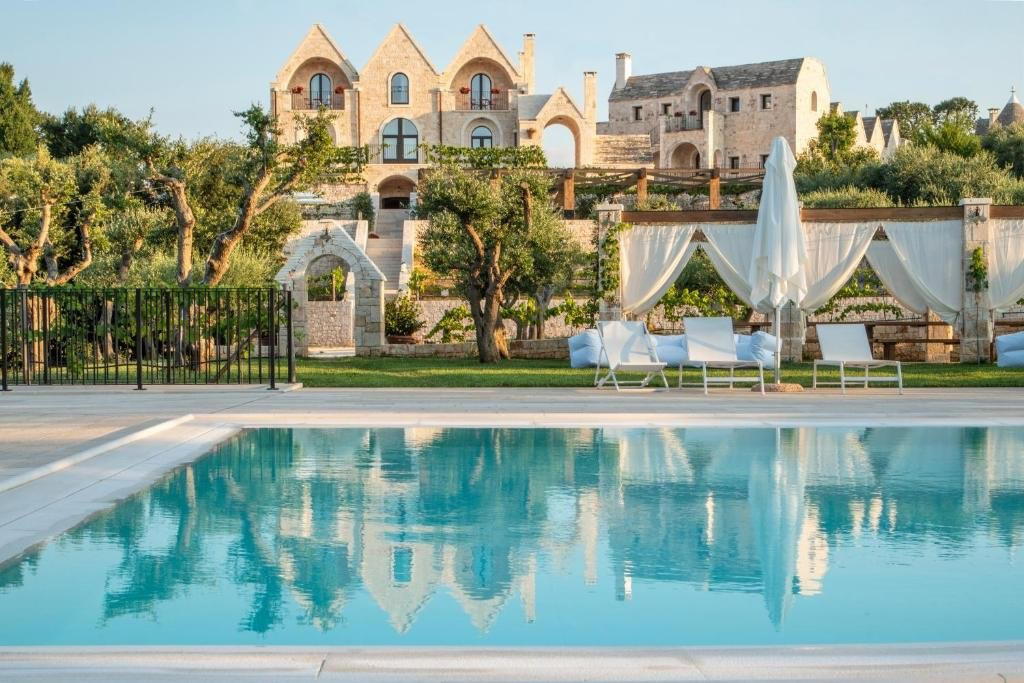
Stone, Trulli, and the Valle d'Itria Design Tradition
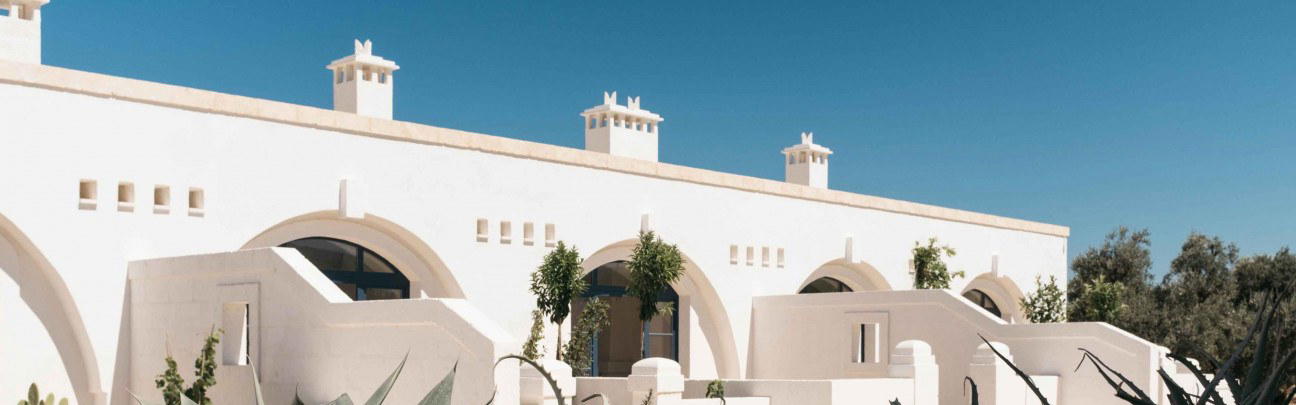
Puglia has never done luxury the way the rest of Italy does it. While the country's premium hotel circuit runs through grand Florentine palazzi like the Four Seasons Hotel Firenze, lakeside Belle Époque institutions like the Grand Hotel Tremezzo, or Venetian waterfront estates like Aman Venice, the Itria Valley operates on a different visual grammar entirely. The architecture here is vernacular and unapologetic: dry-stone walls, whitewashed trulli cones, and masseria farmhouses that read as functional artifacts of an agrarian past before they read as anything approaching aesthetic statements. The design challenge for any serious property in this region is not imposing elegance onto that vernacular, but rather finding the elegance already latent within it.
Ottolire Resort, a 13-room boutique property outside Locorotondo, works from that premise. The estate began as a ruined farmhouse, purchased in the 1970s and subsequently expanded and rebuilt over decades into its current form. That long reconstruction timeline matters: it produced a property whose character feels accumulated rather than installed, where the choice of local materials and the spatial logic of the original masseria layout still shape the guest experience. The rooms are spacious and simply furnished, drawing on regional colors and materials that align with the stone and terracotta vocabulary of the surrounding hills rather than importing a generic luxury finish from elsewhere.
Architecture as Editorial Statement
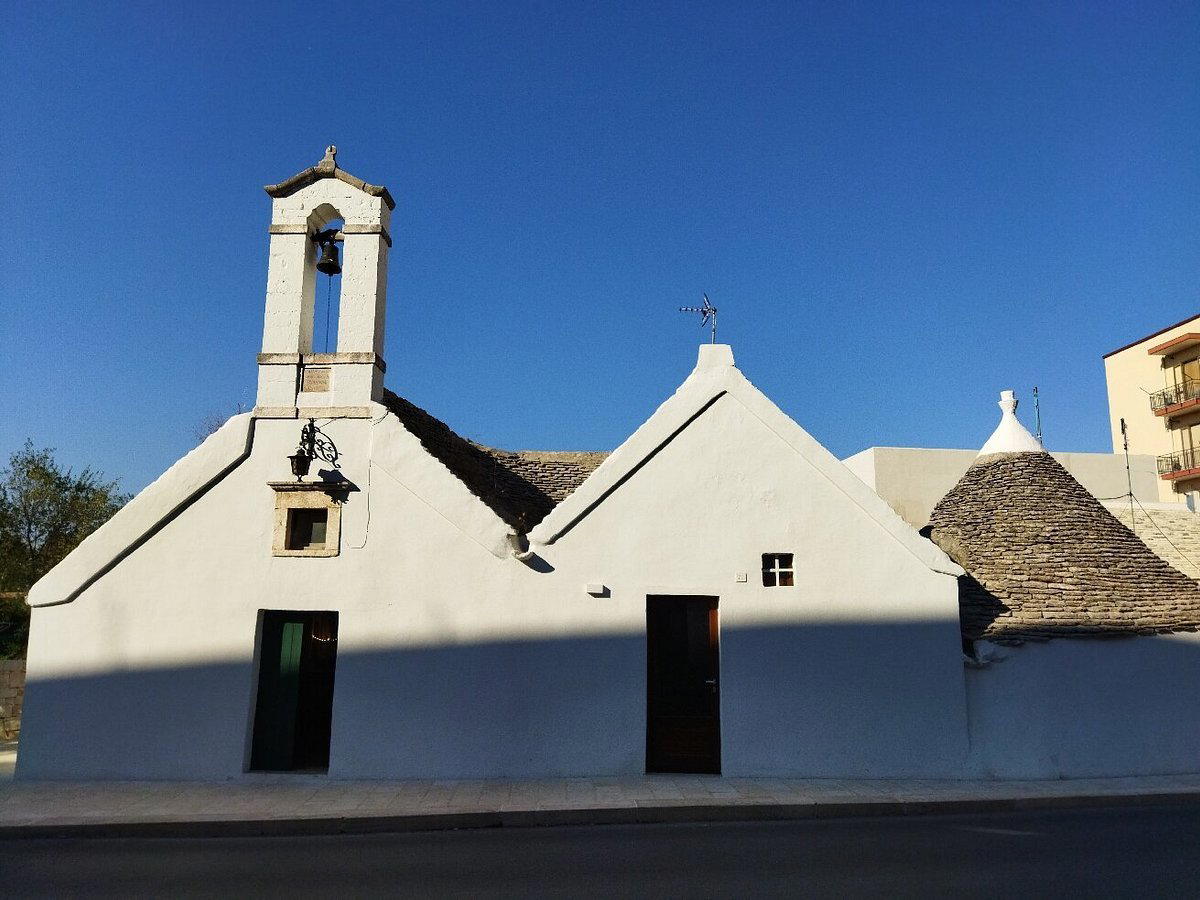
The trullo as architectural form is one of the Valle d'Itria's most recognizable building types, and its adoption here as the container for the spa signals something deliberate about how Ottolire frames its identity. In the broader context of Italian boutique hotels, there is a clear split between properties that use historical architecture as backdrop scenery and those that make it structurally central to the guest sequence. Ottolire sits firmly in the second category. Placing the spa inside a dedicated trullo rather than a purpose-built annex means the highest-intimacy, highest-dwell-time space in the property is the one most saturated with regional form. That is a design decision with a point of view.
The terrace, which the restaurant spills onto, extends the same logic into the dining context. Eating outdoors in Puglia in the warmer months is not an amenity add-on; it is the default condition of how food and sociality work in this part of southern Italy. A kitchen that opens onto landscape rather than retreating behind interior walls reflects a genuine understanding of local dining culture rather than a hospitality convention imported from elsewhere. Comparable properties in other parts of Italy, including Tuscan estates like Rosewood Castiglion Del Bosco or Borgo San Felice Resort, often work within a similarly estate-rooted framework, though the Puglian version carries a rawer material honesty that distinguishes the regional typology from its Tuscan counterparts.
Scale, Intentionality, and the Boutique Threshold
Thirteen rooms is a meaningful number. At that count, a property sits below the threshold where operational scale starts to determine the guest experience, and above the point where intimacy tips into austerity. Italian boutique hotels in this range, when done with discipline, can maintain the quality-to-ratio that larger properties struggle to sustain: attentive service without the formality of full-brigade hospitality, common spaces that feel resident rather than transactional, and a coherence between the built environment and the programming that gets diluted at 40 or 60 keys.
Borgo Egnazia in Savelletri di Fasano operates at considerably larger scale within the same regional frame and has become a reference point for Puglian luxury. Ottolire's 13-room footprint positions it differently: less resort infrastructure, more curated residence. The Michelin Key awarded in 2024 confirms external recognition of quality at this scale, placing the property within the verified upper tier of Italian boutique accommodation without requiring the inventory of a large resort to justify the designation.
The Kitchen and the Garden
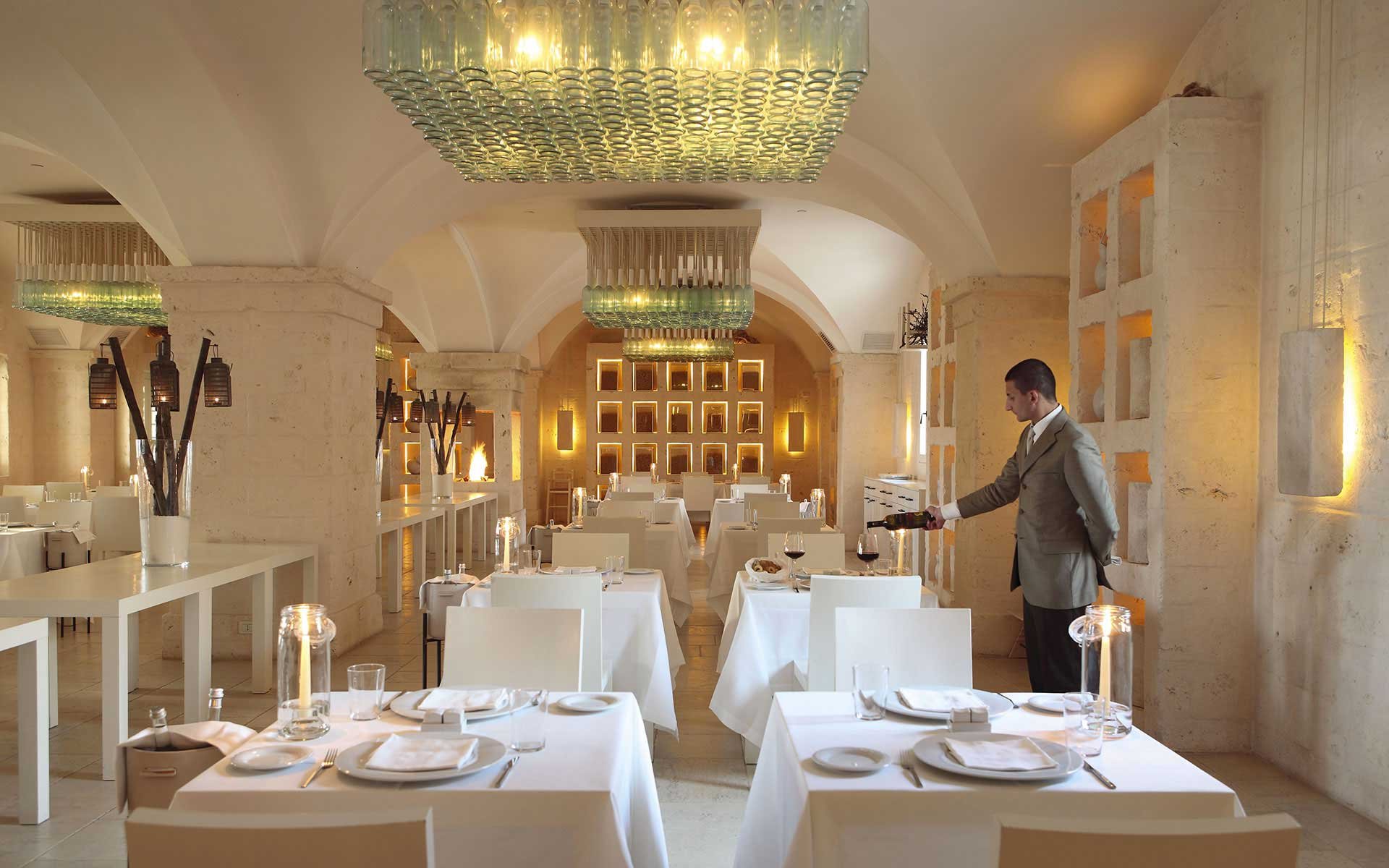
The restaurant draws from the estate's own vegetable garden alongside produce sourced from local suppliers, which is now a common framing for southern Italian country cooking but remains meaningful when the estate scale is small enough to make the garden a genuine operational input rather than a decorative one. Puglian cuisine is structurally well-suited to this kind of sourcing: it is a cucina povera tradition that built its repertoire around what the landscape produced seasonally, prioritizing orecchiette, legumes, bitter greens, aged ricotta, and olive oil over imported complexity. A kitchen working from that tradition with immediate access to garden produce is working within its logic rather than against it.
The terrace setting amplifies this by removing the separation between meal and environment. Diners in the Valle d'Itria in summer sit within the same landscape that produced what is on their plates. That continuity is difficult to manufacture and easy to lose if the design or the sourcing decisions break the chain. Ottolire holds it.
Reaching the Valle d'Itria
Locorotondo sits in the Bari province of Puglia, and Bari's Karol Wojtyla Airport is the practical entry point for international travellers, at under an hour from the property by road. This is a comfortable distance that makes arrival from a long-haul connection manageable without requiring an additional night in the city. The estate's rural address on Contrada Papariello Serafino means a car is effectively necessary for independent movement, though the regional geography rewards that mobility: Alberobello, Locorotondo, Martina Franca, Cisternino, and Ostuni all sit within 30 minutes, giving a multi-day stay genuine range without long drives.
Rates from around $370 per night position Ottolire in the upper bracket of Puglian boutique accommodation, below the price points of the largest Italian luxury hotel brands but consistent with what the Michelin Key recognition implies about quality level. For context, properties in comparable rural Italian categories, such as Castelfalfi in Montaione or Castello di Reschio in Umbria, occupy a similar price band while operating under different regional aesthetics.
For travellers weighing Puglia against Italy's other premium rural destinations, it is worth noting what the region offers that others do not: a coastline within reach, a cuisine of genuine historical depth, and an architectural tradition that produces distinctive spaces without requiring the reconstruction of a medieval castle or a Renaissance villa. Properties like Ottolire that work within that vernacular rather than around it are the more honest version of southern Italian country hospitality.
For a broader map of where to eat and drink in the area, see our full Locorotondo restaurants guide. Elsewhere in Italy, comparable boutique properties worth considering include Casa Maria Luigia in Modena, Corte della Maestà in Civita di Bagnoregio, and Castel Fragsburg in Merano, each working within a distinct regional tradition at similar scale. For coastal Italy, Borgo Santandrea on the Amalfi Coast and Il San Pietro di Positano represent a different register of the country-house-meets-landscape relationship. For those extending a trip to Italy's city properties, Portrait Milano and Bulgari Hotel Roma occupy the urban end of the Italian luxury spectrum.
Questions Travellers Ask
- How would you describe the overall feel of Ottolire Resort?
- Ottolire sits closer to the residence end of the boutique spectrum than the resort end, despite the name. The 13-room scale, the use of local Puglian stone and materials, and the spa housed in a dedicated trullo produce a property that reads as deeply rooted in its regional context. At rates from around $370 per night, it occupies the upper tier of Puglian boutique accommodation without the operational scale of a large resort. The rural Contrada Papariello Serafino address reinforces the sense of seclusion, while proximity to Locorotondo, Alberobello, and Ostuni keeps the stay from feeling isolated.
- Which room category should I book at Ottolire Resort?
- The property's 13 rooms vary by outdoor space: some include private terraces, and categories differ on whether a hot tub is included. The Michelin Key recognition and the $370 entry price point suggest the base category already operates at a considered quality level, so the upgrade decision is primarily about outdoor access. If the stay falls during Puglia's warmer months, April through October, a room with a private outdoor area is worth the difference: the Itria Valley light and the estate's landscape are core to what the property offers, and a private terrace extends the living space into that environment in a way an interior room cannot replicate.
Comparison Snapshot
Comparable venues nearby, for context on price, style, and recognition.
| Venue | Cuisine | Price | Awards | Notes |
|---|---|---|---|---|
| Ottolire ResortThis venue — the venue you are viewing | Contemporary luxury resort designed with local artisanal materials and traditional Puglian architecture integrated into a natural landscape. | $200–300 | 1 Michelin Key | Not listed |
| Leonardo Trulli Resort | Restored trulli and Liberty-style masseria in countryside oasis | Not listed | 1 Michelin Key | Locorotondo |
| Sextantio Le Grotte della Civita | Albergo Diffuso (scattered hotel) concept preserving authentic Sassi cave dwellings with contemporary luxury restoration; blends archaeological heritage with sensory indulgence. | $100–200 | 1 Michelin Key · Mr & Mrs Smith Seal of Approval | Civita (Sassi) |
| Masseria Torre Maizza | Renovated 16th-century Puglian masseria with modern luxury | $500–750 | 2 Michelin Keys · Virtuoso Luxury Hotel Partner | Savelletri di Fasano |
| Palazzo Daniele | aristocratic palazzo restored as boutique artist guesthouse | Not listed | 1 Michelin Key · Mr & Mrs Smith Seal of Approval | Gagliano del Capo |
| Canne Bianche Lifestyle Hotel | Pared-back luxury boutique resort blending contemporary minimalism with Mediterranean bohemian aesthetics in a secluded Puglian fishing village. | $100–200 | 1 Michelin Key · Mr & Mrs Smith Seal of Approval | Torre Canne di Fasano |
Recognition history
Dated appearances from independent guides and award organizations, with the underlying list record or original source where available.
Michelin 1 Key
Michelin
Full recognition history (3 entries)
Michelin 1 Key
Michelin
Michelin 1 Key
Michelin
Continue exploring
More in Locorotondo
Hotels in Locorotondo
Browse all →
Bars in Locorotondo
Browse all →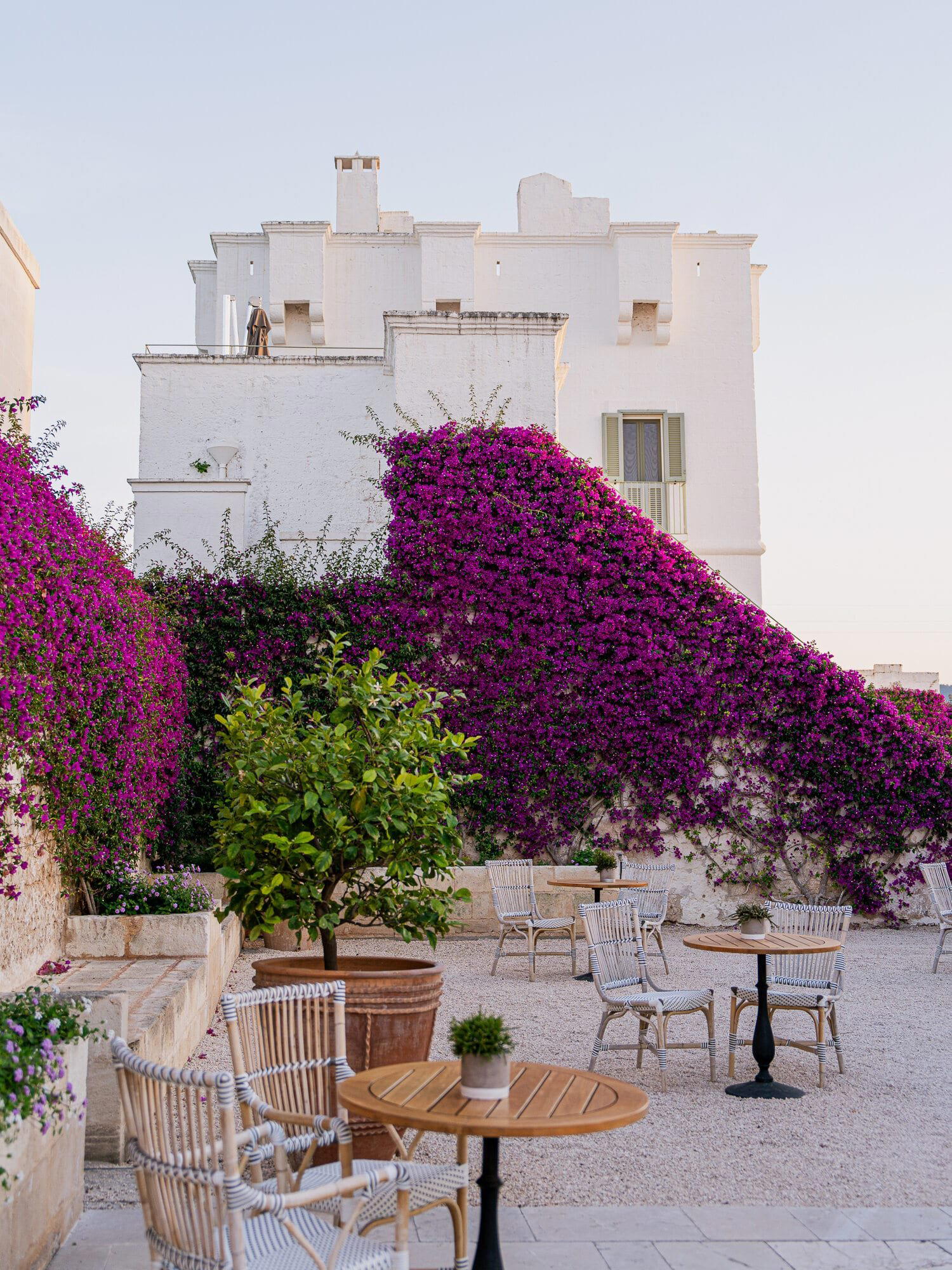
Restaurants in Locorotondo
Browse all →

Details
- Scenic
- Quiet
- Elegant
- Romantic
- Romantic Getaway
- Wellness Retreat
- Family Vacation
- Anniversary
- Garden
- Terrace
- Destination Spa
- Golf Course
- Panoramic View
- Wi Fi
- Pool
- Spa
- Fitness Center
- Restaurant
- Bar
- Room Service
- Concierge
- Airport Transfer
- Hot Tub
- Tennis Court
- Garden
- Vineyard
- Accessible Restroom
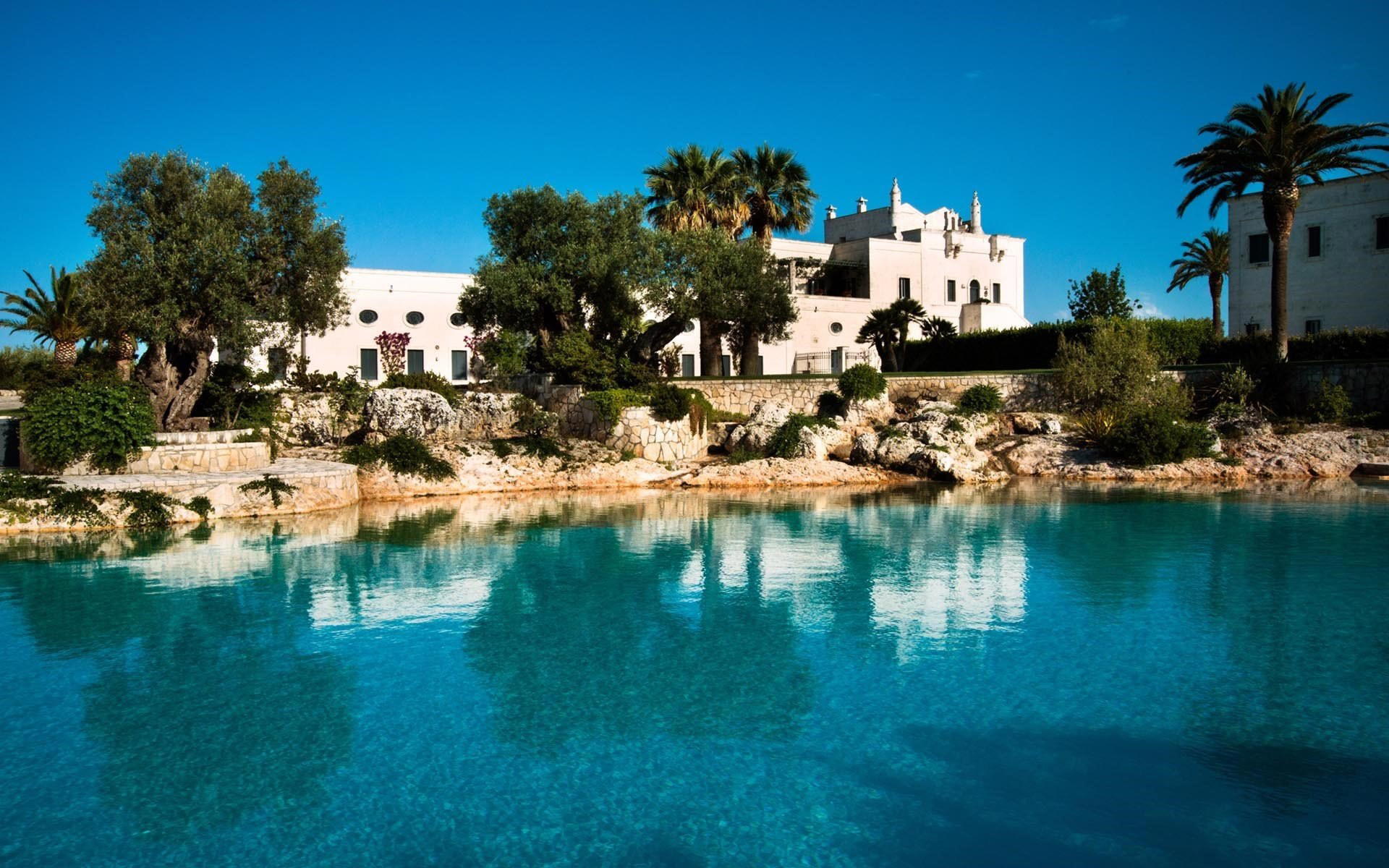
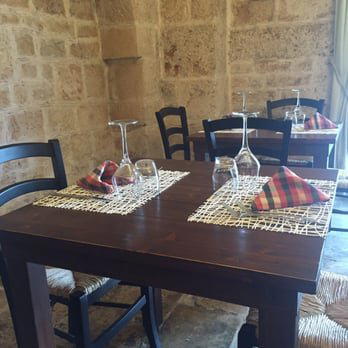
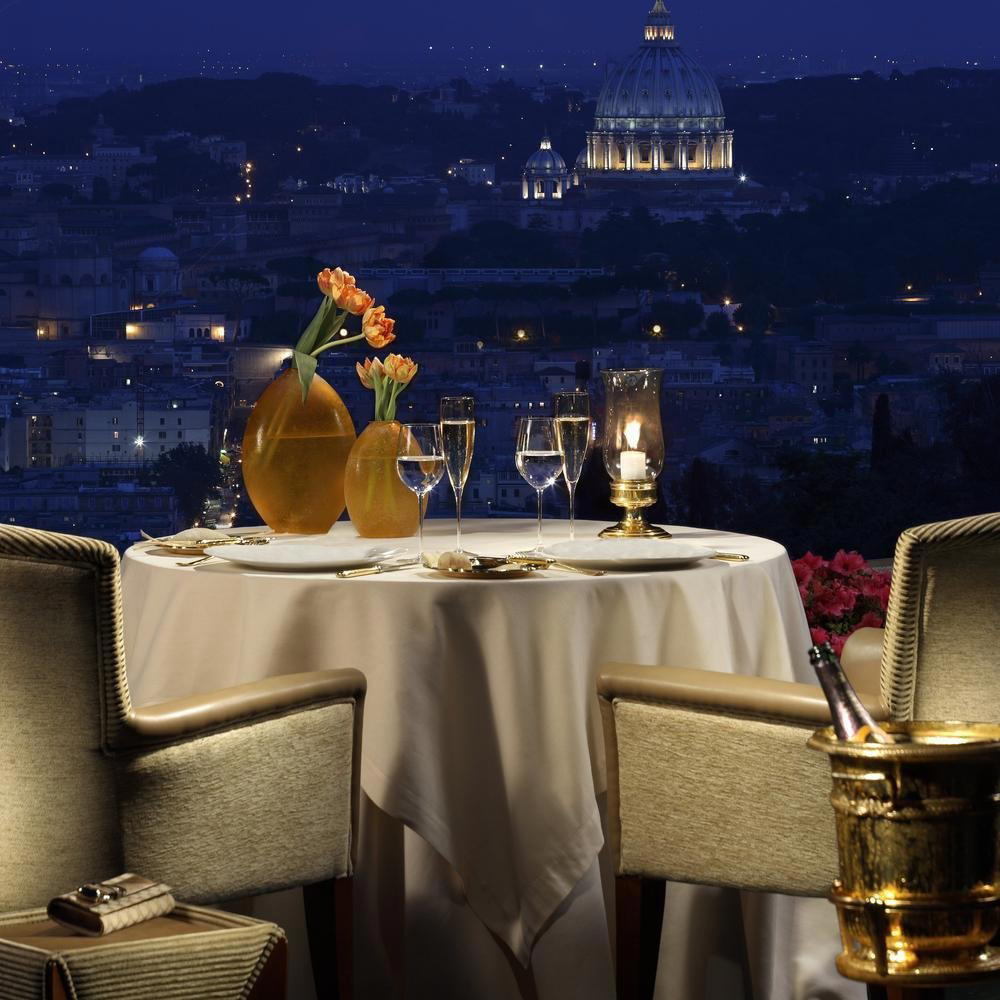
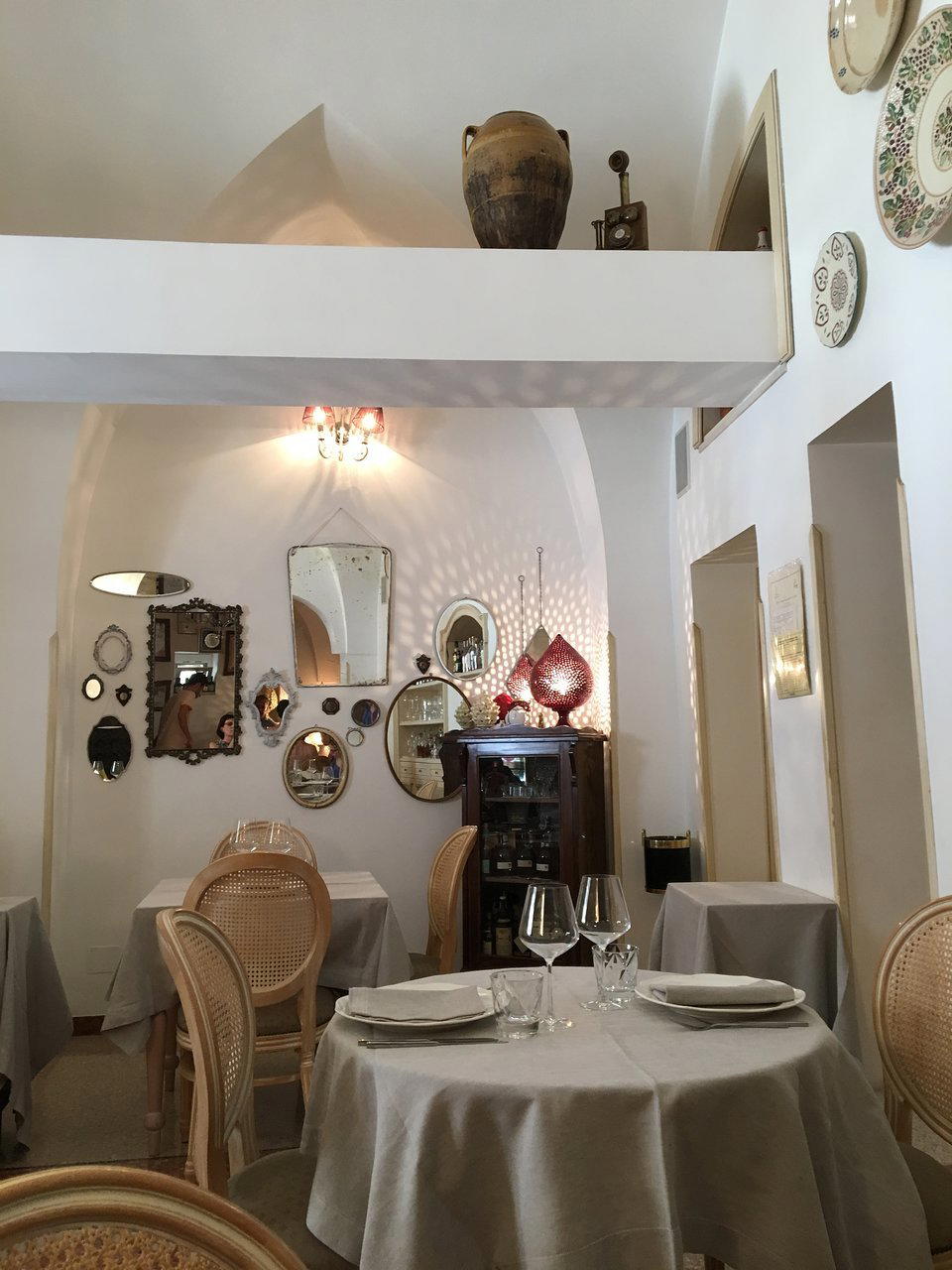
Peaceful and refined, with warm Mediterranean lighting throughout the property, terrace dining overlooking gardens, and a serene pool area surrounded by ancient olive trees and local vines.