Gandhi Cafe
Our verdict
On Bleecker Street in the West Village, Gandhi Cafe occupies a corner of New York's long-running South Asian dining conversation. The address places it among a neighbourhood that has cycled through Italian trattorias, jazz bars, and a wave of chef-driven independents, making it a useful lens on how casual Indian dining has shifted in the city over the past decade.

Pearl is the En Primeur Club membership app, where members save venues, book tables and use the concierge.
The menu
What to order
- Chicken Tikka Masala
- Butter Chicken
- Garlic Naan
Bleecker Street and the Longer Arc of Indian Dining in New York
West Village dining has always been subject to reinvention. The stretch of Bleecker Street around the 200s and 300s has hosted multiple generations of neighbourhood restaurants, Italian red-sauce institutions, wine-focused bistros, and the kind of low-key independents that outlast trends by ignoring them. Gandhi Cafe, at 283 Bleecker St, sits inside that longer cycle. Its address alone signals something about its positioning: this is not the Curry Hill corridor of Lexington Avenue, nor the more recent wave of upscale Indian tasting-menu formats that have pushed into Midtown and the Flatiron. It is a West Village address, which carries its own set of expectations about informality, neighbourhood loyalty, and the kind of cooking that earns repeat visits rather than destination pilgrimages.
For context on how the broader New York dining scene frames the upper end of the market, the city's Michelin-starred French and contemporary houses Le Bernardin, Per Se, and Eleven Madison Park, occupy a separate register entirely, with tasting menus priced well above $200 per person and booking windows that open months in advance. Masa and Atomix similarly represent the apex of their respective categories. Gandhi Cafe operates in a different tier and, importantly, a different conversation: it is part of the city's larger infrastructure of neighbourhood Indian cooking rather than a competitor to the destination dining circuit.
How the West Village Shapes What a Restaurant Becomes
The neighbourhood context matters more than it might seem. West Village blocks carry high rents and a residential clientele that tends to support restaurants with genuine character over ones that rely on marketing or spectacle. Restaurants in this pocket either earn a local following or cycle out within a few years. The survivors tend to share a quality: they become part of the rhythm of the neighbourhood rather than an event within it. That dynamic has shaped Indian restaurants across New York differently depending on their zip code. The Lexington Avenue cluster built its reputation on density and value. The newer generation of modernist Indian formats, some drawing comparisons to the kind of technique-forward cooking you see at places like Smyth in Chicago or Lazy Bear in San Francisco, has moved toward tasting-menu formats and wine programs. A Bleecker Street address implies neither of those trajectories. It implies, instead, the kind of cooking that has to justify itself visit after visit to the same faces.
The Evolution Question: What Changes and What Holds
Indian restaurants in New York have undergone a visible shift over the past fifteen years. The first phase was dominated by regional subcontinental cooking that arrived with immigrant communities and built audiences on authenticity and price. The second phase saw a number of operators push toward what might be called refined Indian, sharper plating, shorter menus, better wine lists, higher prices. That second wave produced some of the city's most-discussed openings of the 2010s and early 2020s. The third, more recent phase is harder to characterize neatly: some operators have doubled down on regional specificity (Goan, Keralan, Gujarati cooking getting their own dedicated formats), while others have pulled back from the modernist experiment toward something more recognizably rooted.
Where Gandhi Cafe sits within that arc is a function of what the Bleecker Street location has demanded of it. A restaurant that has held a West Village address through multiple cycles of the neighbourhood has, by definition, adapted. The menu, the price point, and the format have all been shaped by the pressure of a residential block that does not sustain novelty for its own sake. That kind of evolution, gradual, neighbourhood-driven, less visible than a high-profile rebrand, is actually the more common story in New York dining, even if it generates less coverage than a James Beard nomination or a Michelin star. For a broader map of how the city's dining scene is structured, our full New York City restaurants guide provides the wider frame.
The relevant comparison set for Gandhi Cafe is not the haute-cuisine circuit represented by The French Laundry in Napa, Blue Hill at Stone Barns in Tarrytown, or Providence in Los Angeles, those restaurants operate on different economics, different booking models, and different expectations. Nor does it compete with the farm-integrated formats of Single Thread Farm in Healdsburg or the regional American ambitions of Addison in San Diego.
That is a meaningful category in a city where the high end has become increasingly legible, The Inn at Little Washington, Frasca Food and Wine in Boulder, Emeril's in New Orleans, and European references like Atelier Moessmer Norbert Niederkofler in Brunico and Dal Pescatore in Runate all represent the kind of destination commitment that requires planning. Neighbourhood Indian on Bleecker Street asks for something different: proximity, familiarity, and the kind of food that makes sense on a Tuesday.
Planning Your Visit
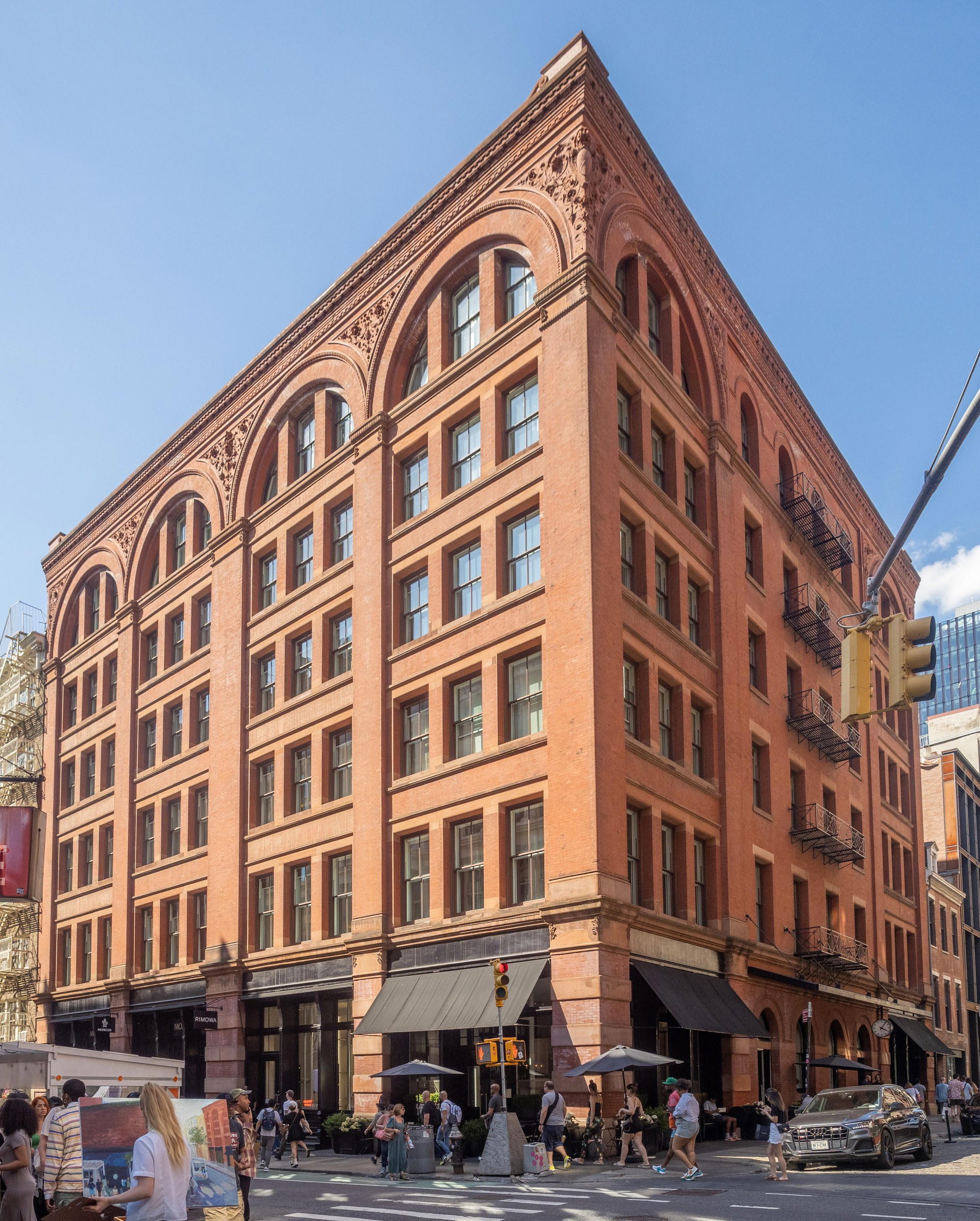
Gandhi Cafe is located at 283 Bleecker St in the West Village, a block that is walkable from the Christopher Street-Sheridan Square and West 4th Street subway stations. Reservations: Dress: West Village neighbourhood standard, no dress code applies. Budget: Hours:
Frequently asked questions
at Gandhi Cafe?
Is Gandhi Cafe reservation-only?
What's the standout thing about Gandhi Cafe?
Do they accommodate allergies at Gandhi Cafe?
Is Gandhi Cafe worth the price?
How does Gandhi Cafe fit into the West Village's South Asian dining scene compared to Curry Hill?
Same-City Peers
Comparable venues nearby, for context on price, style, and recognition.
| Venue | Cuisine | Price | Notes |
|---|---|---|---|
| Gandhi CafeThis venue (the venue you are viewing) | Authentic Anglo-Indian | $20–30 | Not listed |
| Raja Sweets & Fast Food | Authentic Indian Vegetarian Fast Food & Sweets | $10–20 | Jackson Heights |
| Masala Times | Indian Street Food | $10–20 | Greenwich Village |
| Temple Canteen | Authentic South Indian Vegetarian | $10–20 | East Flushing |
| Spice Symphony Times Square | Authentic Indian with Indo-Chinese Fusion | $30–50 | Hell's Kitchen |
| Diwali Indian Cuisine | Traditional Indian Tandoori | $20–30 | Bedford-Stuyvesant (West) |
Continue exploring
More in New York City
Restaurants in New York City
All restaurants in New York City →
Bars in New York City
All bars in New York City →
Details
- Intimate
- Cozy
- Classic
- Casual Hangout
- Family
- Standalone
- Byob
- A La Carte
- Vegetarian Friendly
- Vegan Options
Current opening hours
- Monday
- 12:30–11:30 PM
- Tuesday
- 12:30–11:30 PM
- Wednesday
- 12:30–11:30 PM
- Thursday
- 12:30–11:30 PM
- Friday
- 12:30–11:30 PM
- Saturday
- 12:30–11:30 PM
- Sunday
- 12:30–11:30 PM
Hours can change for holidays and private events. Hours as of .
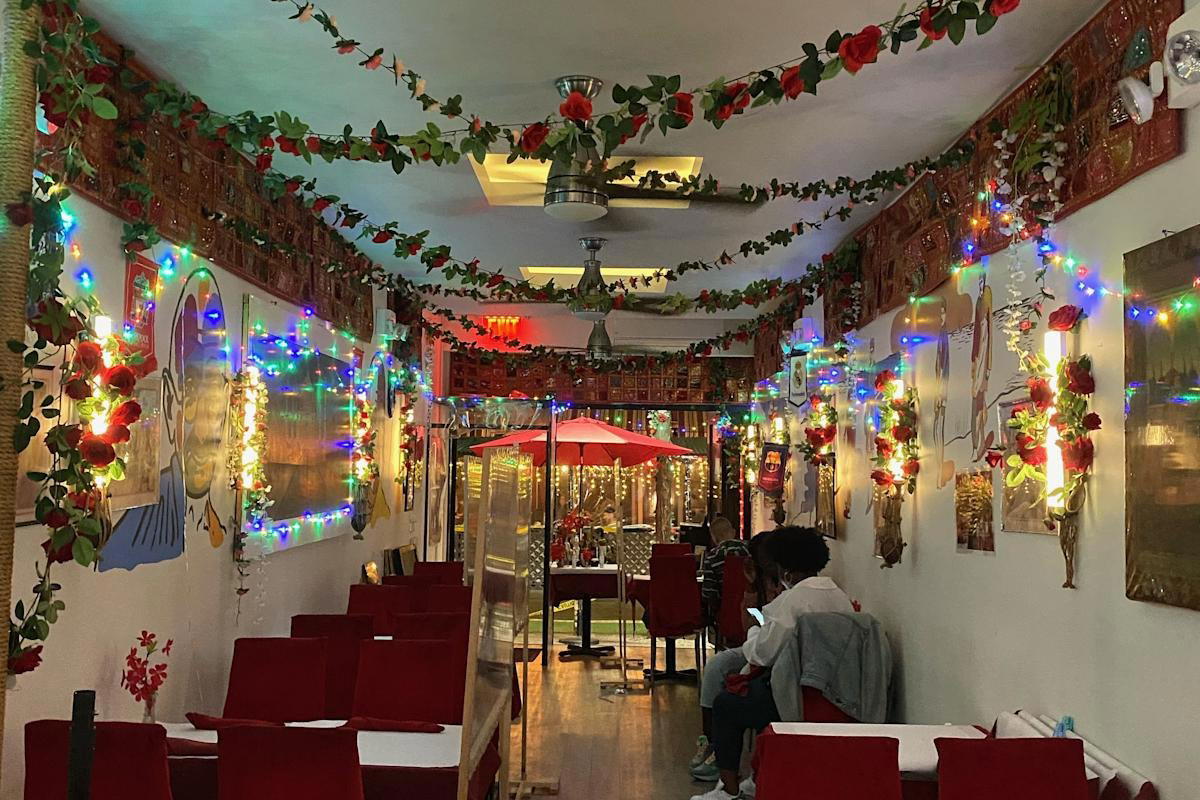
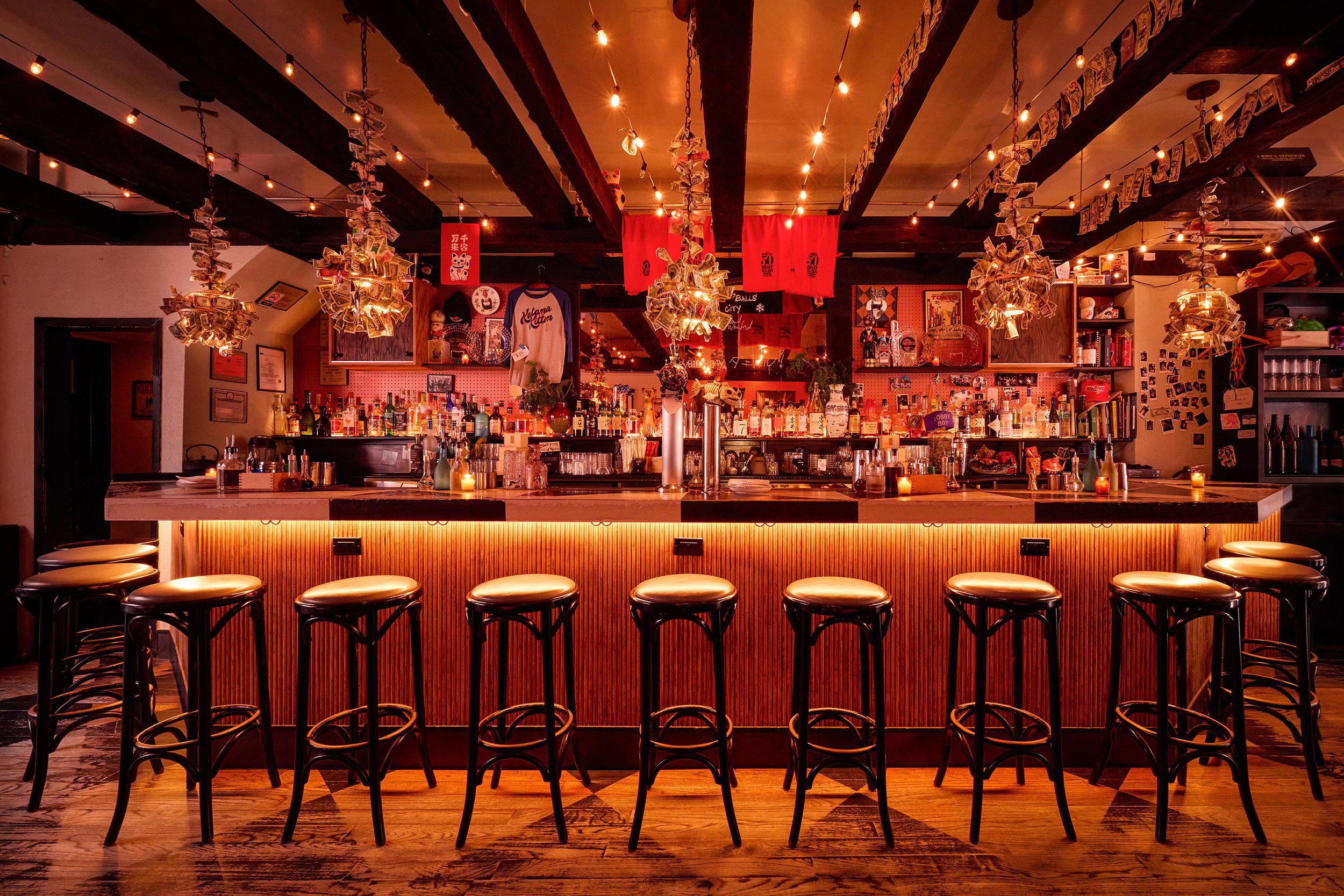
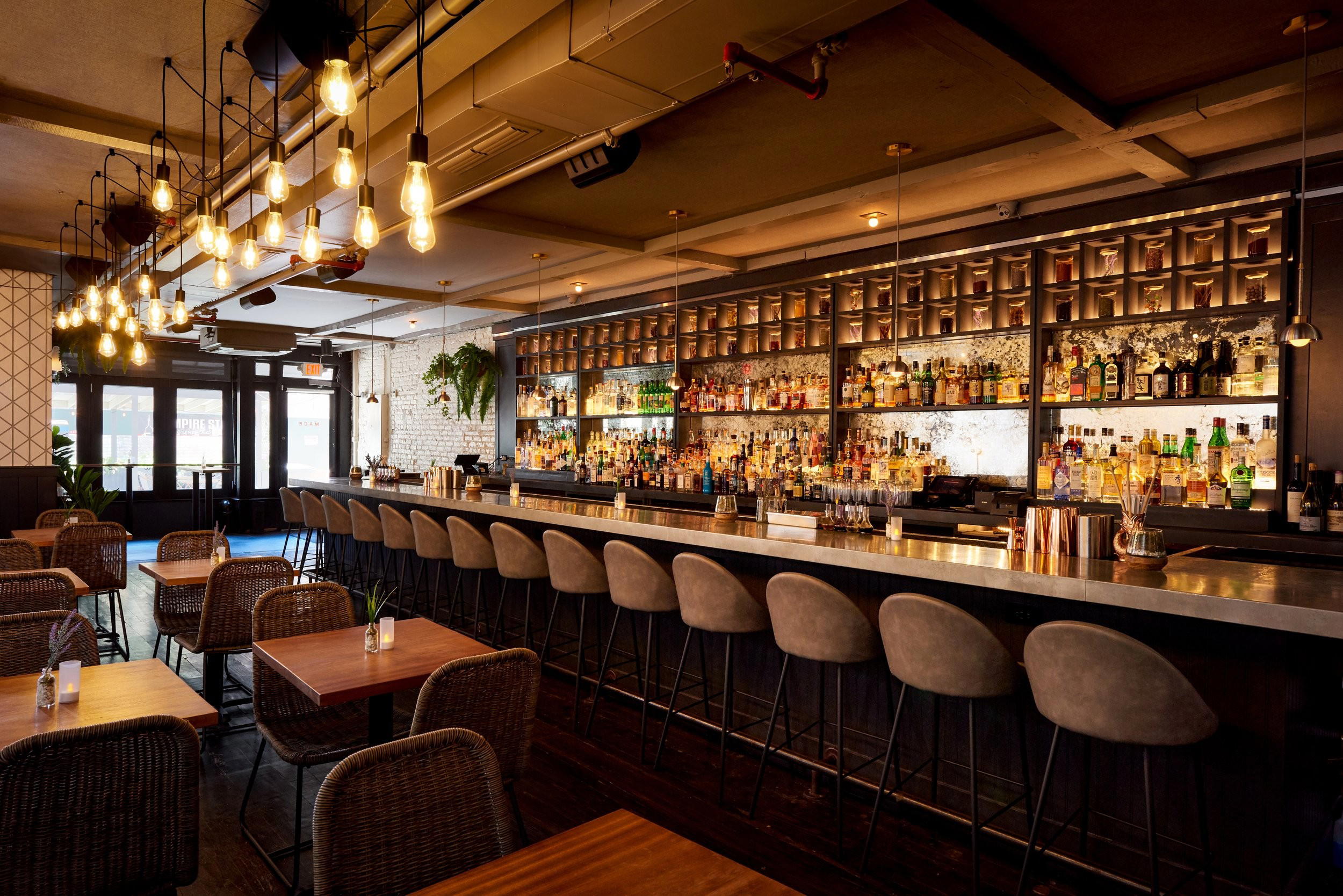
Intimate space with rich red walls, upholstery, and soft instrumental Indian music creating a quiet escape from NYC bustle.