Buvette Paris occupies a narrow room on Rue Henry Monnier in the 9th arrondissement, part of a transatlantic concept that treats the French wine bar format as a daily ritual rather than an occasion. The address sits at the heart of South Pigalle's most densely frequented stretch, where the pace of eating is deliberately unhurried and the boundary between breakfast, lunch, and dinner is more suggestion than rule.
Pearl is the En Primeur Club membership app — saves, bookings, and concierge access live there. Same editors, same standards.
- Address
- 28 Rue Henry Monnier, 75009 Paris, France
- Phone
- +33 1 44 63 41 71
- Website
- ilovebuvette.com
- Directions
- Get directions
 Saves & bookings on Pearl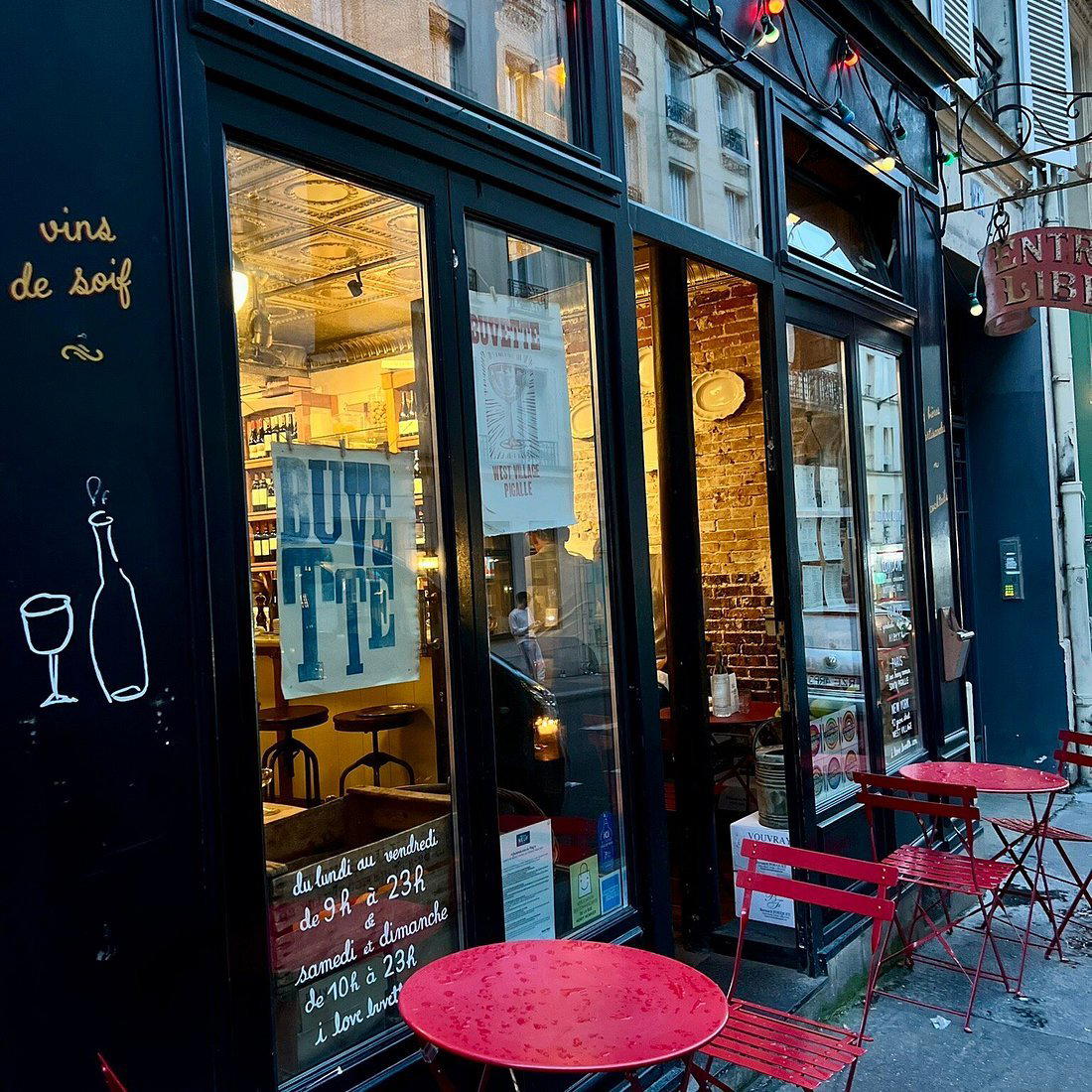
The 9th Arrondissement's Approach to the All-Day Table
Paris's 9th arrondissement has spent the better part of a decade developing a particular grammar for informal eating: convivial rooms, bottles chosen with care but described without ceremony, and a calendar that refuses to reset between meals. The stretch of streets around Rue des Martyrs and Rue Henry Monnier sits at the centre of this sensibility. In a neighbourhood where the zinc counter and the marble-topped table carry as much cultural weight as any tasting menu, the ritual of the meal is measured not in courses but in hours.
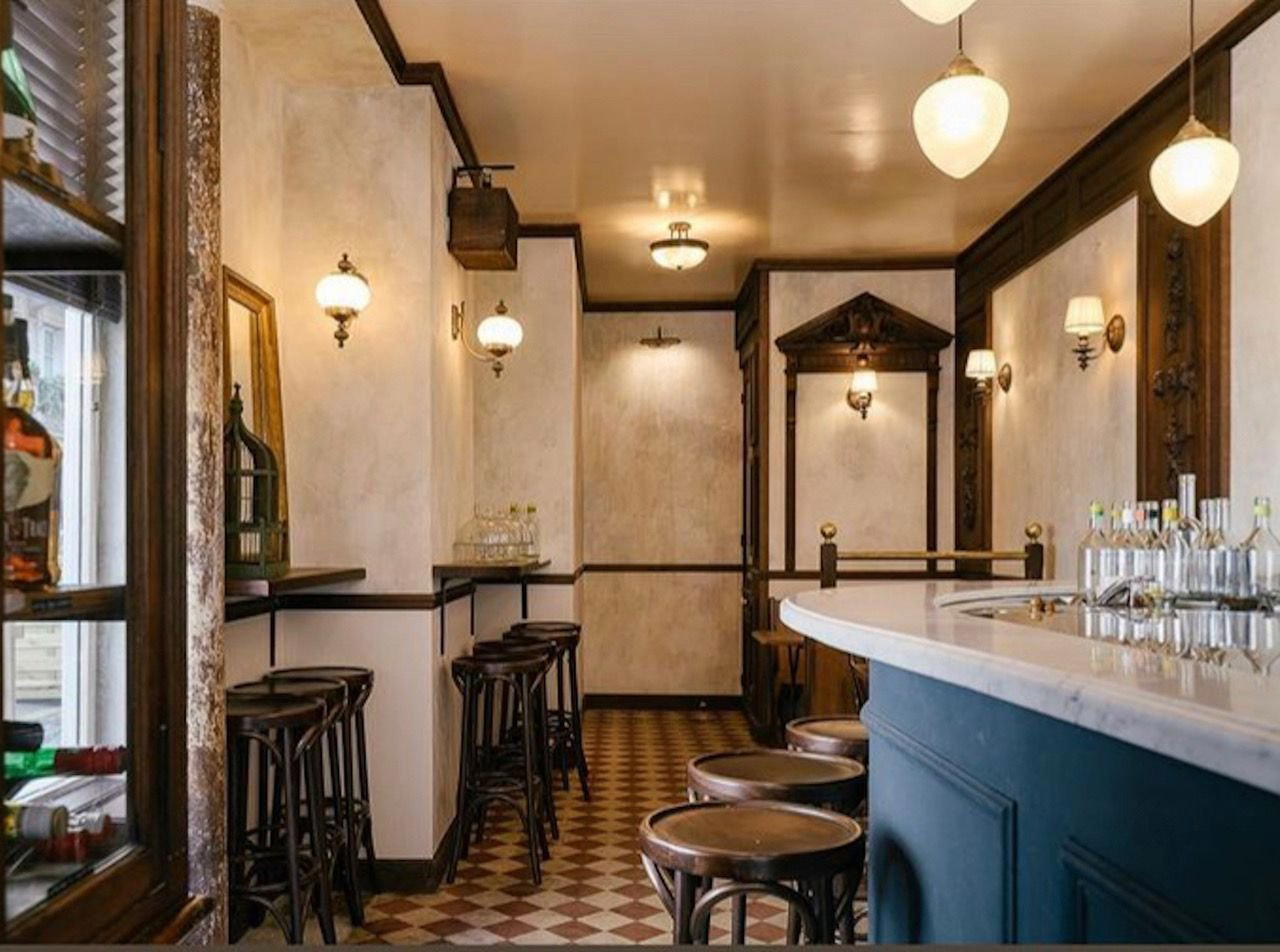
Buvette at 28 Rue Henry Monnier arrived in Paris as the second iteration of a format developed in New York's West Village. That origin matters as context, not biography. What the transatlantic translation produced was a venue that reads, from the street, like a Parisian wine bar of the 1960s — dark wood, low light, bottles lined against the wall — while operating on an American-influenced openness to all-day dining that most traditional Parisian establishments would have resisted. The result is a room that feels entirely of the neighbourhood while doing something the neighbourhood does not universally offer: welcoming you at nine in the morning and again at midnight without changing register.
The Ritual of Eating Without an Agenda
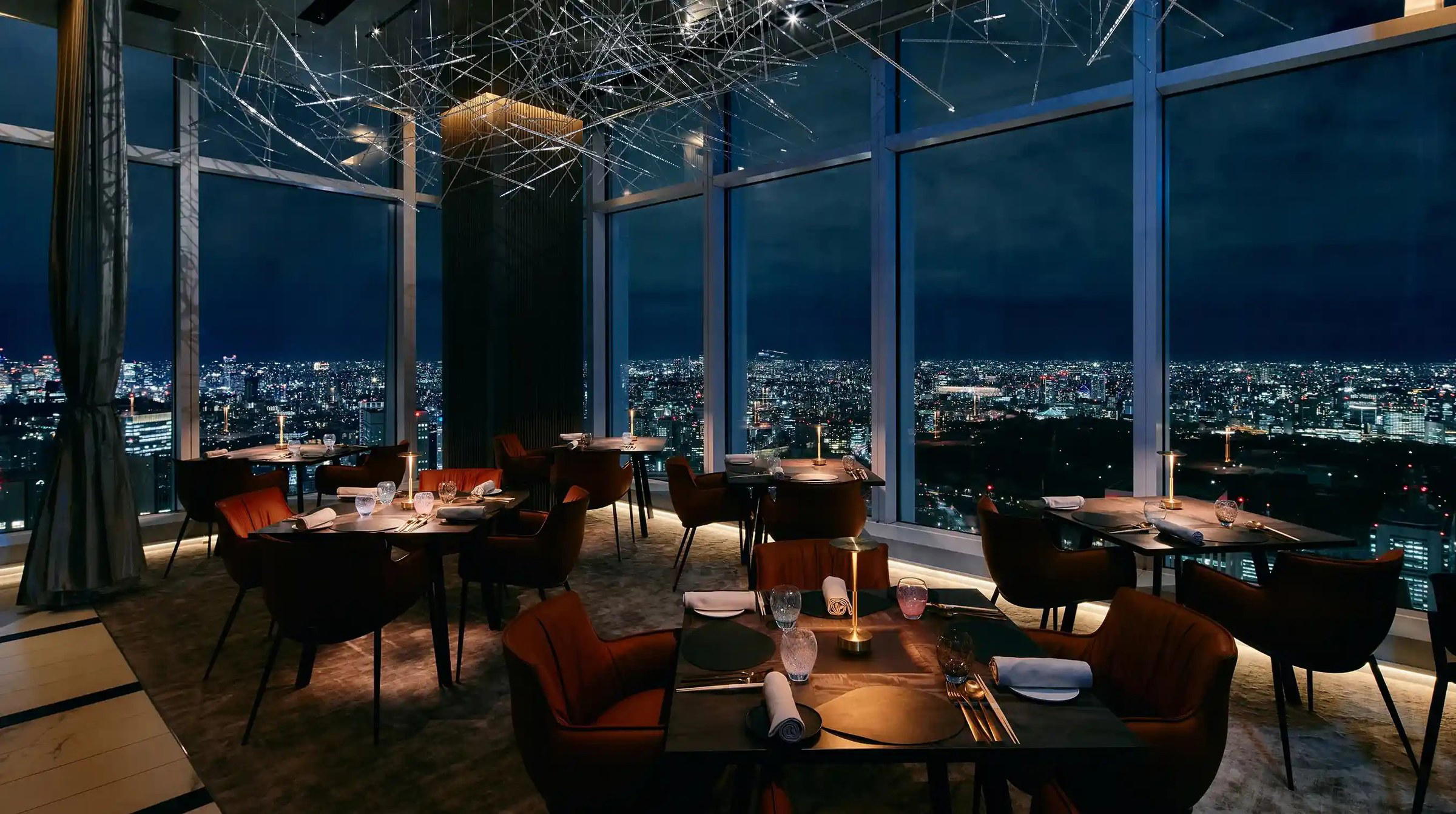
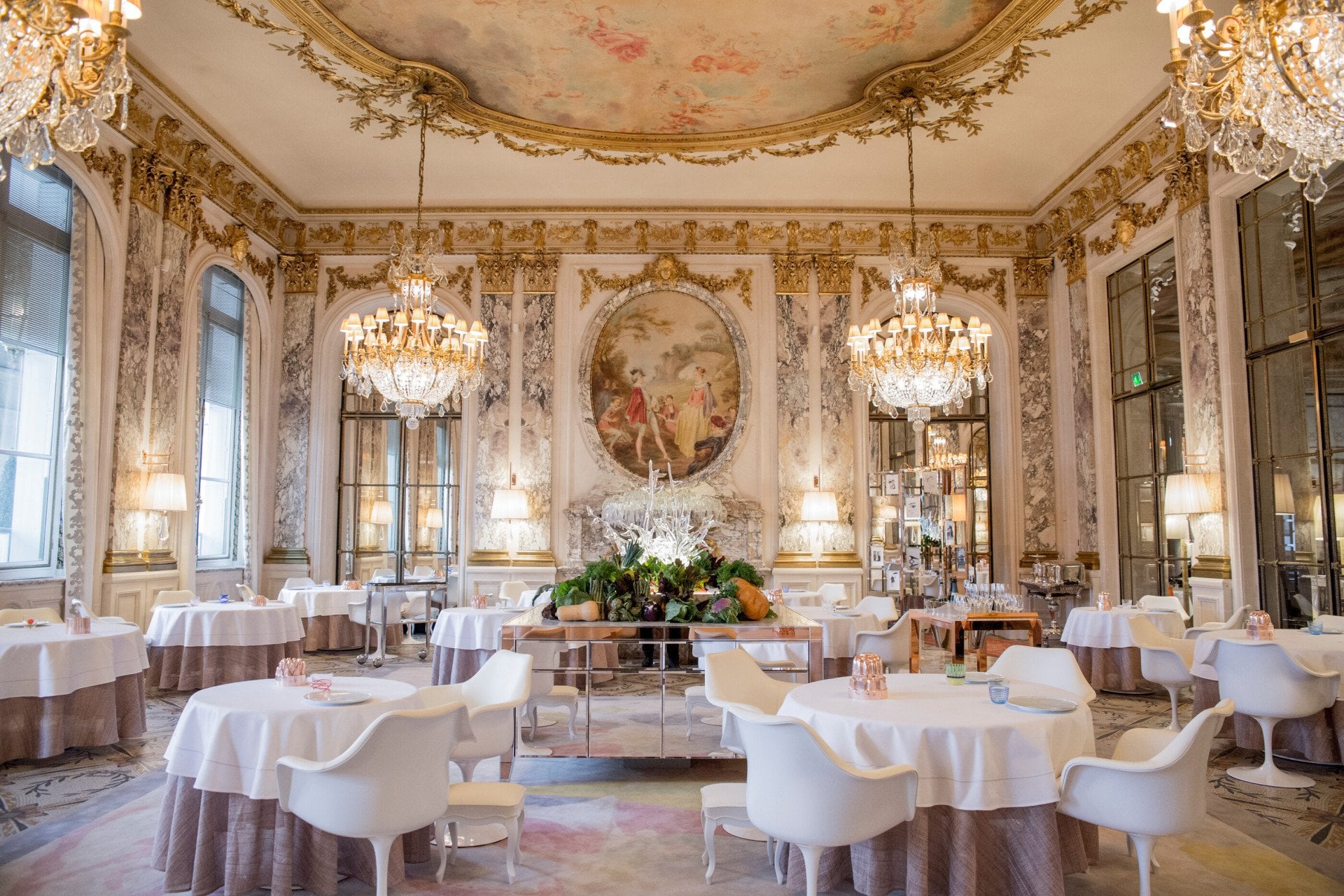
In Paris's more formal dining rooms, the multi-course sequences at addresses like Alléno Paris au Pavillon Ledoyen, Arpège, or L'Ambroisie, the meal has a clear architecture. Arrival, amuse-bouche, the progression of the menu, the cheese trolley, the final coffee: everything signals its moment. The wine bar format, at its most considered, operates on a different kind of discipline. There is no imposed pace. The etiquette is defined by what you pour and when you ask for more bread, not by a choreographed sequence of plates arriving at the kitchen's tempo.
At Buvette, this translates into a mode of eating that rewards patience and discourages the kind of efficiency that turns lunch into a meeting. The room is small enough that you are aware of the tables around you; the food is designed to accumulate on the table rather than replace itself course by course. Dishes are ordered in fragments, shared across the zinc in whatever order they emerge. This is not a deficiency in structure, it is a deliberate format that places the conversation, the glass, and the company ahead of the sequence of delivery.
The gap between this approach and the formal traditions of, say, Kei or Le Cinq at the Four Seasons George V is not a matter of quality, it is a matter of the meal's social contract. At those addresses, the kitchen leads. At a wine bar operating in the French bistronomy tradition, the guest sets the pace, within the constraints of what the kitchen happens to be producing that hour. The format places a different kind of pressure on the wine list and on the kitchen's ability to produce food that holds and shares well, rather than food that must arrive at a precise moment to make its effect.
South Pigalle and the Question of Where This Kind of Place Belongs
The SoPi designation, a roughly bounded zone around Rue Notre-Dame-de-Lorraine and the streets feeding into Pigalle proper, is now well established enough to have attracted comparison pieces in international food media and to have pushed real-estate values across a set of blocks that once operated as an afterthought to the Montmartre tourist circuit above it. The neighbourhood's current character owes a great deal to wine-forward establishments that function as anchors for an evening without ever presenting themselves as destinations in the formal sense.
Buvette occupies a particular position in this geography. Its New York provenance gave it early recognition among visitors arriving with prior knowledge of the West Village original, while its physical integration into Rue Henry Monnier, an address that functions as a daily-use street for the surrounding residential blocks, gave it a neighbourhood legitimacy that venue-tourist traps in the area never acquire. The address is less than ten minutes from the major Métro interchange at Pigalle (lines 2 and 12) and walkable from Notre-Dame-de-Lorraine. Getting there requires no planning beyond knowing which arrondissement you want.
For visitors building an itinerary around Paris's more structured dining experiences, perhaps including a journey to Flocons de Sel in Megève, Mirazur in Menton, or provincial institutions like Troisgros in Ouches, Paul Bocuse outside Lyon, or Bras in Laguiole, Buvette functions as a pressure release. It is the meal between the meals, the counter seat where no one is measuring the pace at which you finish the bottle.
Placing Buvette in a Wider French Context
France's regional dining tradition is weighted toward the kind of institution that has a documented history and a house style that predates current fashion: Auberge de l'Ill in Illhaeusern, Les Prés d'Eugénie in Eugénie-les-Bains, Georges Blanc in Vonnas, or Auberge du Vieux Puits in Fontjoncouse. Against that backdrop, the wine bar format that Buvette represents is not a French invention revisited, it is a French archetype reconstituted through a lens that has been refracted through New York and returned to Paris wearing different clothes. The buvette as a concept is as old as the French café, a simple station for drinking with modest food alongside. What the modern iteration in SoPi represents is a version of that format taken seriously at a level of finish and wine selection that the original concept never claimed.
Internationally, the comparison might run toward Le Bernardin in New York or Lazy Bear in San Francisco, not in food register, but in the way both of those addresses made a deliberate structural choice about how a meal should be conducted and then committed to that structure completely. Buvette's structural choice is informality maintained with precision, which is a harder discipline than it appears. Southern French venues such as La Table du Castellet operate in a different register entirely; the common thread is that all of them treat the format of the meal as a considered decision rather than an inherited default. For more on Paris's wider dining range, see our full Paris restaurants guide.
Planning a Visit
Buvette sits at 28 Rue Henry Monnier in the 9th arrondissement. The address is walkable from both the Pigalle and Saint-Georges Métro stations. As with many small wine bars in this part of Paris, the room fills quickly on weekday evenings and across the full run of weekend hours. The format rewards arriving without a fixed agenda: the all-day structure means a late morning visit, a mid-afternoon glass, and a late-evening counter seat are all within scope. Reservation logistics vary; given the scale of the room and the neighbourhood's popularity among visitors with advance knowledge of the address, arriving outside peak hours remains the more reliable approach for those without a confirmed booking.
How Buvette Paris: Daytime Hours & Casual Dress Code compares with similar nearby venues.
| Venue | Cuisine | Price |
|---|---|---|
| Frenchie Pigalle | Modern Cuisine | €€€ |
| L'Évadé | Modern Cuisine | €€ |
At a Glance
- Cozy
- Intimate
- Rustic
- Classic
- Casual Hangout
- Date Night
- Brunch
- Open Kitchen
- Natural Wine
- Local Sourcing
Current opening hours
- Monday
- 9 AM–3 PM
- Tuesday
- Closed
- Wednesday
- Closed
- Thursday
- 9 AM–3 PM
- Friday
- 9 AM–3 PM
- Saturday
- 10 AM–4:30 PM
- Sunday
- 10 AM–4:30 PM
Hours can change for holidays and private events. Last verified .
Cozy and intimate old-world café atmosphere with warm, relaxed neighborhood vibe.
Know Before You Go
- Getting there
- 28 Rue Henry Monnier, 75009 Paris, France