On Rue Étienne Marcel in Paris's 2nd arrondissement, Lézard Café occupies a stretch of the city where old garment-district pragmatism meets a newer, more considered café culture. The address places it within walking distance of Les Halles and the Marais, positioning it as a neighbourhood reference point rather than a destination import. For visitors working through central Paris, it represents a grounded local option in a part of the city that rewards slow exploration.
Pearl is the En Primeur Club membership app — saves, bookings, and concierge access live there. Same editors, same standards.
- Address
- 32 Rue Étienne Marcel, 75002 Paris, France
- Phone
- +33142332273
- Website
- linktr.ee
- Directions
- Get directions
 Saves & bookings on Pearl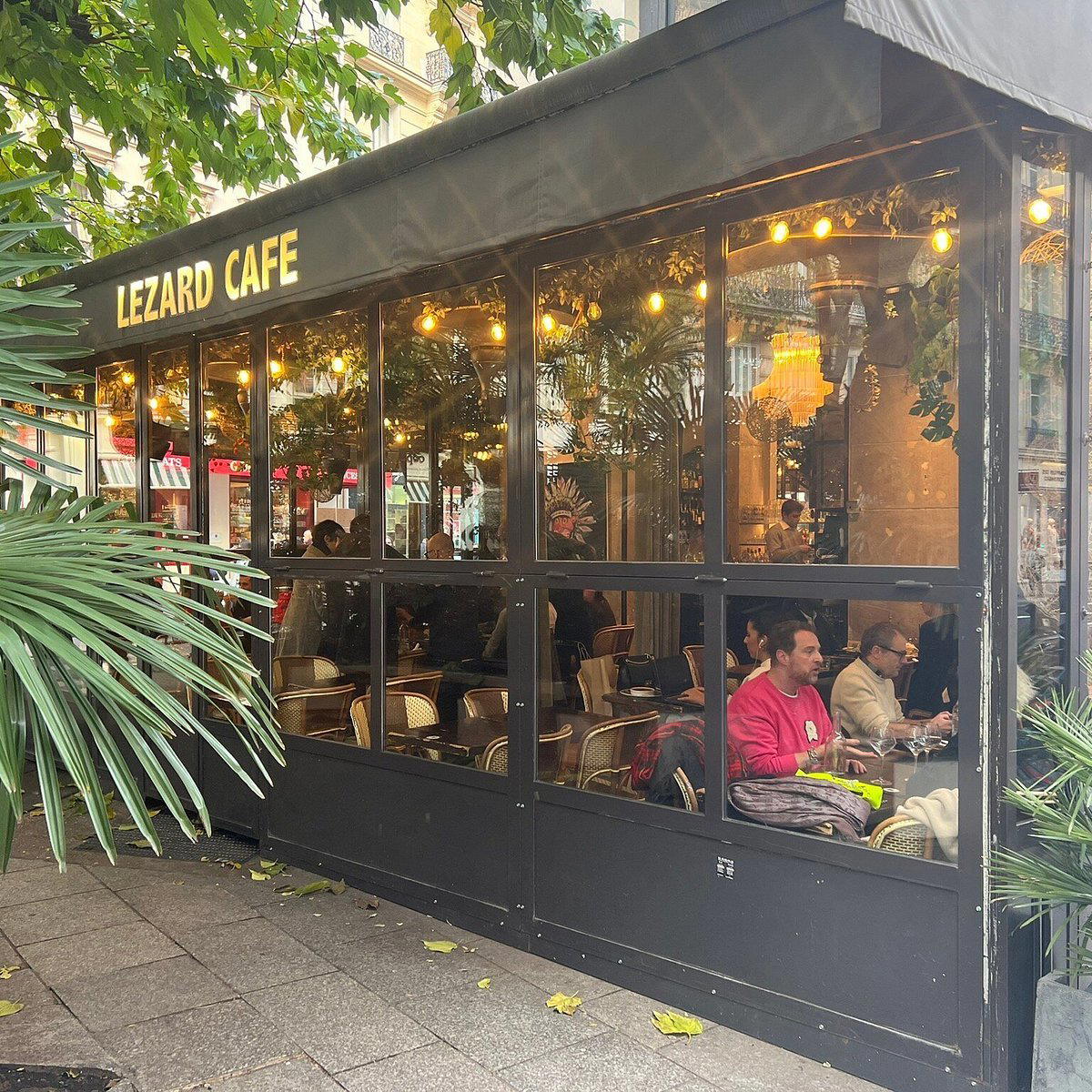
Rue Étienne Marcel and the Shifting Register of Paris's 2nd Arrondissement
The 2nd arrondissement does not announce itself the way the Marais or Saint-Germain do. Its identity is quieter, assembled from the remnants of the old textile trade, the covered passages that predate Haussmann, and a wave of independent cafés and small restaurants that have moved in as the wholesale fabric shops thinned out. Rue Étienne Marcel runs through this transition zone, connecting the pedestrian energy near Les Halles with the calmer, more residential feel of the upper 2nd. It is the kind of street where the buildings carry commercial history and the ground floor tenants have changed three times over. Lézard Café sits at number 32, in a part of Paris where the dining options split between long-established neighbourhood staples and newer openings aimed at the lunch and weekend-brunch crowd that has followed the area's gradual gentrification.
That context matters when placing Lézard Café in any honest account of Parisian café culture. The 2nd is not where Paris's most decorated kitchens operate. Those are distributed across the 8th, where Alléno Paris au Pavillon Ledoyen and Le Cinq at the Four Seasons Hôtel George V anchor the grand-dining tier, or the 7th, where Arpège has held its position for decades. The 1st has its own formal register, with Kei offering contemporary Franco-Japanese precision a short distance away. The 2nd operates at a different frequency entirely, and Lézard Café reads as part of that neighbourhood's more casual, daytime-oriented ecosystem.
What the Café Format Demands of a Space Like This
Parisian café culture has never been monolithic. The grand café-brasseries of the boulevards operate on volume and spectacle; the neighbourhood café works on repetition and familiarity. The leading examples of the latter category function almost as social infrastructure: the same faces at the zinc counter on weekday mornings, the same tables rearranged for a longer Saturday lunch. Rue Étienne Marcel is the kind of street where a café can plausibly serve that role, close enough to the major tourist corridors to receive passing trade, but embedded enough in a working neighbourhood to sustain a regular clientele.
For a café operating in this register, the coordination between whoever runs the floor, whoever manages the coffee and drinks programme, and whatever kitchen operation sits behind the counter is what determines whether the place holds its own or becomes interchangeable with the dozens of similar addresses across central Paris. That team dynamic, rather than any single signature, is what distinguishes a café that becomes a neighbourhood fixture from one that cycles through tourist custom without developing any real identity. In the broader French restaurant context, this distinction is well understood: institutions like L'Ambroisie on the Place des Vosges have held their character across decades precisely because the front-of-house relationship with regulars has been maintained as carefully as anything happening in the kitchen.
Placing Lézard Café in the French Dining Spectrum
Visitors to Paris who have spent time with the country's most documented restaurants, whether at Mirazur in Menton, Flocons de Sel in Megève, or Troisgros in Ouches, arrive in the capital with a calibrated sense of what formal French dining asks of both the kitchen and the table. Lézard Café operates at the opposite end of that register. It is a neighbourhood café on a central Paris street, not a destination table. That is not a criticism; it is a category description. France's dining culture has always accommodated both, and the café tradition, from the covered-passage establishments of the 19th century to the contemporary iterations in areas like the 2nd and 10th arrondissements, has its own rigour and its own standards.
Further afield, the contrast becomes even sharper. Institutions such as Auberge de l'Ill in Illhaeusern, Bras in Laguiole, Paul Bocuse outside Lyon, Auberge du Vieux Puits in Fontjoncouse, and Assiette Champenoise in Reims represent the destination-restaurant model built around regionality, extended tasting formats, and multi-generational kitchen discipline. Au Crocodile in Strasbourg and AM par Alexandre Mazzia in Marseille show how that ambition operates outside Paris. None of that is the frame for a café at 32 Rue Étienne Marcel, and applying it would be the wrong lens. The relevant peer group is the 2nd arrondissement's working café stock, not the country's decorated dining rooms.
For international visitors who have experienced the formal precision of restaurants like Le Bernardin in New York or the tasting-menu rigour of Atomix, the Parisian neighbourhood café represents a deliberate gear change. The appeal is not in the complexity of the offer; it is in the texture of the ordinary. A table on Rue Étienne Marcel in the afternoon, between the lunch rush and the evening shift, is its own argument for a different kind of attention.
Planning Your Visit
The 2nd arrondissement is accessible from multiple Metro lines, with Étienne Marcel (line 4) and Réaumur-Sébastopol (lines 3 and 4) both within a short walk of number 32. The area is most active at lunch on weekdays, when the surrounding offices and studios generate consistent foot traffic. Weekend mornings draw a slower, more residential crowd. As the neighbourhood café market in Paris has tightened, with higher rents and increased competition from specialty coffee operations, addresses in this part of the 2nd tend to do better in spring and autumn when the covered-passage tourist circuit brings additional visitors through. For a broader view of where Lézard Café sits within Paris's dining options across all price points and cuisines, see our full Paris restaurants guide.
| Venue | Neighbourhood | Category | Price Tier | Booking Required |
|---|---|---|---|---|
| Lézard Café | 2nd arr. (Étienne Marcel) | Neighbourhood café | Not published | Likely walk-in |
| Kei | 1st arr. | Contemporary French/Modern | €€€€ | Advance booking advised |
| L'Ambroisie | 4th arr. (Marais) | French Classic | €€€€ | Essential, weeks ahead |
| Alléno Paris | 8th arr. (Champs-Élysées) | Creative | €€€€ | Essential |
How Lézard Café Paris compares with similar nearby venues.
| Venue | Cuisine | Price |
|---|---|---|
| Stohrer | Patisserie | Not listed |
| Café Compagnon | Modern Cuisine | €€ |
Continue exploring
More in Paris
Restaurants in Paris
Browse all →
Bars in Paris
Browse all →
Hotels in Paris
Browse all →
At a Glance
- Cozy
- Classic
- Lively
- Casual Hangout
- Brunch
- Group Dining
- Date Night
- After Work
- Terrace
- Standalone
- Craft Cocktails
- Beer Program
- Local Sourcing
- Street Scene
Current opening hours
- Monday
- 7:30 AM–2 AM
- Tuesday
- 7:30 AM–2 AM
- Wednesday
- 7:30 AM–2 AM
- Thursday
- 7:30 AM–2 AM
- Friday
- 7:30 AM–2 AM
- Saturday
- 7:30 AM–2 AM
- Sunday
- 7:30 AM–2 AM
Hours can change for holidays and private events. Last verified .