Gabojeong Galbi #2 (가보정 2관)
Gabojeong Galbi #2 sits in Suwon's Ingye-dong district, part of a galbi tradition that has made the city one of South Korea's most referenced addresses for grilled short rib. The second hall of the Gabojeong operation extends capacity for a format built around quality beef and the kind of straightforward fire-and-table service that defines the regional style. For Korean BBQ beyond Seoul's tourist circuit, Suwon remains the more serious reference point.
 Discover on Pearl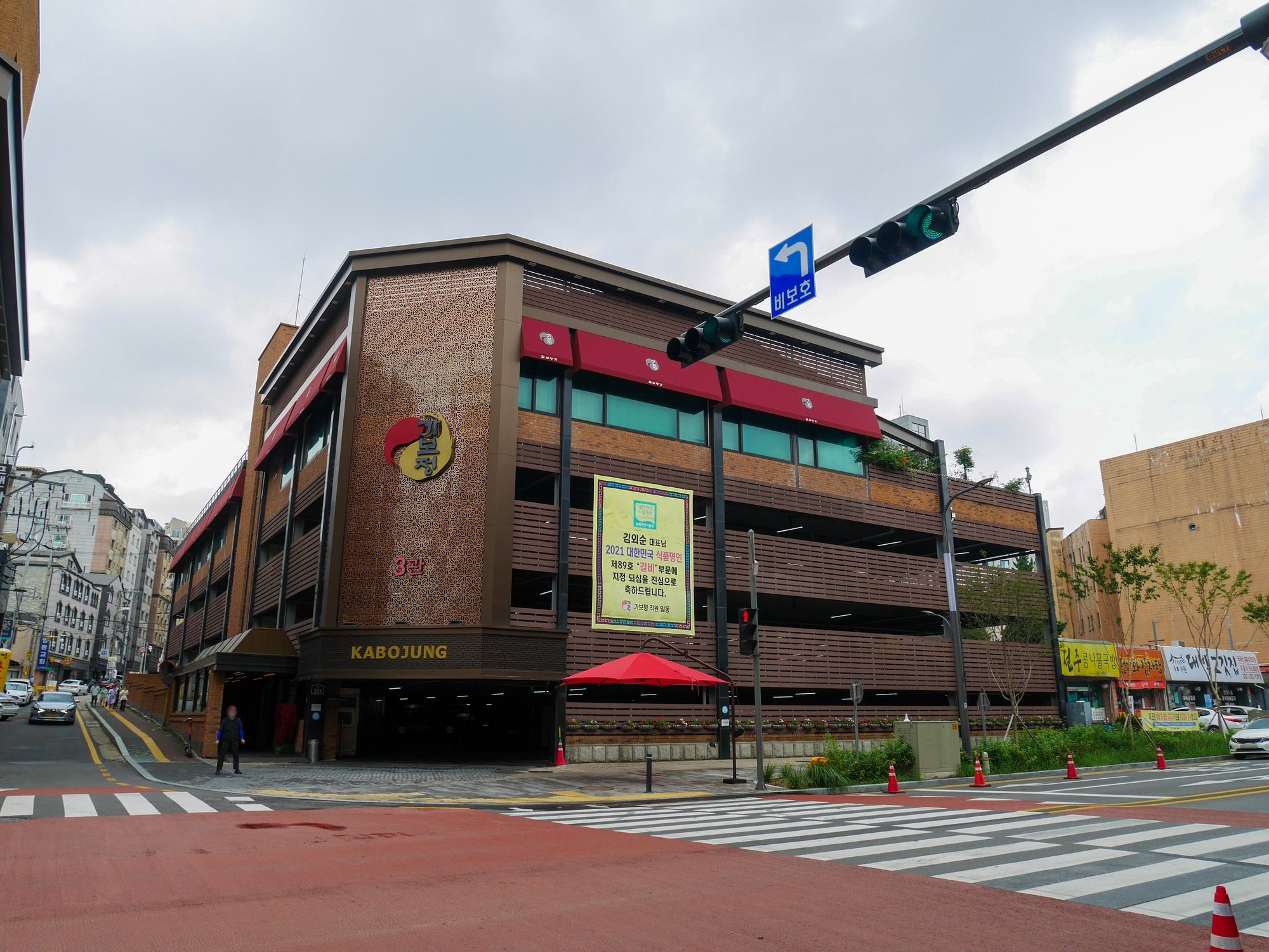
Suwon's Galbi Identity and What Drives It
Among South Korean cities with a clearly defined meat culture, Suwon occupies a position that food writers have argued about for decades. The city's galbi tradition, anchored in the Ingye-dong and surrounding Paldal-gu corridors, is not a recent phenomenon built around tourism or trend cycles. It developed over generations as a regional style distinct from Seoul's broader barbecue market, and it has survived precisely because the sourcing and service conventions around it remained consistent even as the capital's dining scene reinvented itself repeatedly. Gabojeong Galbi #2, located at 팔달구 장다리로 281 in Ingye-dong, operates within that tradition as part of an established multi-hall operation that has built local recognition across both of its venues. For context on the first hall's character and seating format, see Gobojeong Galbi #1 (가보정 1관).
The Ingredient Logic Behind Suwon-Style Galbi
Korean short rib as a category rewards sourcing discipline more than most grilled formats. The cut — typically LA-style or traditional thick-cut beef ribs — has almost no margin for error at the sourcing stage. Cheap or poorly handled beef shows immediately under direct heat: the fat renders unevenly, the char arrives before the interior is properly cooked through, and the texture loses the slight chew that separates a properly aged rib from an underdeveloped one. Suwon's galbi houses have historically staked their reputations on supply chain consistency, and that consistency is what draws diners from Seoul, roughly an hour north by rail, specifically for this format rather than consuming it locally.
The shortlist, unlocked.
Hard-to-book tables, cellar releases, and concierge-planned trips.
Get Exclusive Access →The broader Korean BBQ scene has bifurcated sharply over the past decade. At one end sit high-specification wagyu and Hanwoo premium counters in Seoul , venues like Mingles in Seoul represent the fine-dining adjacent tier of Korean cuisine, while dedicated beef specialists in the capital increasingly position themselves around grading certificates and provenance storytelling. At the other end, neighbourhood BBQ remains price-driven and volume-oriented. Suwon's established galbi houses occupy a middle ground that is harder to replicate: regional identity built over decades, with a sourcing reputation that functions as a trust signal without requiring elaborate certification displays. For further reference on regional Korean dining traditions across the country, Mori in Busan and Double T Dining in Gangneung show how other cities have developed their own culinary identities distinct from Seoul.
The Second Hall Format and What It Signals
Operating across multiple halls is a characteristic of Suwon's most established galbi destinations. It is not a franchise model in the way Seoul's chain BBQ operations function; it is more accurately a capacity response to consistent, multi-year demand. A second hall typically runs under the same sourcing and preparation protocols as the first, handling overflow volume while maintaining the table-side cooking format that defines the experience. The physical environment at venues like Gabojeong Galbi #2 tends toward functional directness: grill-embedded tables, ventilation hoods overhead, and a service rhythm organised around meat delivery and charcoal management rather than elaborate mise en place. This is table-focused cooking where the quality argument is made entirely by the ingredient.
That format stands in deliberate contrast to the performance-oriented dining that has expanded in Seoul over the same period. Contemporary Korean tasting menus at venues such as 권숙수 - Kwon Sook Soo in Gangnam-gu have built international recognition through multi-course precision and deep referencing of Korean culinary heritage. Suwon's galbi tradition makes a different argument: that the most durable form of culinary identity is one embedded in a single ingredient category, handled consistently over many years. Both positions are coherent; they are simply answering different questions about what Korean dining should be.
Getting to Ingye-dong and Planning Around It
Suwon is accessible from Seoul via the subway's 1 Line or by intercity express, making it a realistic day-trip or evening destination rather than an overnight commitment. The Ingye-dong galbi corridor is within reasonable distance of Suwon Station, though the specific logistics of reaching 장다리로 will depend on local transport options at the time of visit. Given the multi-hall structure of the Gabojeong operation, groups of varying sizes are generally more easily accommodated here than at single-room specialists, though confirmed booking details should be verified directly before visiting. For a broader orientation to dining in the city, the Our full 수원시 restaurants guide covers the full range of options across cuisine types and price points, including Doosoogobang in Suwon, which represents another facet of the city's food identity.
Peak dining times at established galbi houses in Suwon tend to concentrate around weekend lunch and early dinner, when Seoul visitors arrive with the specific intention of eating galbi in its home context rather than an approximation of it. Arriving outside those windows typically means shorter waits and a more measured pace of service , relevant when the cooking is table-side and benefits from attention rather than rush.
Suwon Galbi in the Wider Korean Dining Map
Korean regional food culture extends well beyond Suwon. Injegol in Inje County addresses mountain district ingredients in a different register; Gyeongju Wonjo Kongguk (경주원조콩국) in 경주시 represents the deep regional specificity of Gyeongju's food culture; and Cheon Jee (천지) in 제주시 illustrates how island geography shapes an entirely distinct supply chain. What unites these places is a common logic: the most compelling regional dining in Korea is shaped by what grows or grazes nearby and what local communities have decided to do with it over time, not by what the Seoul dining calendar declares important in any given year. For international reference points in how ingredient sourcing drives culinary identity at high levels, Le Bernardin in New York City and Lazy Bear in San Francisco both demonstrate how rigorous supply chain thinking translates into dining credibility across very different cultural contexts.
Suwon galbi sits within that broader argument. Its claim is not to sophistication in the contemporary tasting-menu sense but to depth in a narrower, more honest category: a single cut of beef, sourced with care, cooked over fire at the table. That is either enough for a diner or it is not, and the city's galbi houses have learned to trust that it is enough for the people who matter most to them , the ones who come back.
Frequently Asked Questions
- What's the must-try dish at Gabojeong Galbi #2 (가보정 2관)?
- Galbi , Korean beef short rib , is the defining order at any established Suwon galbi house, and Gabojeong's reputation rests on that cut specifically. The format follows the regional convention of table-side grilling, where the quality of the beef becomes immediately apparent from how the fat renders and how the meat holds its texture under direct heat. Suwon's galbi tradition, of which this venue is part, is referenced across Korean food writing as a regional standard for the category. For a broader picture of where Korean cuisine operates at its highest registers, Mingles in Seoul provides useful context on how the national dining scene has developed around its core ingredients.
- Is Gabojeong Galbi #2 (가보정 2관) reservation-only?
- Specific booking policies for Gabojeong Galbi #2 are not confirmed in available data, so contacting the venue directly before visiting is advisable, particularly for weekend dinners or larger groups. Suwon's established galbi houses draw a consistent flow of visitors from Seoul, and the Ingye-dong corridor can be busy on weekend evenings. The multi-hall structure of the Gabojeong operation generally provides more flexibility than single-room specialists, though this should not be taken as a guarantee of walk-in availability during peak periods. For a fuller view of Suwon's dining options and how to plan a visit, see the Our full 수원시 restaurants guide.
- How does Gabojeong Galbi #2 compare to other galbi venues in the Ingye-dong area of Suwon?
- The Gabojeong operation is notable for running across two halls , a structure that signals sustained, multi-year demand rather than seasonal popularity. Within Suwon's galbi corridor, the multi-hall format places Gabojeong among the higher-capacity and more established names in the district, which itself has a decades-long reputation as the city's primary address for beef short rib. For those building a broader itinerary around Suwon's food identity, Doosoogobang in Suwon offers a different angle on the city's culinary character.
Peer Set Snapshot
These are the closest comparables we have in our database for quick context.
| Venue | Cuisine | Price | Awards | Notes |
|---|---|---|---|---|
| Gabojeong Galbi #2 (가보정 2관) | This venue | |||
| Eatanic Garden | Contemporary | ₩₩₩₩ | Michelin 1 Star | Contemporary, ₩₩₩₩ |
| Onjium | Korean | ₩₩₩₩ | Michelin 1 Star | Korean, ₩₩₩₩ |
| 7th Door | Korean, Contemporary | ₩₩₩₩ | Michelin 1 Star | Korean, Contemporary, ₩₩₩₩ |
| Palate | Contemporary | ₩₩ | Michelin 1 Star | Contemporary, ₩₩ |
| L'Amitié | French | ₩₩₩ | Michelin 1 Star | French, ₩₩₩ |
Need a table?
Our members enjoy priority alerts and concierge-led booking support for the world's most difficult tables.
Get Exclusive AccessThe shortlist, unlocked.
Hard-to-book tables, cellar releases, and concierge-planned trips.
Get Exclusive Access →