
Tabelog 100 #72
Our verdict
G Men 7 puts Yokohama ramen in its everyday, specialist register: compact room, counter seating, ramen and tsukemen, and a price band that keeps it far from the city’s formal dining economy. Its Tabelog Ramen KANAGAWA “Tabelog 100” selections in 2024 and 2025 place it inside Kanagawa’s serious noodle conversation rather than the tourist circuit.

Pearl is the En Primeur Club membership app, where members save venues, book tables and use the concierge.
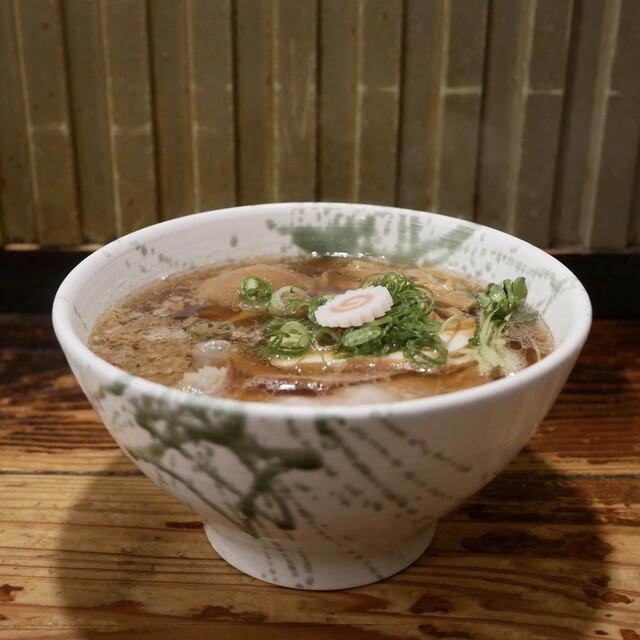
The menu
What to order
- Shoyu ramen
- Shio ramen
- Tsukemen (dipping noodles)
- Chuka soba
Yokohama’s ramen addresses are not built only for theatre. The pleasure can be in the directness of the format, the short distance between decision and bowl, and the way a city meal can become a serious detour without acquiring the manners of fine dining. G Men 7 belongs to that Yokohama category: casual, focused, and specific, with ramen and tsukemen as the frame rather than a broad menu built to please every table.
Yokohama’s dining identity is often reduced to its most familiar visitor-facing scenes, but the city’s noodle culture is more dispersed. Serious bowls turn up across the city, often operating closer to daily routine than destination dining. That is the useful context here. G Men 7 is not competing with tasting-menu rooms or hotel restaurants; it sits in the low-price, high-repeat-visit ramen tier where broth style, noodle handling, and queue tolerance matter more than décor.
Kanagawa ramen judged by focus, not ceremony
The clearest trust signal is external: G Men 7 was selected for Tabelog Hyakumeiten in 2025, with a Tabelog score listed at 3.73. In Japan’s ramen ecosystem, that matters because the category rewards consistency over luxury cues. A shop can be modest in feel, the spend can remain low, and the judgment can still be exacting. The format here, ramen and tsukemen, places the shop in a lineage where choice is narrower but scrutiny is sharper.
That distinction is useful for travellers mapping Yokohama beyond the most obvious version of the city. The comparison set in Kanagawa is not only ramen shops at the same price level, such as Susurimase nka, but also casual specialists where a single format carries the meal. Yokohama has room for broader comfort-food addresses and other city dining rooms, but ramen asks for a different reading: less emphasis on a long table experience, more attention to the bowl, and a sharper relationship between price and execution.
The wine-list angle, in this case, is absence rather than depth. This is not a cellar-led restaurant, and that is part of the point. Ramen shops in this tier rarely ask diners to think in terms of pairings, vintages, or sommelier architecture. The curation sits in the food format itself: broth, noodles, dipping style, speed, and repeatability. For travellers used to evaluating restaurants through beverage programs, G Men 7 is a reminder that Japanese casual dining often concentrates its seriousness in one narrow lane.
A focused format that suits solo diners and quick decisions
The experience reads closer to a focused noodle stop than a lingering restaurant meal. That format shapes behavior. Solo dining makes sense, small groups are easier than large ones, and the meal’s tempo belongs more to the bowl than to extended table service. This kind of ramen visit rewards flexibility, direct ordering, and a willingness to let the food define the pace.
Practical reading is simple: this is a casual ramen stop with specialist recognition, not a long-form dining reservation. The listed budget is low, with dinner and lunch both shown in the - JPY 999 range. That combination makes it a better fit for diners who can move with the day rather than those trying to anchor an entire evening around one seating.
Location matters, too. G Men 7 is in Yokohama, which changes how visitors may place it in a day of eating. A traveller based elsewhere in the city may treat the meal as a ramen errand; a diner already moving through Yokohama will read it as a stronger local option. For broader planning, Yokohama restaurant, hotel, bar, winery, and experience guides can help decide whether this kind of focused ramen stop fits the day’s route.
Where it fits in a wider Japan eating itinerary
For visitors building a Japan itinerary around specialist casual food, G Men 7 makes sense as part of a pattern rather than as a standalone trophy stop. The same logic links modest, focused rooms across cities: a single craft, a narrow menu language, and a price point that encourages comparison by execution rather than luxury. In Yokohama, that can mean looking at G Men 7 alongside other specialists such as Izutsu, Kawa no Saki no Ue, Susurimase nka, Tonkatsu Souki, or boulangerie onni, depending on the shape of the day.
It also sits usefully against the international appetite for Japanese casual formats. The export version can become polished and explanatory. In Japan, the grammar is usually less narrated. A ramen shop does not need to explain itself through design language when the local audience already knows how to read the ordering customs common to the genre and the value of a bowl under the four-figure yen mark.
That is the editorial reason to care. G Men 7 gives Yokohama diners a recognized ramen address, with a low spend and a format that privileges concentration over breadth. Pair it with other city-specific specialists rather than with formal dining. Other focused Yokohama dining rooms can underline the same point in different registers. The serious Japanese meal is not always expensive, lengthy, or drink-led. Sometimes it is a narrow noodle brief, a modest budget, and enough recognition to justify leaving the main tourist corridor.
Frequently asked questions
How would you describe the vibe at G Men 7?
G Men 7 reads as a focused ramen and tsukemen shop in Yokohama. The format fits quick, casual meals, and its Tabelog Hyakumeiten selection in 2025 signals consistent attention for a specialist ramen and tsukemen address.
When is G Men 7 open?
Opening hours for G Men 7 should be checked directly before visiting, as casual ramen shops can adjust service depending on the day and availability.
What should I budget for a meal at G Men 7?
Pricing at G Men 7 is listed as - JPY 999 - JPY 999.
What's G Men 7's location?
Yokohama.
What's the defining dish or idea at G Men 7?
The core offer is ramen and tsukemen, with the focus on the bowl rather than a broad restaurant format. That focus has carried enough weight for G Men 7 to appear in Tabelog Hyakumeiten in 2025.
What if I have allergies at G Men 7?
Allergy-sensitive diners should check ingredients carefully before ordering, especially with ramen and tsukemen, where broth, noodles, tare, and toppings can all contain allergens. The format is best approached as a quick, practical visit in Yokohama rather than a drawn-out consultation.
Cuisine and Credentials
Comparable venues to calibrate price, style, and recognition.
| Venue | Cuisine | Price | Awards | Notes |
|---|---|---|---|---|
| G Men 7This venue (the venue you are viewing) | Classic Yokohama ramen shop | $10–20 | Tabelog 100 #72 | Not listed |
| Chuka Soba Efu | Japanese Ramen | $10–20 | Tabelog 100 #99 | Kōhoku |
| Kikuya Curry | Japanese & Sri Lankan-style Curry House | $10–20 | Tabelog 100 #79 | Naka |
| Torakichi Ya Hikaru | Yokohama-style ramen shop | $10–20 | Tabelog 100 #95 | Kanagawa |
| Tsurumigawa Bashi Motsu Niku Ten | Japanese tachinomi offal bar | $10–20 | Tabelog 100 #32 | Tsurumi |
| Hi, How Are You | Pakistani-style Japanese curry house | $10–20 | Tabelog 100 #92 | Kōhoku |
Recognition history
Dated appearances from independent guides and award organizations, with the underlying list record or original source where available.
Tabelog 100 #72 · No. 72
Tabelog · Tabelog 100 - Ramen - KANAGAWA - 2025
Continue exploring
More in Yokohama
Restaurants in Yokohama
All restaurants in Yokohama →



Bars in Yokohama
Browse all →




Details
- Lively
- Cozy
- Solo
- Casual Hangout
- After Work
- Standalone
- Open Kitchen
- A La Carte
- Counter Dining
- Beer
- Soft Drinks
Current opening hours
- Monday
- 11:30 AM–11 PM
- Tuesday
- Closed
- Wednesday
- 11:30 AM–11 PM
- Thursday
- 11:30 AM–11 PM
- Friday
- 11:30 AM–11 PM
- Saturday
- 11:30 AM–11 PM
- Sunday
- 11:30 AM–11 PM
Hours can change for holidays and private events. Hours as of .
Compact, no-frills local ramen shop with counter-focused seating, close interaction with the kitchen, and a revived sense of bustling counter energy after acrylic partitions were removed.