
Tabelog 100 #32
Our verdict
Tsurumigawa Bashi Motsu Niku Ten puts Yokohama’s tachinomi culture in a compact, offal-led frame: standing-bar energy, tripe as the anchor, and a Tabelog 100 Tachinomi 2025 selection as the credential. It belongs to the city’s informal drinking-and-eating circuit rather than its polished destination-dining tier, which is exactly the point.

Pearl is the En Primeur Club membership app, where members save venues, book tables and use the concierge.
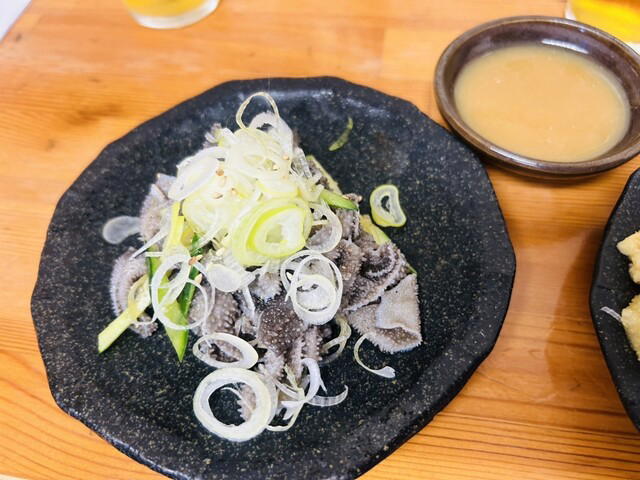
Approaching a tachinomi counter in Yokohama is less about ceremony than tempo: short stays, quick decisions, elbows close to strangers, and food built to keep pace with drinks rather than slow the room down. In Yokohama, that rhythm carries a working-city edge. The format rewards diners who understand that value here is measured in precision of category, turnover, and local confidence, not in linen, chef introductions, or a long tasting arc.
Tsurumigawa Bashi Motsu Niku Ten sits inside that tradition with a narrow, practical identity: stand-up bar and tripe. That combination matters. Japan’s tachinomi culture has always been a counterweight to reservation-led dining, and tripe-focused rooms occupy a sharper corner of it, where texture, seasoning, and drink compatibility do the heavy lifting. The venue’s selection for Tabelog 100 Tachinomi 2025 gives it a public credential within a category that is often judged by regulars long before visitors catch on.
Offal, standing-room rhythm, and Yokohama's informal drinking culture
Yokohama dining can split quickly between polished meals, casual itineraries, ramen routes, and commuter-belt drinking rooms. This venue belongs to the latter map. Its appeal is not postcard Yokohama; it is the city as residents use it after work, where the better rooms are small, direct, and built around repeat behaviour. In that context, a tripe-led tachinomi place speaks a different language from the city’s ramen counters and other casual specialists.
The comparison is useful. Menya Numata, Ramen Dohyo Kakureihoho, and Ramen Matsushin sit in the low-priced ramen lane, where the decision is usually about broth, noodle style, and queue tolerance. Tsurumigawa Bashi Motsu Niku Ten moves the evening into a drinking-food register. It is closer in spirit to the tripe and meat-focused side of casual Japanese dining, while remaining its own stand-up bar and tripe format alongside names such as Yakiniku Horumon Beef Boss. The editorial point is not that one format outranks another; it is that Yokohama’s serious casual dining is fragmented by purpose. Ramen solves hunger fast. Tachinomi solves the first stop of the evening.
That distinction helps travellers plan intelligently. A stand-up tripe bar is not a substitute for a long dinner, and it is not meant to be. It works when the night is built around movement: one compact food-and-drink stop, then another Yokohama address, or a final train onward. Readers mapping Yokohama by category can place it alongside other casual specialists, then widen the search through Our full Yokohama restaurants guide.
The credential is category-specific, not luxury-coded
Tabelog’s 100 Tachinomi selection is valuable because it recognises a field that does not fit neatly into conventional fine-dining rankings. Stand-up bars are judged by consistency, usefulness, crowd memory, and whether the food holds attention in a short-format visit. A Tabelog score of 3.57 in this category signals traction without turning the room into a trophy meal. That is the right lens for reading the place.
The recognition also matters because casual Japanese dining is dense and competitive. In neighbourhood formats, regulars have alternatives, and weak concepts have little room to coast. Tripe-focused cooking also has a lower tolerance for vague execution: the category depends on handling, seasoning, and pacing. A tripe specialist that earns national category recognition is participating in a more disciplined tradition than the informality of the room might suggest.
For visitors used to English-language restaurant culture, the mistake is to look for a chef narrative. None is needed. The story sits in the format: a small urban bar, a tripe focus, and a recognition category built around tachinomi rather than tasting menus. That is why the venue reads better as part of Yokohama’s everyday drinking infrastructure than as an isolated restaurant profile.
How to fold it into a Yokohama night
The practical decision is simple: use this as a focused stop, not a whole-evening anchor. The category suits diners who are comfortable with compact rooms, direct ordering, and a local bar cadence. It also suits travellers who want to understand Yokohama beyond the usual dining corridors. This is not the city’s showcase version of itself, which is part of its value: the format shows how Yokohama eats when the plan is functional, social, and close to everyday routes.
That style pairs well with a broader casual itinerary. A diner could build one night around tachinomi, another around ramen, and another around different Yokohama casual formats. For nearby and cross-city alternatives, compare it with other casual dining rooms in Yokohama or with comparable venue references such as Teuchi Chuka Soba Sakata, Menya Numata, Ramen Dohyo Kakureihoho, Ramen Matsushin, and Yakiniku Horumon Beef Boss. Travellers extending the category search across Japan can contrast the format with unnamed stand-up bars, meat-focused counters, cafes, and other casual specialists in other cities.
International comparisons can be misleading unless the format is kept in view. Japanese drinking or casual-food references abroad may overlap in mood, but Yokohama tachinomi is a different social machine: lower ceremony, faster cadence, and a stronger connection to the after-work route. For the rest of the trip architecture, use Our full Yokohama hotels guide, Our full Yokohama bars guide, Our full Yokohama wineries guide, and Our full Yokohama experiences guide.
The recommendation is for travellers who value category literacy. Tsurumigawa Bashi Motsu Niku Ten is not trying to translate itself into luxury language, and that restraint is its editorial strength. It gives Yokohama visitors a credible read on tachinomi culture through a tripe-focused, locally grounded format with a 2025 Tabelog 100 selection behind it.
Frequently asked questions
What part of town is Tsurumigawa Bashi Motsu Niku Ten in?
Yokohama.
What does dinner at Tsurumigawa Bashi Motsu Niku Ten typically cost?
Pricing at Tsurumigawa Bashi Motsu Niku Ten is listed as JPY 2,000 - JPY 2,999.
What are the operating hours at Tsurumigawa Bashi Motsu Niku Ten?
Specific operating hours are not provided in the available venue facts.
What makes Tsurumigawa Bashi Motsu Niku Ten worth seeking out?
Its 2025 selection in Tabelog 100 Tachinomi gives it a clear credential, and the format is tightly defined: stand-up bar and tripe in Yokohama. With dinner priced at JPY 2,000–JPY 2,999, it suits people who want a compact, no-frills stop rather than a drawn-out evening.
Style and Standing
Comparable venues by cuisine and price in the same metro.
| Venue | Cuisine | Price | Awards | Notes |
|---|---|---|---|---|
| Tsurumigawa Bashi Motsu Niku TenThis venue (the venue you are viewing) | Japanese tachinomi offal bar | $10–20 | Tabelog 100 #32 | Not listed |
| Kannai Motsu Niku Ten | Japanese Standing Bar / Yakitori & Offal | $1–10 | Tabelog 100 #82 | Naka |
| Kawa no Saki no Ue | Japanese Ramen | $10–20 | Tabelog 100 #65 | Kōnan |
| Yokohama Chuka Soba Ishin Shoten Honten | Classic ginger shoyu ramen (chuka soba) | $1–10 | Tabelog 100 #74 | Nishi |
| China Soba Ya Honten | Traditional Ramen (Shina Soba) | $10–20 | Tabelog 100 #79 | Totsuka |
| Yokohama Ramen Tagamiya | Traditional Yokohama iekei ramen | $10–20 | Tabelog 100 #6 | Minami |
Recognition history
Dated appearances from independent guides and award organizations, with the underlying list record or original source where available.
Tabelog 100 #32 · No. 32
Tabelog · Tabelog 100 - Tachinomi - 2025
Continue exploring
More in Yokohama
Restaurants in Yokohama
All restaurants in Yokohama →



Bars in Yokohama
Browse all →







Details
- Lively
- Energetic
- Cozy
- After Work
- Casual Hangout
- Solo
- Group Dining
- Late Night
- Standalone
- Beer Program
- Sake Program
- A La Carte
- Small Plates
- Counter Dining
- Beer
- Sake
- Shochu
Current opening hours
- Monday
- 4–9 PM
- Tuesday
- Closed
- Wednesday
- 4–9 PM
- Thursday
- 4–9 PM
- Friday
- 4–9 PM
- Saturday
- 3–9 PM
- Sunday
- 3–9 PM
Hours can change for holidays and private events. Hours as of .