Fuji Steak House
Fuji Steak House occupies a strip-mall suite in Redmond's 164th Avenue corridor, placing it squarely in the city's everyday dining tier rather than its special-occasion bracket. For a city shaped by tech-campus schedules and a broad Pacific Rim dining culture, a neighbourhood steakhouse with Japanese framing fills a specific, practical gap. Booking ahead is advisable for weekend tables.
Pearl is the En Primeur Club membership app — saves, bookings, and concierge access live there. Same editors, same standards.
- Address
- 7330 164th Ave NE e255, Redmond, WA 98052
- Phone
- +14259685800
- Website
- fuji-steakhouse.com
- Directions
- Get directions
 Saves & bookings on Pearl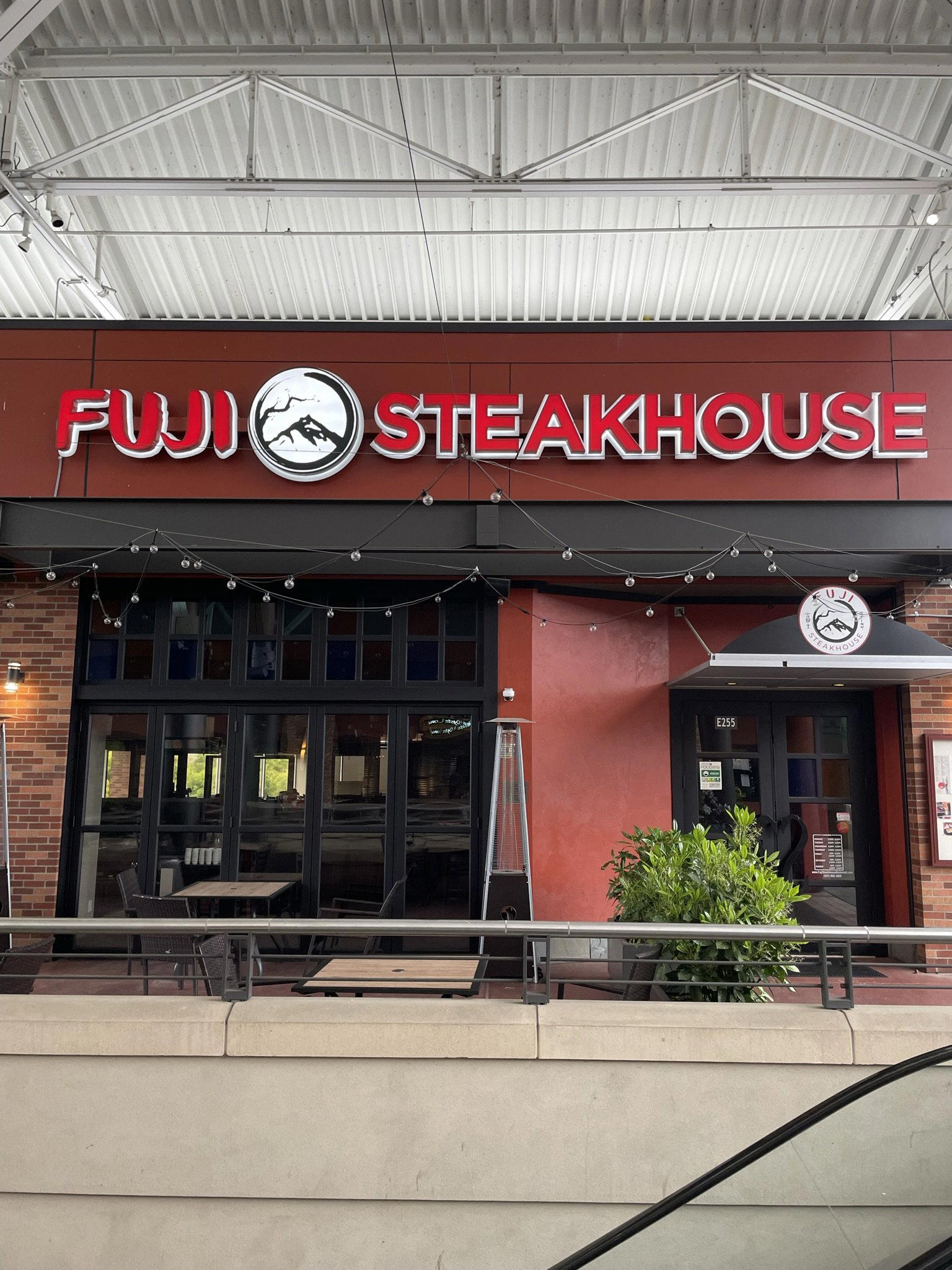
Where Redmond Eats on a Tuesday Night
Redmond's dining scene is bifurcated in a way that mirrors many Pacific Northwest tech suburbs: a handful of polished, destination-oriented rooms sit alongside a much larger tier of neighbourhood restaurants that do the actual daily work of feeding the city. Fuji Steak House, addressed to a suite on 164th Avenue NE, belongs firmly to the second category. The surrounding retail corridor is practical rather than atmospheric, shared with the kind of businesses that make a neighbourhood function rather than one that draws visitors from Seattle's Capitol Hill. That context matters, because it sets the right frame for what Fuji Steak House is and what it is not.
Japanese steakhouse formats in the United States occupy a specific cultural position. The teppanyaki model, which became widespread after Benihana standardised it in the 1960s, fused theatrical tableside cooking with the American appetite for beef at a time when Japanese cuisine was largely unfamiliar to mainland diners. Decades later, that format has split into two streams: polished urban versions that take the theatrical element seriously as a hospitality proposition, and suburban neighbourhood rooms where the format functions more as a reliable comfort ritual. Fuji Steak House sits in that second stream, operating in a city where a significant portion of the working population commutes to campuses with cafeteria budgets in the thousands, yet still wants a recognisable, unhurried dinner experience close to home.
The Case for Japanese Steakhouse in a Tech Suburb
Redmond's dining character has been shaped, more than almost any comparable American suburb, by the demographic weight of its tech workforce and the cultural diversity that comes with it. Momiji Redmond addresses the sushi end of the Japanese-American spectrum, while Matador Redmond and Jack's BBQ - Redmond serve the grilled-meat demand from entirely different cultural angles. Kanishka Cuisine of India and Miah's Kitchen speak to the South Asian communities that form a substantial part of Redmond's population. Within that spread, a Japanese steakhouse represents a format that crosses several of those lines simultaneously: it reads as approachable to American diners, familiar to diners with Japanese cultural reference points, and reliable enough for groups that can't agree on a cuisine.
That cross-appeal is, in practical terms, the format's core argument. Japanese steakhouses occupy a middle band that handles groups, families, and mixed dietary preferences more smoothly than most single-cuisine rooms.
Ingredient Sourcing in the Japanese Steakhouse Format
The Japanese steakhouse format, even in its most neighbourhood-oriented expressions, carries inherited sourcing assumptions. In Japan, wagyu grading systems (the A3 to A5 scale based on marbling, meat colour, and fat quality) have created a consumer literacy around beef provenance that filtered into American Japanese steakhouses in two distinct ways. Higher-end operations, like Single Thread Farm in Healdsburg or the farm-sourcing emphasis at Blue Hill at Stone Barns in Tarrytown, turned sourcing into a central editorial statement. Neighbourhood rooms like Fuji Steak House work within a different cost structure, where sourcing decisions are largely invisible to the diner but still constrained by what suppliers can deliver consistently at a suburban price point.
The Pacific Northwest geography offers a specific advantage here that is worth naming. Washington state's proximity to Midwest beef finishing operations, combined with Seattle-area distribution infrastructure that serves a genuinely international food market, means that suburban Redmond restaurants have access to a supply chain that comparable suburbs in the interior United States do not. The regional fish supply, similarly, runs through distributors who serve both the high-end Seattle restaurants and the neighbourhood tier. None of this guarantees sourcing quality at any specific venue, but it establishes the ceiling of what the format can achieve when the operator chooses to use it.
For diners comparing the restaurant against sourcing-first dining rooms, including Providence in Los Angeles, Addison in San Diego, or Atelier Moessmer Norbert Niederkofler in Brunico, the comparison is useful only as a map of the full spectrum. Neighbourhood steakhouses and Michelin-tracked destination rooms serve categorically different functions in a dining ecosystem, and evaluating one by the standards of the other produces false conclusions. Le Bernardin in New York City, Smyth in Chicago, Lazy Bear in San Francisco, Emeril's in New Orleans, The French Laundry in Napa, The Inn at Little Washington in Washington, and Atomix in New York City occupy a tier defined by sourcing as a primary competitive axis. The restaurant competes on different terms entirely: consistency, accessibility, and the social utility of a format that works for a six-person table with two children and three different dietary preferences.
Planning a Visit
The restaurant is located at 7330 164th Ave NE, Suite e255, Redmond, WA 98052, in a multi-tenant retail complex that is most practically reached by car from the surrounding residential neighbourhoods or from the SR-520 corridor. Parking is generally available in the shared lot. Hours should be confirmed before a first visit, particularly for weekend evenings when the teppanyaki format tends to draw larger groups. Walk-in availability on weekday evenings is typically more reliable at neighbourhood-tier Japanese steakhouses than on Friday and Saturday nights, when table demand from groups and families tends to concentrate.
A Quick Peer Check
Comparable venues nearby, for context on price, style, and recognition.
| Venue | Cuisine | Price | Notes |
|---|---|---|---|
| Fuji Steak HouseThis venue — the venue you are viewing | Japanese Hibachi Teppanyaki | $$ | Not listed |
| Jack's BBQ - Redmond | Central Texas BBQ | $$ | Bel-Red |
| Kanishka Cuisine of India | Northern Indian with Fusion | $$ | Downtown Redmond |
| Matador Redmond | Modern Tex-Mex | $$ | Old Town |
| Woodblock | Contemporary Rustic American with Mediterranean Influences | $$$ | Downtown Redmond |
| Momiji Redmond | Modern Japanese Sushi & Grilled Dishes | $$$ | Downtown Redmond |
Continue exploring
More in Redmond
Restaurants in Redmond
Browse all →
Bars in Redmond
Browse all →
Hotels in Redmond
Browse all →
At a Glance
- Lively
- Energetic
- Group Dining
- Family
- Celebration
- Open Kitchen
- Sake Program
Current opening hours
- Monday
- 3:30–9:30 PM
- Tuesday
- 3:30–9:30 PM
- Wednesday
- 3:30–9:30 PM
- Thursday
- 3:30–9:30 PM
- Friday
- 12–2:30 PM, 3:30–9:30 PM
- Saturday
- 12–2:30 PM, 3:30–9:30 PM
- Sunday
- 12–2:30 PM, 3:30–9:30 PM
Hours can change for holidays and private events. Last verified .
Energetic grill-side atmosphere with lively chef performances and interactive dining.