Our verdict
Set along the green fringe of Kiel's western edge, Forstbaumschule Restaurant u. Parkcafé occupies a setting where parkland and café culture meet in a format that Kiel's dining scene has long supported: unhurried, rooted in place, and oriented toward the rhythm of a longer afternoon. For visitors reading the city's restaurant options alongside more formal venues, it represents a different register entirely.

Pearl is the En Primeur Club membership app — saves, bookings, and concierge access live there. Same editors, same standards.
- Address
- Düvelsbeker Weg 46, 24105 Kiel, Germany
- Phone
- +49 431 333496
- Hours
- Mon–Thu 10 AM–11 PMFri–Sat 10 AM–12 AMSun 10 AM–10 PM
- Website
- forstbaumschule.de
- Directions
- Get directions
- Booking
- Book on OpenTable
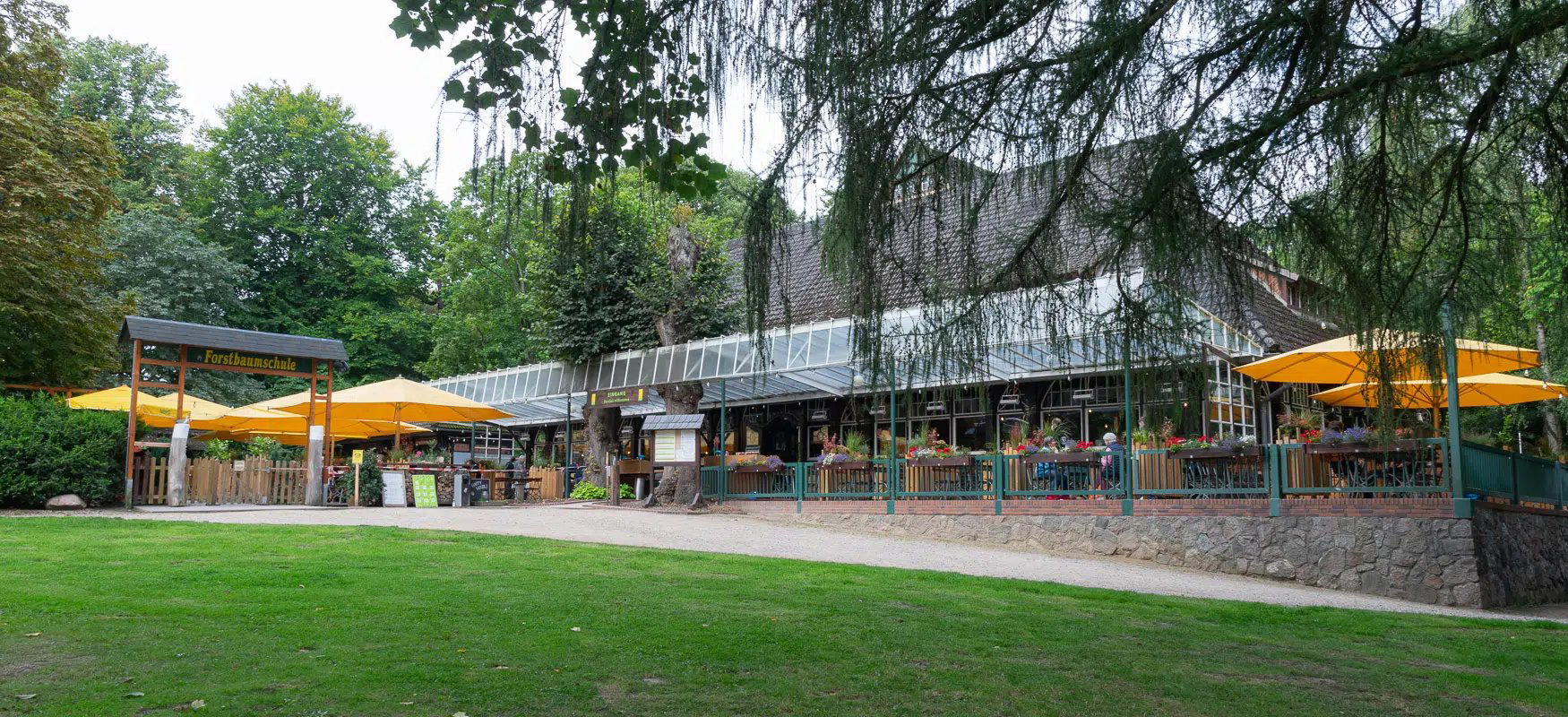
Where Parkland and Plate Share Equal Billing
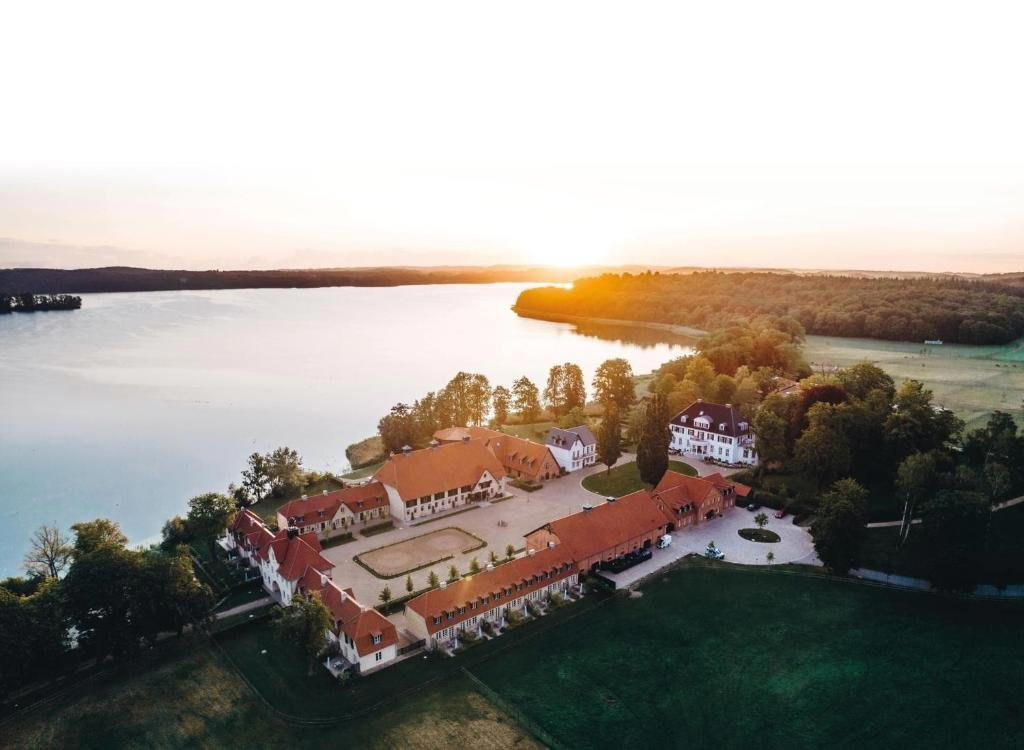
The approach to Forstbaumschule Restaurant u. Parkcafé on Düvelsbeker Weg sets the tone before you reach the door. The address sits on Kiel's western edge where the city's residential fabric gives way to tree cover and open green space, a geography that shapes the kind of meal people come here to have. This is not the compressed urban block of a city-centre restaurant, where the experience is defined by proximity and noise. It is somewhere you travel to deliberately, which changes the pacing of everything that follows.
That deliberateness is a dining ritual in itself. Across northern Germany, the tradition of the Parkcafé, a restaurant embedded in or beside public green space, carries a specific social contract: the setting is part of the offer, and the meal is expected to extend rather than conclude. Tables turn at a different rhythm here than they do at Ahlmanns, Kiel's creative fine-dining reference point, or at the more format-driven FLYGGE, which operates a tighter regional cuisine programme. The Parkcafé format asks the guest to settle in, and the architecture, typically with generous terrace space and a clear visual relationship to the surrounding landscape, enforces that expectation.
The Ritual of the Long Afternoon
German café-restaurant culture has always assigned high value to the Nachmittag, the long afternoon stretch between lunch service and dinner. At venues operating in the Parkcafé tradition, this window is not dead time but the point of the thing: coffee arrives without urgency, cake is ordered as a course rather than an afterthought, and the expectation of a swift turnover simply does not apply. The customs here align with what food historians describe as the Central European Kaffeehauskultur tradition, where the café is treated as a social institution rather than a transactional food stop.
For visitors arriving from cities where this rhythm has largely disappeared, it can feel unfamiliar. The correct approach is to follow the pace of the room rather than impose a schedule. Order in stages if that is how the afternoon is unfolding. At venues in this category, the kitchen tends to be structured around the expectation that guests will move between courses and registers, from savoury to sweet, with pauses between. That structure differs markedly from the tasting-menu discipline of multi-course operations like Schwarzwaldstube in Baiersbronn or Aqua in Wolfsburg, where pacing is controlled entirely by the kitchen. Here, the guest has more agency over how the meal moves.
Kiel's Dining Register and Where This Fits
Kiel's restaurant scene operates across a relatively wide spread of formats, from the harbour-adjacent fish trade culture documented at Der Bauch von Kiel to the Italian-rooted programme at Farina di Nonna and the hotel dining of Fischers Fritz im Hotel Birke. Within that spread, the park-and-café format occupies a distinct position: it is not competing on culinary complexity or tasting-menu architecture, and it is not positioning itself against the kind of address-driven fine dining that earns coverage in national publications.
What it offers instead is a mode of eating that Germany's larger cities have largely priced or developed out of existence: accessible, place-specific, unhurried, and oriented around the outdoor or semi-outdoor experience of a particular patch of city. The Förde coastline and the green corridors running west from central Kiel give the city an unusual density of this kind of venue relative to its population size. Forstbaumschule sits within that tradition rather than apart from it.
Readers comparing it to venues like JAN in Munich or Vendôme in Bergisch Gladbach are measuring against a different category entirely.
Planning the Visit
Düvelsbeker Weg 46 is reachable from central Kiel by bicycle along routes that run west through the city's residential belt, which suits the ethos of the place. Visitors arriving for a weekend afternoon should treat the journey as part of the experience, particularly in the warmer months when Kiel's waterfront and green-space corridors are at their most active. The venue is worth cross-referencing against our full Kiel restaurants guide before booking, particularly for travellers who want to plan a day that moves between different dining registers across the city.
Given the Parkcafé format, timing matters more than at a restaurant with fixed tasting menus. Arriving in the early-to-mid afternoon allows the longest possible window before evening service patterns shift the room's character.
For those building a wider itinerary around northern Germany's dining scene, the contrast between the Parkcafé register and the high-intensity programmes at venues like ES:SENZ in Grassau or Schanz in Piesport is instructive. The country supports both modes with equal seriousness, which is one of the more interesting things about eating in Germany systematically. A meal at a venue like Waldhotel Sonnora in Dreis and a long afternoon at a Parkcafé are not in competition; they serve different functions in a well-constructed trip.
Frequently asked questions
Where is Forstbaumschule Restaurant u. Parkcafé located?
Forstbaumschule Restaurant u. Parkcafé is located at Düvelsbeker Weg 46, 24105 Kiel, Germany, Kiel.
Is Forstbaumschule Restaurant u. Parkcafé accessible by bicycle from central Kiel?
Düvelsbeker Weg 46 sits in Kiel's western residential belt, reachable from the city centre via established cycling routes that run through the neighbourhood without requiring main-road stretches. The address suits the kind of destination that draws a locally rooted crowd from Schleswig-Holstein rather than visitors arriving by car or taxi.
What's the best thing to order at Forstbaumschule Restaurant u. Parkcafé?
The venue's cuisine specifics aren't documented in detail, but the café-restaurant format at Düvelsbeker Weg 46 places it squarely in the German Parkcafé tradition — where the afternoon Kuchen service and seasonal hot dishes carry equal weight to any set menu. Arrive mid-afternoon and follow what the kitchen is running that day rather than committing to a fixed order in advance.
What's the best way to book Forstbaumschule Restaurant u. Parkcafé?
No booking phone or website is currently listed for Forstbaumschule Restaurant u. Parkcafé, so visiting directly at Düvelsbeker Weg 46, Kiel is the most reliable approach. For weekend afternoons or group visits, arriving early in the service window reduces the chance of a wait, which is standard practice for popular parkside café-restaurants in Kiel's western districts.
Where It Fits
| Venue | Cuisine | Price | Awards | Notes |
|---|---|---|---|---|
| Forstbaumschule Restaurant u. ParkcaféThis venue — the venue you are viewing | Traditional German with Park Café | $10–20 | Not listed | Not listed |
| Ahlmanns | Modern German Fine Dining | $150–200 | 1 Michelin Star | Creative |
| ICHI | Japanese Contemporary Fine Dining | $50–100 | Michelin Plate | Japanese Contemporary |
| FLYGGE | Nordic-inspired Regional Cuisine | $50–100 | Michelin Plate | Regional Cuisine |
| KOS fine dining | Modern European Fine Dining | Not listed | Michelin Plate | Contemporary |
| Kaufmannsladen | Modern North German Steak & Grill | $30–50 | Michelin Plate | Not listed |
Continue exploring
More in Kiel
Restaurants in Kiel
Browse all →
Bars in Kiel
Browse all →

Hotels in Kiel
Browse all →

Details
- Cozy
- Scenic
- Rustic
- Family
- Casual Hangout
- Brunch
- Garden
- Terrace
- Beer Program
- Garden
- A La Carte
- Buffet
- Beer
- Vegetarian Friendly
- Vegan Options
Current opening hours
- Monday
- 10 AM–11 PM
- Tuesday
- 10 AM–11 PM
- Wednesday
- 10 AM–11 PM
- Thursday
- 10 AM–11 PM
- Friday
- 10 AM–12 AM
- Saturday
- 10 AM–12 AM
- Sunday
- 10 AM–10 PM
Hours can change for holidays and private events. Last verified .
Cozy and authentic ambiance amidst greenery, with an energetic beer garden atmosphere enhanced by park views.