
Michelin Plate
Our verdict
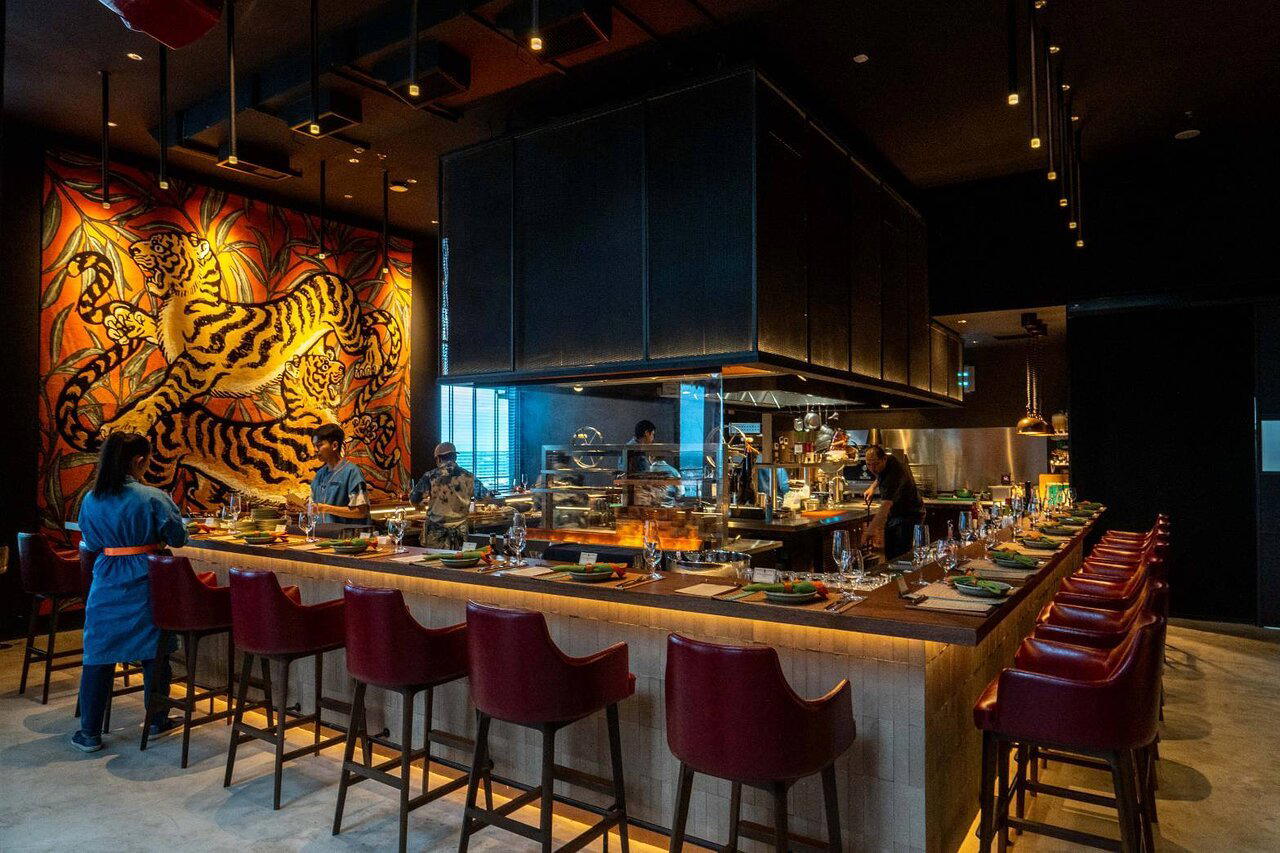
On the 27th floor of Khon Kaen's Ad Lib Hotel, Food by Fire makes a strong case for Isan produce at the serious grill table. A U-shaped counter surrounds an open kitchen where fire and fermentation do the heavy lifting, while close ties with local farmers ground the menu in northeastern Thailand's agricultural identity. The Khon Kaen chocolate-fed beef is the dish to order.

Pearl is the En Primeur Club membership app, where members save venues, book tables and use the concierge.
The menu
What to order
- Khon Kaen chocolate-fed beef
- Thai oysters
- Dry aged Thai wagyu
Fire, Fermentation, and the Isan Larder
Northeastern Thailand has long supplied Bangkok's restaurant industry with some of its most characterful ingredients, smoked fish paste, wild herbs, dry-aged meats, and fermented vegetable preparations that carry a depth no industrial supply chain can replicate. That produce rarely gets the fine-dining treatment in its own region. Most Isan restaurants in Khon Kaen operate at the street-food and casual end of the market, as seen in strong local options like Jok Guay Jab Tom Sen Bat Queue and Here Joi Beef Noodle, where the price point is low and the format is informal. Food by Fire sits in a different tier entirely, applying contemporary grill technique to that same northeastern larder from a perch on the 27th floor of the Ad Lib Hotel on Sri Chant Road.
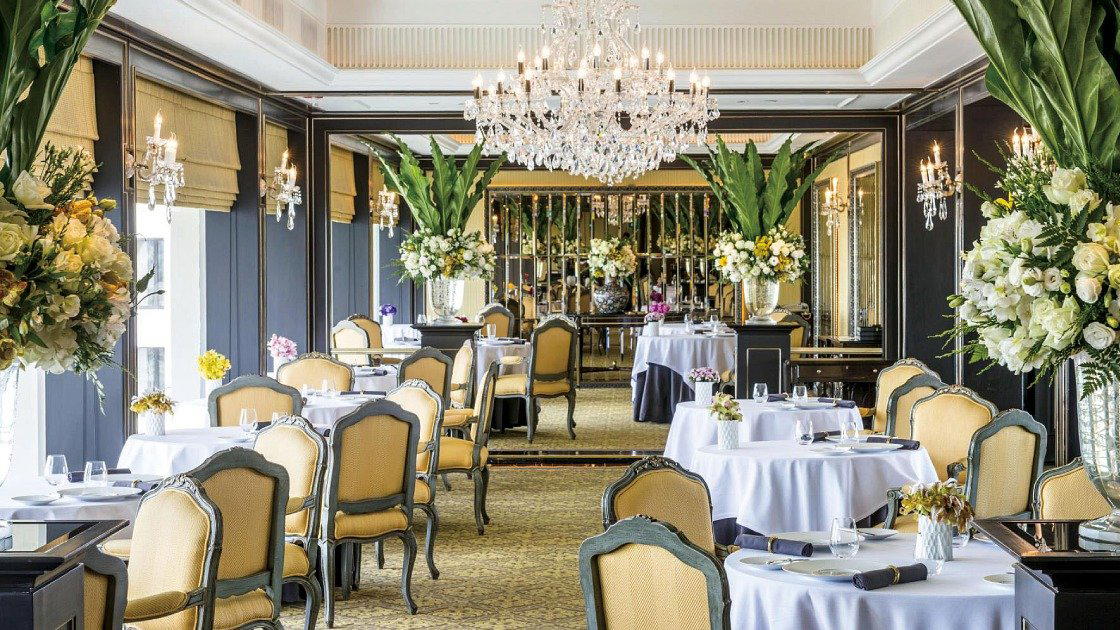
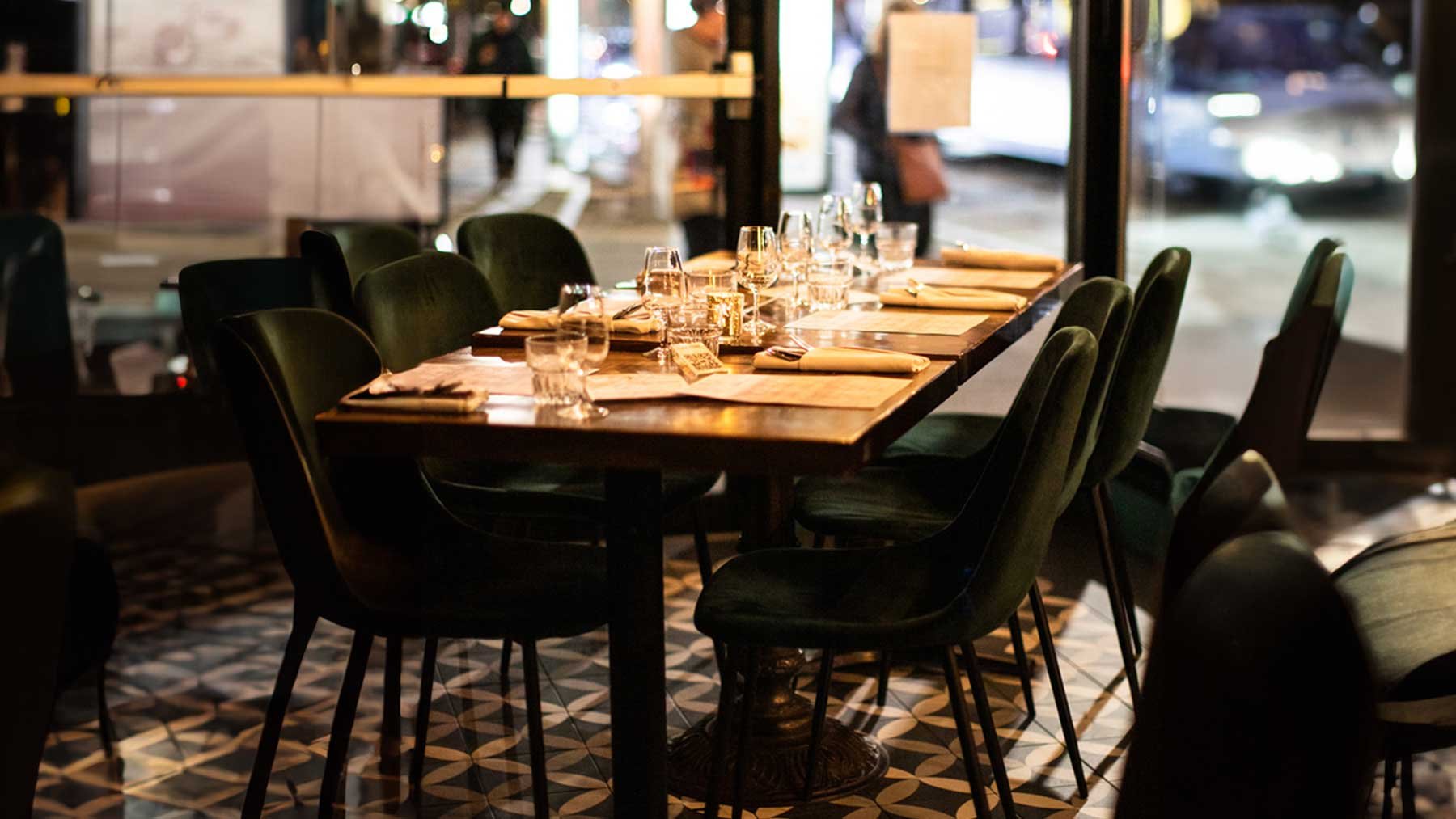
The room announces its intent immediately. A deep red wall carries a large-format tiger mural, and a U-shaped counter wraps around an open kitchen where the fire is visible and central rather than hidden behind a pass. In a city where the default dining format is either open-air shophouse or hotel banquet hall, that counter arrangement signals something closer to what Bangkok's sourcing-led contemporary restaurants have been doing for the past several years. For regional context, the farm-to-counter ethos pursued here mirrors the direction taken by places like PRU in Phuket and the Michelin-starred Sorn in Bangkok, both of which built menus around documented producer relationships. Food by Fire applies a comparable logic in a city with far less competition at that positioning.
Where the Ingredients Come From
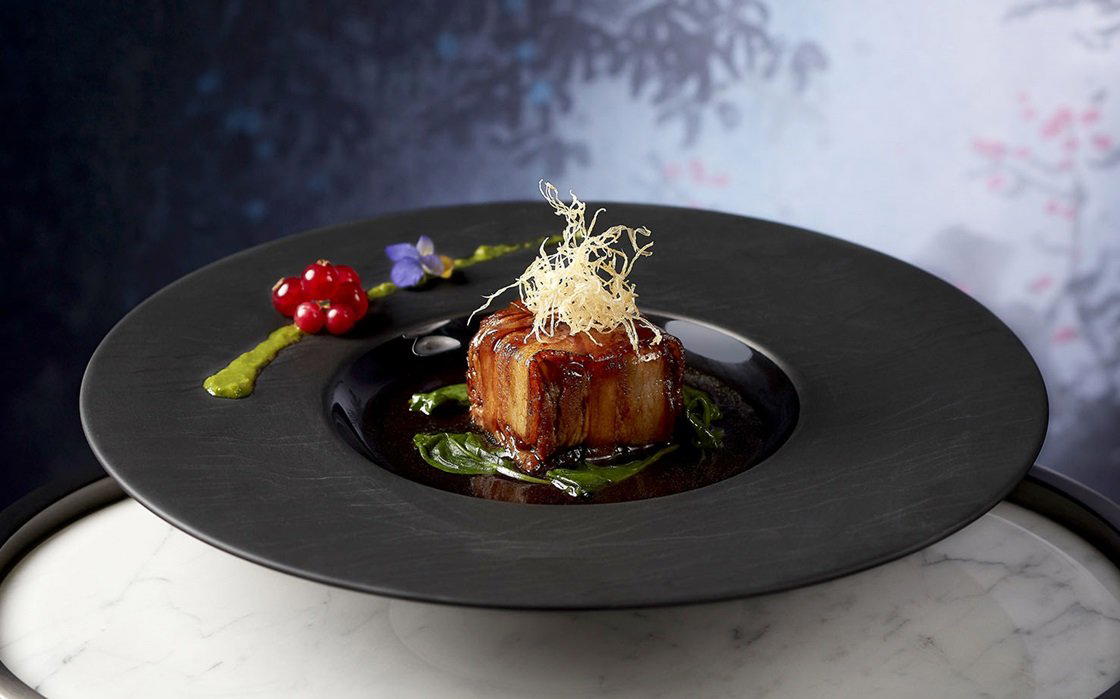
The phrase "close ties with farmers" gets used loosely across the industry. At Food by Fire, the most concrete evidence of that relationship is on the plate: Khon Kaen chocolate-fed beef, a local rearing practice in which cattle are finished on cacao-derived feed, producing meat with a particular fat profile and a flavour that differs noticeably from standard Thai beef or imported cuts. Khon Kaen province sits within one of Thailand's more active beef-rearing corridors, and the chocolate-feeding method is a documented regional practice rather than a marketing invention. Serving it as the centrepiece of a grill menu, accompanied by a spicy red-wine sauce, house-made papaya kimchi, and an eggplant dip, shows a kitchen that understands how to frame an ingredient without overcomplicating it.
Papaya kimchi is worth pausing on. It sits at the junction of two fermentation traditions: the northeastern Thai som tam lineage, where green papaya is treated as a vehicle for salt, acid, and heat, and the Korean kimchi method that has been absorbed and adapted across Southeast Asian restaurant kitchens over the past decade. At a sourcing-focused grill restaurant in Isan, using locally grown papaya through a fermentation process that extends shelf life and deepens flavour is a logical move. It also signals a kitchen that thinks about acidity and fermentation as structural tools rather than garnish decisions. The eggplant dip performs a similar function: a fat, smoky counterpoint to the beef's richness, rooted in regional produce.
Herbs grown on-site or sourced from known local growers complete the supply picture. In a region where wild herbs such as sawtooth coriander, cha-om, and various citrus leaves form the backbone of everyday cooking, the decision to anchor a contemporary grill menu in those same materials gives the food a specificity that imported-ingredient kitchens cannot replicate. Restaurants working at this level of producer transparency in Thailand include AKKEE in Pak Kret and Aeeen in Chiang Mai, both of which have built reputations on ingredient provenance rather than classical technique alone.
Food by Fire in Khon Kaen's Dining Picture
Khon Kaen is Thailand's fourth-largest city and the commercial centre of the northeast, yet its restaurant scene remains dominated by casual formats. The city's strong points are its noodle shops, its Isan barbecue stalls, and a handful of Thai-Chinese establishments such as Baan Heng that have earned loyal followings over decades. Contemporary dining is thin on the ground. Kaen, the Thai contemporary option, is the closest local peer, while mid-range Isan restaurants like Guang Tang Noodles cover the casual middle ground. Food by Fire operates well above that register, making it the natural choice for a considered dinner in the city rather than a quick meal between meetings.
That positioning matters for visitors who arrive expecting the casual price structure typical of Isan dining. Food by Fire's hotel address, rooftop elevation, and produce-sourcing model place it in a category closer to destination restaurants in other Thai cities than to the street-level competition nearby. The comparison point is less Praprai or Kai Yang Rabeab and more the kind of contemporary regional restaurant that charges for provenance and presentation alongside flavour. For a broader sense of where it fits in the city's wider hospitality offer, the full Khon Kaen restaurants guide gives useful context, as do the Khon Kaen hotels guide, bars guide, wineries guide, and experiences guide for building out an itinerary around the region.
Internationally, the grill-and-fermentation format Food by Fire occupies has precedents that range from the produce-obsessive ethos of Le Bernardin in New York City at the haute end to the Southern American fire-cooking tradition represented by Emeril's in New Orleans. The common thread across those references is a kitchen built around a specific ingredient identity rather than a generic tasting-menu format. Food by Fire's claim on that territory is its command of Isan produce specifically, which gives it a distinction that matters in a Thai dining context where Bangkok tends to absorb all the editorial attention.
Planning a Visit
Food by Fire is located on the 27th floor of the Ad Lib Hotel at 999 Sri Chant Road, Nai Mueang, in central Khon Kaen, accessible by taxi from the city centre in under ten minutes. Given its hotel setting and contemporary format, booking ahead is advisable, particularly on weekend evenings when the rooftop position and open-fire kitchen make it a popular destination for the city's business travellers and visitors from Bangkok. Current hours and reservation methods are best confirmed directly with the Ad Lib Hotel. The Khon Kaen chocolate-fed beef is the dish that defines the menu and the one most consistent with the kitchen's sourcing philosophy; ordering it gives the clearest read on what Food by Fire is attempting.
Frequently asked questions
Is Food by Fire okay with children?
The open-counter format around an active fire kitchen may not suit very young children, and the 27th-floor hotel setting at Ad Lib Hotel is oriented toward an adult dining occasion. Older children comfortable in a sit-down grill environment should manage without issue. Families visiting Khon Kaen primarily for street food will find the format here a noticeable shift in pace and formality.
Is Food by Fire formal or casual?
Food by Fire operates at a different register from Khon Kaen's street food and casual Isan formats. The hotel address on the 27th floor of the Ad Lib Hotel, open-counter layout, and a menu built around sourced-beef courses place it closer to a contemporary grill restaurant than a neighbourhood eatery. Dress accordingly for an evening out, though the Isan-inflected menu keeps it from feeling stiff.
Does Food by Fire have a Michelin star or similar recognition?
Food by Fire has received recognition including: With its striking tiger mural on a deep red wall and U-shaped counter around an open kitchen, this Isan grillhouse celebrates northeastern produce in bold, contemporary style. Fire and fermentation anchor a steak and grill menu that is pack….
What should I order at Food by Fire?
The Khon Kaen chocolate-fed beef is the clear priority, served with a spicy red-wine sauce, house-made papaya kimchi, and an eggplant dip, it connects the fire-forward kitchen directly to local cattle farming. Beyond that, the menu's use of local herbs and fermented elements rewards ordering broadly rather than sticking to familiar cuts. The U-shaped counter position means you can watch the kitchen's fire work while you eat.
How do I find Food by Fire?
Food by Fire is located at 27F, Ad Lib Hotel, 999 Sri Chant Road, Nai Mueang, Mueang Khon Kaen, Khon Kaen.
What's the best way to book Food by Fire?
Food by Fire sits at the Ad Lib Hotel, 999 Sri Chant Road, Nai Mueang, Khon Kaen, so the hotel's front desk is a reliable contact point if no direct restaurant booking channel is available. Given that Khon Kaen has very few contemporary grill restaurants at this level, reservations are advisable rather than optional, particularly for counter seats around the open kitchen. Arriving without a booking on a weekend risks losing the full counter experience.
What is Food by Fire known for?
Food by Fire anchors its identity in open-fire cooking and fermentation, with the kitchen drawing directly from northeastern Thai farmers and home-grown herbs. The Khon Kaen chocolate-fed beef is the signature dish, served with papaya kimchi and an eggplant dip, and it represents the most direct expression of the restaurant's sourcing philosophy. The 27th-floor counter at the Ad Lib Hotel, framed by a tiger mural on a deep red wall, sets the visual tone for the whole operation.
Quick Comparison
Comparable venues nearby, for context on price, style, and recognition.
| Venue | Cuisine | Price | Awards | Notes |
|---|---|---|---|---|
| Food by FireThis venue (the venue you are viewing) | Modern Isan Wood-Fired Grill | $30–50 | Michelin Plate | Not listed |
| Vacca | Authentic Italian | $20–30 | Michelin Plate | Tambon Sila |
| Kaen | Contemporary Isan | $20–30 | Michelin Plate | Nai Mueang |
| Krua Supanniga by Khunyai Somsie | Authentic Eastern Thai Regional Cuisine | $20–30 | Michelin Plate | Phra Lap |
| Baan Heng | Thai-Chinese Breakfast | $1–10 | Michelin Bib Gourmand | Nai Mueang |
| Praprai | Authentic Isaan Thai | $10–20 | Michelin Bib Gourmand | Mueang Khon Kaen |
Recognition history
Dated appearances from independent guides and award organizations, with the underlying list record or original source where available.
Michelin Plate
Michelin · 2026 Michelin Plate
Continue exploring
More in Khon Kaen
Details
- Modern
- Trendy
- Cozy
- Lively
- Date Night
- Group Dining
- Special Occasion
- Family
- Open Kitchen
- Terrace
- Panoramic View
- Hotel Restaurant
- Extensive Wine List
- Craft Cocktails
- Farm To Table
- Local Sourcing
- Skyline
- Street Scene
- A La Carte
- Small Plates
- Wine
- Cocktails
Current opening hours
- Monday
- Closed
- Tuesday
- Closed
- Wednesday
- 5–11 PM
- Thursday
- 5–11 PM
- Friday
- 5–11 PM
- Saturday
- 5–11 PM
- Sunday
- 5–11 PM
Hours can change for holidays and private events. Hours as of .
Cozy and welcoming atmosphere with open kitchen views, striking tiger mural, bold contemporary style, and terrace seating offering Khon Kaen skyline vistas.