
Michelin Plate
Our verdict
A Khon Kaen institution with more than 70 years of continuous family ownership, Guang Tang Noodles holds consecutive Michelin Plate recognition (2024 and 2025) for its handmade egg noodle soups and wontons. The entry-level price point and address on Phimphasut Road make it one of the city's most accessible Michelin-recognised stops, anchored by a wonton noodle soup and barbecue pork combination that has defined the shop across three generations.

Pearl is the En Primeur Club membership app, where members save venues, book tables and use the concierge.
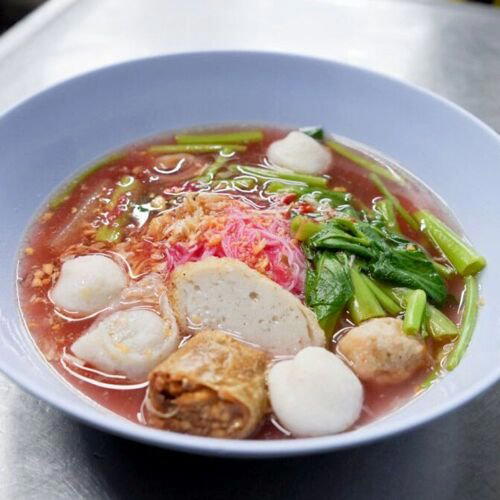
The menu
What to order
- Noodle soup with wontons and barbecue pork
- Deep-fried noodles with gravy and pork
Egg Noodle Culture and the Long Game in Khon Kaen
In Thailand's northeast, the noodle shop functions as a neighbourhood institution in a way that Bangkok's more celebrated dining scene rarely replicates. These are places where recipes travel through families rather than culinary schools, where the recipe for a wonton skin or a broth base is a form of inheritance. Khon Kaen's Phimphasut Road carries several of these spots, but Guang Tang Noodles occupies a distinct position: a third-generation Chinese-Thai egg noodle operation that has been running for more than 70 years and now holds consecutive Michelin Plate recognition for 2024 and 2025.
The Michelin Plate designation, which signals cooking worth a stop rather than a special journey, tends to concentrate in Bangkok and Chiang Mai. When it appears in provincial capitals like Khon Kaen, it typically marks a place that local regulars have known for decades while visitors have largely overlooked.
What the Menu Is Actually Doing
The core of Chinese-Thai egg noodle cooking in this tradition is technical in ways that read as simple at the table. Egg noodles made in-house have a different bite and absorbency than commercial alternatives, they hold broth differently and carry sauce in a way that factory-produced noodles cannot match. At Guang Tang, both the noodles and the wontons are produced on-site, which places the kitchen firmly in a category of production-led noodle shops that is shrinking across Thailand as ingredient sourcing becomes more centralised.
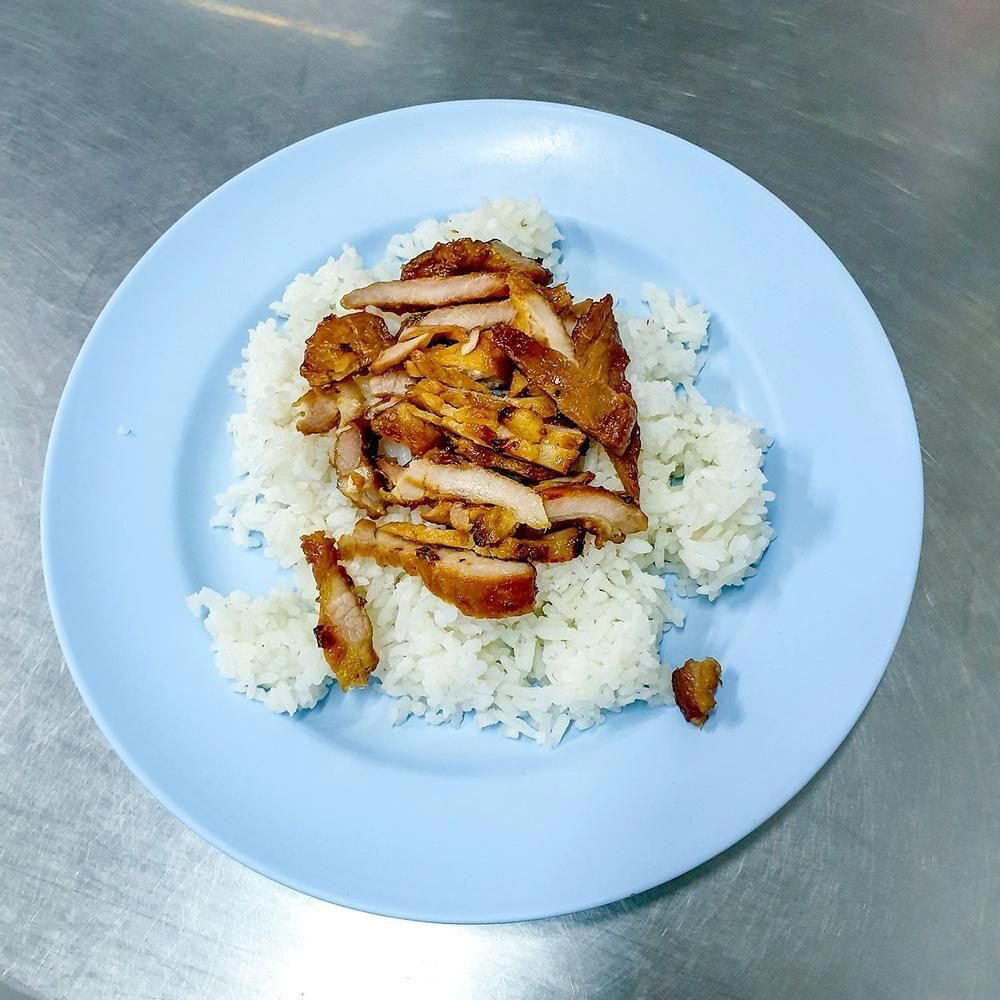
Wonton noodle soup with barbecue pork is the dish the Michelin guide specifically references, and it represents a convergence of two distinct Chinese-Thai culinary traditions: the Cantonese wonton, which requires a thin, properly sealed wrapper and a filling that holds texture after boiling, and the char siu-style barbecued pork that arrived with Chinese migrants and became embedded in Thai cooking to the point where it no longer reads as foreign. When both elements are made in-house at the quality this kitchen achieves, the dish functions as a compressed history of the Sino-Thai community in the region.
Deep-fried noodles with gravy and a choice of pork or beef offer a textural counterpoint: crisp noodle cakes against a glossy, starch-thickened sauce, a format that appears across Chinese-Thai noodle shops and rewards good timing. The dish deteriorates quickly once the sauce softens the noodles, which is part of why it works better in a sit-down context than as takeaway. Both dishes price at the single-฿ tier, keeping Guang Tang in the same accessible bracket as Here Joi Beef Noodle and the broader cluster of Khon Kaen noodle spots rather than the higher-spend Isan dining that defines much of the city's regional food identity.
Three Generations and What That Actually Means
A 70-year-plus operation in a single-cuisine noodle format is not incidental. It requires that each generation absorb and maintain a production process that offers no shortcuts: hand-mixed wonton filling, hand-folded wrappers, hand-pulled or hand-cut noodle dough. The original owner's techniques have been passed down in a line that now represents one of Khon Kaen's longest-running food businesses. That continuity is itself a form of credential, independent of any guide recognition.
The longevity also functions as market data. A noodle shop that has operated for more than seven decades in the same city without pivoting its format or outsourcing its core production has done so because the product sustains demand. In Thailand's provincial food scene, where competition at the ฿ price tier is intense and margins are thin, seven decades of operation is a more reliable indicator of quality than any single-year award cycle.
For broader Thai culinary context, Sorn in Bangkok and PRU in Phuket represent the high-investment end of Thailand's Michelin recognition, while Guang Tang sits at the opposite end of the economic spectrum with the same guide's acknowledgement. That spread illustrates how Thailand's Michelin coverage increasingly documents the full range of the country's food culture rather than concentrating solely on formal dining rooms. Regional noodle traditions from Hangzhou to Taichung have attracted similar guide attention, reflecting a wider reassessment of handmade noodle formats as a serious culinary category.
The Khon Kaen Noodle Scene in Context
Khon Kaen's food identity is primarily associated with Isan cooking: grilled meats, fermented fish sauces, papaya salads, and sticky rice. But the city has a substantial Chinese-Thai population whose culinary contributions run parallel to that dominant narrative. The noodle shop tradition, largely rooted in Teochew and Cantonese migration, operates in a different register entirely, lighter broths, wheat-based noodles, pork preparations that read more central Chinese than northeastern Thai.
Guang Tang sits within this parallel tradition alongside Whale Chicken Noodles and Jok Guay Jab Tom Sen Bat Queue, which together form a loose network of Chinese-Thai street and casual food that operates alongside the city's more prominent Isan dining. Baan Heng and Sriruen Pad Thai on Ruenchit Road occupy adjacent positions in the city's affordable, tradition-led eating. Visitors focused only on Isan food miss this dimension of Khon Kaen's culinary depth. For those exploring Isan's regional cooking more broadly, Aeeen in Chiang Mai and Agave in Ubon Ratchathani provide further regional reference points, while AKKEE in Pak Kret shows what Chinese-Thai cooking looks like at a higher price tier.
Planning Your Visit
Guang Tang Noodles is on Phimphasut Road in the Nai Mueang district, central Khon Kaen, at number 18/22. The single-฿ pricing means a full meal lands comfortably below 100 baht per person. No booking method or formal hours are published, which is consistent with the format: arrive, take a seat, and order from a short, focused menu. Morning and early-afternoon visits are typical for this category of Thai noodle shop, though local patterns may vary. For accommodation and further exploration around Khon Kaen, see our full Khon Kaen hotels guide, bars guide, wineries guide, and experiences guide. For the full picture of where Guang Tang sits among the city's restaurants, our full Khon Kaen restaurants guide covers the range from Isan grills to Chinese-Thai noodle shops across all price tiers.
Frequently asked questions
Can I bring kids to Guang Tang Noodles?
Is Guang Tang Noodles formal or casual?
at Guang Tang Noodles?
Cost Snapshot
A small set of peers for context, based on recorded venue fields.
| Venue | Cuisine | Price | Awards | Notes |
|---|---|---|---|---|
| Guang Tang NoodlesThis venue (the venue you are viewing) | Chinese Egg Noodles | $1–10 | Michelin Plate | Not listed |
| Here Joi Beef Noodle | Thai Beef Noodles | $1–10 | Michelin Bib Gourmand | Noodles, ฿ |
| Jok Guay Jab Tom Sen Bat Queue | Thai Street Food Noodles & Porridge | $1–10 | Michelin Bib Gourmand | Street Food, ฿ |
| Kai Yang Rabeab (Khao Suan Kwang) | Not listed | Not listed | Not listed | Isan, ฿ |
| Khun Jaeng Guay Tiew Pak Mor Kao Wang | Thai Noodle Shop | $1–10 | Michelin Bib Gourmand | Thai, ฿ |
| Praprai | Authentic Isaan Thai | $10–20 | Michelin Bib Gourmand | Isan, ฿฿ |
Recognition history
Dated appearances from independent guides and award organizations, with the underlying list record or original source where available.
Michelin Plate
Michelin
Full recognition history (3 entries)
Michelin Plate
Michelin
Michelin Plate
Michelin
Continue exploring
More in Khon Kaen
Details
- Classic
- Casual Hangout
- A La Carte
Current opening hours
- Monday
- 9 AM–4 PM
- Tuesday
- 9 AM–4 PM
- Wednesday
- Closed
- Thursday
- 9 AM–4 PM
- Friday
- 9 AM–4 PM
- Saturday
- 9 AM–4 PM
- Sunday
- 9 AM–4 PM
Hours can change for holidays and private events. Hours as of .
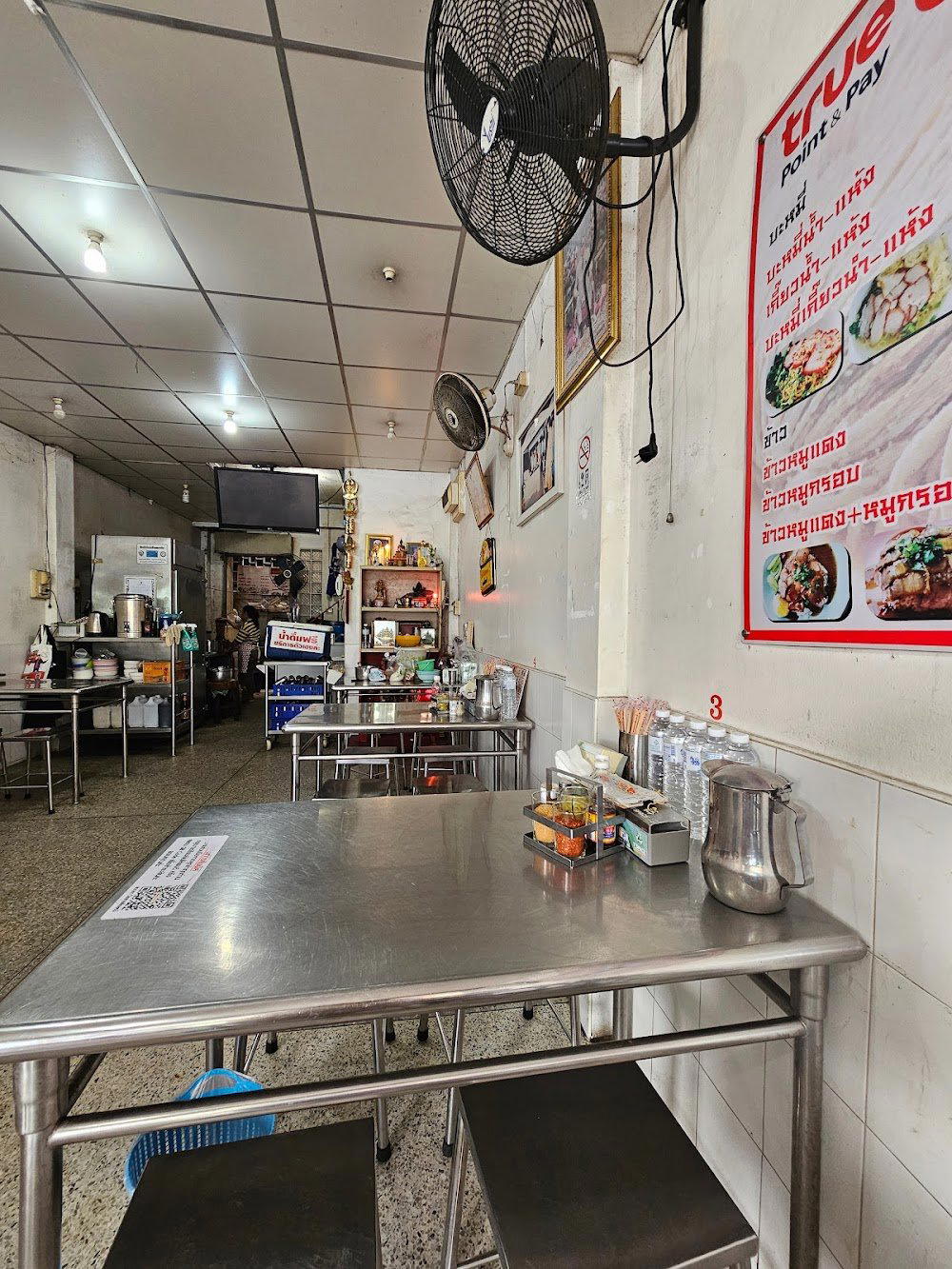
Classic street food atmosphere with a focus on satisfying, traditional noodle dishes.