
Michelin Bib Gourmand
Our verdict
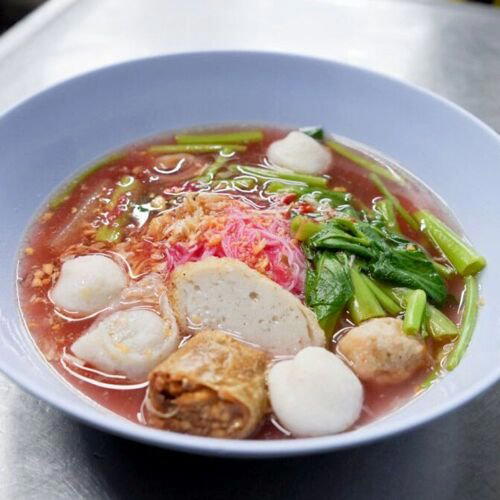
Established in 1986 and now in its second generation, Here Joi Beef Noodle has earned consecutive Michelin Bib Gourmand recognition in 2024 and 2025 for its clear, layered beef broth served with brisket, tendon, and meatballs. The concise menu now includes Thai basil rice alongside the signature noodles. At ฿ pricing, it sits at the accessible end of Khon Kaen's noodle scene without compromising on depth or craft.

Pearl is the En Primeur Club membership app, where members save venues, book tables and use the concierge.
The Red Sign and What It Represents
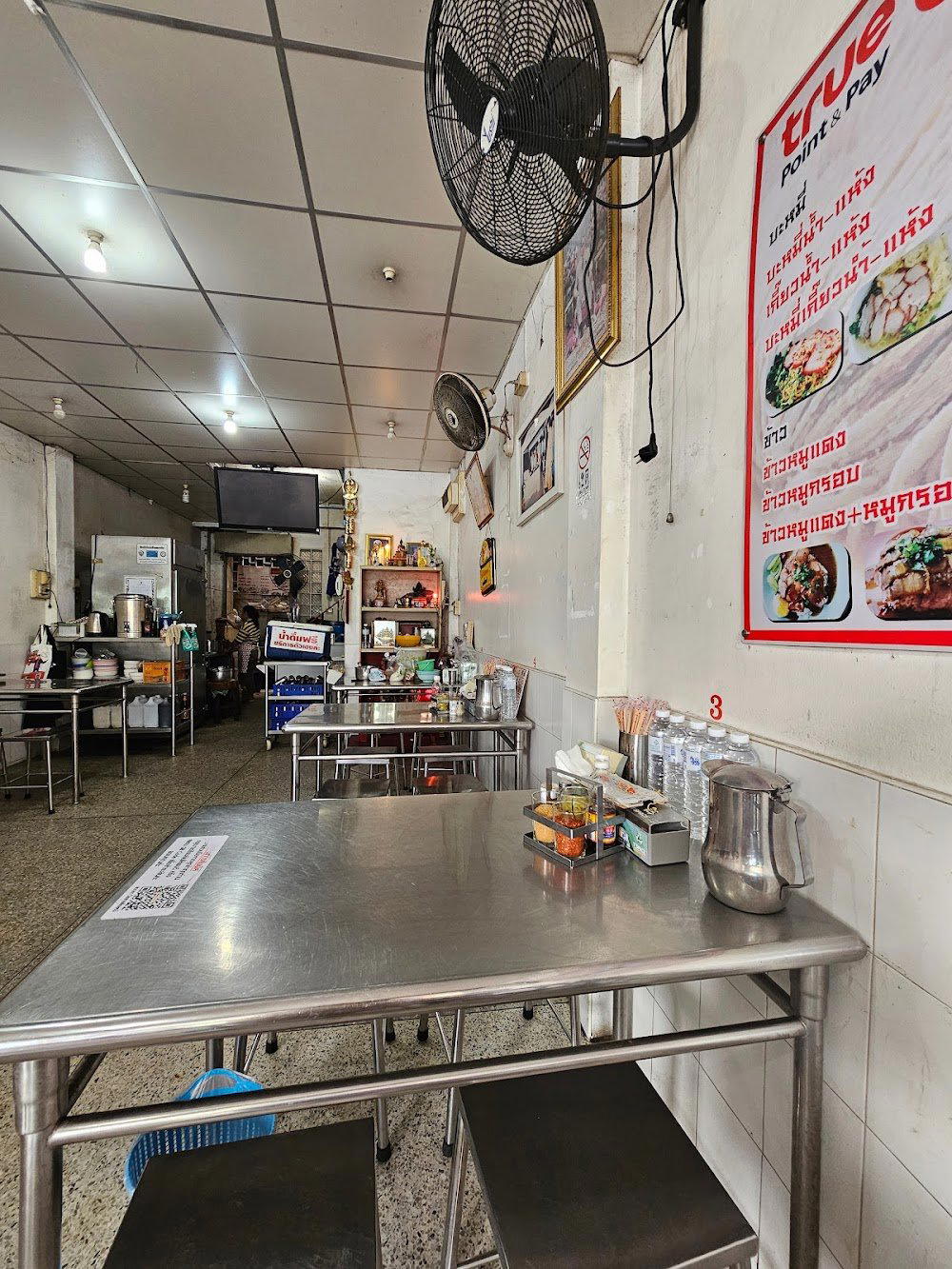
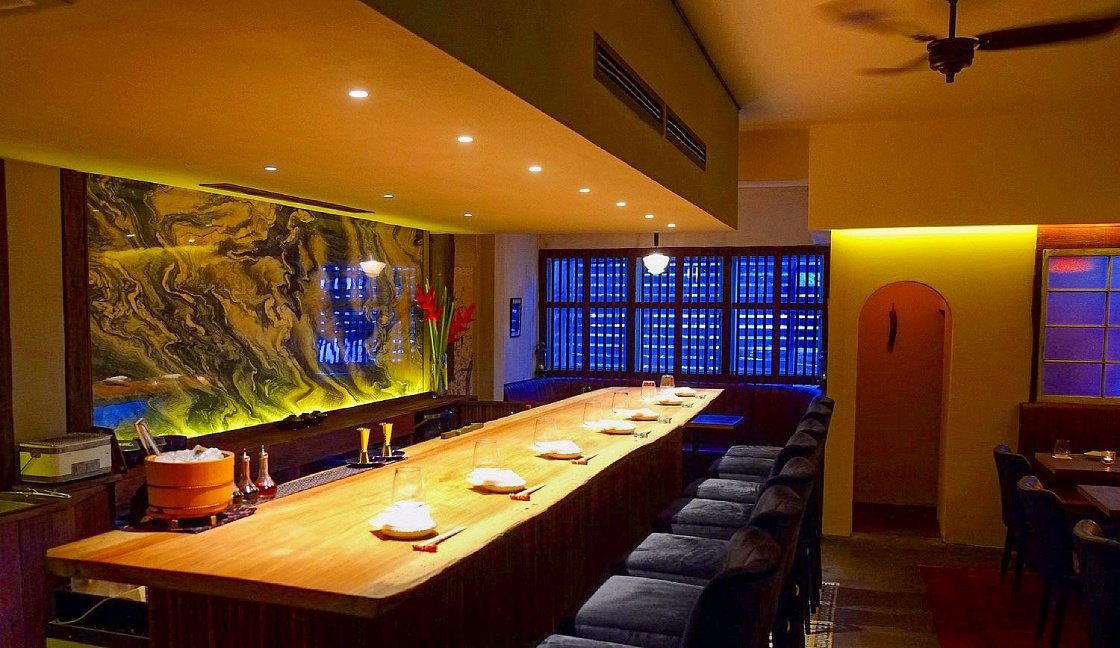
A red shopfront sign in a mid-century neighbourhood district is not, on the surface, a remarkable sight in Khon Kaen. But the red sign at Here Joi Beef Noodle carries a specific weight: nearly four decades of continuous service, a generational handoff that kept the broth recipe intact, and two consecutive Michelin Bib Gourmand awards that confirmed what the local regulars already knew. The physical setting belongs firmly to the category of workaday Thai noodle houses, tables close together, the smell of simmering bone stock in the air, a printed menu short enough to read in thirty seconds. That economy of presentation is not incidental. It is the format in which northeast Thailand's most respected noodle kitchens have always operated.
Beef Noodles in the Isan Tradition
Khon Kaen sits at the centre of the Isan region, where the culinary tradition draws on both central Thai and Lao influences, filtered through decades of trade-route culture. Beef noodle soups occupy a specific place in that tradition: less fiery than the papaya-salad-and-grilled-meat dishes that define Isan cooking in tourist shorthand, more reflective of the slow-kitchen patience that characterises Chinese-Thai shophouse cooking. The broth at Here Joi is described in the Michelin documentation as light and flavoursome, a deceptively simple phrase that, in the context of beef noodle culture, points to restraint and long extraction rather than the heavy, opaque stocks common elsewhere. Brisket, tendon, and meatballs each bring a different texture register to the bowl: the brisket offers the yielding pull of long-braised muscle, the tendon a gelatinous softness, the meatballs a firmer, bouncing counterpoint. Together, they map the full range of what serious beef noodle kitchens use to build a complete eating experience.
Across Southeast Asia, the beef noodle format has produced some of the region's most rigorously maintained food traditions. In Khon Kaen, the genre sits alongside other noodle-focused institutions, places like Guang Tang Noodles and Whale Chicken Noodles, that together define what a serious provincial noodle culture looks like. Here Joi occupies the beef end of that spectrum, competing on broth depth and ingredient quality rather than variety or novelty.
What a Bib Gourmand Signals Here
The Michelin Bib Gourmand category was designed to identify restaurants offering quality cooking at prices accessible to a wide dining public. In Thailand, where the Michelin Guide expanded beyond Bangkok to cover Chiang Rai, Phuket, and increasingly the provinces, the Bib Gourmand has become one of the more reliable signals for finding serious food in less-documented cities. Here Joi received the award in both 2024 and 2025, placing it in a peer group that nationally includes celebrated operations like Sorn in Bangkok at the starred end of the spectrum, and regionally positions it alongside destinations in cities where Michelin scrutiny is newer and, arguably, more meaningful as a differentiator.
For Khon Kaen specifically, the recognition matters because the city's food culture is deep but its international profile is thin compared to Chiang Mai or Bangkok. Venues like Aeeen in Chiang Mai or PRU in Phuket operate in cities where food tourism is already structured. Here Joi earns its Bib recognition in a market where that external validation carries more practical weight for travellers deciding where to eat. The ฿ price tier confirms that the award is not the result of a premium tasting-menu format: this is everyday-price cooking that has been judged on the same criteria as far more expensive operations.
A Menu That Knows What It Is
The menu at Here Joi is concise by design. Established food businesses that survive generational transitions typically survive by protecting what works rather than expanding what doesn't. The core offering, beef noodles with brisket, tendon, and meatballs in a clear broth, has remained the anchor since the shop opened in 1986. The more recent addition of Thai basil rice represents a considered expansion: a rice-based option that complements the noodle format without pulling the kitchen into unfamiliar territory. Thai basil rice occupies a familiar register in central and northeastern Thai cooking, which makes it a natural adjacency rather than a departure.
The concise format also places Here Joi in a broader pattern visible across serious noodle houses in the region. Comparable operations in Taiwan and mainland China, A Kun Mian in Taichung and A Bing Bao Shan Mian in Hangzhou, operate on similar principles: a tight menu anchored to one noodle tradition, executed with precision over many years. The discipline is the point. Breadth dilutes; depth compounds.
Placing It in Khon Kaen's Eating Scene
Khon Kaen's dining culture ranges from Isan barbecue and street-side papaya salad stalls to Chinese-Thai shophouses and, increasingly, a small tier of more formal Thai cooking. At the ฿ end of the price spectrum, the competition is genuinely strong: Sriruen Pad Thai on Ruenchit Road, Jok Guay Jab Tom Sen Bat Queue, and Baan Heng all operate in the same accessible price tier and represent different corners of the city's noodle and Thai-Chinese tradition. Here Joi's differentiation within that peer group comes from its specific focus on beef and its Michelin-confirmed consistency across consecutive years.
For visitors structuring a day around Khon Kaen's food culture, the full Khon Kaen restaurants guide maps the full range of options. Those spending more time in the city will also find useful orientation in the Khon Kaen hotels guide, the bars guide, and the experiences guide. For regional context, Agave in Ubon Ratchathani and AKKEE in Pak Kret illustrate how different corners of provincial Thailand are developing their own distinct food identities beyond the Bangkok axis.
Planning Your Visit
Here Joi Beef Noodle is located in the Sila area of Mueang Khon Kaen District. The ฿ price point means a full meal is accessible at low cost, and the format, a shophouse noodle operation with a short menu, does not require advance booking in the conventional sense. The second-generation ownership, combined with back-to-back Bib Gourmand recognition, suggests the kitchen is in a period of stable form rather than transition. Arriving at off-peak hours is advisable for any popular shophouse of this type, as seating capacity in this format is typically limited and turnover-dependent.
Frequently asked questions
What's the price range at Here Joi Beef Noodle?
Pricing at Here Joi Beef Noodle is listed as ฿.
Is Here Joi Beef Noodle award-winning?
Here Joi Beef Noodle has received recognition including: Established in 1986 and now run by the second generation, this spot with its red sign has long been serving comforting beef noodles featuring tender brisket, tendon and meatballs in a light, flavoursome broth. Thai basil rice is a welcome n….
What should I order at Here Joi Beef Noodle?
The beef noodle soup is the dish that earned consecutive Michelin Bib Gourmand recognition in 2024 and 2025. The bowl draws on a light broth and combines brisket, tendon, and meatballs, three cuts that reflect the kitchen's approach to the full range of the animal. Thai basil rice is a newer addition to the menu and worth ordering alongside.
Where is Here Joi Beef Noodle located?
Here Joi Beef Noodle is located at Sila, Mueang Khon Kaen District, Khon Kaen 40000, Thailand, Khon Kaen.
Cuisine and Recognition
| Venue | Cuisine | Price | Awards | Notes |
|---|---|---|---|---|
| Here Joi Beef NoodleThis venue (the venue you are viewing) | Thai Beef Noodles | $1–10 | Michelin Bib Gourmand | Not listed |
| Jok Guay Jab Tom Sen Bat Queue | Thai Street Food Noodles & Porridge | $1–10 | Michelin Bib Gourmand | Street Food, ฿ |
| Kai Yang Rabeab (Khao Suan Kwang) | Isan | Not listed | Not listed | ฿ |
| Khun Jaeng Guay Tiew Pak Mor Kao Wang | Thai Noodle Shop | $1–10 | Michelin Bib Gourmand | Thai, ฿ |
| Praprai | Authentic Isaan Thai | $10–20 | Michelin Bib Gourmand | Isan, ฿฿ |
| Sriruen Pad Thai (Ruenchit Road) | Thai Pad Thai | Not listed | Michelin Bib Gourmand | Noodles, ฿ |
Recognition history
Dated appearances from independent guides and award organizations, with the underlying list record or original source where available.
Michelin Bib Gourmand
Michelin
Full recognition history (3 entries)
Michelin Bib Gourmand
Michelin
Michelin Bib Gourmand
Michelin
Continue exploring
More in Khon Kaen
Details
- Casual
- Well Known
- Casual Hangout
- Standalone
- A La Carte
Current opening hours
- Monday
- 9 AM–3 PM
- Tuesday
- 9 AM–3 PM
- Wednesday
- 9 AM–3 PM
- Thursday
- 9 AM–3 PM
- Friday
- 9 AM–3 PM
- Saturday
- 9 AM–3 PM
- Sunday
- 9 AM–3 PM
Hours can change for holidays and private events. Hours as of .
Casual local landmark with a welcoming, no-frills atmosphere centered around a red sign and concise menu.