Fontevraud L'Ermitage



1 Michelin Star · Gault & Millau Remarkable Restaurant · We're Smart World 2 Radishes
Our verdict
Inside the cloisters of Fontevraud Abbey, one of Europe's largest monastic complexes, Thibaut Ruggeri — Bocuse d'Or 2013 winner — cooks a tightly focused creative menu anchored in the Loire's biodynamic produce. A Michelin star since 2024 confirms the kitchen's standing. The setting alone sets an agenda that most French restaurants cannot match on geography alone.

Pearl is the En Primeur Club membership app — saves, bookings, and concierge access live there. Same editors, same standards.
- Address
- 38 Rue Saint-Jean de l'Habit, 49590 Fontevraud-l'Abbaye, France
- Phone
- +33 2 46 46 10 10
- Hours
- Mon–Tue ClosedWed–Fri 7–9:30 PMSat–Sun 12–1:30 PM, 7–9:30 PM
- Website
- fontevraud.fr
- Directions
- Get directions
- Booking
- Book on the venue's website
Eating Inside a Royal Abbey
The approach to Saint-Lazare Priory, within the walled grounds of the Royal Abbey of Fontevraud, does something to the appetite that no amount of interior design can replicate. The abbey complex, founded in 1101 and one of the largest surviving monastic ensembles in Europe, carries a weight of stone and silence that arrives before any menu does. Designer Patrick Jouin and architect Sanjit Manku converted the priory's cloisters into the dining room, working with unfinished materials and an architectural restraint that mirrors the monastic bones of the structure rather than competing with them. The result is a room where the 12th century and a contemporary French kitchen occupy the same air without obvious friction.
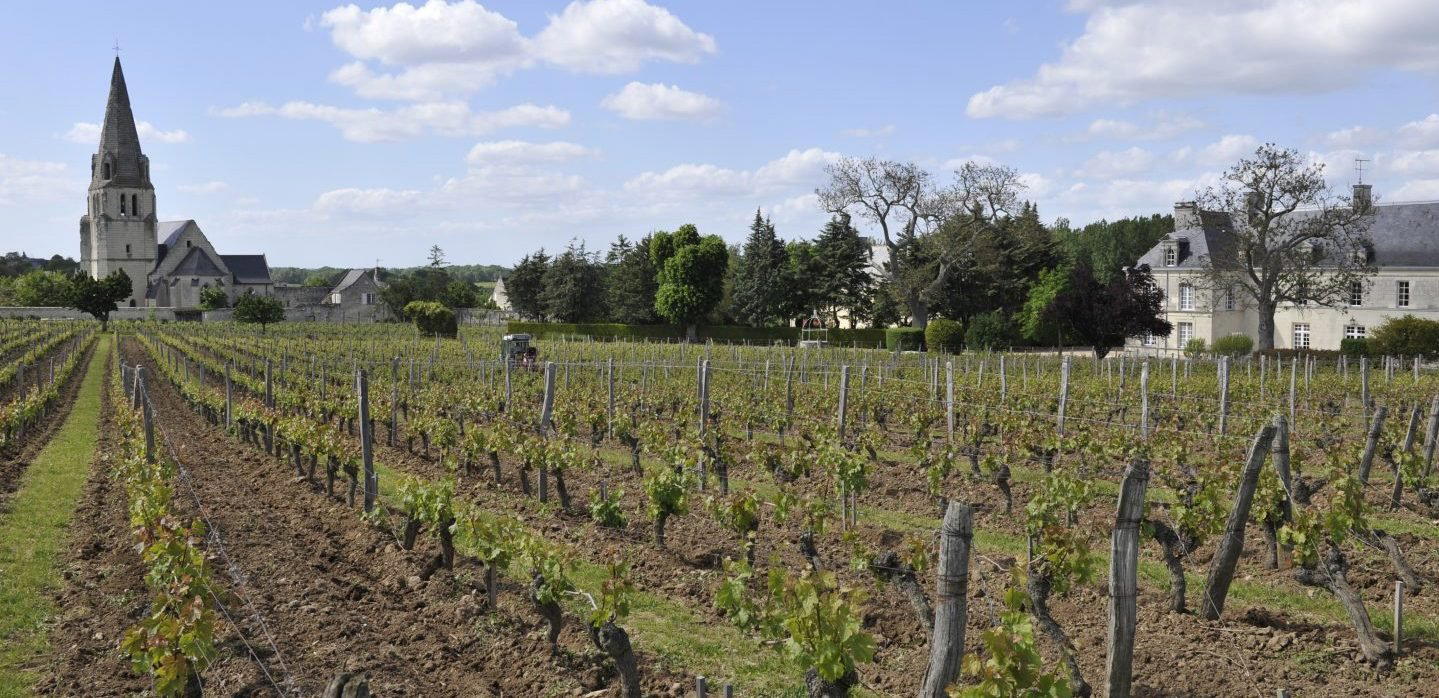
Very few French restaurants can claim a setting of this particular character. The Loire Valley is dense with châteaux-adjacent dining, but Fontevraud operates at a different register: this is a working cultural monument, not a repurposed estate. That distinction matters when reading the menu, because the kitchen's emphasis on local, domain-sourced produce and biodynamic farming is not decorative terroir marketing — it connects directly to the land the abbey has cultivated for centuries.
The Training Behind the Menu
Thibaut Ruggeri's cooking is, in part, the story of what France's haute cuisine pipeline produces when it works well. Ruggeri trained with Michel Guérard, the architect of cuisine minceur at Eugénie-les-Bains, and with Georges Blanc at Vonnas, one of the Bresse region's long-standing multi-starred houses. Both represent different strands of French culinary tradition: Guérard's lightness and conceptual precision, Blanc's deep anchorage in regional product. Those two influences surface in how Ruggeri constructs a menu that is technically ambitious without losing connection to the Loire's larder.
The Bocuse d'Or win in 2013 is the most visible credential in Ruggeri's record, placing him in a line that runs from Paul Bocuse's own institution at Collonges-au-Mont-d'Or to the competition he created. Bocuse d'Or victors tend to come equipped with both technical fluency and the ability to perform under pressure — skills that translate differently in a permanent kitchen than in competition, but which indicate a level of preparation few menus can ignore. Ruggeri hails from Megève, the Alpine resort town that is also home to Emmanuel Renaut's Flocons de Sel, a context that reinforces a sensibility shaped by precision and mountain-adjacent luxury dining before his move to the Loire.
In the broader French creative dining scene, which includes reference points like Alléno Paris au Pavillon Ledoyen, Mirazur in Menton, and Bras in Laguiole, Fontevraud L'Ermitage operates at the point where creative ambition and strict product fidelity meet. The menu is intentionally short, disciplined by the garden's output and a biodynamic farming calendar rather than by commercial calculation. That restraint is an editorial position, not a limitation.
What the Kitchen Prioritises
The menu at Fontevraud L'Ermitage draws heavily from the abbey's own domain. Racan poultry and Anjou pigeon are named reference points in the sourcing, both carrying a provenance specific to the western Loire. Racan, from the Sarthe-Loir confluence, has been associated with quality free-range poultry for long enough that it functions as a regional designation rather than a marketing claim. Anjou pigeon similarly operates as a Loire Valley product with documented local character.
The vegetable selection is deliberately limited, governed by garden production and what Ruggeri describes as lunar rhythm, a biodynamic scheduling principle that connects harvest timing to the moon's cycle. This is not an unusual position among high-commitment natural and biodynamic kitchens across France, but at Fontevraud it carries additional coherence: the abbey's agricultural traditions predate modern farming methods by several centuries, and the alignment between historic land stewardship and contemporary biodynamics gives the approach a setting it rarely gets elsewhere. Comparable commitments to terrain-specific, production-led menus can be found at Auberge du Vieux Puits in Fontjoncouse and Troisgros in Ouches, both of which have built menus around hyper-local sourcing at a similar price tier.
Michelin star awarded in 2024 confirms that the kitchen's ambition registers at a national level. Michelin's category of "Remarkable" framing also signals that the inspectors regard the setting and the produce as integral to the evaluation, not incidental to it. The star places Fontevraud L'Ermitage inside a tier of regional French creative restaurants that includes AM par Alexandre Mazzia in Marseille, Assiette Champenoise in Reims, and Au Crocodile in Strasbourg, restaurants operating outside Paris at a price point and ambition level that competes nationally.
Creative Cooking in a European Context
Creative fine dining format, tasting-length menus built around chef identity, regional sourcing, and high technique, has expanded significantly across Europe over the past decade. In northern Italy, Enrico Bartolini in Milan represents the format at an urban flagship scale. In Germany, JAN in Munich operates within a comparable product-forward framework. What distinguishes Fontevraud is that the creative format here is directly conditioned by the physical container: you cannot easily replicate a kitchen inside a 12th-century royal abbey in a different city. The menu's shortness, the biodynamic calendar, the estate-sourced proteins, these are the expression of a specific place, not a transferable concept.
Loire Valley itself, for all its château tourism and appellation wine production, does not have a long tradition of destination fine dining at this level. Fontevraud fills a gap in the regional map, operating well above the casual-bistro baseline that covers much of the valley's restaurant offer and sitting at a price tier, €€€€, that positions it as a deliberate destination rather than an incidental meal. For context on the full local picture, see our full Fontevraud-l'Abbaye restaurants guide, as well as guides to hotels, bars, wineries, and experiences in the area, which together illustrate just how small but purposeful this corner of Anjou has become for travellers moving beyond the main château circuit.
Planning Your Visit
Fontevraud L'Ermitage is located at 38 Rue Saint-Jean de l'Habit, within the abbey precinct. The village of Fontevraud-l'Abbaye sits approximately 15 kilometres south of Saumur, which has direct rail connections from Paris Montparnasse. The restaurant carries a four-star price designation, expect the cost to sit well above the Loire Valley's everyday dining baseline, and given both the abbey's visitor draw and the restaurant's Michelin recognition, advance booking is strongly advised, particularly for weekend services and during the summer season when abbey tourism peaks.
The address also warrants one note of practical context: this is a small village, not a city. Fontevraud rewards the kind of trip that builds in the abbey visit, a night nearby, and the restaurant as a deliberate centrepiece rather than a late addition. The same Jouin-Manku design team whose architectural intervention shaped the dining room also worked on the hotel within the abbey complex, which gives the full stay a coherence of spatial language that is rare even at equivalent price points in the Loire.
Frequently asked questions
Would Fontevraud L'Ermitage be comfortable with kids?
At the €€€€ price tier, inside a 1-Michelin-Star creative kitchen set within one of Europe's largest monastic complexes, this is not a natural fit for young children. The menu is deliberately short, seasonally driven, and structured around tasting-length courses that require time and attention. Families with older, food-curious teenagers would find the setting more workable than those with younger children.
What is the atmosphere like at Fontevraud L'Ermitage?
The restaurant occupies the cloisters of Saint-Lazare Priory, redesigned by architect Sanjit Manku and designer Patrick Jouin using untreated materials and monastic minimalism. The result is spare and architectural rather than conventionally luxurious — the abbey stonework does more work than any decorative scheme. For those who read space as part of a meal, it is a genuinely distinct setting in a Loire Valley region already well-supplied with château dining rooms.
What kind of recognition has Fontevraud L'Ermitage received?
Fontevraud L'Ermitage has received recognition including: Chef Thibaut Ruggeri can call on a range of products from the historic domain surrounding the "Royal" Abbey. So we don't have to tell you that this is a very unique location. The choice of dishes remains very limited, as does the vegetable ….
What's the signature dish at Fontevraud L'Ermitage?
No fixed signature dish is published, by design: the menu is intentionally short and tied directly to the abbey domain's garden output and biodynamic production cycles. Racan poultry and Anjou pigeon are named sourcing reference points and appear as recurring anchors in Thibaut Ruggeri's cooking. What holds consistent is the method — high technique applied to a narrow selection of local product — rather than any single plated constant.
A Quick Peer Check
| Venue | Cuisine | Price | Awards |
|---|---|---|---|
| Fontevraud L'ErmitageThis venue — the venue you are viewing | Contemporary French Fine Dining | $100–150 | 1 Michelin Star · Gault & Millau Remarkable Restaurant |
| Alléno Paris au Pavillon Ledoyen | Creative | Not listed | Michelin 3 Star |
| Kei | Contemporary French, Modern Cuisine | Not listed | Michelin 3 Star |
| L'Ambroisie | French, Classic Cuisine | Not listed | Michelin 3 Star |
| Le Cinq - Four Seasons Hôtel George V | French, Modern Cuisine | Not listed | Michelin 3 Star |
| Plénitude | Contemporary French | Not listed | Michelin 3 Star |
Recognition history
Dated appearances from independent guides and award organizations, with the underlying list record or original source where available.
Michelin 1 Star
Michelin
Gault & Millau Remarkable Restaurant
Gault & Millau
We're Smart World 2 Radishes
We're Smart World
Full recognition history (5 entries)
Michelin 1 Star
Michelin
Michelin 1 Star
Michelin
Continue exploring
More in Fontevraud-l'Abbaye
Restaurants in Fontevraud-l'Abbaye
Browse all →
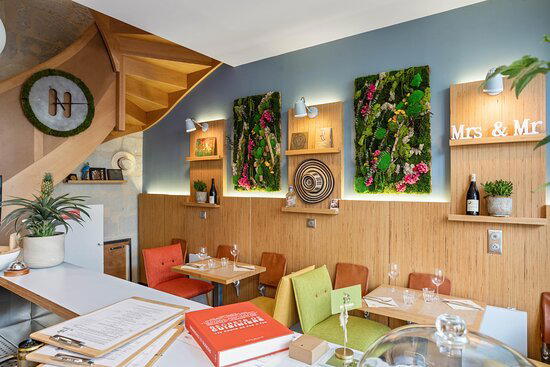
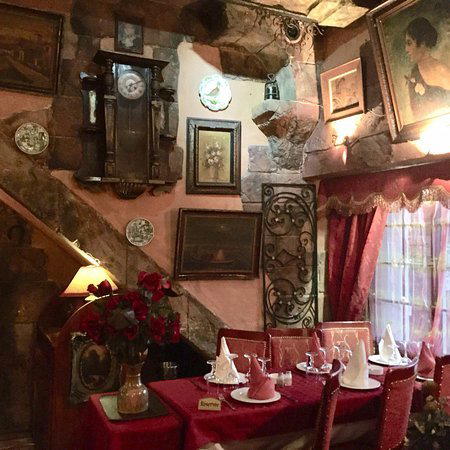
Bars in Fontevraud-l'Abbaye
Browse all →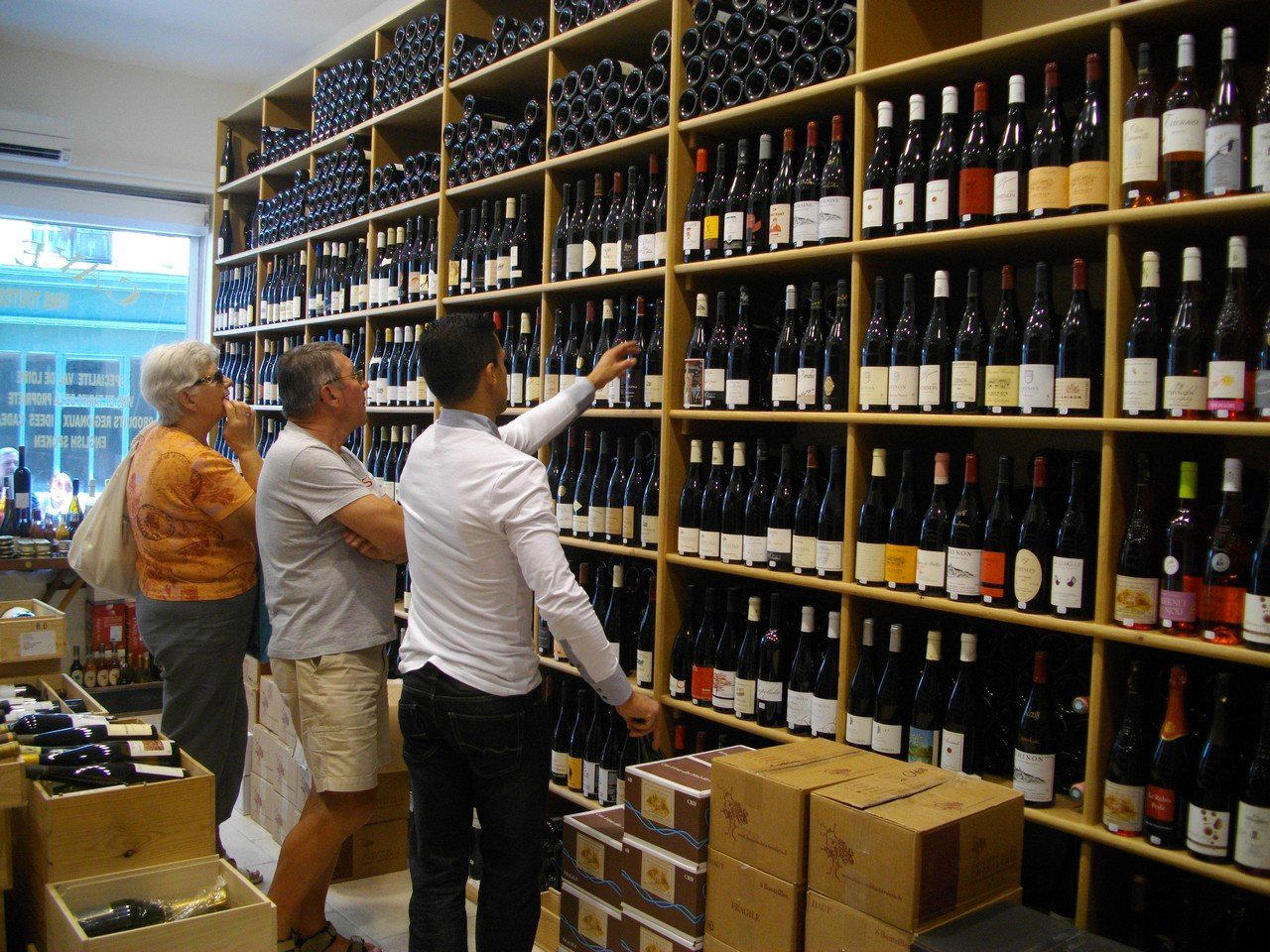
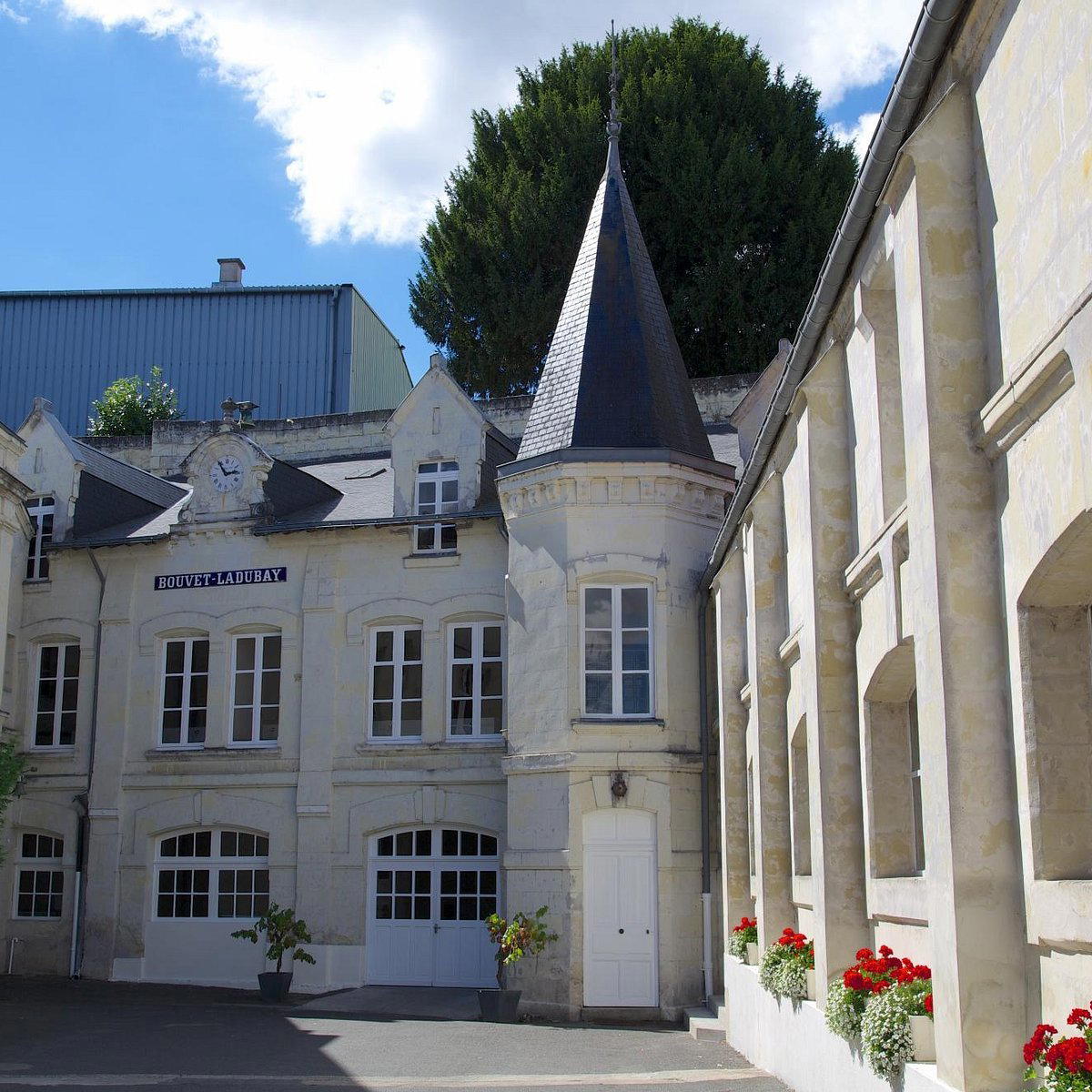
Hotels in Fontevraud-l'Abbaye
Browse all →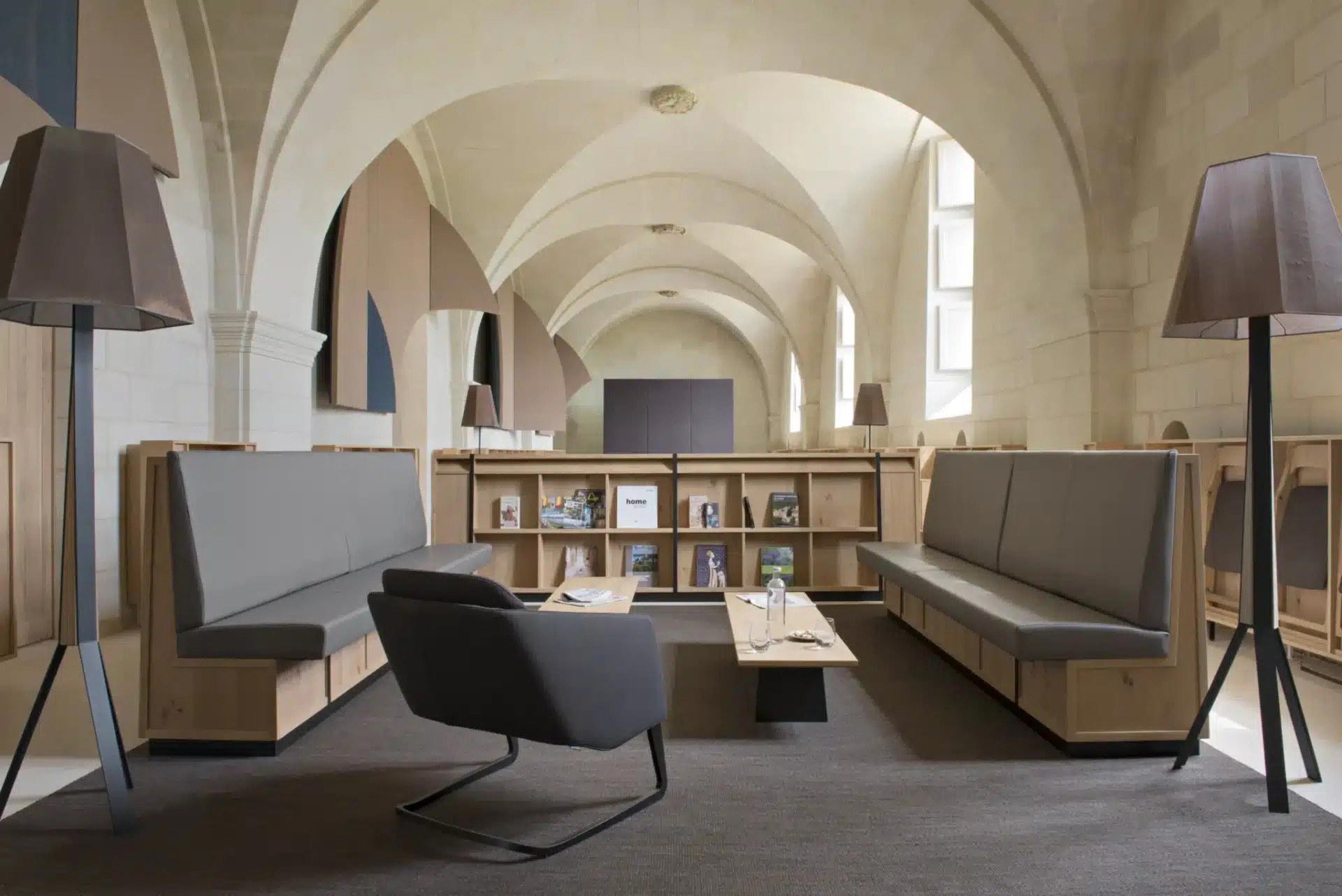

Details
- Elegant
- Sophisticated
- Special Occasion
- Date Night
- Historic Building
- Hotel Restaurant
- Extensive Wine List
- Sommelier Led
- Local Sourcing
- Farm To Table
- Tasting Menu
- Prix Fixe
Current opening hours
- Monday
- Closed
- Tuesday
- Closed
- Wednesday
- 7–9:30 PM
- Thursday
- 7–9:30 PM
- Friday
- 7–9:30 PM
- Saturday
- 12–1:30 PM, 7–9:30 PM
- Sunday
- 12–1:30 PM, 7–9:30 PM
Hours can change for holidays and private events. Last verified .
Serene and elegant monastic atmosphere blending historical architecture with contemporary design, warm and intimate lighting in the cloister setting.