
Gault & Millau Exceptional Hotel
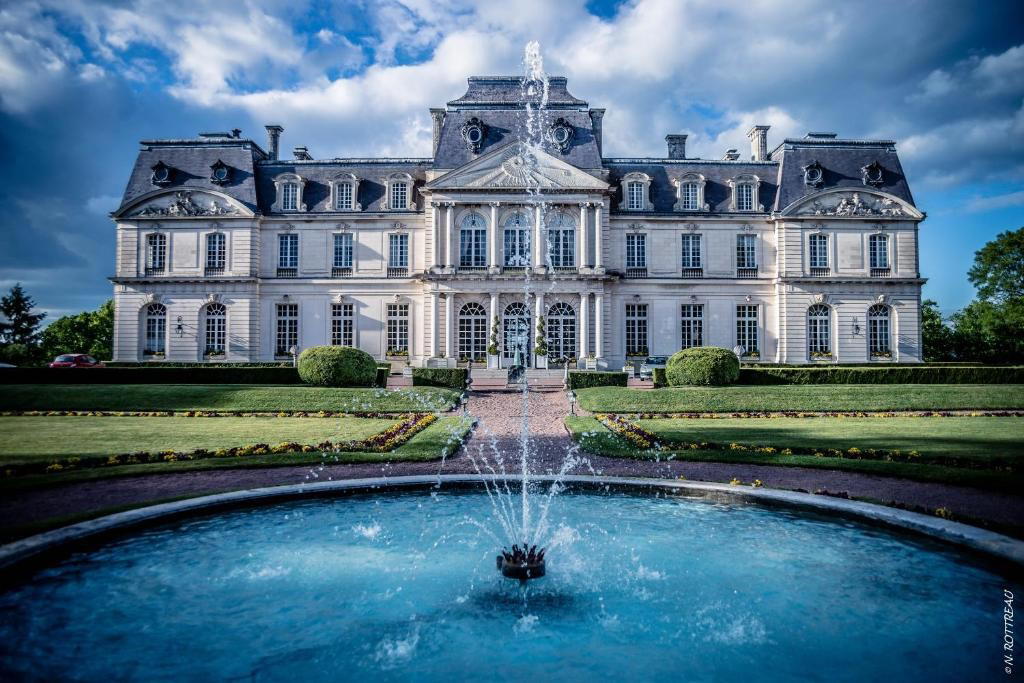
Château d'Artigny sits on a commanding ridge above the Indre valley outside Montbazon, a full-scale Loire château built in the early twentieth century and awarded Exceptional Hotel status by Gault & Millau in 2025. The architecture is the experience here: colonnaded facades, formal gardens, and interiors scaled to the grand tradition of the French aristocratic house. It is one of the more architecturally serious château-hotels in the Loire Valley.

Pearl is the En Primeur Club membership app, where members save venues, book tables and use the concierge.
A Château Built for Permanence
The Loire Valley has accumulated château-hotels the way other regions accumulate boutique inns, but there is a meaningful distinction between properties that occupy historic fabric and those that were purpose-built to command attention. Château d'Artigny belongs to the second category. The building was constructed in the early twentieth century on a ridge above the Indre river valley near Montbazon, designed in the classical French style with the full vocabulary of the period: colonnaded stone facades, a formal forecourt, steeply pitched rooflines, and grounds laid out with the geometric discipline of the grande tradition. The effect, approaching along the estate drive, is less of stumbling upon a relic than of arriving at something that was always meant to be seen from a distance.
That architectural confidence is the organizing principle of the property. Unlike many Loire château conversions, where the historic shell must accommodate the compromises of hospitality, Artigny's interiors were scaled from the beginning for reception and ceremony. The proportions are generous without being oppressive: high ceilings, tall windows that orient rooms toward the valley and the formal gardens, and a spatial sequence that moves guests through the building rather than depositing them in it. For a category of property, the grand château-hotel, where period detail often becomes backdrop, the architecture here remains the actual subject.
France's château-hotel tier has expanded considerably over the past two decades, with properties ranging from intimate maison d'hôtes in restored outbuildings to full-scale palaces holding several dozen rooms. Château d'Artigny operates at the formal end of this spectrum, with a scale and architectural ambition that places it in a comparatively small peer group within the Loire Valley itself. Gault & Millau's award of Exceptional Hotel status in 2025, carrying a five-point designation, positions it among properties that the guide's evaluators judge to have crossed from very good to genuinely notable, a threshold that fewer Loire properties reach than the region's general prestige might suggest.
The Loire Valley corridor between Tours and Chinon holds several recognized château properties, but the architectural grammar varies considerably across them. Some are medieval in origin, with the constraints of fortified construction determining room configurations and circulation; others are Renaissance or early classical, with interiors that reward close attention to carved detail but rarely deliver the spatial grandeur that a nineteenth or early twentieth century building can achieve. Artigny's early twentieth century construction date is, paradoxically, an architectural advantage: it gave the builders access to all the historical references they wished to deploy, without the structural compromises of adapting genuinely ancient fabric.
In the broader map of French château-hotel hospitality, the comparison points extend beyond the Loire. Properties like Domaine Les Crayères in Reims occupy a similar architectural register, where the building itself carries the editorial argument. Château du Grand-Lucé in Le Grand-Lucé operates in the same Loire region and offers a counterpoint in scale and era. Further afield, Château de Montcaud in Sabran and Château de la Gaude in Aix-en-Provence illustrate how the French château-hotel tradition translates across different regional contexts, each with its own architectural vocabulary. What Artigny retains that several peers have softened is the commitment to formal scale without apology.
Gardens and Setting as Extension of the Architecture
French formal garden design operates on the assumption that the landscape is a continuation of the architecture, not a separate category of experience. The grounds at Château d'Artigny follow this logic: the geometric parterre layout, the sight lines from principal rooms to the gardens and the valley beyond, and the management of the estate's refined position above the Indre all read as deliberate compositional decisions rather than inherited accidents of topography. The ridge location gives the property an aspect that most Loire valley châteaux, positioned closer to the river plain for practical historic reasons, cannot replicate.
This is worth noting because the Loire Valley's appeal to visitors has always been partly architectural and partly landscape. The valley was designated a UNESCO World Heritage Site in 2000 specifically for the combination of built heritage and cultural landscape, and the most coherently experienced château properties are those where building and setting form a legible relationship. The position and formal garden layout at Artigny make that relationship explicit in a way that reinforces the architectural argument of the building itself.
Montbazon and the Southern Touraine
Montbazon sits roughly twelve kilometres south of Tours, in the southern Touraine where the Indre river joins the broader Loire drainage system. The town itself is modest, with the ruins of a medieval keep on a nearby promontory marking its historic position as a fortified crossing point. For visitors arriving from Tours, the approach via the D910 takes under twenty minutes by car; the nearest high-speed rail connection is Tours itself, which sits on the Paris-Bordeaux TGV corridor and receives trains from Paris Montparnasse in approximately an hour. That accessibility from Paris, combined with the relative quiet of the southern Touraine compared to the more heavily visited Chambord-Amboise axis to the northeast, gives the Montbazon area a different character from the Loire's most trafficked tourist zone.
For those building a broader Loire itinerary, the southern Touraine offers wine appellations including Chinon and Bourgueil within a short drive, and the town of Loches preserves one of the most complete medieval ensembles in the region. Artigny's position makes it a workable base for this territory, though the property's own scale and architecture tend to anchor guests rather than function purely as a convenient overnight stop.
For context on what the French provinces' competitive set looks like at the top tier more broadly, properties including Baumanière Les Baux-de-Provence in Les Baux, Les Sources de Caudalie in Bordeaux, La Bastide de Gordes in Gordes, and Château Lafaurie-Peyraguey in Sauternes illustrate how the category plays out across different French regions, each with distinct architectural identities. The Royal Champagne Hotel & Spa in Champillon and Château de la Chèvre d'Or in Èze represent further reference points for how setting and architecture interact in the French grand hotel tradition.
Planning a Stay
The Gault & Millau Exceptional Hotel designation confirmed in 2025 adds institutional verification to that pattern. Guests considering the Loire Valley in spring or early autumn will find the gardens and valley setting at their most photogenic; summer brings higher demand from the broader French tourism circuit, and the property's formal scale means it absorbs larger groups without the intimacy collapse that affects smaller maison d'hôtes in high season. Direct contact via the property address at 92 Rue de Monts, 37250 Montbazon, is the appropriate booking route; a visit to our full Montbazon restaurants guide provides broader context on dining options in the area for guests planning time beyond the estate itself.
For those weighing a Loire stay against France's other grand château-hotel options, the comparison set is worth mapping carefully. Properties like Cheval Blanc Paris operate at a different scale of urban luxury, while coastal alternatives including Hotel Du Cap-Eden-Roc in Cap d'Antibes, La Réserve Ramatuelle, and Airelles Saint-Tropez Château de la Messardière offer the Riviera and Var register. The Loire's particular proposition, architecture embedded in a UNESCO-designated cultural landscape, is what Château d'Artigny argues most directly through its building, its grounds, and its position above the Indre.
How It Stacks Up
Comparable venues nearby, for context on price, style, and recognition.
| Venue | Cuisine | Awards | Notes |
|---|---|---|---|
| Château d'ArtignyThis venue (the venue you are viewing) | Belle Époque château in classic 18th-century French style with formal symmetry and grandeur. | Gault & Millau Exceptional Hotel | Not listed |
| COMO Cordeillan-Bages | Luxury wine‑country château hotel blending Médoc heritage with COMO’s contemporary, high‑touch hospitality. | Not listed | Pauillac / Bages (Médoc, Bordeaux Left Bank) |
| Alexandra Palace - La Maison Younan | Luxurious historic château with modern comforts in a 70-hectare wooded park. | 5-Star | Mazières-en-Gâtine |
| Auberge du Bon Laboureur | Cluster of five historic character houses offering intimate 5-star comfort | Michelin Selected | Chenonceaux |
| Cures Marines Trouville Hôtel Thalasso & Spa - MGallery | Historic seafront luxury resort with contemporary renovations | Michelin Selected · Gault & Millau Exceptional Hotel | Trouville-sur-Mer |
| Villa-des-Prés | Contemporary Parisian luxury boutique hotel housed in a post-Haussmann 1911 apartment building, designed as a private mansion with character and discretion. | 1 Michelin Key | Saint-Germain-des-Prés |
Recognition history
Dated appearances from independent guides and award organizations, with the underlying list record or original source where available.
Gault & Millau Exceptional Hotel
Gault & Millau
Continue exploring
More in Montbazon
Hotels in Montbazon
All hotels in Montbazon →
Bars in Montbazon
All bars in Montbazon →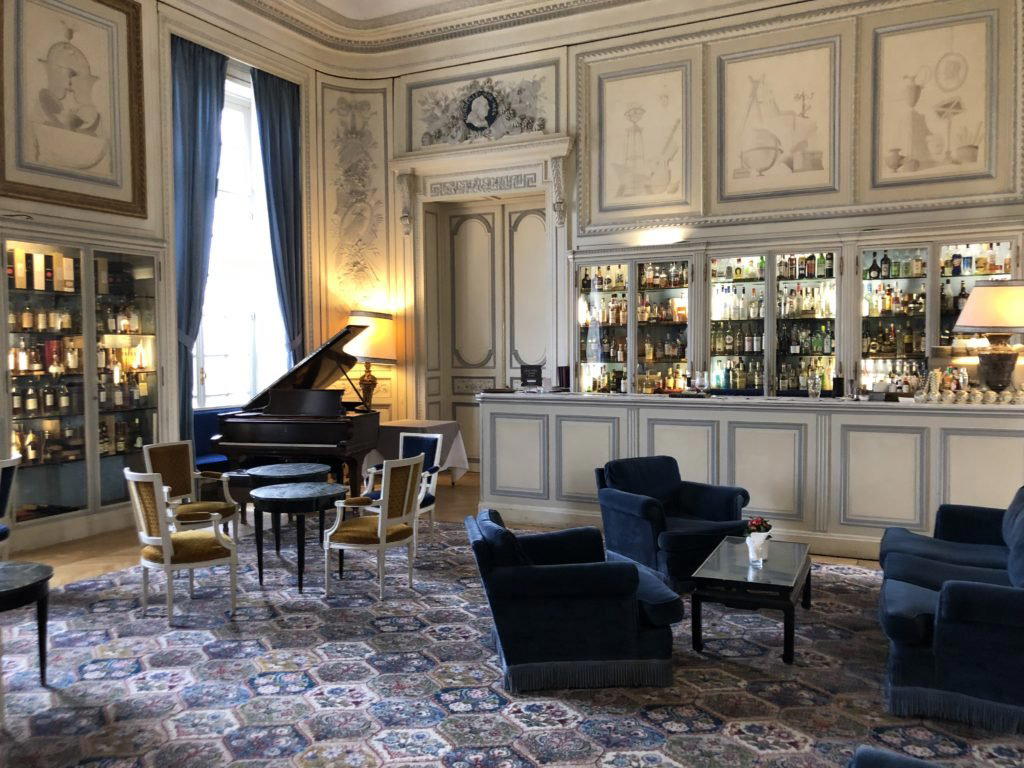
Restaurants in Montbazon
All restaurants in Montbazon →

Details
- Romantic
- Elegant
- Classic
- Scenic
- Sophisticated
- Ornate
- Romantic Getaway
- Honeymoon
- Anniversary
- Weekend Escape
- Historic Building
- Garden
- Panoramic View
- Pool
- Spa
- Sauna
- Massage
- Tennis Court
- Restaurant
- Bar
- Room Service
- Wi Fi
- Fitness Center
- Concierge
- Garden
- Elevator
- Wheelchair Accessible
Refined and enchanting atmosphere with elegant lighting, marble decor, wood paneling, and trompe-l'œil frescoes in a luxurious, historic setting.