Our verdict
Fong Mei sits on Van Arteveldestraat in Antwerp's Stuivenberg district, a neighbourhood where Chinese and Vietnamese communities have shaped a distinct dining corridor well outside the city's high-end restaurant belt. The address places it in a part of the city where price and presentation follow community standards rather than tourist expectations, making it a useful reference point for anyone mapping Antwerp's broader Asian dining scene.

Pearl is the En Primeur Club membership app — saves, bookings, and concierge access live there. Same editors, same standards.
- Address
- Van Arteveldestraat 65, 2060 Antwerpen, Belgium
- Phone
- +3232250654
- Hours
- Mon–Wed 12–10 PMThu ClosedFri–Sun 12–10 PM
- Website
- fongmei-antwerpen.be
- Directions
- Get directions
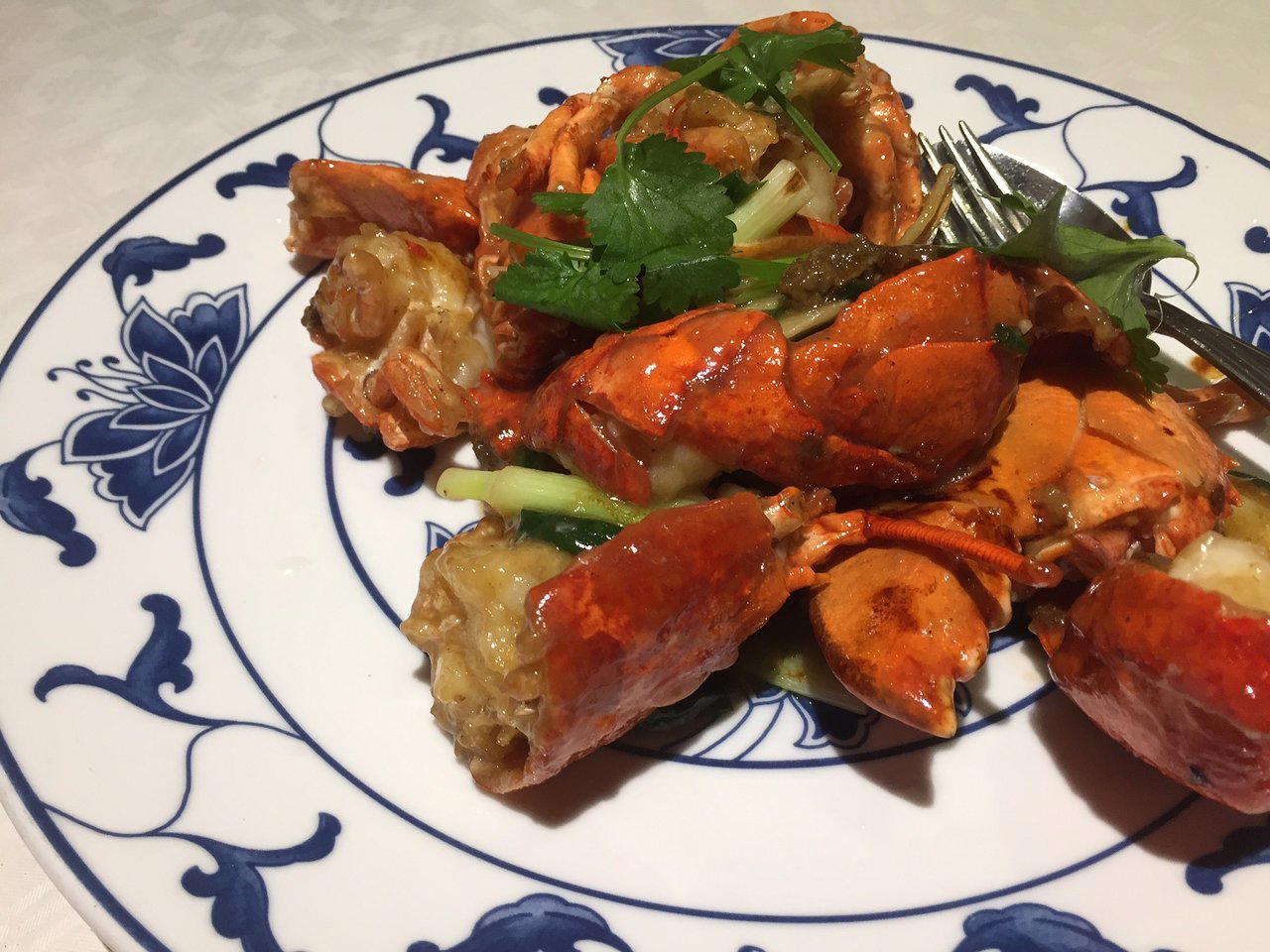
The menu
What to order
- Dim Sum
- Peking Duck
- Char Siew Bao
- Siew Mai
- Ha Kau
- Har Gow
- Cheong Fan
- Lo Mai Gai
Stuivenberg and the Shape of Antwerp's Asian Dining Quarter
Antwerp's restaurant reputation is anchored in the historic centre and along the Schelde waterfront, where addresses like Zilte and Hertog Jan at Botanic compete for the same Michelin-aware audience that also visits Hof van Cleve or Boury on a Flemish dining tour. Move north into Stuivenberg and the logic changes entirely. This is a post-industrial neighbourhood with a dense Chinese, Vietnamese, and Moroccan residential presence, and its food culture operates by a different set of rules: community pricing, utilitarian room design, and menus calibrated for regulars rather than visitors.
Van Arteveldestraat 65 sits inside that geography. Fong Mei occupies a street-level position in a district where Chinese supermarkets, Vietnamese bakeries, and modest canteen-style restaurants cluster within a few blocks of one another. The competitive set here is not 't Fornuis or Bistrot du Nord; it is the surrounding neighbourhood operations that serve the same community day after day. Understanding that context is the prerequisite for reading the experience accurately.
What the Neighbourhood Tells You Before You Enter
Stuivenberg is one of the least-visited districts among travellers who confine Antwerp to its cathedral quarter and diamond merchant streets, yet it holds a more textured cross-section of the city's actual population. The street pattern is tighter here, the building stock more varied, and the commercial strips reflect decades of successive migrant communities rather than any single wave of gentrification. Chinese restaurants in this part of Antwerp tend to serve Cantonese or broader southern Chinese formats, often alongside Vietnamese dishes that reflect the community overlap in Belgium's largest port city.
That overlap is significant. Belgium has a long-established Vietnamese diaspora, particularly in cities like Antwerp and Brussels, where restaurants frequently combine Chinese and Vietnamese menus under one roof, or pivot between cuisines depending on the cook and the customer. This is a different structural pattern from the specialist Chinese dining that has emerged in cities like London or Amsterdam, where Sichuan, Shanghainese, and Cantonese formats now occupy distinct market positions. In Antwerp's Stuivenberg, the model is more fluid and more community-focused.
For comparison, the Japanese dining segment in Antwerp follows a separate trajectory: DIM Dining operates in the €€€€ tier with a format aimed at the same audience that books Le Chalet de la Forêt in Brussels or Bozar Restaurant for a special occasion. Fong Mei operates in a register several tiers removed from that, which is precisely what makes the neighbourhood framing relevant.
Reading the Experience
Responsible editorial practice means not filling those gaps with invented specifics. What can be stated with confidence is the address, the neighbourhood character, and the broader category of dining that Stuivenberg supports.
That restraint is itself informative. In Belgian dining coverage, addresses in this postcode (2060) rarely appear in the mainstream food press that covers Vrijmoed in Gent or Willem Hiele in Oudenburg. That does not diminish its relevance; it defines it.
For readers who have already worked through the reference addresses in Antwerp's fine dining tier and are curious about the city's less-documented food geography, Stuivenberg represents a meaningful counterpoint. The density of Asian restaurants along and around Van Arteveldestraat makes the area worth a deliberate visit rather than a passing detour.
Antwerp's Broader Dining Structure and Where This Fits
Belgium produces a disproportionate number of high-end restaurants relative to its population: operations like d'Eugénie à Emilie in Baudour, La Durée in Izegem, Cuchara in Lommel, and Ralf Berendsen in Neerharen signal a national dining culture that takes technique seriously across a wide geographic spread. Antwerp's own contribution to that tier is well-documented in our full Antwerp restaurants guide.
What that guide also reflects is a city with substantial Asian dining activity that sits largely outside the award structures. In cities where this pattern has been studied more closely, such as San Francisco (see Lazy Bear for a reference point on how city dining can bifurcate sharply by format and audience) or New York (where Le Bernardin occupies a position entirely removed from the outer-borough community dining scene), the gap between award-circuit restaurants and neighbourhood institutions is wide and structural. Antwerp follows a similar pattern, and Stuivenberg is where that gap is most visible.
The implication for a visitor: if you are building an Antwerp itinerary that includes a formal dinner at a Michelin-recognised address, adding a lunch or early dinner in Stuivenberg gives you a more complete reading of the city's food culture. The two experiences are not substitutes for one another; they are different instruments measuring different things.
Planning a Visit
Fong Mei is located at Van Arteveldestraat 65, 2060 Antwerp, in the Stuivenberg district north of the city centre. Community-oriented restaurants in this postcode typically operate on a walk-in basis, but hours can be irregular, particularly mid-week. The surrounding streets offer additional options if timing does not align, making the area worth building a broader neighbourhood visit around rather than a single-destination trip.
Frequently asked questions
Is Fong Mei suitable for children?
For a neighbourhood restaurant in Antwerp's Stuivenberg district, at a non-premium price point, children are generally accommodated without issue.
Is Fong Mei formal or casual?
This is a casual address. Antwerp has a well-developed formal dining tier, with award-recognised operations demanding a different register entirely; Fong Mei's Stuivenberg location places it at the opposite end of that spectrum, and standard city-casual dress is appropriate.
What should I eat at Fong Mei?
Stuivenberg's Chinese and Vietnamese restaurants generally perform well on roasted meats, noodle soups, and rice plates; approach the menu with that context in mind and follow the staff's direction on house strengths.
Do I need a reservation for Fong Mei?
If the restaurant operates as a typical Stuivenberg neighbourhood address, walk-ins are likely the standard approach.
How does Fong Mei fit into Antwerp's wider Asian dining scene?
Antwerp's Chinese and Vietnamese dining activity is concentrated in the Stuivenberg and Borgerhout districts, where community restaurants have operated for several decades alongside the city's diamond-trade Asian population. These addresses sit in a separate tier from Antwerp's Japanese-influenced fine dining operations and receive little mainstream food-press coverage despite serving a consistent local clientele. Fong Mei's Van Arteveldestraat location positions it within that community corridor rather than the tourist or award-circuit dining map.
Cost Snapshot
Comparable options at a glance, pulled from our tracked venues.
| Venue | Cuisine | Price | Awards | Notes |
|---|---|---|---|---|
| Fong MeiThis venue — the venue you are viewing | Authentic Cantonese Dim Sum | $20–30 | Not listed | Not listed |
| Hertog Jan at Botanic | Modern Japanese Omakase Fine Dining | Not listed | 2 Michelin Stars · La Liste Top Restaurants | Modern Flemish, Creative |
| Bistrot du Nord | Classic French Bistro | $100–150 | 1 Michelin Star | French, Traditional Cuisine |
| DIM Dining | Modern Asian Fine Dining | Not listed | 1 Michelin Star · Wine Spectator Best of Award of Excellence | Japanese, Asian |
| Dôme | Modern French Fine Dining | $100–150 | Michelin Plate · Star Wine List | Modern French, Classic French |
| Fine Fleur | Michelin-Starred French Fine Dining | Not listed | 1 Michelin Star · Star Wine List | Modern European, Creative |
Details
- Classic
- Cozy
- Lively
- Group Dining
- Brunch
- Casual Hangout
- Celebration
- Beer Program
- Family Style
- A La Carte
- Tsingtao Beer
- Chinese Tea
- Vegetarian Friendly
Current opening hours
- Monday
- 12–10 PM
- Tuesday
- 12–10 PM
- Wednesday
- 12–10 PM
- Thursday
- Closed
- Friday
- 12–10 PM
- Saturday
- 12–10 PM
- Sunday
- 12–10 PM
Hours can change for holidays and private events. Last verified .