


1 Michelin Star · Wine Spectator Best of Award of Excellence
Our verdict
A Michelin-starred counter restaurant on Vrijdagmarkt where chef Simon van Dun applies Japanese technique to local Flemish ingredients, producing a menu that holds Opinionated About Dining recognition and a house sake program overseen by sommelier Jonas Kellens. The counter seats face an open kitchen, and the format rewards diners who want to watch the logic of each plate unfold in real time.
The menu
What to order
- Wagyu_beef
- Duck
- Langoustines
Counter Intelligence: How DIM Dining Reads at the Table
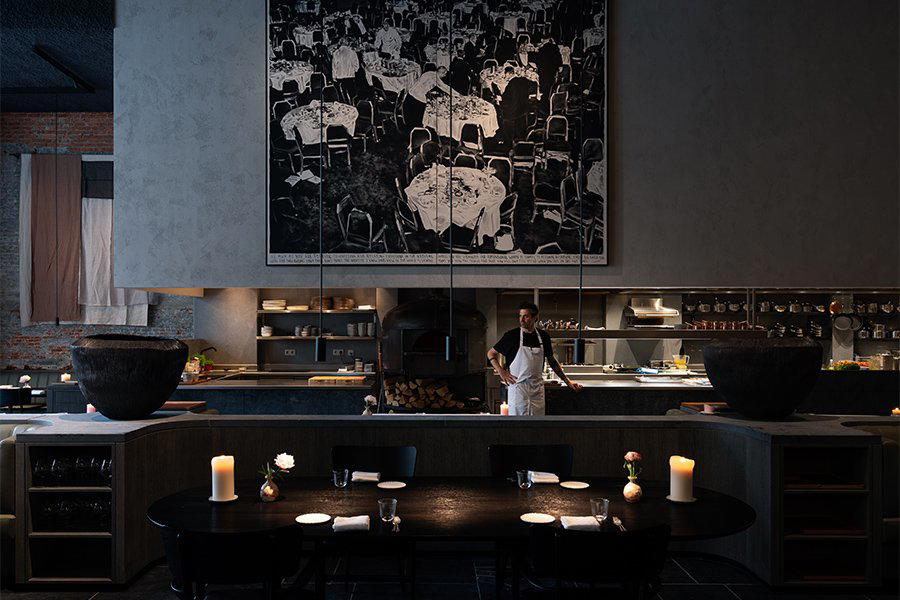
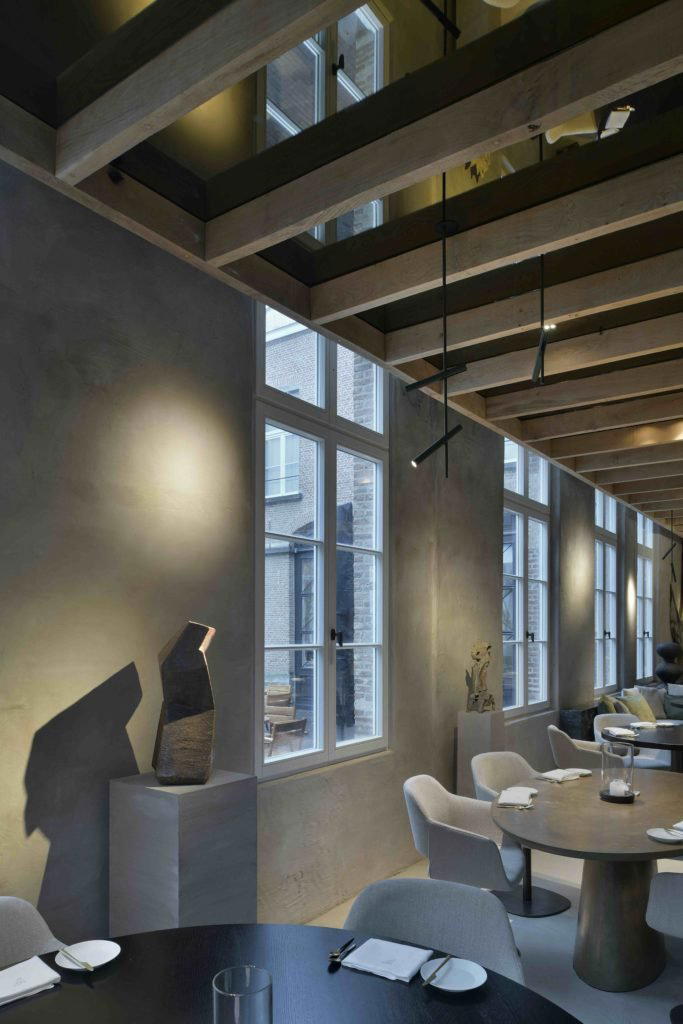
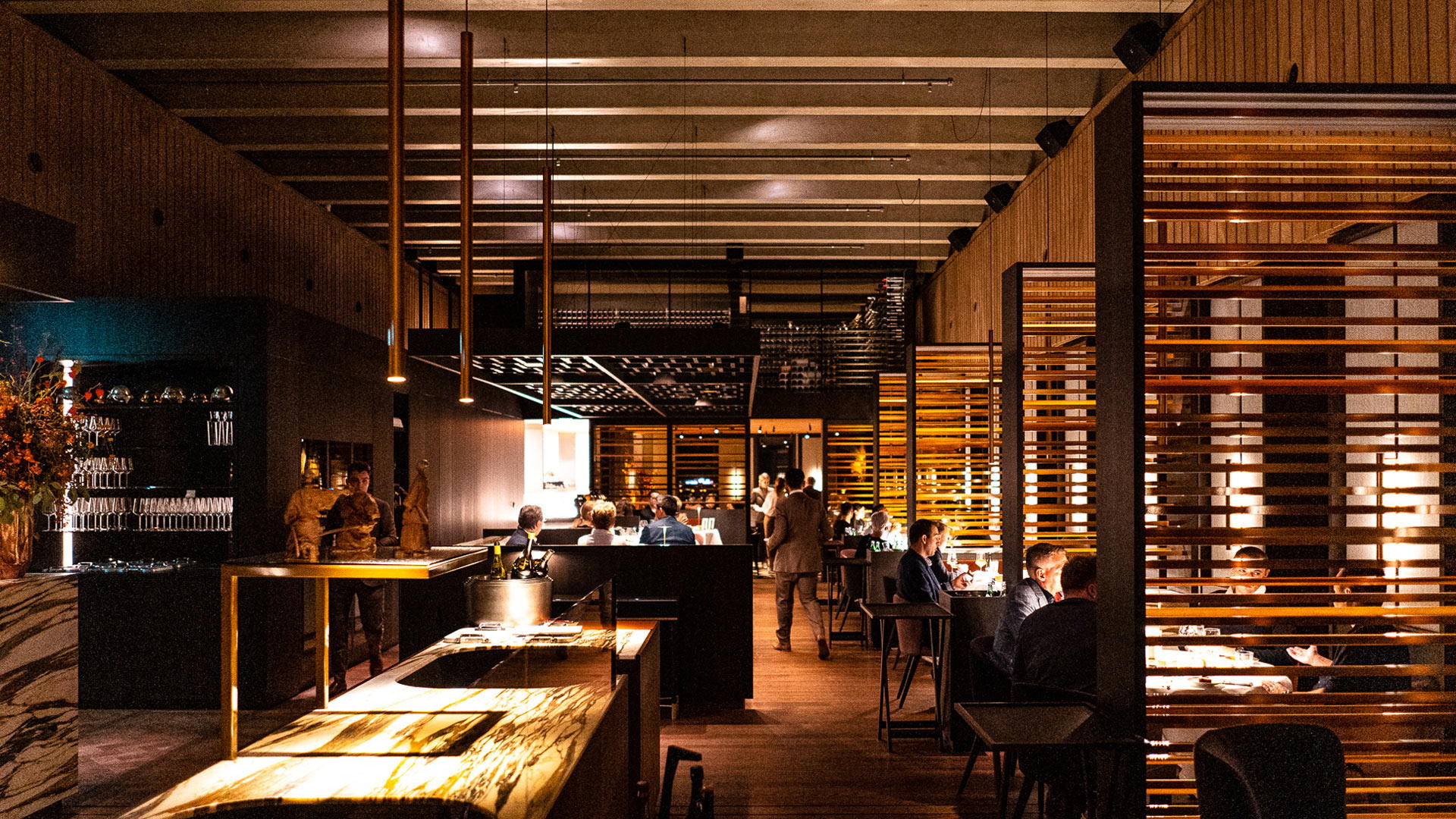
Vrijdagmarkt, one of Antwerp's older public squares, has long carried the civic weight of a market district rather than a fine-dining address. That tension between setting and ambition is part of what makes DIM Dining's format so readable the moment you step inside. The room operates on a logic closer to a Japanese kappo kitchen than a European tasting-menu house: the counter is where the meal actually happens, and everything in the design reinforces that hierarchy. Pale materials, deliberate lighting, and the controlled noise of a small kitchen at work replace the tableclothed formality that defines most of Antwerp's starred tier. You arrive knowing this will not feel like dinner at 't Fornuis or Dôme.
The Architecture of the Menu
DIM Dining's menu is structured around a single productive contradiction: the techniques and sequencing are Japanese, but the raw materials are emphatically local. Chef Simon van Dun uses the counter format to make that argument visible rather than just asserting it on a printed card. Watching the kitchen work, you see the pacing of a Japanese omakase service applied to ingredients that are sourced from the Flemish hinterland and the surrounding Belgian larder. That structural decision separates DIM from the European restaurants that deploy Asian aesthetics decoratively. Here the influence shapes the actual logic of how a dish is assembled and how courses follow one another.
The specific example in the public record is instructive. A whole duck, basted continuously in wagyu fat, arrives medium-rare, its richness cut by a gravy built from duck juices and dark ale from the Brussels-based OWA brewery, accompanied by fresh vegetables. The composition illustrates the menu's operating principle: a Japanese approach to fat management and protein treatment, applied to a bird sourced locally, finished with a Belgian brewing ingredient as the acidic and bitter counterweight. It is a dish with a clear internal argument, and the counter format means the diner can follow that argument from prep through plating. The structure of the menu is, in this sense, the menu's primary content.
This architecture places DIM in a specific niche within Antwerp's starred cohort. Hertog Jan at Botanic works a Flemish-modernist register with two Michelin stars; Bistrot du Nord occupies the traditional French single-star position. DIM's one Michelin star, awarded in 2025, and its back-to-back Opinionated About Dining rankings (Recommended for New Restaurants in 2023, #437 in Europe in 2024, #414 in 2025) describe a restaurant that has been consistently building rather than plateauing. Among Belgian peers with similar cross-cultural intent, the trajectory maps more closely to places like Boury in Roeselare or Willem Hiele in Oudenburg than to the classic Antwerp fine-dining address.
The Wine and Sake Program as a Second Menu
In the international counter-dining conversation, the drink pairing is often treated as subordinate to the food. DIM makes a different argument. Jonas Kellens, the sommelier and certified sake master on the floor, operates a program that functions as its own editorial layer over the kitchen's output. The pairing documented in public descriptions, a 1984 All Koji sake alongside the wagyu-basted duck, demonstrates a willingness to reach into aged and unconventional sake categories rather than defaulting to direct wine matches. This is not a house that uses sake as a novelty signal. It is used structurally, the way a serious wine director uses an old Burgundy, to add time and complexity to a dish's finish.
The broader list holds 485 selections across 4,950 inventory units, with France, California, and Italy identified as the primary strengths. Pricing runs into the premium tier, with significant representation of bottles above the €100 mark. For a restaurant operating at €€€€ on the cuisine side, this is a list built to match rather than to recoup margin at the lower end. The corkage fee is set at €50, which is on the higher end for Antwerp but consistent with a house that has invested in inventory depth. For diners with specific bottle targets, bringing something outside the list is viable, but the pairing program, given Kellens's sake credentials, is worth using as the primary lens.
DIM Within the Broader Belgian Fine-Dining Map
Belgium's restaurant culture has historically concentrated prestige in the Flemish countryside rather than its urban centres. Addresses like Hof van Cleve in Kruishoutem, Bartholomeus in Heist, and Castor in Beveren reflect a pattern where destination dining often requires leaving the city. DIM is part of a smaller but growing cohort of Antwerp restaurants that have absorbed the same level of critical attention without moving to a rural format. Zilte, operating from the best of the MAS museum, represents one version of urban ambition in Antwerp's starred tier. DIM represents a different geometry: smaller, counter-focused, and built around a cuisine logic that does not exist elsewhere in the city at this recognition level.
The comparison with Japanese-inflected fine dining in other European cities is worth making. Restaurants that work the same cross-cultural seam, applying Japanese structure to local European ingredients, have become a distinct category in London, Paris, and Copenhagen. Atomix in New York provides a reference point for the counter-forward Korean-inflected version of this approach, and Le Bernardin shows what sustained single-minded focus on a cuisine logic produces over decades. DIM is operating at an earlier stage of that trajectory, but the OAD ranking movement and Michelin recognition suggest the direction is consistent. For completeness on the Brussels axis, Bozar Restaurant offers a different register of Belgian fine dining worth knowing alongside this one.
Planning Your Visit
The operating schedule at DIM Dining is intentionally compressed. The restaurant is closed Sunday through Wednesday. On Thursday, service runs dinner only, from 7 to 10 pm. Friday and Saturday offer a lunch window from noon to 1:30 pm as well as dinner sittings at 7 to 8 pm. The limited hours and counter format mean that advance booking is not optional at this address: available seats move quickly, particularly for Friday and Saturday dinner. The Vrijdagmarkt address sits in central Antwerp and is accessible on foot from the main shopping and hotel districts. For accommodation context, our full Antwerp hotels guide covers the city's options across tiers. Diners who want to build an evening around the neighbourhood would do well to check our Antwerp bars guide for options within walking distance before or after service.
Price range sits at €€€€ on the cuisine side, consistent with its one-Michelin-star peers in the city. For full context on how DIM fits within Antwerp's broader dining map, our full Antwerp restaurants guide maps the city's starred and notable houses across cuisine types. Those planning a wider Antwerp stay can also reference our wineries guide and our experiences guide for the fuller picture.
Frequently asked questions
at DIM Dining?
DIM Dining operates a set menu format, so individual ordering is not the structure. The menu's internal logic, Japanese technique applied to local Belgian ingredients, means the most productive approach is to follow the full sequence and engage with the drink pairing program. Sommelier and sake master Jonas Kellens's pairings, particularly in the sake register, add a layer of interpretation to each course that a wine-only pairing would miss. If you are attending for lunch on Friday or Saturday, the format will differ from dinner in pace and potentially in scope, so confirm the current menu structure when booking. The counter seats facing the kitchen give the clearest view of how each plate is assembled, which is material to understanding the menu's argument rather than just tasting the output.
Where the Accolades Land
| Venue | Cuisine | Price | Awards | Notes |
|---|---|---|---|---|
| DIM DiningThis venue (the venue you are viewing) | Modern Asian Fine Dining | Not listed | 1 Michelin Star · Wine Spectator Best of Award of Excellence | Not listed |
| Hertog Jan at Botanic | Modern Japanese Omakase Fine Dining | Not listed | 2 Michelin Stars · La Liste Top Restaurants | Modern Flemish, Creative |
| 't Fornuis | Classic French-Belgian Fine Dining | $100–150 | 1 Michelin Star | European-Flemish, Classic Cuisine |
| Bistrot du Nord | Classic French Bistro | $100–150 | 1 Michelin Star | French, Traditional Cuisine |
| Dôme | Modern French Fine Dining | $100–150 | Michelin Plate · Star Wine List | Modern French, Classic French |
| Fine Fleur | Michelin-Starred French Fine Dining | Not listed | 1 Michelin Star · Star Wine List | Modern European, Creative |
Recognition history
Dated appearances from independent guides and award organizations, with the underlying list record or original source where available.
Michelin 1 Star
Michelin
Opinionated About Dining Top Restaurants in Europe Recommended
Opinionated About Dining
Wine Spectator Best of Award of Excellence
Wine Spectator
Full recognition history (7 entries)
Opinionated About Dining Top Restaurants in Europe Ranked #414
Opinionated About Dining
Michelin 1 Star
Michelin
Opinionated About Dining Top Restaurants in Europe Ranked #437
Opinionated About Dining
Opinionated About Dining Top New Restaurants in Europe Recommended
Opinionated About Dining
Continue exploring
More in Antwerp
Restaurants in Antwerp
All restaurants in Antwerp →
Bars in Antwerp
All bars in Antwerp →
DIM Dining
The wine
DIM Dining holds the Wine Spectator Best of Award of Excellence, which Wine Spectator gives to lists of usually 350 or more selections.
- Wine program
- Deep wine list
- Wine Spectator
- Wine Spectator Best of Award of Excellence
- Selections
- 485
- Bottles in cellar
- 4,950
- List strengths
- France, California, Italy
- Wine director
- Tyler Wesslund
- Sommelier-led
- Sake program
Details
- Elegant
- Intimate
- Modern
- Sophisticated
- Minimalist
- Date Night
- Special Occasion
- Chefs Counter
- Open Kitchen
- Sake Program
- Sommelier Led
Current opening hours
- Monday
- Closed
- Tuesday
- 7–8 PM
- Wednesday
- 12–1:30 PM, 7–8 PM
- Thursday
- 12–1:30 PM, 7–8 PM
- Friday
- 12–1:30 PM, 7–8 PM
- Saturday
- 12–1:30 PM, 7–8 PM
- Sunday
- Closed
Hours can change for holidays and private events. Hours as of .
Restful and confidential with Japanese minimalism blended with Western luxury, calm and cozy vibe, modern and serene interior.