"A Breakfast That Satisfies Breakfasts in Mexico are a lot more interesting than eggs and toast. Start with a cafe de olla (coffee made in a clay pot with brown sugar and cinnamon) or hot chocolate with bread to dunk in it, then move on to the main course. A lot of the popular Mexican breakfast dishes are tortilla-based. These chilaquiles are made with crispy fried tortillas that are drowned in spicy tomato sauce and topped with queso fresco, onion and parsley. A breakfast like this will give you plenty of energy for a day of sightseeing. The markets in Oaxaca offer great breakfast options, especially if you're looking for a large meal that will fill you up and keep you satisfied until the late lunch that is customary in Mexico. The Mercado de la Merced has a few good options, including Fonda Florecita and Fonda Rosita, which both offer delicious breakfasts."
Pearl is the En Primeur Club membership app — saves, bookings, and concierge access live there. Same editors, same standards.
- Address
- Democracia 18, PRIMERA ETAPA, Ricardo Flores Magon, 68025 Oaxaca de Juárez, Oax., Mexico
- Phone
- +52 951 515 5160
- Directions
- Get directions
 Saves & bookings on Pearl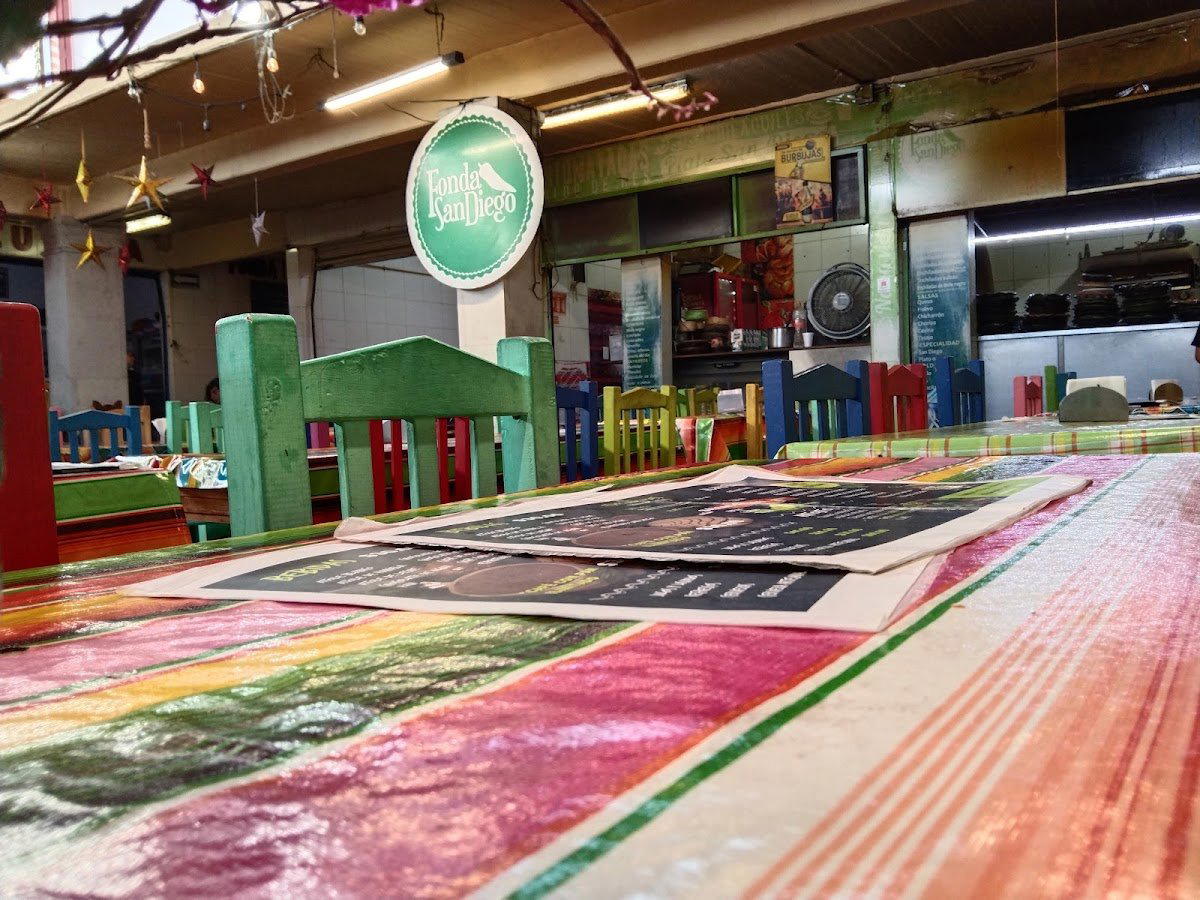
Where the Street Meets the Table in Ricardo Flores Magon
The colonia of Ricardo Flores Magon sits a few blocks outside the polished centro of Oaxaca City, where the tourist density thins and the streets settle into a quieter residential rhythm. Fonda Rosita occupies an address on Democracia 18 within this neighbourhood, and that location is itself a signal about what kind of eating this is. Fondas, as a category, are among the most structurally honest formats in Mexican food culture: short menus, daily rotation, cooking calibrated to what arrived at market that morning rather than to a fixed brand identity. The fonda model predates the restaurant as most travellers understand it, rooted in the comida corrida tradition where a set sequence of small courses arrives at midday for a price that reflects the economics of a neighbourhood, not a tourism premium.
Reading the Menu as a Document
At a fonda, the menu is less a list of choices than a daily statement of intent. The comida corrida format, which dominates the midday service at establishments of this type across Oaxaca, typically moves through a sopa aguada (a brothy soup course), a sopa seca (a dry pasta or rice dish), a main protein course, and often a small dessert or agua fresca to close. That architecture is not arbitrary. Each course performs a function: the aguada opens the appetite and hydrates; the seca provides starch; the main anchors the meal. What changes daily, and what distinguishes one fonda from another, is the interpretation of those fixed positions. In a city where mole negro, coloradito, and amarillo are everyday cooking rather than special-occasion dishes, the main course slot at a fonda can carry real culinary weight. Oaxaca's seven canonical moles are not museum pieces in this context; they are working sauces that appear on neighbourhood tables throughout the week.
This is the lens through which Fonda Rosita reads most clearly. The address in a residential colonia, the fonda designation in the name, the format of the space as implied by the neighbourhood: all of it points toward cooking that is structured around repetition and refinement rather than novelty. The most demanding test of a fonda kitchen is consistency. Unlike a tasting menu kitchen where each dish can be engineered in advance, fonda cooking operates on volume and timing, producing multiple courses simultaneously for a lunch crowd that expects speed alongside substance. Oaxacan fondas that earn local loyalty do so by maintaining that standard across weeks and months, not by executing a single celebrated dish.
Oaxaca City's Neighbourhood Eating Tier
Oaxaca City's dining attention clusters heavily around the centro historico and a handful of streets adjacent to the Zocalo, where restaurants such as Catedral Restaurant and Bar Jardin Zocalo operate within sight of colonial architecture and heavy foot traffic. A second tier of the city's food culture exists in the colonias, where places like Fonda Rosita serve primarily local residents and the smaller proportion of travellers who follow addresses rather than tourist maps. This tier is where Oaxacan cooking is most legible as a daily practice rather than a curated experience. The contrast with the more design-led end of the city's offer, which includes spots like Boulenc and Cafe Los Cuiles, is pronounced. Those venues interpret Oaxacan ingredients through a contemporary or specialty-coffee lens; a fonda operates from an entirely different premise, where the cooking exists to feed the neighbourhood efficiently and honestly.
For travellers whose frame of reference extends to Mexico City's more technically ambitious end, such as Pujol, or to the coastal and northern fine dining circuits represented by Le Chique in Puerto Morelos, KOLI Cocina de Origen in Monterrey, or Alcalde in Guadalajara, the fonda format sits at a deliberately different point on the spectrum. It is not attempting what those kitchens attempt. Its ambition is compression and tradition rather than innovation or tasting-menu depth. Internationally, the comparison would be to the kind of worker's lunch format that still survives in Lyon's bouchons or in Rome's trattorie, where the value lies in the codified structure and the quality of execution within tight parameters, not in the breadth of the offer. Venues like Le Bernardin in New York City or Lazy Bear in San Francisco represent the opposite end of that ambition axis, which is context worth holding when calibrating expectations.
Casa Crespo and the Broader Oaxacan Tradition
Visitors who want to sit between the fonda tier and the contemporary cooking end of Oaxaca's offer might look to Casa Crespo, which bridges traditional technique with a more curated format. Similarly, Levadura de Olla Restaurante has built a specific reputation around wood-fire and clay-pot Oaxacan cooking in a more composed setting. Fonda Rosita occupies a different slot entirely, and the category distinction matters. Understanding the fonda as a format, rather than treating it as an underdeveloped version of a restaurant, is the prerequisite for getting the most out of it. Elsewhere in Mexico, operations like Animalón in Valle de Guadalupe, Olivea Farm to Table in Ensenada, Lunario in El Porvenir, HA' in Playa del Carmen, and Pangea in San Pedro Garza Garcia each represent the country's more technically ambitious dining register. The fonda sits at the other pole: no reservations infrastructure, no tasting menu architecture, no celebrity chef narrative. What it offers instead is access to a cooking tradition that is harder to find as tourism pressure continues to reshape Oaxaca's centro.
Planning a Visit
Fonda Rosita operates, as fondas typically do, around the midday comida service, which in Mexico runs from roughly 1pm to 4pm and represents the main meal of the day rather than a light lunch. The address at Democracia 18 in the Ricardo Flores Magon colonia is accessible on foot from the centro, though the walk is longer than the distances between most frequently visited dining spots. Arriving early in the service window tends to give better access to the full range of daily dishes before popular plates sell out. For a fuller picture of where Fonda Rosita fits within the city's dining offer, see our full Oaxaca City restaurants guide.
At a Glance
- Rustic
- Classic
- Casual Hangout
- Solo
- Family
- Standalone
Casual, bustling market-stall atmosphere with a local, no-frills feel rather than a polished restaurant setting.
Know Before You Go
- Getting there
- Democracia 18, PRIMERA ETAPA, Ricardo Flores Magon, 68025 Oaxaca de Juárez, Oax., Mexico