
Michelin Plate
Our verdict
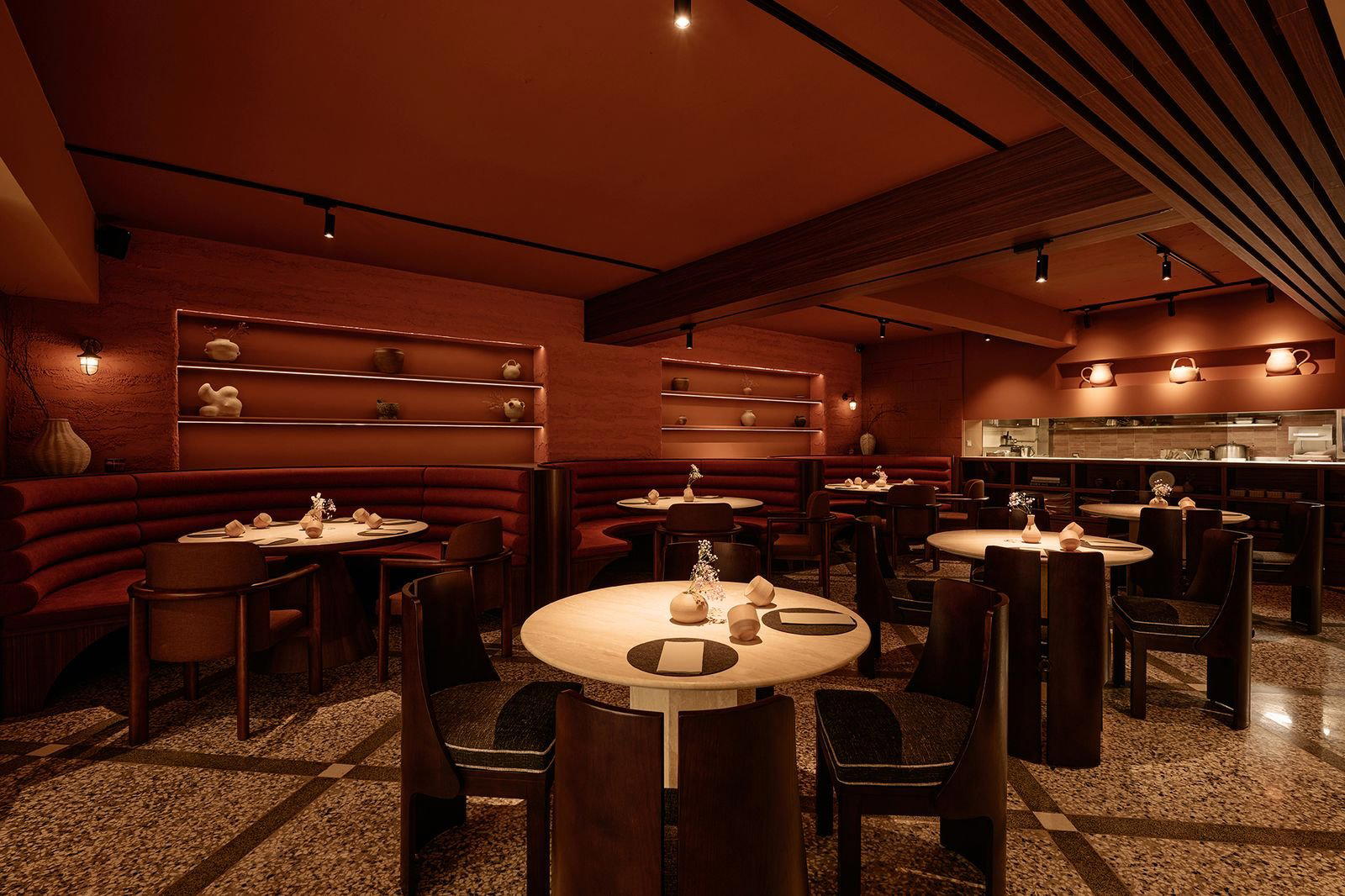
On the second floor of a lane-side building in Da'an District, Fon-Cé brings Latin American cooking to Taipei through a warm-toned room of terracotta and cacti. The kitchen draws on LATAM traditions across the continent, translating them into dishes that balance familiarity and precision. It is one of the few addresses in the city working seriously within this culinary tradition.

Pearl is the En Primeur Club membership app, where members save venues, book tables and use the concierge.
The menu
What to order
- Chickpea_donuts_with_chicken_liver_pate
- Tamal
Terracotta, Cacti, and the Latin American Table in Taipei
Taipei's fine-dining circuit is heavily weighted toward French-influenced tasting menus, Cantonese tradition, and the Taiwanese-contemporary formats represented by tables like Taïrroir and logy. Latin American cuisine operates in a much narrower lane in the city, which makes the second-floor room on Lane 233 of Dunhua South Road something worth noting. Walking up to Fon-Cé, you leave the commercial rhythm of Da'an's main thoroughfares and arrive at a space built around warmth: terracotta walls, cacti as structural design elements, and a colour palette that signals a deliberate departure from the cool minimalism common across Taipei's premium restaurant tier.
The room does not try to be neutral. The visual grammar here is LATAM by conviction, borrowing from the earthen textures and sun-baked tones of a continent that stretches from the Sonoran Desert to the Patagonian steppe. In a city where French kitchens like L'Atelier de Joël Robuchon and Spanish-rooted formats like Molino de Urdániz command significant attention, Fon-Cé positions itself in a genuinely different register, one that is more sensory and less austere in its physical presentation.
A Continent on the Plate: How LATAM Traditions Structure the Menu
Latin American cooking is not a single tradition. It is a family of regional cuisines shaped by Indigenous foundations, colonial-era European influence, waves of African diaspora, and later arrivals from Japan, China, and elsewhere. What connects them, at the table level, is a particular rhythm: communal sharing, an interplay of acidity and richness, and street food traditions that have gradually moved into more considered cooking environments. Fon-Cé draws on this breadth rather than fixing on a single national cuisine.
The approach becomes clearest in how the kitchen handles familiar continental reference points. The buñuelo, a fried dough fritter that appears in Colombia, Mexico, and across the Caribbean and Andean regions in varying forms, serves here as the conceptual anchor for a dish that places chickpea against chicken liver pâté and a caramelised coconut sauce. The logic is recognisable to anyone who knows LATAM street food: the contrast of a crisp, yielding base with something rich and unctuous on leading, then cut by sweetness. The specific execution, with coconut as the bridge ingredient, draws on the Afro-Brazilian and coastal traditions where coconut appears as a cooking medium rather than a garnish. This is the kind of cross-continental referencing that defines the more ambitious end of LATAM cooking globally, where chefs at restaurants like Emeril's in New Orleans and the coastal French-American formalism of Le Bernardin in New York City have also demonstrated that rigour applied to specific regional traditions produces more interesting results than broad fusion.
The Ritual of the Meal Here
Latin American dining ritual, at its more deliberate end, is not structured around the kind of precise, silent progression that defines high-end Japanese omakase or the choreographed French service at some of Taipei's other premium tables. The pacing tends to be more conversational, with dishes arriving in a way that encourages the table to linger and the flavours to accumulate. This suits Da'an's lane-side setting: the second-floor position removes the room from street-level noise without creating the sealed, pressure-chamber atmosphere that sometimes characterises basement or high-floor dining rooms.
The terracotta backdrop and the sensory warmth of the design choices signal how meals here are meant to unfold. The cues are tactile and visual before they are gastronomic. This matters because the LATAM table is historically one of the most social eating formats on the planet, and a kitchen working in this tradition needs a room that supports that sociability rather than suppressing it.
For context on the wider Taiwan dining scene, tables in other cities are developing similar depth in specific regional traditions: JL Studio in Taichung works with Southeast Asian references, and GEN in Kaohsiung represents a different regional approach. In Taipei itself, the range extends from the rigour of Le Palais in Cantonese tradition to the Indigenous-ingredient focus at Akame in Wutai Township. Fon-Cé occupies a niche that none of these addresses cover.
Getting There and Planning Your Visit
Fon-Cé sits on the second floor of a building at 15, Lane 233, Section 1, Dunhua South Road in Da'an District, one of Taipei's most active dining neighbourhoods. Da'an is walkable from the MRT's Zhongxiao Dunhua and Da'an stations, and the lane network between the main roads contains a number of the district's more considered eating and drinking addresses. Given the specificity of what Fon-Cé does within Taipei's restaurant scene, it is worth checking current booking availability in advance. For broader orientation across the city's food and drink options, our full Taipei restaurants guide covers the range from Taiwanese street food to multi-course tasting menus. If you are planning around accommodation, our Taipei hotels guide maps the city's lodging options by district and tier. The Taipei bars guide and experiences guide are useful companions for building out evenings around a meal here. Travellers moving beyond Taipei might also consider Zhu Xin Ju in Tainan, Volando Urai Spring Spa and Resort in Wulai District for a different register entirely, or A Gan Yi Taro Balls in New Taipei for one of the region's most specific local food traditions. The Taipei wineries guide rounds out the picture for those interested in Taiwan's developing wine scene alongside its restaurant culture.
Frequently asked questions
Is Fon-Cé child-friendly?
Fon-Cé sits on the second floor of a building on Lane 233, Dunhua South Road in Da'an District, which is a neighbourhood better suited to evening dining than family outings. The restaurant's LATAM-rooted menu, with dishes like chickpea with chicken liver pâté and caramelised coconut sauce, skews toward adventurous adult palates rather than straightforward family fare. Call ahead to confirm seating arrangements if you're planning to bring young children.
What is the atmosphere like at Fon-Cé?
The room runs warm and earthy: terracotta backdrops, cacti, and what the venue describes as sensual, rustic Latin American touches. It reads less like the restrained minimalism common to Taipei's French-leaning tasting menus and more like a space designed to evoke the breadth and warmth of the continent the menu draws from. The overall register is relaxed but considered.
Does Fon-Cé have a Michelin star or similar recognition?
Fon-Cé has received recognition including: The warm-hued room sports rustic LATAM charm, depicted by cacti against a terracotta backdrop paired with vibrant, sensual touches. Named after the chef’s parents, Fon-Cé captures the varied culinary landscapes of LATAM with passion and del….
What do people recommend at Fon-Cé?
The standout dish noted in editorial coverage is the chickpea with chicken liver pâté and caramelised coconut sauce, a preparation inspired by buñuelo, the fried dough fritter eaten across Latin America. It captures Fon-Cé's approach well: a familiar continental reference point reframed through the chef's personal lens and the ingredients available in Taipei.
Cuisine and Recognition
Comparable venues nearby, for context on price, style, and recognition.
| Venue | Cuisine | Price | Awards | Notes |
|---|---|---|---|---|
| Fon-CéThis venue (the venue you are viewing) | Contemporary Latin American | $50–100 | Michelin Plate | Not listed |
| ÉCRU | Modern French-Japanese Fusion | $100–150 | Michelin Plate | Jian'an |
| Set. | Modern Western Fine Dining | Not listed | Michelin Plate | Shuanglian |
| Staff Only Club | Bar Snacks and Cocktails | $10–20 | Not listed | Fushui |
| AJIMI | Kappo Omakase | $150–200 | Michelin Plate | De'an |
| Villa 32 | Italian Fine Dining | $100–150 | Star Wine List · Relais Chateaux Award | Zhongxin |
Recognition history
Dated appearances from independent guides and award organizations, with the underlying list record or original source where available.
Michelin Plate
Michelin
Continue exploring
More in Taipei
Restaurants in Taipei
All restaurants in Taipei →
Bars in Taipei
All bars in Taipei →
Hotels in Taipei
All hotels in Taipei →
Wineries in Taipei
Browse all →
Details
- Intimate
- Elegant
- Rustic
- Cozy
- Sophisticated
- Date Night
- Special Occasion
- Celebration
- Open Kitchen
- Sake Program
- Local Sourcing
- Tasting Menu
Current opening hours
- Monday
- 5:30–10:30 PM
- Tuesday
- Closed
- Wednesday
- Closed
- Thursday
- 5:30–10:30 PM
- Friday
- 5:30–10:30 PM
- Saturday
- 5:30–10:30 PM
- Sunday
- 5:30–10:30 PM
Hours can change for holidays and private events. Hours as of .
Warm-hued interior with rustic terracotta, cacti, red brick, yellow tones, soft lighting creating an intimate, lively, and sensual LATAM-inspired atmosphere.