Our verdict
Flying Ostrich by Dolmama occupies a curious position in Yerevan's dining scene: a satellite of the Dolmama name that extends the brand's reputation for Armenian hospitality into a distinct format. The address on Sayat Nova Street places it within walking distance of the city's cultural corridor, making it a practical anchor for an evening that moves between the capital's galleries and restaurants. Consider it alongside the broader Dolmama family when planning a Yerevan table.

Pearl is the En Primeur Club membership app, where members save venues, book tables and use the concierge.
The menu
What to order
- Ostrich barbecue
- Khorovats
Where the Dolmama Name Meets a Different Register
Yerevan's restaurant culture has matured considerably over the past decade. What was once a city where a handful of Soviet-era canteens and a few ambitious newcomers divided the dining public has become a genuinely competitive scene, with Armenian cuisine reclaiming its position at the table after years of being overshadowed by international formats. In that context, the Dolmama name carries weight. The original Dolmama established itself as a reference point for refined Armenian cooking, and its offshoots, including Dolmama - Armenia's Restaurant, have extended that reputation across different formats and price tiers. Flying Ostrich by Dolmama sits within this family, operating from 6 Sayat Nova Street in the Dilijan district of Yerevan, a location that positions it along one of the city's more culturally active corridors.
The Sayat Nova address is not incidental. Streets named for the 18th-century Armenian poet and musician carry a certain cultural charge in Yerevan, and a restaurant on this corridor benefits from foot traffic that includes visitors moving between the city's galleries, the Cascade complex, and the Republic Square area. The surrounding blocks contain some of the capital's more deliberate dining choices, which means Flying Ostrich arrives into a neighbourhood where the competition is paying attention.
The Sensory Register of Yerevan's Mid-Tier Dining
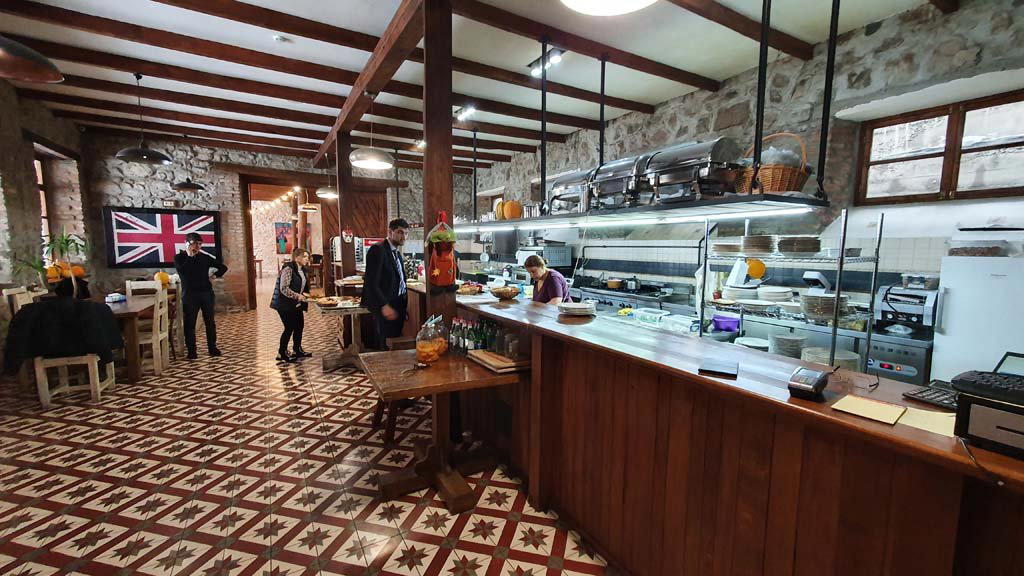
Armenian restaurant interiors in this price band tend toward two poles: the aggressively folkloric, heavy with duduk music and embroidered tablecloths, or the internationally generic, borrowing the visual language of European bistros without much local inflection. The better addresses find a middle register, where the materials reference local craft without performing it. Yerevan's volcanic stone, known as tufa, appears in many of the city's more considered interiors, and the warm ochre tones it produces change character noticeably across a meal as the light shifts from afternoon to evening. Whether Flying Ostrich leans into that local material palette or opts for a different aesthetic approach is something a visit will clarify better than any description.
Sound matters in Yerevan's dining rooms in ways that visitors from louder capitals sometimes find surprising. The city does not default to the ambient noise levels of, say, a packed London brasserie or a New York spot running at Saturday-night volume. Conversations carry. That has implications for how a table of four or six experiences a meal, and it is one reason why Armenian restaurants at this level tend to work well for extended, unhurried dinners rather than quick turnovers. The Dolmama family's reputation has been built partly on that unhurried register.
Armenian Cuisine at This Moment
The broader context for any restaurant operating under the Dolmama banner is a cuisine that is in an interesting transitional period. Armenian cooking has deep roots in agricultural produce, preserved foods, and wood-fired preparation methods that predate most of what passes for contemporary cooking trends in Europe and North America. Dishes built around manti, dolma, khorovats, and the specific tang of matsun exist within a culinary logic that is internally consistent and historically grounded. The question facing Armenian restaurants right now is how much of that tradition to present straight, how much to reframe for an internationally mobile audience, and whether reframing it risks losing the qualities that make it worth presenting at all.
Restaurants like At Gayane's have approached this by foregrounding the hospitality dimension of Armenian food culture, where the meal is an extended social event rather than a sequence of courses. Buzand Cafe Restaurant and Dragon Garden represent different points on the spectrum between local and international formats. Flying Ostrich by Dolmama, carrying the Dolmama name, operates with an implicit promise of quality that the parent brand has established over time.
For international visitors arriving with reference points from restaurants like Le Bernardin in New York City or Atomix in New York City, the terms of comparison shift entirely in Yerevan. Armenian cooking does not aspire to the tasting-menu format or the ingredient provenance signalling that drives premium dining in those cities. Its ambitions are different, rooted in abundance, generosity, and a table culture where running out of bread before the main course would be a genuine failure of hospitality. That difference is not a deficit; it is a distinct set of values, and restaurants that understand it tend to produce meals that feel complete rather than designed.
Planning a Visit
Yerevan's dining rhythm runs later than Western European capitals but earlier than Istanbul or Tehran. Lunch service at mid-tier restaurants typically runs from around noon, with dinner picking up from 7pm and extending well past 10pm on weekends. The summer months, particularly July and August, bring outdoor terraces into play across the city, and the cooler shoulder seasons of May and October often produce the most comfortable conditions for an unhurried evening meal. Spring in Yerevan coincides with the apricot blossom season, a moment the city claims as its own with some justification, and the produce arriving in markets during April and May signals a shift in what kitchens can work with.
Sayat Nova Street is accessible on foot from most central Yerevan accommodation, and the surrounding area connects to the metro network. Reservations through the Dolmama family of restaurants have historically been advisable for weekend evenings, though the specific booking method for Flying Ostrich is best confirmed directly. For visitors extending beyond Yerevan, Dilijan makes for a worthwhile day or overnight trip into the Armenian highlands, and Poloz Mukuch in Gyumri represents a strong reason to include Armenia's second city in an itinerary.
Our full Yerevan restaurants guide maps the city's dining scene across neighbourhoods and price tiers, with comparative context for visitors building a multi-day itinerary. For reference points in other formats, the community-driven hospitality model at Lazy Bear in San Francisco, the regional ingredient focus at Atelier Moessmer Norbert Niederkofler in Brunico, and the coastal produce tradition at Uliassi in Senigallia each illuminate, by contrast, what makes Armenian hospitality its own category. The legacy Italian family table at Dal Pescatore in Runate is perhaps the closest European analogue in spirit, if not in cuisine. Other reference points worth knowing: Emeril's in New Orleans, HAJIME in Osaka, Quattro Passi in Marina del Cantone, and Reale in Castel di Sangro each represent how regional culinary traditions anchor fine dining in their respective cities, a dynamic that Armenian restaurants are increasingly engaging with on their own terms.
Frequently asked questions
Is Flying Ostrich by Dolmama good for families?
Flying Ostrich by Dolmama sits on Sayat Nova Street in central Yerevan, which puts it within easy reach of the city's main pedestrian corridors and makes logistics straightforward for groups with children. The mid-tier register that defines this end of the Dolmama family suggests a less formal setting than the flagship, which typically works in favour of family visits. Yerevan's dining culture also skews family-friendly by default, with multi-generational tables the norm rather than the exception at restaurants in this category.
How would you describe the vibe at Flying Ostrich by Dolmama?
The Dolmama name carries weight in Yerevan, the original Dolmama helped define what serious Armenian restaurant dining could look like, and Flying Ostrich operates in that lineage but at a different register. Expect something closer to an animated neighbourhood room than a destination fine-dining counter: the kind of place where the Sayat Nova Street address grounds it in the cultural centre of the city rather than a tourist strip. It sits between the aggressively folkloric and the stripped-back modern, which is where Yerevan's more interesting mid-tier dining tends to land right now.
How does Flying Ostrich by Dolmama relate to the original Dolmama restaurant in Yerevan?
Flying Ostrich by Dolmama operates under the Dolmama banner, placing it within the same family of Yerevan restaurants that gave the Dolmama name its standing in Armenian dining. The 'by Dolmama' designation signals a deliberate connection rather than a coincidence of branding, though the Sayat Nova Street address and the venue's mid-tier positioning suggest it functions as a distinct concept rather than a straight replica of the original. For travellers already familiar with Dolmama, Flying Ostrich offers a way to engage with that same culinary sensibility in a different format within the same city.
What's the signature dish at Flying Ostrich by Dolmama?
Given the Dolmama connection, Armenian cooking traditions, dolma, khorovats, and grain-forward preparations, are likely to anchor the menu, but confirming a house signature requires checking directly with the restaurant on Sayat Nova Street in Yerevan.
What part of town is Flying Ostrich by Dolmama in?
Flying Ostrich by Dolmama is located at 6 Sayat Nova Street Dilijan, Երևան, Yerevan, Yerevan.
Peers in This Market
A quick peer reference to anchor this venue in its category.
| Venue | Cuisine | Price | Awards |
|---|---|---|---|
| Flying Ostrich by DolmamaThis venue (the venue you are viewing) | Armenian Fusion with Ostrich Barbecue | Not listed | Not listed |
| Mina | Italian with Armenian Accents | $30–50 | Wine Spectator Award of Excellence · World's Best Wine Lists Awards WBWL 1-Star |
| At Gayane's | Traditional Armenian Home Cooking | $10–20 | Not listed |
| Dolmama - Armenia's Restaurant | Modern Armenian | $30–50 | Not listed |
| Buzand Cafe Restaurant | Armenian and Mediterranean Cafe | $10–20 | Not listed |
Continue exploring
More in Yerevan
Restaurants in Yerevan
All restaurants in Yerevan →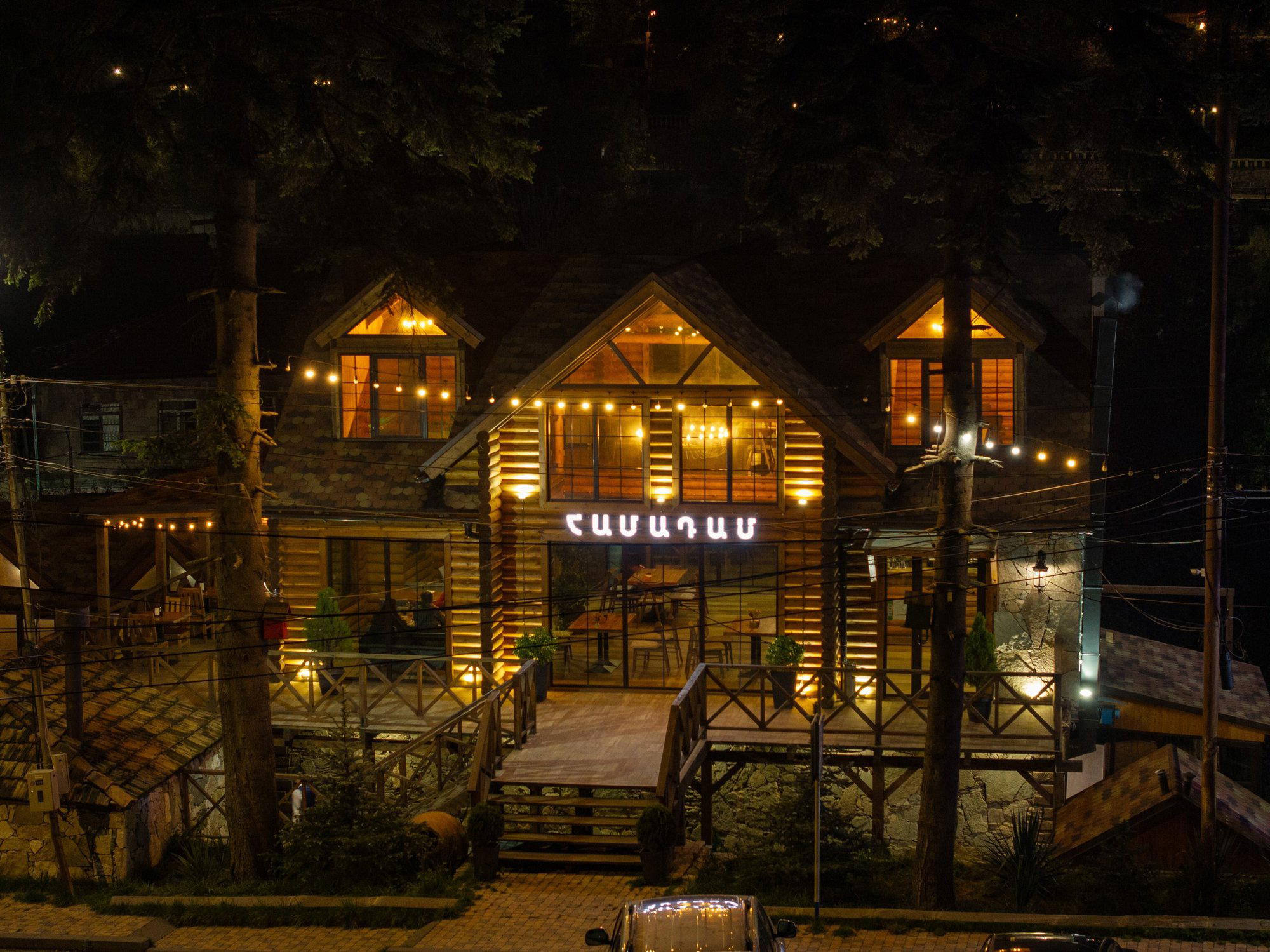
Details
- Cozy
- Trendy
- Casual Hangout
- Group Dining
- Courtyard
- Open Kitchen
- A La Carte
Cozy environment with colorful and interesting interior featuring original paintings, plus an upstairs lounge.