Our verdict
Dilijan sits in the forested highlands of Tavush, Armenia, where the surrounding land shapes what reaches the table as directly as anywhere in the South Caucasus. The town's dining scene draws on wild-gathered herbs, mountain dairy, and centuries of Armenian preserve traditions, placing it in a different register from the capital's more polished restaurant culture.

Pearl is the En Primeur Club membership app — saves, bookings, and concierge access live there. Same editors, same standards.
The menu
What to order
- Ostrich steak
- Trout with vegetables
Forest, Altitude, and the Logic of Local Eating
Approaching Dilijan from Yerevan, the landscape shifts gradually from dry highland plateau to something greener and more enclosed. By the time the road enters Tavush province, oak and hornbeam press close to the verges, and the air carries a cooler, resinous quality. That physical transition is not incidental to how the town eats. In few places in the South Caucasus does the surrounding terrain exert such direct pressure on what arrives at the table. Dilijan's dining culture is shaped less by urban ambition than by what the forests, streams, and alpine pastures immediately around it produce.
This positions Dilijan in a different conversation from Yerevan. Restaurants like At Gayane's in Yerevan operate within a capital city's expectations, where Armenian cuisine is curated for a cosmopolitan audience. Dilijan's tables tend to reflect a more immediate relationship with supply: the herbs on the plate are more likely to have been gathered from the hillside that morning than sourced through a distribution chain. That directness is the defining editorial fact about eating here.
What Grows Here, and Why It Reaches the Table
Armenia's ingredient culture has always leaned on fermentation, drying, and preservation as responses to hard winters, but Tavush's wetter, more temperate microclimate produces a wider green palette than the rest of the country. Wild garlic, wood sorrel, nettles, and several varieties of mountain thyme appear in Dilijan kitchens in ways that simply cannot be replicated at lower altitudes with different soil. The province's dairy tradition similarly reflects the richness of highland pasture: matsun (the local strained yogurt) produced from cattle grazing above 1,000 metres carries a sharpness and fat content distinct from commercially standardised versions.
This ingredient logic parallels what drives serious regional cooking elsewhere. At Atelier Moessmer Norbert Niederkofler in Brunico, the entire program is structured around what the Alpine supply chain can provide at a given moment. At Reale in Castel di Sangro, Apennine altitude dictates both ingredient availability and the sensibility of the cooking. Dilijan operates under similar logic, even if the formal dining infrastructure is less developed. The supply chain is short because geography makes it short.
Dilijan's Place in the Armenian Dining Map
Armenia's restaurant culture tends to concentrate in Yerevan, where the density of visitors and the concentration of purchasing power sustain more elaborate formats. Outside the capital, Gyumri has developed its own distinct food culture, visible in places like Poloz Mukuch in Gyumri, which operates within a more urban vernacular tradition. Dilijan occupies a third position: smaller, less urban, and more directly connected to what its particular corner of Armenian nature produces.
That positioning has consequences for what visitors should expect. The register here is not the refined tasting-menu format you would find at Atomix in New York City or the classical French precision of Le Bernardin in New York City. Dilijan eating is closer to what happens in other mountain towns where culinary identity is anchored in preservation of local practice rather than external validation. The authority on the plate comes from ingredient provenance and generational recipe knowledge, not from award cycles.
For a broader map of where Dilijan's tables fit within the town's dining options, our full Dilijan restaurants guide covers the range of formats and price points available. Losh represents one of the more considered expressions of the local approach.
Ingredient Sourcing as Editorial Frame
Sourcing transparency has become a fashionable claim across contemporary fine dining, but in Dilijan it predates any marketing impulse. The town's small scale and its distance from industrial supply networks mean that local sourcing is a structural reality rather than a branding decision. Restaurants drawing ingredients from nearby farms and foragers are doing so partly because the logistics of doing otherwise are complicated by the region's relative remoteness.
This mirrors a pattern visible at other geographically isolated dining destinations. Uliassi in Senigallia works within the constraints and gifts of the Adriatic coast. Quattro Passi in Marina del Cantone is inseparable from the particular marine supply of its stretch of coastline. Dal Pescatore in Runate derives its identity from the agricultural specificity of the Po Valley. In each case, geography is not a backdrop but the actual subject. Dilijan sits in that same tradition of place-defined cooking, operating at a more modest scale but with comparable ingredient logic.
Planning a Table in Dilijan
Dilijan is roughly 100 kilometres north of Yerevan via the M4 highway, a drive that runs to approximately 90 minutes under normal conditions. The town itself is compact enough that its main dining options are accessible on foot from the central Sharambeyan district, where restored 19th-century craftsmen's workshops give the area its architectural character. Visiting between late spring and early autumn captures the full range of the regional produce calendar: the wild herb season peaks in May and June, while preserved and fermented preparations dominate winter menus. Summer weekends draw visitors from Yerevan and international tourists using the town as a base for Dilijan National Park, so tables at the more popular spots fill more quickly in July and August. Arriving with a reservation or at least a plan is sensible for that window; outside peak season, the town operates at a quieter pace where walk-in dining is more reliably available.
The Broader Context: Mountain Cooking and Its Discipline
Mountain cooking traditions across the world share a set of structural features: short growing seasons that push preservation techniques to the centre of the pantry, dairy herds adapted to high pasture, and a protein economy built around whatever the local terrain can sustain. Armenian highland cooking fits that pattern, with additional layers from the country's long history of trade-route crossings and the cultural memory encoded in its meze and bread traditions. Dilijan's version of that tradition benefits from Tavush's relative greenness, producing a slightly more herb-forward, dairy-rich expression than the more austere cooking of the drier central and southern provinces.
For visitors accustomed to structured tasting experiences at restaurants like Piazza Duomo in Alba, Le Calandre in Rubano, or Quique Dacosta in Dénia, the shift to Dilijan's more informal register requires a recalibration of expectations. The discipline here is not in presentation architecture or course sequencing but in the sourcing chain and the fidelity to inherited technique. That is a different kind of seriousness, and for anyone interested in how Armenian culinary identity survives outside the capital, it is a more instructive one.
Frequently asked questions
What's the address for Dilijan?
Dilijan is located at Armenia, Dilijan.
How does Dilijan's dining scene differ from eating in Yerevan?
Yerevan concentrates Armenia's highest-density restaurant market, sustained by visitor volume and urban purchasing power, while Dilijan operates on a smaller, more producer-direct scale in Tavush province. The forest altitude and wetter climate of the region produce ingredients — foraged greens, walnuts, specific fermented dairy — that do not feature prominently in the capital's menus. For travellers specifically interested in regional Armenian cooking rather than Yerevan's broader international offer, Dilijan provides a more geographically grounded reference point.
What should I eat at Dilijan?
Tavush's wetter, forested climate produces ingredients that differ sharply from the drier highland fare dominant in Yerevan: foraged mushrooms, mountain herbs, walnuts, and fermented dairy products are structural to local cooking. Look for dishes built around these preserved and dried ingredients, which reflect a centuries-old response to hard winters rather than any recent trend. The town's small producer network means seasonal availability shapes the menu more directly than in larger Armenian cities.
Should I book Dilijan in advance?
Dilijan sits roughly 100 kilometres north of Yerevan, about a 90-minute drive via the M4 highway, and draws a steady flow of visitors particularly in summer and autumn. Smaller dining rooms in the town can fill quickly during peak season, so reserving ahead — especially for weekend evenings — is sensible. Availability tends to be more open midweek and outside the main tourist months.
What's the defining dish or idea at Dilijan?
The organising idea across Dilijan's food scene is ingredient proximity: the town's restaurants source from a local supply chain that predates contemporary fine-dining sourcing rhetoric. Fermentation and preservation techniques — driven historically by necessity rather than fashion — give the cooking a depth and specificity tied directly to Tavush's forest altitude and climate. That discipline, applied to locally foraged and grown produce, is what separates Dilijan's table from Yerevan's more cosmopolitan restaurant offer.
Can Dilijan handle vegetarian requests?
Armenian mountain cooking has always leaned heavily on plant-based preservation: pickled vegetables, dried fruits, legume dishes, and herb-forward preparations are embedded in the tradition rather than added as concessions. Dilijan's ingredient culture, shaped by Tavush's agricultural output, makes vegetarian eating here coherent rather than accommodated. Communicating dietary requirements directly to your chosen venue before arrival remains advisable.
Is Dilijan worth the price?
Dilijan sits outside Yerevan's more elaborately priced restaurant tier, and the value calculus here is different: you are paying for proximity to sourcing and a cooking tradition that has not been packaged for export. Compared to the Armenian capital's fine-dining market, prices across Dilijan's dining scene tend to be moderate, though specific menu pricing varies by venue and season. The 90-minute drive from Yerevan adds a time cost that visitors should factor honestly into the decision.
At-a-Glance Comparison
| Venue | Cuisine | Price | Awards |
|---|---|---|---|
| DilijanThis venue (the venue you are viewing) | Modern Armenian | $20–30 | Not listed |
| Mina | Italian with Armenian Accents | $30–50 | Wine Spectator Award of Excellence · World's Best Wine Lists Awards WBWL 1-Star |
| Losh | Modern Armenian Fusion | Not listed | Not listed |
| At Gayane's | Traditional Armenian Home Cooking | $10–20 | Not listed |
| Dolmama - Armenia's Restaurant | Modern Armenian | $30–50 | Not listed |
Continue exploring
More in Dilijan
Restaurants in Dilijan
All restaurants in Dilijan →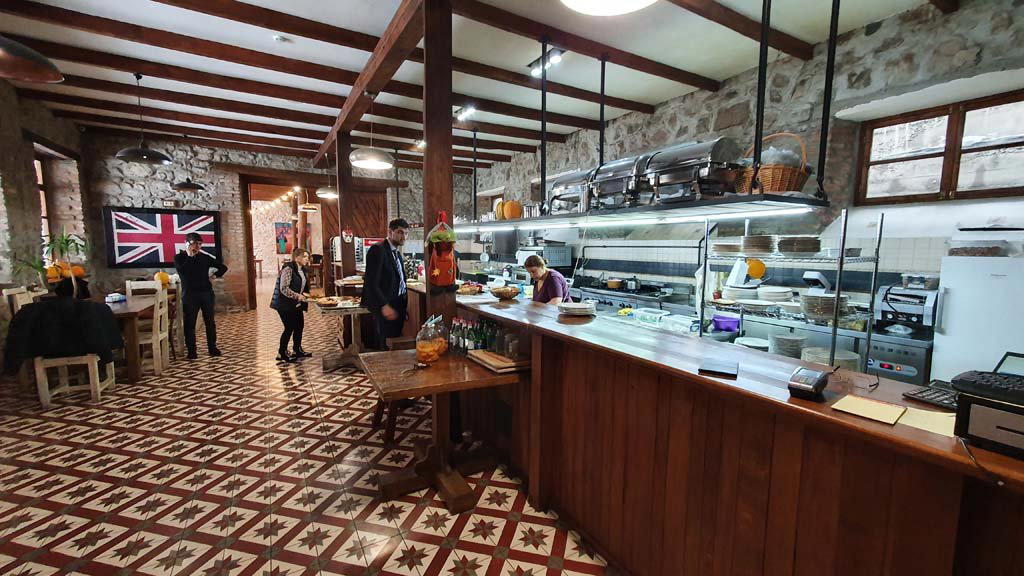
Details
- Cozy
- Rustic
- Group Dining
- Celebration
- Family
- Terrace
- Courtyard
- Local Sourcing
- Mountain
- A La Carte
- Vegetarian Friendly
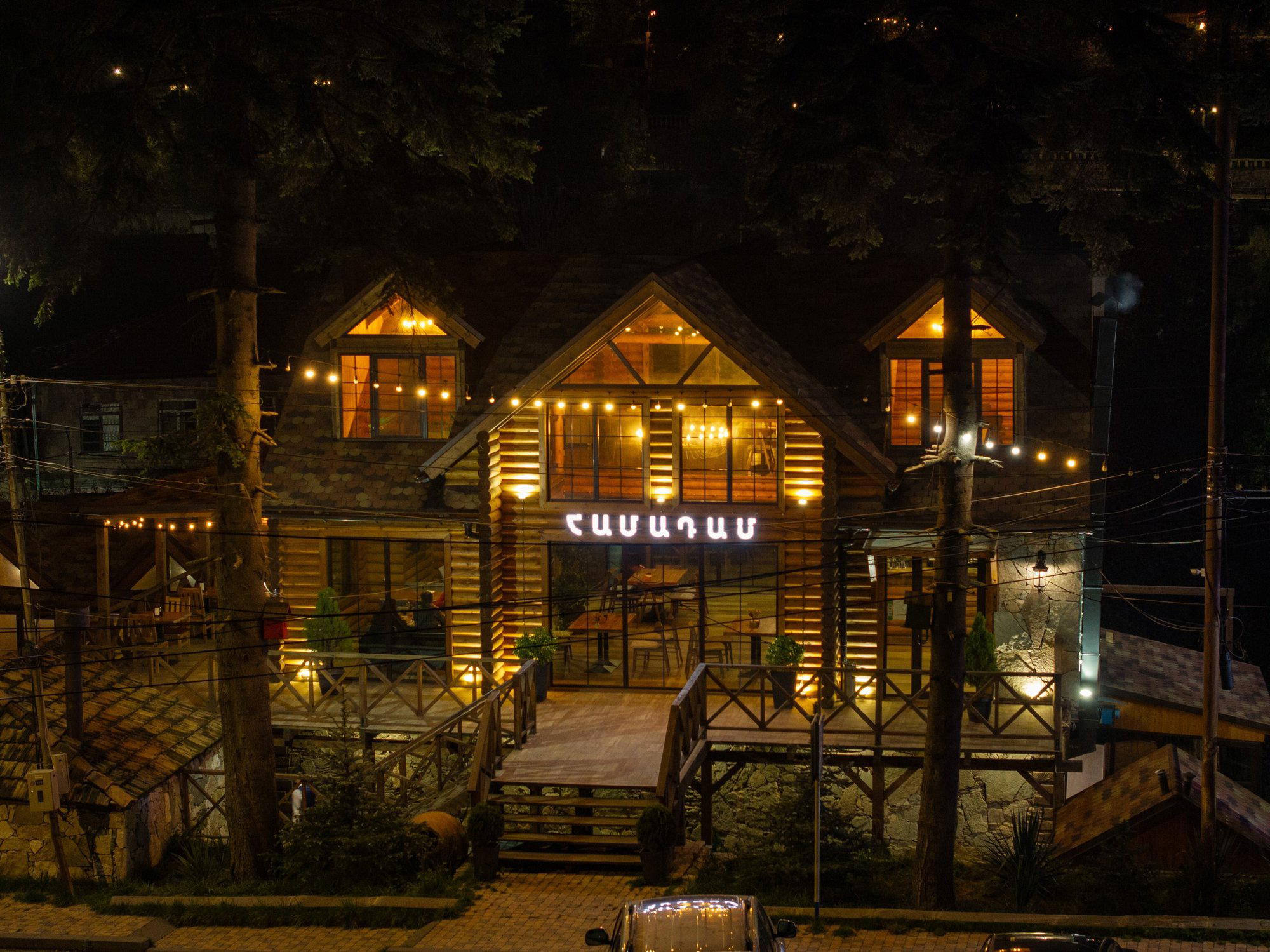
Cozy with old-style country or vintage decor, picturesque veranda, spacious courtyard, and forest surroundings.