Fenêtre

Tabelog Bronze #69
Our verdict
Fenêtre puts serious French cooking in an unlikely part of eastern Hokkaido, where dairy country, cold seas, and agricultural supply give the category a different center of gravity from Tokyo dining rooms. Its Tabelog Award Bronze recognition in 2025 and 2026, plus selection for Tabelog French EAST 100 in 2023 and 2025, place it among Japan’s more closely watched regional French addresses.

Pearl is the En Primeur Club membership app, where members save venues, book tables and use the concierge.
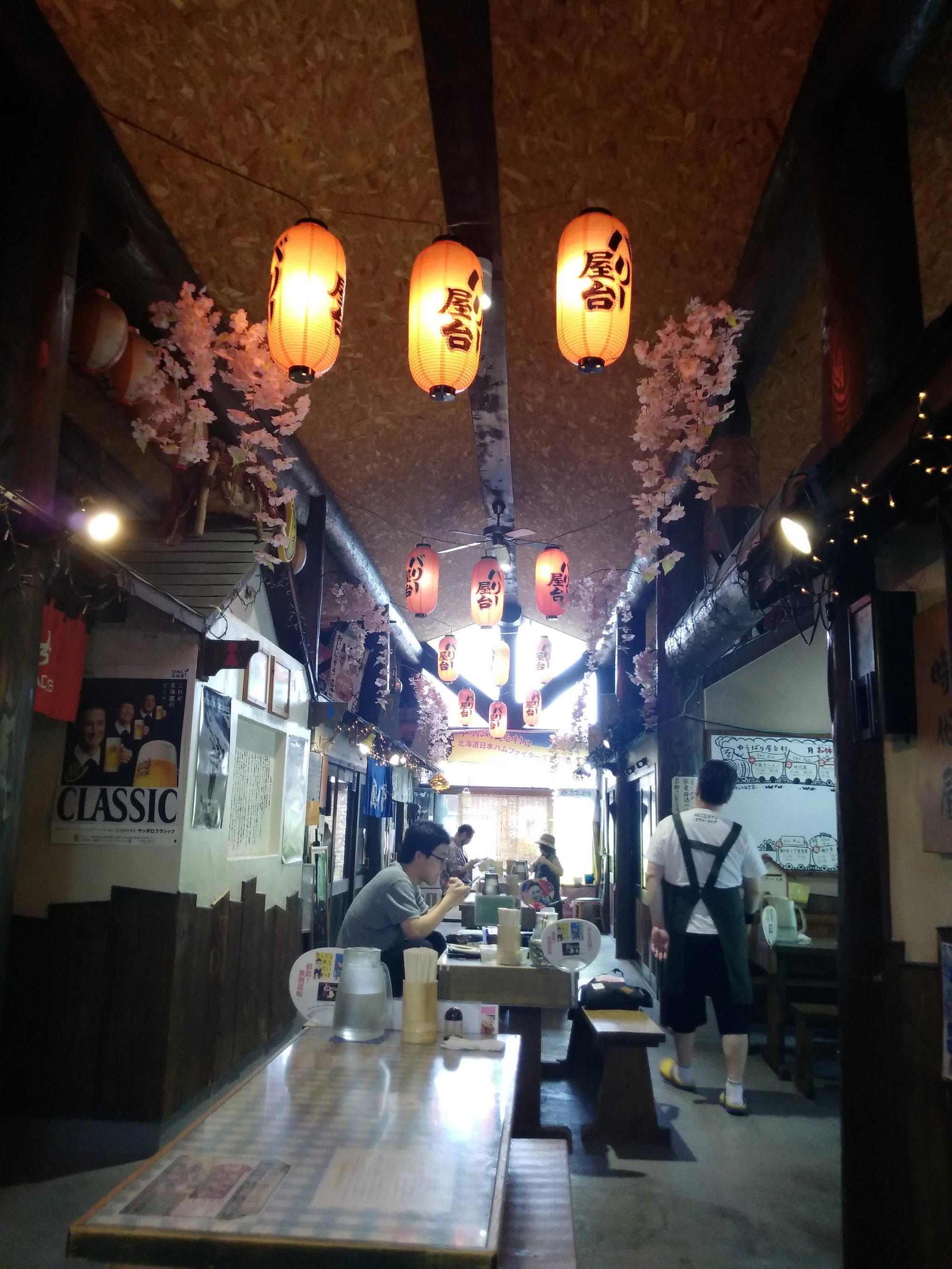
Eastern Hokkaido does not announce itself with the density of Ginza counters or the hotel polish of Sapporo dining rooms. The approach to Nakashibetsu is flatter, colder, and more agricultural: dairy farms, wide roads, and a sense that the meal has to justify the detour. That setting matters. French cooking in this part of Japan is less about metropolitan ceremony than about how a kitchen translates local supply, especially Hokkaido’s dairy, vegetables, seafood, and meat, into a language built on sauce, timing, and restraint.
Fenêtre sits inside that regional argument. Its category is French, but the more useful frame is Hokkaido French outside the large-city circuit, where sourcing is not a decorative claim but the structural advantage. Nakashibetsu is better known for milk and rural scale than for luxury dining density, which makes the restaurant’s recognition sharper: The Tabelog Award Bronze in both 2025 and 2026, a 4.17 score in the 2026 listing, and selection for Tabelog French EAST 100 in 2023 and 2025. Those signals put it in a competitive bracket usually associated with restaurants in cities with deeper visitor traffic.
Hokkaido French with the supply chain close to the table
Japan’s strongest French restaurants often succeed by narrowing the gap between imported technique and local produce. In Tokyo, that can mean rarefied tasting-menu architecture and elaborate cellar culture. In Hokkaido, the equation changes. The region’s raw materials carry more of the identity: dairy with national reputation, cold-water seafood, hardy vegetables, and a shorter growing season that makes preservation and seasonality feel less theoretical. A French kitchen here has to read the terrain rather than simply decorate plates with regional references.
That is why Fenêtre is more interesting as a case study in place than as a conventional destination-dining trophy. Nakashibetsu is not a casual add-on to a Tokyo or Kyoto itinerary; it is eastern Hokkaido, closer in spirit to road-trip Japan than to station-building gastronomy. The reward is a version of French cooking shaped by distance from the central restaurant economy. The restaurant’s awards suggest that diners and evaluators are not treating remoteness as a novelty. They are reading the work against a national French category and finding it competitive.
The dinner budget listed at JPY 15,000 to JPY 19,999 also clarifies the tier. This is not priced like a simple countryside bistro, yet it does not sit in the extreme bracket occupied by Japan’s rarest urban tasting counters. It occupies a useful middle of serious occasion dining: expensive enough to demand planning, grounded enough to keep the focus on food rather than theatre. For travelers building a wider Hokkaido route, Our full Nakashibetsu restaurants guide gives the local dining context, while Our full Nakashibetsu hotels guide, Our full Nakashibetsu bars guide, Our full Nakashibetsu wineries guide, and Our full Nakashibetsu experiences guide are the more practical companions for planning around a meal in eastern Hokkaido.
Why regional recognition carries extra weight here
Award recognition in rural Japan should be read differently from recognition in major cities. In Tokyo, repeat listings can be reinforced by constant media attention, inbound demand, and a large pool of local regulars. In a smaller Hokkaido town, repeat visibility has to travel farther. Fenêtre’s 2025 and 2026 Bronze awards, along with French EAST 100 selection across multiple years, indicate consistency across more than a single season of attention.
The comparison within Nakashibetsu also matters. Local options such as caffe kaiyodai and Cream Dowa sit in a low-price everyday bracket, while Hamada Shoten is listed at a more modest spend. Against that local field, Fenêtre operates in a separate occasion-dining lane. Against Japan’s French category, the restaurant is not protected by its location; it is judged in an eastern Japan frame that includes far denser restaurant markets. That tension is the point. The meal belongs to Nakashibetsu, but the recognition asks diners to measure it beyond Nakashibetsu.
For readers mapping Japan by cuisine rather than prefecture, the address also widens the usual circuit. A French meal in eastern Hokkaido tells a different story from beef-focused dining in Kanagawa, Tokyo izakaya formats, Osaka cafe culture, or Kyoto counter cooking. The broader EP Club restaurant archive makes those contrasts visible through entries such as -Grilled beef Sukiyaki- KAMAKURA TANUKIAN 鎌倉 たぬき庵 in Kamakura, . 鮪と炭火焼き うお炭 秋葉原店 in Tokyo, .cafe in Osaka, .know in Kumamoto, (Shoku) Vietnam in Kawasaki, [Curry Senmon Ten] Maruyama Kyoju. in Sapporo, [ki:] in Kyoto, #肉といえば松田 奈良本店 in Kashihara, 1/3 HAMBURGER FACTORY in Kanazawa, 1000 in Yokohama, 1000mヒュッテ 1000m Hut in Kutchan, Jōdo Saké Bar in Los Angeles, and Onigiri Time in Pasadena. Fenêtre’s value is clearest when seen against that spread: it is not chasing the same energy as a big-city opening, and it should not be assessed as one.
The planning logic: make the meal the anchor
Nakashibetsu rewards deliberate routing. The restaurant lists reservations as available, accepts credit cards, has parking, and does not offer private rooms. Those details point to a meal that should be planned as the center of an evening rather than a spontaneous stop between sights.
The editorial case is strongest for diners who care about how French technique behaves outside the metropolitan spotlight. There is no need to inflate the claim: the draw is not spectacle, celebrity biography, or a named signature dish. It is the collision of a serious French category with a town whose ingredients and geography change the premise. For a Japan trip built around regional food intelligence, that is enough reason to pay attention.
Frequently asked questions
Is Fenêtre suitable for children?
Fenêtre reads as a meal for adults rather than a children-first room: reservations are available, private rooms are unavailable, and the setup is better suited to a planned dinner in Nakashibetsu. The French kitchen and Tabelog Bronze recognition point to a more formal pacing.
How would you describe the vibe at Fenêtre?
Fenêtre has the profile of a reservation-led French room in Nakashibetsu, not a casual drop-in spot. Its Tabelog Award 2026 Bronze result and inclusion in Tabelog French EAST "Tabelog 100" 2025 give it the sort of local authority that usually comes with a quieter, more deliberate dining room.
How do I find Fenêtre?
Fenêtre is located in Nakashibetsu9, Nakashibetsu.
Do they take walk-ins at Fenêtre?
Reservations are available at Fenêtre, so it should be treated as a booked-table restaurant rather than a walk-in plan. That approach suits a Hokkaido French address with a 2026 Tabelog Bronze award and a dinner budget listed at JPY 15,000 to JPY 19,999.
What's the defining dish or idea at Fenêtre?
The defining idea is French cuisine expressed in Nakashibetsu, backed by Tabelog recognition in 2025 and 2026 and selection for French EAST "Tabelog 100" in 2025 and 2023. Those details are not published. Check the venue's official channels for the latest details.
Comparison Snapshot
Comparable venues by cuisine and price in the same metro.
| Venue | Cuisine | Price | Awards | Notes |
|---|---|---|---|---|
| FenêtreThis venue (the venue you are viewing) | French with Local Hokkaido Ingredients | $100–150 | Tabelog Bronze #69 | Not listed |
| Les Alchimistes | Modern French-Japanese Fusion | $200–300 | 1 Michelin Star · Black Pearl 1 Diamond | Shirokanedai |
| à nu Shohei Shimano | French Fine Dining | Not listed | Not listed | Hiroo |
| フェネトレ | French with Local Hokkaido Ingredients | $100–150 | Tabelog Bronze #69 | Nakashibetsu Town |
| 塞尚 | Modern French Fine Dining | $300–500 | World's 50 Best #16 · La Liste Top Restaurants | Marunouchi |
| L'Oiseau Bleu | Vegan French Bakery | Not listed | Not listed | Kita-ku |
Recognition history
Dated appearances from independent guides and award organizations, with the underlying list record or original source where available.
Tabelog Bronze #69
Tabelog
Full recognition history (3 entries)
Tabelog 100 #17 · No. 17
Tabelog · Tabelog 100 - French - EAST - 2025
Tabelog Bronze
Tabelog
Continue exploring
More in Nakashibetsu
Restaurants in Nakashibetsu
All restaurants in Nakashibetsu →
Details
- Quiet
- Elegant
- Intimate
- Scenic
- Cozy
- Special Occasion
- Date Night
- Standalone
- Sake Program
- Local Sourcing
- Prix Fixe
Calm interior with large windows overlooking quiet woods, providing privacy, distance, and a serene natural atmosphere.