
Tabelog 100 #72
Our verdict
Tokyo curry has split into quick lunch counters, specialist spice rooms, and award-listed neighborhood staples. Ethiopia Curry Kitchen Takadanobaba ten sits in the accessible specialist bracket: Tabelog Curry TOKYO 100 selection in 2023 and 2024, 18 seats, counter service, take-out, and pricing that keeps the meal closer to everyday Tokyo eating than occasion dining.

Pearl is the En Primeur Club membership app, where members save venues, book tables and use the concierge.
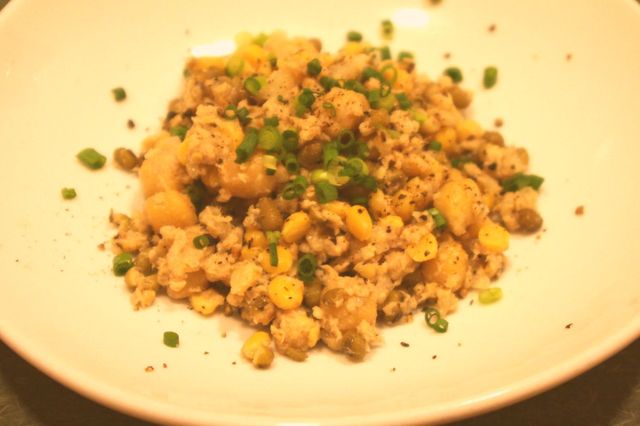
The menu
What to order
- Beef curry
- Chicken curry
- Greens curry
Approach this Tokyo curry room and the grammar is familiar to serious Tokyo eaters: compact, practical, and built for decisions rather than ceremony. Tokyo curry rewards compression: spice, rice, heat, quick turnover, and a room that can serve solo diners without turning the meal into an occasion.
Ethiopia Curry Kitchen Takadanobaba ten sits in that democratic but scrutinized tier. It was selected for Tabelog Curry TOKYO 100 in 2024, a useful signal in a city where curry is fiercely subdivided: Japanese curry shops, Indian curry counters, soup curry specialists, spice-curry rooms, and hybrid Asian formats. Its listed categories, curry, Indian curry, Asian, and ethnic, place it in the cross-current rather than the orthodox katsu-curry lane.
Tokyo curry here works as a progression, not a single plate
The meal’s rhythm is simple, but more structured than the price suggests. Tokyo curry culture often treats sequencing as quiet discipline: choose the base, set spice level, let rice and sauce frame the plate, then decide how far heat should carry the finish. Here, the appeal is not luxury by ingredient signaling, but control by format: a curry-focused meal where balance, heat, and repeatability matter.
The format also makes the meal legible for travelers. A sushi counter at this level of scrutiny can require language, timing, and etiquette; curry is more direct. The question is whether it delivers enough definition to justify crossing town. The Tabelog selection answers partly. So does the category itself: curry suits a short arc, where the first spoonful sets balance, the middle tests stamina, and the final bites reveal whether the spice has depth or merely volume.
Tokyo adds another layer. The city’s everyday dining culture favors durable formats over destination gloss, and curry suits that demand: warm, filling, customizable, repeatable. A meal in the JPY 1,000 to JPY 1,999 range sits inside that local economy while carrying enough recognition to draw curry-focused diners from elsewhere in Tokyo.
Recognition matters more because the format is casual
Award attention in casual Tokyo dining differs from Michelin-style destination dining. In a low-price category, the room rarely sells luxury cues; recognition must signal consistency, identity, and repeat appeal. A Tabelog Curry TOKYO 100 selection gives Ethiopia Curry Kitchen Takadanobaba ten a stronger editorial signal than décor or chef biography would. It says the shop is judged within a specialist category where small differences, spice profile, sauce texture, portion logic, heat calibration, and rice handling, carry the weight.
The comparison set shows how broad Tokyo value dining can be. Tonkatsu Hinata occupies another comfort-food lane, with pork cutlet as the organizing idea rather than spice. L’AMITIE represents the city’s durable French bistro appetite at a modest price tier. Alayashiki, Unagi Senmonten Aikawa, and Trattoria dai Paesani show how neighborhood restaurants operate across radically different budgets and traditions without the same occasion planning. Against that spread, curry can be serious without asking for a long evening.
The casual format reinforces the point. This is best treated as a flexible curry stop, shifting pressure to timing and appetite rather than advance planning. It suits a Tokyo day better than a locked itinerary. Travelers can pair it with broader city exploration, saving higher-commitment meals for another night. For nearby alternatives and contrasts, look to other Tokyo dining rooms, graphic cafe culture, or another curry address in the city.
How to place it in a Tokyo eating day
This works better as a targeted meal than a grand evening plan. The listed lunch and dinner budgets, both JPY 1,000 to JPY 1,999, make it practical for solo dining, pairs, or a quick meal between neighborhoods. The friction is minimal and mostly logistical; the appeal is culinary and direct. Use it for lunch or an early casual dinner, not a slow celebratory table.
Tokyo visitors often overbuild schedules around high-demand sushi, kappo, and omakase counters. A curry stop corrects the balance, showing another precision: affordable, repeatable, spice-led cooking that earned category recognition without fine-dining posture. For a wider route, use Our full Tokyo restaurants guide, then cross-reference drinking and stay planning through Our full Tokyo bars guide, Our full Tokyo hotels guide, Our full Tokyo wineries guide, and Our full Tokyo experiences guide.
For readers mapping Japan by category rather than neighborhood, the useful comparison is breadth. Tokyo’s compact specialist rooms can be weighed against other regional dining rooms across Japan, from curry counters and cafes to casual, highly focused local restaurants. Internationally, the same casual-specialist logic appears in focused Japanese-adjacent formats abroad, where a narrow idea can carry a full meal.
Within Tokyo, the stronger itinerary is not to chase sameness. Put curry beside other focused dining, whether seafood, yakitori, bistro cooking, tonkatsu, unagi, or Italian, and the city’s dining intelligence becomes clearer. Tokyo does not reserve seriousness for high prices. Sometimes it appears in a curry room where the meal depends on sauce, spice, rice, and pace.
Frequently asked questions
Is Ethiopia Curry Kitchen Takadanobaba ten a family-friendly restaurant?
The setup is casual and practical, so it can work for families as well as solo diners depending on timing and appetite. It is located in Tokyo.
What's the vibe at Ethiopia Curry Kitchen Takadanobaba ten?
The mood is practical and no-frills, with a curry-focused format rather than a formal dining-room feel. Its Tabelog 100 - Curry - TOKYO - 2024 selection gives it local credibility without turning it into a luxury restaurant.
Is Ethiopia Curry Kitchen Takadanobaba ten expensive?
Pricing at Ethiopia Curry Kitchen Takadanobaba ten is listed as JPY 1,000 - JPY 1,999 JPY 1,000 - JPY 1,999 View spending breakdown.
What are Ethiopia Curry Kitchen Takadanobaba ten's hours?
Check current hours directly with Ethiopia Curry Kitchen Takadanobaba ten before visiting.
A Minimal
Comparable venues side-by-side for orientation.
| Venue | Cuisine | Price | Awards | Notes |
|---|---|---|---|---|
| Ethiopia Curry Kitchen Takadanobaba tenThis venue (the venue you are viewing) | Japanese Curry | $1–10 | Tabelog 100 #72 | Not listed |
| Alayashiki | Seasonal Japanese Izakaya | $50–100 | Tabelog 100 #72 | JPY 8,000 - JPY 9,999 JPY 1,000 - JPY 1,999 |
| Trattoria dai Paesani | Authentic Abruzzese Trattoria | $20–30 | Gambero Rosso 2 Forchette | Not listed |
| L'AMITIE | French Bistro | $50–100 | Michelin Bib Gourmand · Tabelog 100 #94 | French |
| Unagi Senmonten Aikawa | Traditional Unagi (eel) specialty restaurant | $50–100 | Tabelog 100 #21 | JPY 6,000 - JPY 7,999 JPY 5,000 - JPY 5,999 |
| Tonkatsu Hinata | Tonkatsu Specialist | $10–20 | Michelin Bib Gourmand · Tabelog 100 #8 | Tonkatsu |
Recognition history
Dated appearances from independent guides and award organizations, with the underlying list record or original source where available.
Tabelog 100 #72 · No. 72
Tabelog · Tabelog 100 - Curry - TOKYO - 2024
Continue exploring
More in Tokyo
Restaurants in Tokyo
All restaurants in Tokyo →



Bars in Tokyo
All bars in Tokyo →






Details
- Classic
- Cozy
- Well Known
- Solo
- Casual Hangout
- Family
- Standalone
- Street Scene
- A La Carte
- Vegetarian Friendly
- Allergy Accommodating
Current opening hours
- Monday
- 11 AM–11 PM
- Tuesday
- 11 AM–11 PM
- Wednesday
- 11 AM–11 PM
- Thursday
- 11 AM–11 PM
- Friday
- 11 AM–11 PM
- Saturday
- 11 AM–11 PM
- Sunday
- 11 AM–11 PM
Hours can change for holidays and private events. Hours as of .
A compact, no-frills neighborhood curry shop with a classic, casual feel and a focused takeout-friendly rhythm.