Esters
Esters sits on Kynaston Road in Stoke Newington, N16, representing the quieter, neighbourhood-rooted end of London's café-restaurant spectrum. Where central London dining pivots on spectacle and Michelin credentials, this corner of Hackney has built a reputation on supply-chain honesty, low-waste kitchen thinking, and the kind of regulars who walk rather than cab. A counter-point to destination dining, and worth understanding on those terms.
Pearl is the En Primeur Club membership app — saves, bookings, and concierge access live there. Same editors, same standards.
- Address
- 55 Kynaston Rd, London N16 0EB, United Kingdom
- Phone
- +442072540253
- Website
- estersn16.com
- Directions
- Get directions
 Saves & bookings on Pearl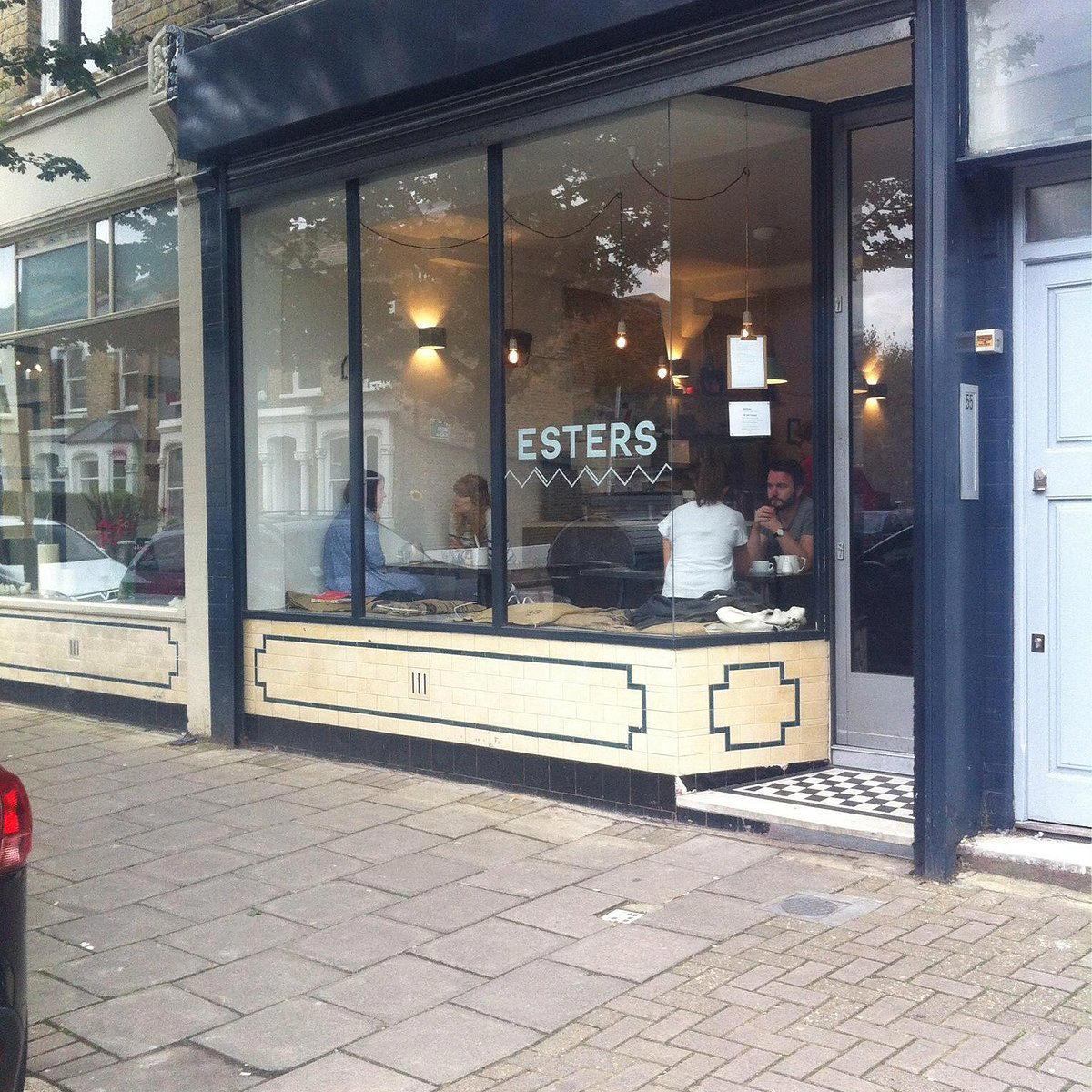
Stoke Newington and the Ethics of the Everyday
The stretch of Kynaston Road in N16 is not where London's restaurant press corps typically looks. The neighbourhood's dining character has been shaped by a resident population that treats food provenance as a baseline rather than a selling point. Stoke Newington sits north-east of the central London corridor that runs from Mayfair through Marylebone and down to Chelsea, where the city's formal fine-dining tier concentrates: operations like CORE by Clare Smyth, Restaurant Gordon Ramsay, and Sketch, The Lecture Room and Library occupy the ££££ tier and compete on heritage, pedigree, and multi-course theatre. Esters at 55 Kynaston Road is a different kind of proposition entirely. It operates as a neighbourhood café-restaurant that earns its position through consistency and sourcing discipline.
That distinction matters for anyone mapping London's dining scene beyond the obvious. The capital now has two parallel economies of restaurant ambition. One is the formal, destination-oriented track anchored by institutions such as The Ledbury and Dinner by Heston Blumenthal. The other is a slower, more embedded model built around daily practice: sourcing relationships with small producers, menus that respond to what arrived that morning rather than what the PR calendar demands, and a physical footprint that belongs to its street. Esters sits firmly in the second track.
What Neighbourhood Sustainability Actually Looks Like in Practice
The sustainability conversation in London dining has often been dominated by destination restaurants with the budget to install elaborate composting systems, commission carbon audits, and hire dedicated forager-in-residence roles. The more durable version of ethical sourcing, however, tends to operate at smaller scale and lower noise. In north and east London particularly, a cluster of independent café-restaurants has built its identity around daily supply decisions: buying from small farms, rotating menus to match genuine seasonal availability, and reducing waste by designing around whole-animal and whole-vegetable approaches rather than cherry-picking the photogenic cuts.
Esters belongs to this tradition. The address, 55 Kynaston Road, N16, places it within walking distance of Clissold Park and the Church Street market corridor, both of which feed into the neighbourhood's established habit of treating locally sourced, low-intervention food as the default rather than the premium tier. This is the context in which the café's sourcing choices read most clearly: not as marketing but as operational logic shaped by where it sits and who it serves daily.
For comparison, the UK's most formally recognised sustainability-adjacent kitchens tend to operate at considerable remove from urban centres. L'Enclume in Cartmel and Moor Hall in Aughton have the physical space to run kitchen gardens and maintain direct producer relationships at scale. Gidleigh Park in Chagford operates within a self-contained estate. Urban neighbourhood restaurants work with tighter constraints and less capital, which in some ways demands more rigorous sourcing discipline: there is no buffer of prestige or spectacle to compensate for supply-chain sloppiness.
The Café Format as an Ethical Architecture
The café format itself carries sustainability logic that tasting-menu restaurants structurally cannot replicate. Shorter menus mean lower ingredient volumes and less spoilage. Daytime trading patterns allow for ingredient purchasing based on confirmed morning availability. The absence of elaborate pre-preparation reduces energy use. These are not talking points but operational realities that shape how a place like Esters functions relative to its west London fine-dining counterparts operating at three sittings across elaborate multi-course sequences.
This is also the format that has made north and east London's neighbourhood café scene increasingly credible as a dining destination in its own right, rather than a consolation prize for those who cannot secure tables at more formal addresses. The same shift has happened elsewhere: Lazy Bear in San Francisco built its reputation partly through the communal, low-waste logic of its supper-club origins before moving into a more fixed format. Hand and Flowers in Marlow demonstrates that informal pub format and serious sourcing credentials are not mutually exclusive. hide and fox in Saltwood operates at small scale with a supply chain transparency that its size enables. Esters participates in the same broader argument: that ethical sourcing and formal prestige are independent variables.
Placing Esters in the Wider British Picture
Across the UK, particularly discussed restaurants of the last decade have tended to combine provenance credentials with either destination-hotel settings or Michelin recognition. Ynyshir Hall in Machynlleth, Waterside Inn in Bray, and Restaurant Andrew Fairlie in Auchterarder each sit within larger hospitality structures that support their sourcing programmes. Midsummer House in Cambridge and Opheem in Birmingham have formalised their supply-chain ethics through award recognition. The urban neighbourhood café operates without those scaffolding structures, which is precisely what makes its sourcing choices more consequential on a per-decision basis.
For visitors building a London itinerary around the full range of what the city's restaurant culture offers, Esters represents the N16 end of that spectrum: the neighbourhood café that has earned local loyalty through operational honesty rather than critical positioning. It sits at the opposite end of the format scale from the ££££ destination dining of central and west London, and should be read as such. For international reference points at the formal end of the sustainability conversation, Le Bernardin in New York City has built a supply-chain transparency programme into a three-Michelin-star operation, demonstrating how the same values scale across different formats.
Planning a Visit
Esters is at 55 Kynaston Road, London N16 0EB, in Stoke Newington. It is walk-in friendly, with casual dress and daytime trading focused on brunch and lunch.
A Credentials Check
Comparable venues nearby, for context on price, style, and recognition.
| Venue | Cuisine | Price | Notes |
|---|---|---|---|
| EstersThis venue — the venue you are viewing | Modern British Brunch Cafe | $$ | Not listed |
| Grind | Modern British Brasserie | $$ | St Luke's |
| Newman Arms | British Pie Pub | $$ | Fitzrovia |
| Garden Café | Modern British & European | $$ | Lambeth |
| The Buttery | Contemporary British Cafe | $$ | Belgravia |
| The English Pig | British Pork-Focused Gastropub | $$ | Spitalfields |
Continue exploring
More in London
Restaurants in London
Browse all →

Bars in London
Browse all →
Hotels in London
Browse all →



At a Glance
- Cozy
- Modern
- Trendy
- Brunch
- Casual Hangout
- Open Kitchen
- Local Sourcing
Current opening hours
- Monday
- Closed
- Tuesday
- 8 AM–3:30 PM
- Wednesday
- 8 AM–3:30 PM
- Thursday
- 8 AM–3:30 PM
- Friday
- 8 AM–3:30 PM
- Saturday
- 9 AM–3:30 PM
- Sunday
- Closed
Hours can change for holidays and private events. Last verified .
Bright, charming café with simple light wood interiors, cozy atmosphere, and a busy back garden with mismatched tables.