Esssalon occupies a address on Hauptplatz in Pinkafeld, a small Burgenland town that sits within one of Austria's most food-serious regional corridors. The restaurant operates in a part of the country where sourcing from local farms and forest edges is standard practice rather than a selling point. For travellers moving between Vienna and the Styrian border, it represents a considered stop on a route well supplied with serious kitchens.
Pearl is the En Primeur Club membership app — saves, bookings, and concierge access live there. Same editors, same standards.
- Address
- Hauptpl. 15, 7423 Pinkafeld, Austria
- Phone
- +4369911953953
- Website
- esssalon.at
- Directions
- Get directions
 Saves & bookings on Pearl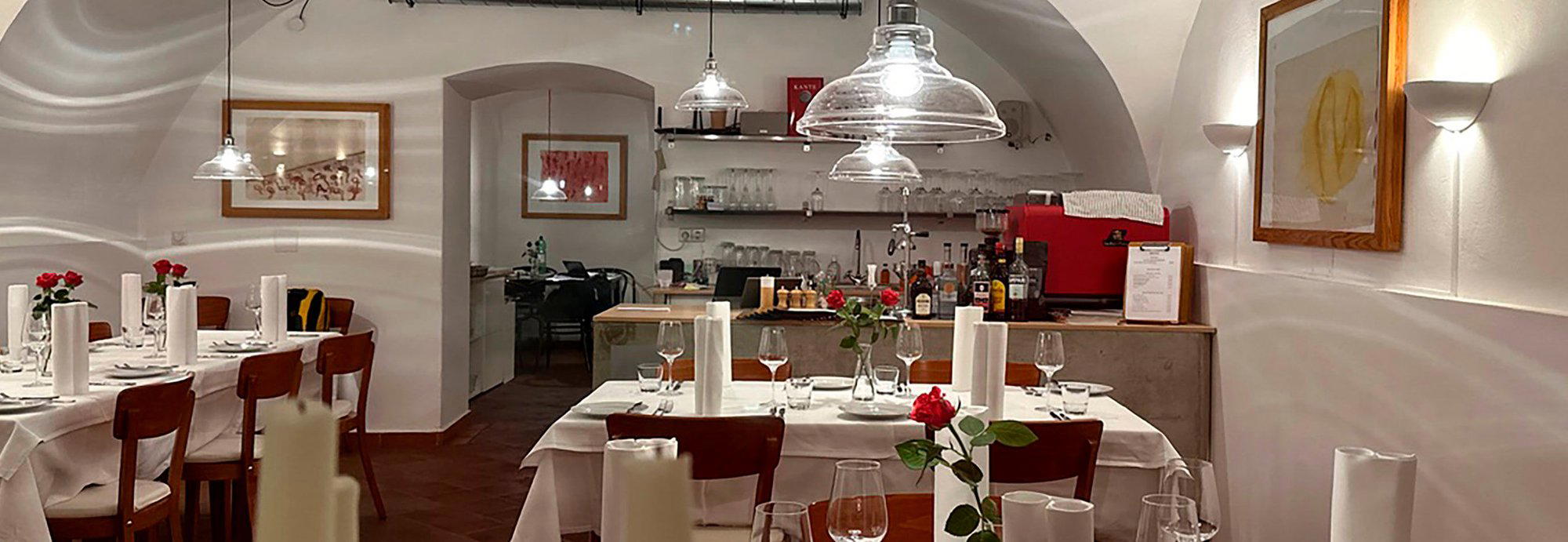
Pinkafeld and the Southern Burgenland Dining Tradition
Southern Burgenland occupies an unusual position in Austria's dining geography. It sits between the wine country of the Neusiedlersee to the north and the forested hills of Styria to the south, a corridor where the larder has always been well stocked but the restaurant culture has developed quietly, without the critical attention that gravitates toward Vienna or Salzburg. Towns like Pinkafeld are where that quietness becomes an asset: local sourcing is not a trend here but a structural reality, shaped by proximity to small producers, game forests, and family farms that have supplied the same kitchens for generations.
Esssalon sits at Hauptplatz 15 in the centre of Pinkafeld, a positioning that places it in the civic heart of a town that functions as a regional hub for the southern Burgenland Pinkatal valley. In Austrian market towns of this scale, the Hauptplatz restaurant carries a particular role: it serves the community on ordinary evenings and becomes the destination address for the surrounding villages on occasions that matter. That dual function shapes the kind of kitchen these establishments tend to run, one that must be consistent rather than experimental, and confident in its sourcing rather than dependent on imported prestige ingredients.
What the Setting Tells You Before the Food Arrives
Approaching a restaurant on an Austrian Hauptplatz, you arrive through a frame of civic architecture, the kind of proportioned facades and fountain squares that appear in every provincial Austrian centre and yet never feel generic from the inside. The ground-floor entry of a building on this square in Pinkafeld carries the weight of that setting, a built environment that quietly sets expectations about formality and occasion. Austrian provincial dining rooms of this type tend toward composed interiors, warm lighting, and a pace that is unhurried in a way that urban rooms rarely manage.
The sourcing logic of southern Burgenland makes itself felt in kitchens like this through the specificity of what appears on the plate. Game from the Pinkatal forests, freshwater fish from regional rivers, dairy and root vegetables from farms within the valley, these are the ingredients that define the cooking tradition of this corridor. That tradition connects, at its most ambitious end, to places like Taubenkobel in Schützen am Gebirge, which has built a national reputation on Burgenland produce, and at its most grounded to the market-town restaurants that form the everyday infrastructure of the region's food culture.
The Ingredient Logic of This Region
Austrian regional cooking, when it is working well, is an exercise in compression: a small geography with a clearly defined seasonal rhythm, a set of producers who have been working the same land for decades, and a kitchen tradition that knows exactly what to do with what arrives. Southern Burgenland operates within that logic. The Pinkatal valley's elevation and microclimate produce ingredients with a density and character that is distinct from the flatter, warmer Pannonian plain to the north. Root vegetables carry more earth. Game has the lean quality of animals that work for their food in forested terrain.
This is the sourcing context in which Austrian provincial restaurants have produced some of the country's most thoughtful cooking, not because they are chasing a philosophy but because the supply chain dictates it. Compare this with the approach taken at Döllerer in Golling an der Salzach, which has formalised its alpine sourcing into a nationally recognised program, or Kräuterreich by Vitus Winkler in Sankt Veit im Pongau, where herb cultivation has become the editorial anchor of the kitchen. In smaller regional settings, that same sourcing discipline operates without the editorial framing, which can make it harder to read from the outside but no less rigorous in practice.
For travellers who engage with Austrian dining at its most context-specific, the provincial Hauptplatz restaurant in a town like Pinkafeld is an important data point in understanding how the country's food culture actually functions away from its headline addresses. The Landhaus Bacher in Mautern an der Donau represents the ceiling of this provincial-institution format, carrying Michelin recognition over decades while remaining embedded in a small Danube town. Most regional restaurants operate below that level of formal recognition while maintaining the same structural commitment to place and season.
How Esssalon Fits the Regional Picture
The restaurant scene in Pinkafeld operates in a different register from the recognised addresses elsewhere in Austria. That absence of formal recognition is not a verdict on quality; it reflects the structural reality that Austria's critical infrastructure is concentrated in its cities and ski resort corridors, leaving the Burgenland provincial towns largely uncharted by the usual signals.
Esssalon, positioned on the main square of a town of this size and type, occupies the address where a regional community centres its dining life. That carries its own form of accountability: the kitchen cannot rely on destination traffic or critical attention to fill seats. It earns its position through consistency and through knowledge of its supply chain, the two qualities that sustain provincial Austrian restaurants across decades.
Travellers who have worked through Austria's more prominent regional addresses, places like Obauer in Werfen, Artis in Graz, or Ois in Neufelden, will find in Pinkafeld a different register: quieter, less curated, and more embedded in the rhythms of a working town. That is not a compromise; it is a different kind of dining proposition, one that rewards a different kind of attention.
Planning a Visit
Pinkafeld is accessible from Vienna in approximately two hours by car via the A2 motorway and the Oberwart junction, placing it within range for a long lunch or an evening meal en route to Graz or the Styrian border. The town is small enough that Hauptplatz 15 is simple to locate on arrival. As with most Austrian provincial restaurants of this type, contacting the venue directly before visiting is the practical approach, particularly for weekend evenings when local demand is at its peak. Reservations are essential, and opening hours are Monday to Thursday from 11:30 AM to 2 PM, Friday from 11:30 AM to 2 PM and 6 to 10 PM, Saturday from 6 to 10 PM, and Sunday closed.
In Context: Similar Options
Comparable venues nearby, for context on price, style, and recognition.
| Venue | Cuisine | Price | Notes |
|---|---|---|---|
| EsssalonThis venue — the venue you are viewing | Creative Seasonal Mediterranean with Austrian & Asian Influences | $$ | Not listed |
| Purkarthofer | Mediterranean & Styrian Fusion | $$ | Fernitz-Mellach |
| Konoba | Croatian Seafood | $$$ | Josefstadt |
| Seedeck | Urban-Mediterranean Bistro | $$ | Stadtseepromenade |
| Senhor Vinho | Traditional Portuguese Seafood | $$ | Margareten |
| s'Gwölb im Thurmhof | Austrian-Mediterranean Gastropub | $$ | Moosdorf |
Continue exploring
More in Pinkafeld
Restaurants in Pinkafeld
Browse all →
Bars in Pinkafeld
Browse all →
Hotels in Pinkafeld
Browse all →

At a Glance
- Cozy
- Romantic
- Intimate
- Scenic
- Date Night
- Special Occasion
- Garden
- Standalone
- Farm To Table
- Organic
- Local Sourcing
- Garden
Current opening hours
- Monday
- 11:30 AM–2 PM
- Tuesday
- 11:30 AM–2 PM
- Wednesday
- 11:30 AM–2 PM
- Thursday
- 11:30 AM–2 PM
- Friday
- 11:30 AM–2 PM, 6–10 PM
- Saturday
- 6–10 PM
- Sunday
- Closed
Hours can change for holidays and private events. Last verified .
Charming and cozy with outdoor seating in a precious location featuring flowers and a fountain; intimate setting well-suited for romantic dinners.